(And why are we doing it?)
First, let me explain a little bit of what the Camino is all about: My summary will be very short, but if you what to know more about the life of St. James, or learn more about the history of the Camino there is plenty of good information out there on the internet. Simply put “Camino de Santiago” into your web browser and you can read all you want about it. Here is a link to a Wikipedia article:
https://en.m.wikipedia.org/wiki/Camino_de_Santiago
Of course there are numerous movies, YouTube videos, podcasts, blogs and Facebook groups to help you immerse yourself on the topic.

The 2010 movie “The Way”, starring Martin Sheen, is not only an enjoyable film, but it will give you a good glimpse into the reasons people take this long journey and how they benefit from it.

There are also several books on the Camino readily available at any book store. John Brierly’s guide is one used by many pilgrims, giving them details of every step of the way.
A short history lesson: Legend says that St. James, one of the first apostles, was martyred in the year 44 AD, and that his body was recovered by his followers, who took it by boat to Spain, where he had once preached the gospel. There he was buried, in what is now Santiago de Compostela, Spain. Devoted Catholics from all over Europe, but mostly Spain, France and Italy, started making their pilgrimage there as a way of doing penance and to honor St. James. It’s likely the pilgrimages started as far back as the 9th century. The routes were highly traveled during the Middle Ages, but have varied in popularity over the years due to wars, political unrest and plague. Early pilgrims probably traveled from village to village via old trade routes, some of which are ancient Roman roads. The pilgrims probably relied on all the village churches, monasteries and convents along the route for food and shelter.
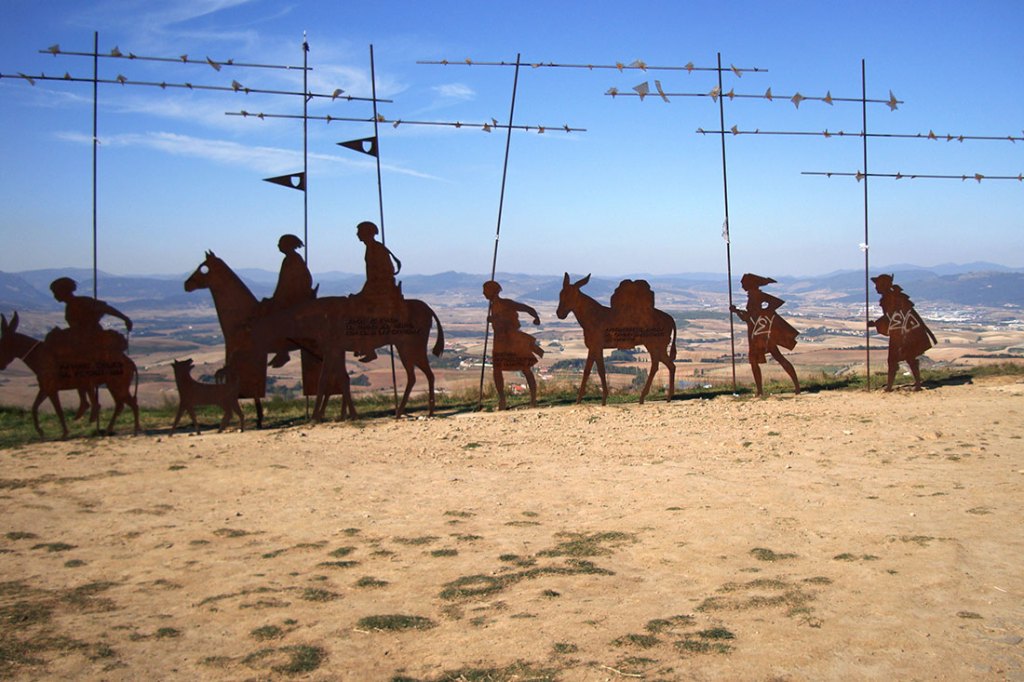
Today, the pilgrimage has become popular again, and is drawing up to 300,000 visitors a year through the various routes (except for a huge drop in 2020 due to COVID). Modern pilgrims make the journey for many reasons: devotion, spiritual growth, exercise, penance or even tourism. Over the years other forms of hospitality have sprung up to keep up with the increasing number of pilgrims. Today, pilgrims can choose from an array of hostels (private and municipal) hotels, bed and breakfasts, pensions and paradors to find rest after a long day of walking. Most pilgrims choose to stay in the communal settings of a hostel, where they will sleep in dormitory style bunk beds and dine as a group with other travelers.
 Digital Postcards