Arrival in Spain

Carrie and I flew in to Madrid on Thursday and immediately caught an Iberia flight to Bilbao. We knew we’d need a few days to decompress and get adjusted to the six hour time change. So, to get the most enjoyment out of our rest we wanted first go to Bilbao to see the Guggenheim Museum and then head the resort town of San Sebastián. Both cities are in the Basque region of Spain and offered great opportunities to immerse ourselves in the local culture and beauty of the region and partake in all the delicacies here (I’m talking about pinchos, which are the areas version of tapas, and great wine).

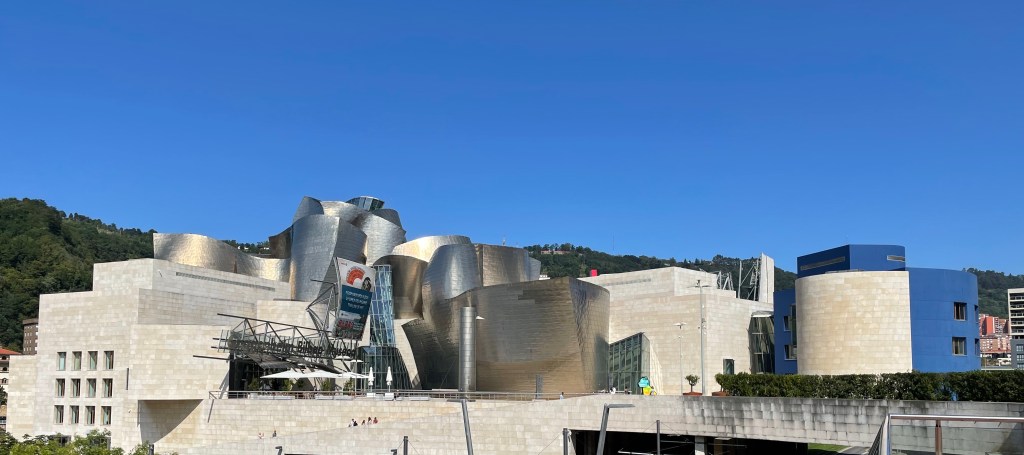
First stop was Bilbao. Flying into this northern coastal town I was surprised how mountainous and rugged the terrain was. I was also surprised how this once industry laden city, compared to Pittsburgh in the US, is now clean and vibrant with a very active art focus starting with the Guggenheim Museum. We have always wanted to spend some time here and enjoyed seeing glimpses of the museum and town in the movie version of Dan Brown’s book “Origin”. The Guggenheim rests on one side of the River Nervion which runs through the middle of central Balbao. Centuries old buildings and residences line the opposite side of the river in sharp contrast to the bright steel modern architecture of the Frank Geary designed museum.
Seafood salad

What is the Camino de Santiago?

(And why are we doing it?)

First, let me explain a little bit of what the Camino is all about: My summary will be very short, but if you what to know more about the life of St. James, or learn more about the history of the Camino there is plenty of good information out there on the internet. Simply put “Camino de Santiago” into your web browser and you can read all you want about it. Here is a link to a Wikipedia article:

https://en.m.wikipedia.org/wiki/Camino_de_Santiago

Of course there are numerous movies, YouTube videos, podcasts, blogs and Facebook groups to help you immerse yourself on the topic.

The 2010 movie “The Way”, starring Martin Sheen, is not only an enjoyable film, but it will give you a good glimpse into the reasons people take this long journey and how they benefit from it.

There are also several books on the Camino readily available at any book store. John Brierly’s guide is one used by many pilgrims, giving them details of every step of the way.

A short history lesson: Legend says that St. James, one of the first apostles, was martyred in the year 44 AD, and that his body was recovered by his followers, who took it by boat to Spain, where he had once preached the gospel. There he was buried, in what is now Santiago de Compostela, Spain. Devoted Catholics from all over Europe, but mostly Spain, France and Italy, started making their pilgrimage there as a way of doing penance and to honor St. James. It’s likely the pilgrimages started as far back as the 9th century. The routes were highly traveled during the Middle Ages, but have varied in popularity over the years due to wars, political unrest and plague. Early pilgrims probably traveled from village to village via old trade routes, some of which are ancient Roman roads. The pilgrims probably relied on all the village churches, monasteries and convents along the route for food and shelter.

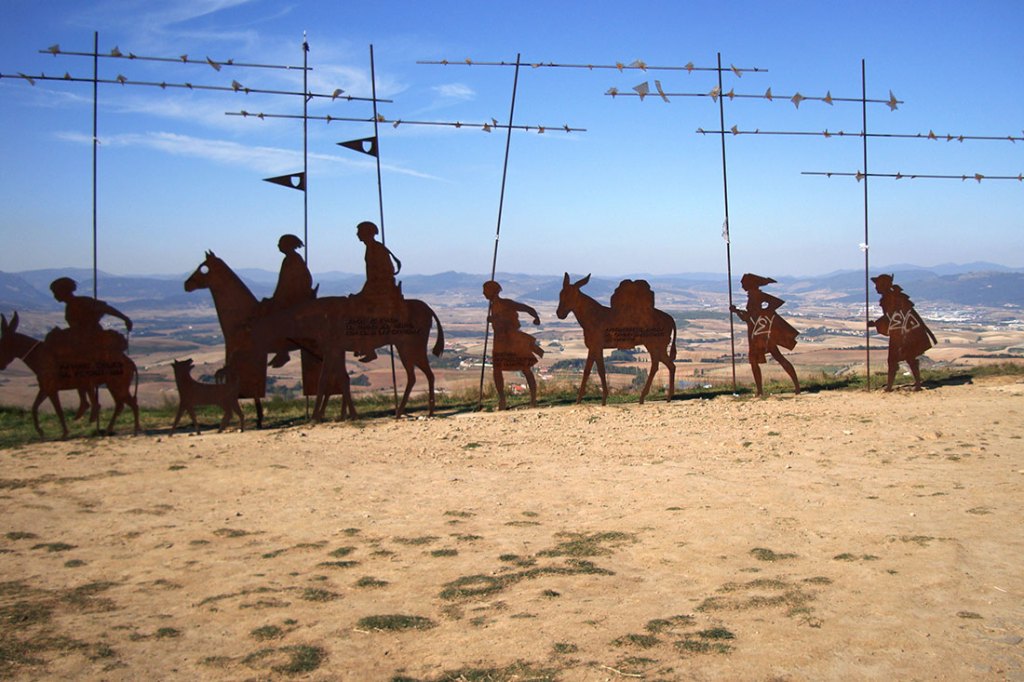
Camino pilgrims

Today, the pilgrimage has become popular again, and is drawing up to 300,000 visitors a year through the various routes (except for a huge drop in 2020 due to COVID). Modern pilgrims make the journey for many reasons: devotion, spiritual growth, exercise, penance or even tourism. Over the years other forms of hospitality have sprung up to keep up with the increasing number of pilgrims. Today, pilgrims can choose from an array of hostels (private and municipal) hotels, bed and breakfasts, pensions and paradors to find rest after a long day of walking. Most pilgrims choose to stay in the communal settings of a hostel, where they will sleep in dormitory style bunk beds and dine as a group with other travelers.


Planning for the Camino de Santiago

We started actually planning for the Camino in March 2021. We booked our flights in May and took advantage of some of the softer airline prices we noticed, as a result of Covid. Flights from the US to Spain were not yet open, but there was talk that Spain would soon be opening up travel for vaccinated US citizens.

One great resource we used was the “American Pilgrims on the Camino” Facebook group. There we found lots of current useful tips for planning our trip on the Camino. As a result of the sentiment from this group, we started booking some of the early hotels and albuergues in advance.

Although we were already avid walkers (two to three miles each walk, about three to four days per week, at a clip of about three miles per hour), we stepped up our game to get into better shape for the long days of walking on the Camino. We began longer walks, walks with elevation changes, and started wearing backpacks with increasing weight (it is recommended that you carry no more than about 12-15% of your body weight on your back).


In our preparations, along with our short walks, we walked 12 miles, with light packs, earlier this week. We also did a six mile hike, with near max weight, in one of the state parks last week. We are about one month out from the Camino walk. Here’s a suggested plan to get one in shape for all that walking:

Camino Frances Stages

There are many routes to take, but they all have the same goal: Santiago de Compostela, in the northwest of Spain. One of the most popular routes is the Camino Frances, which starts in St. Jean Pied de Port (at the foot of the pass), France. This little town nestles up to the French side of the Pyrenees. This is the route we will take starting on September 1, traveling about 790 kilometers (500 miles) until we arrive in Compostela. We expect to walk for about 5 weeks or so. We are in no hurry, so we will take some breaks as we walk, to enjoy the history and hospitality we encounter along the way.