More Logistics and Techie Stuff

During the planning stages we made a few changes and additions to our usual modes of communication. One, we both changed our cell service to T-Mobile, which has good international coverge and unlimited data. So far its been pretty good. Even when the wifi service at a lodging is subpar, we can use our phones as a wifi hotspot.

Two, we added WhatsApp to our phones. Using WhatsApp is an efficient way to communiticate with the family back home as well as to contact hotels, luggage transfer companies and fellow pilgrims without incurring cell or data charges. It’s well accepted here in Spain.

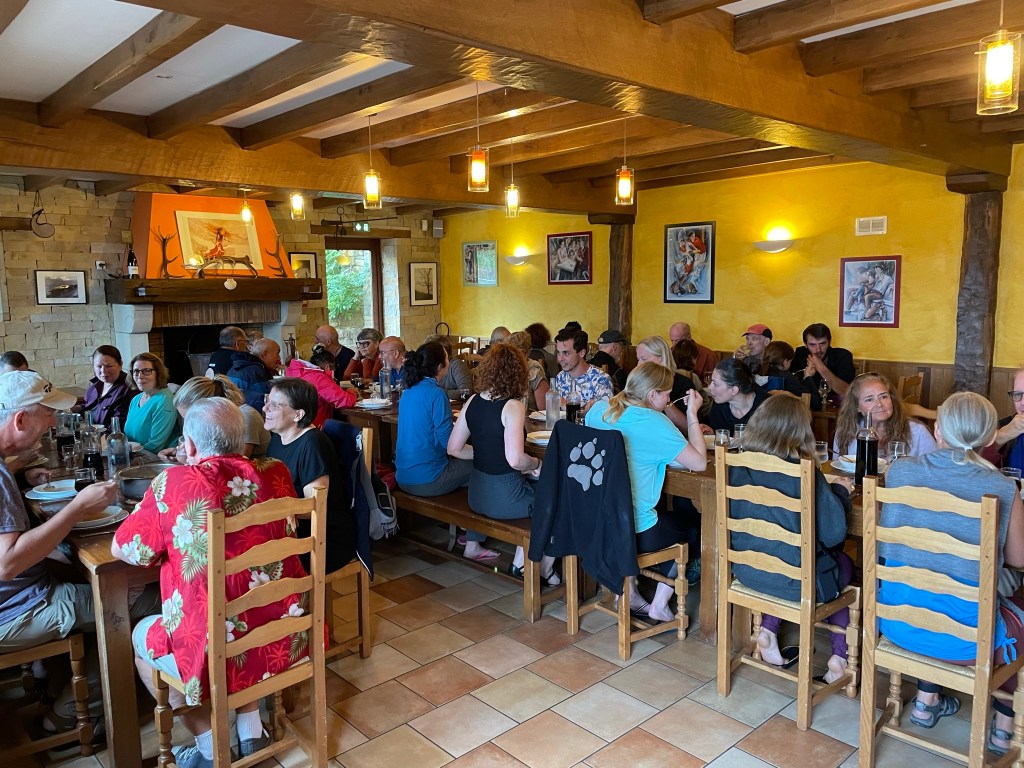
As we mentioned in an earlier post, after starting at St. Jean Pied De Port, our first stop along the way was at Refuge Orrisson. Because this was a community dormatory setting and the meals were shared in a group as well, many of the 45-50 guests became aquainted with each other and many formed friendly bonds here. One of the pilgrims started an Orrisson group page on WhatApp so everyone could keep track of one another. It’s worked great so far, but as time goes on our group gets more spread out all the time, and not everyone can get together as easily. However, information trickles back down the trail from the faster walkers and we’ve now heard that lodging in the next few stages is very tight.

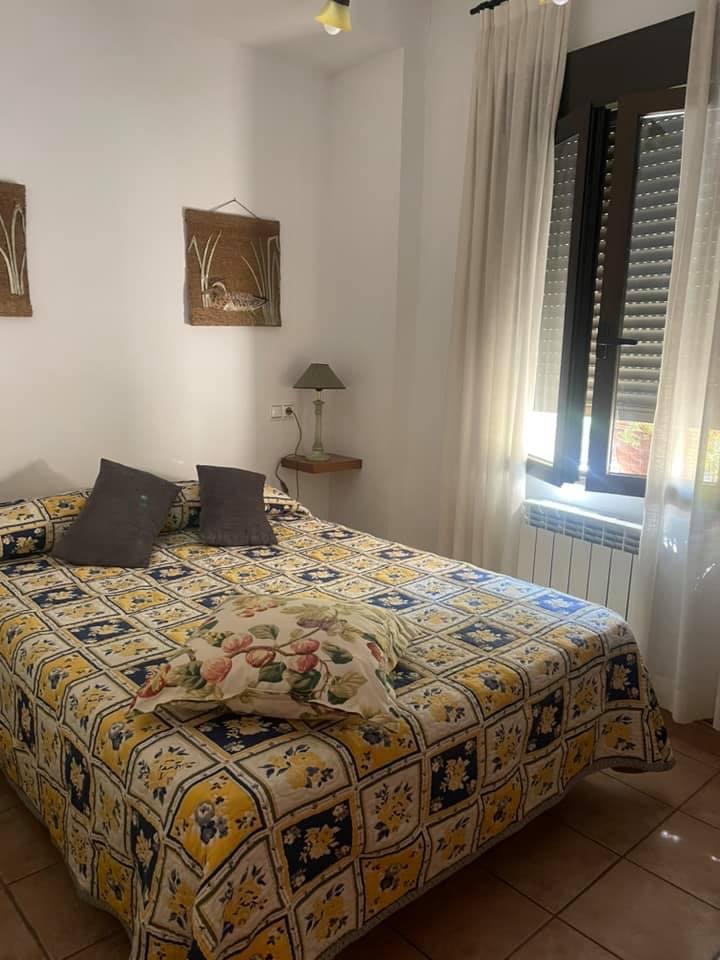
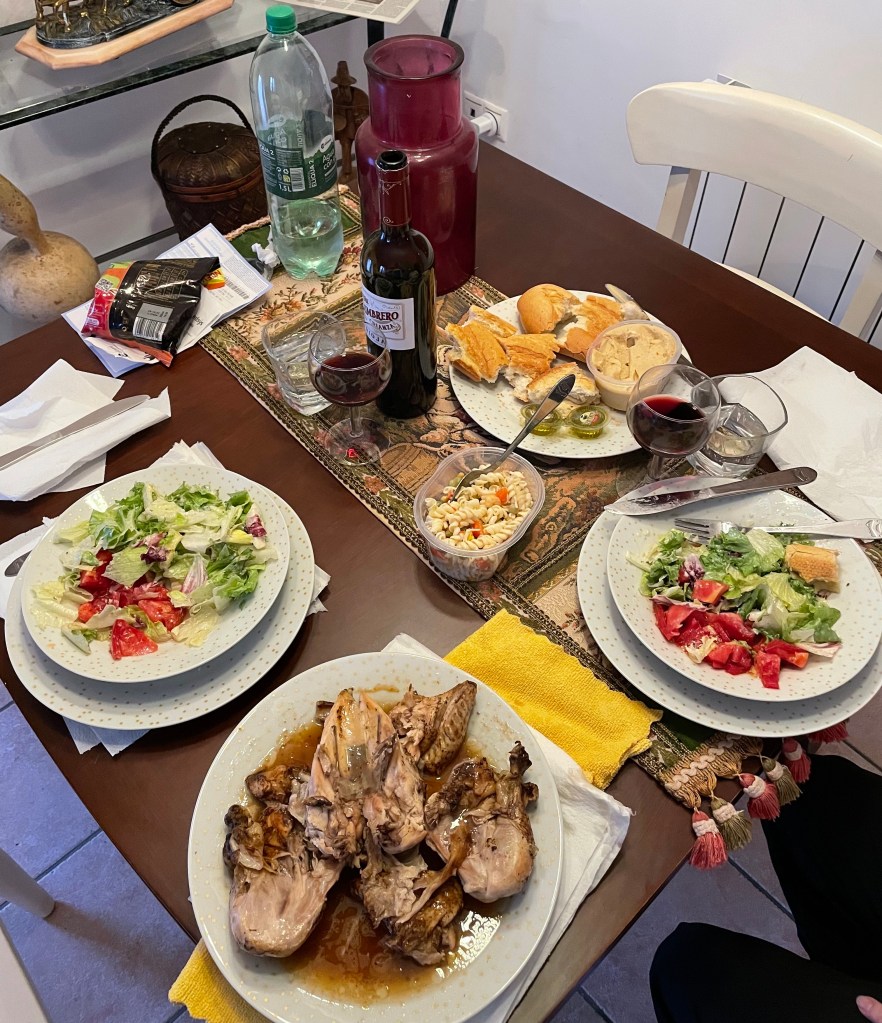
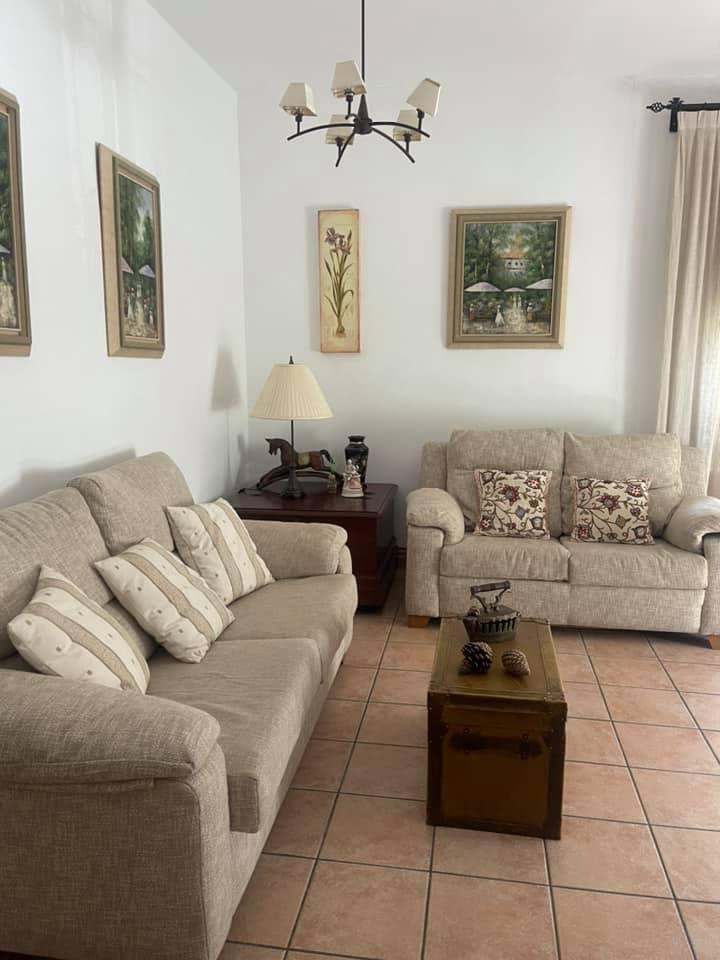
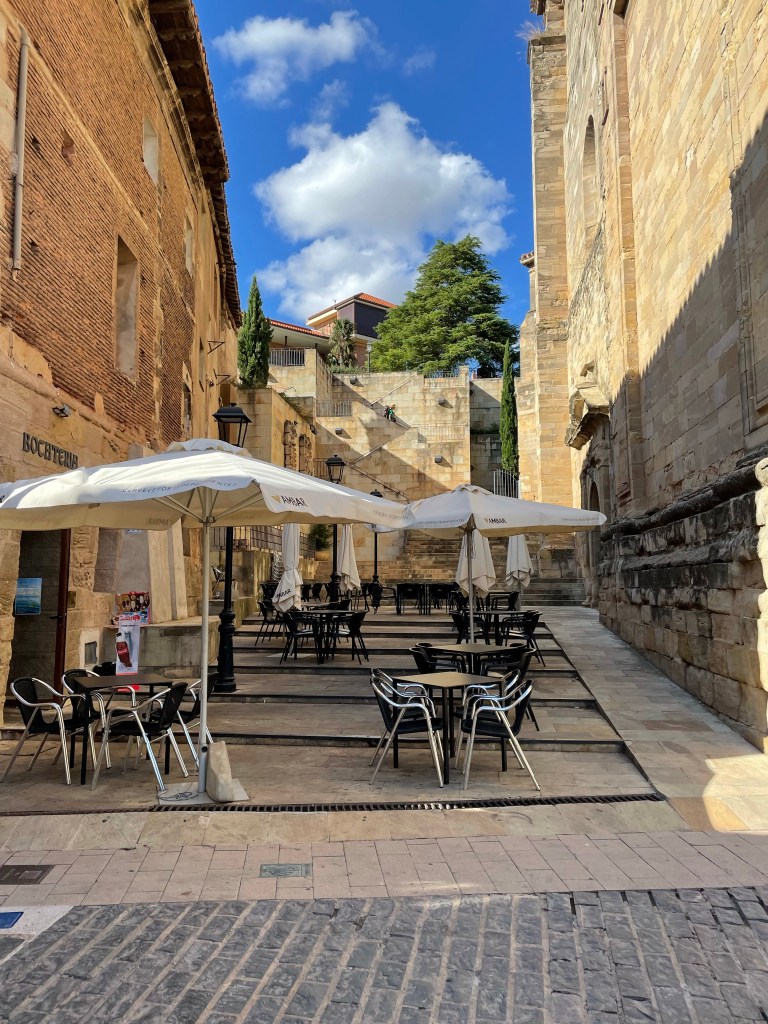
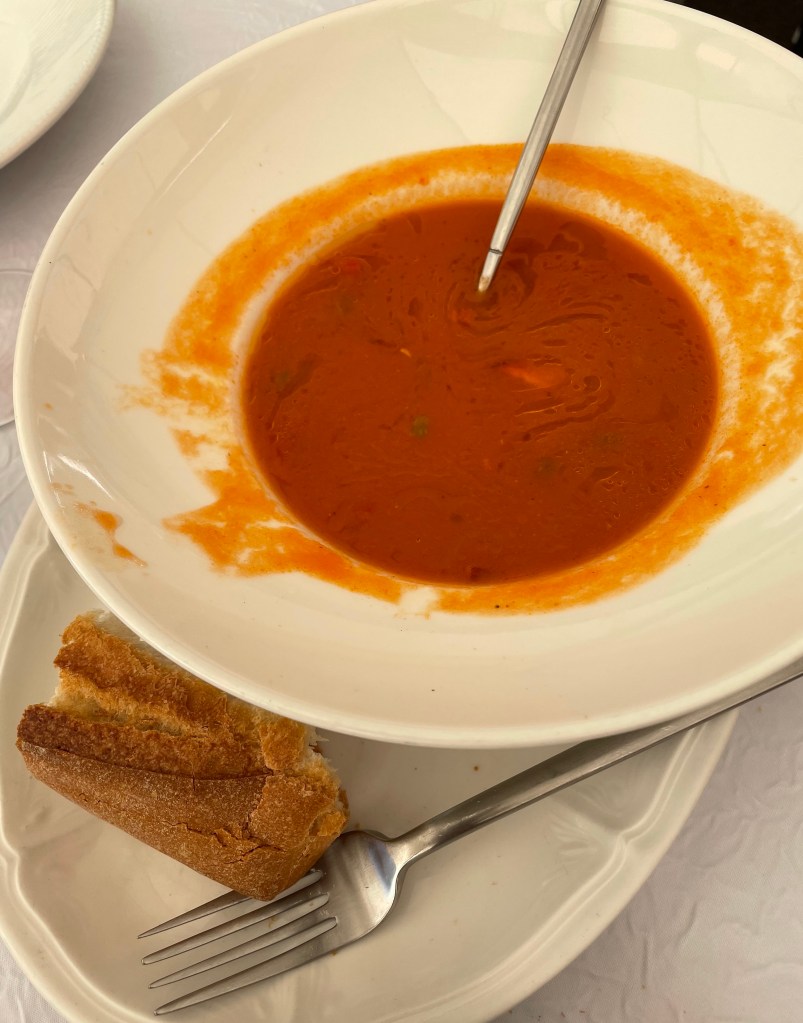
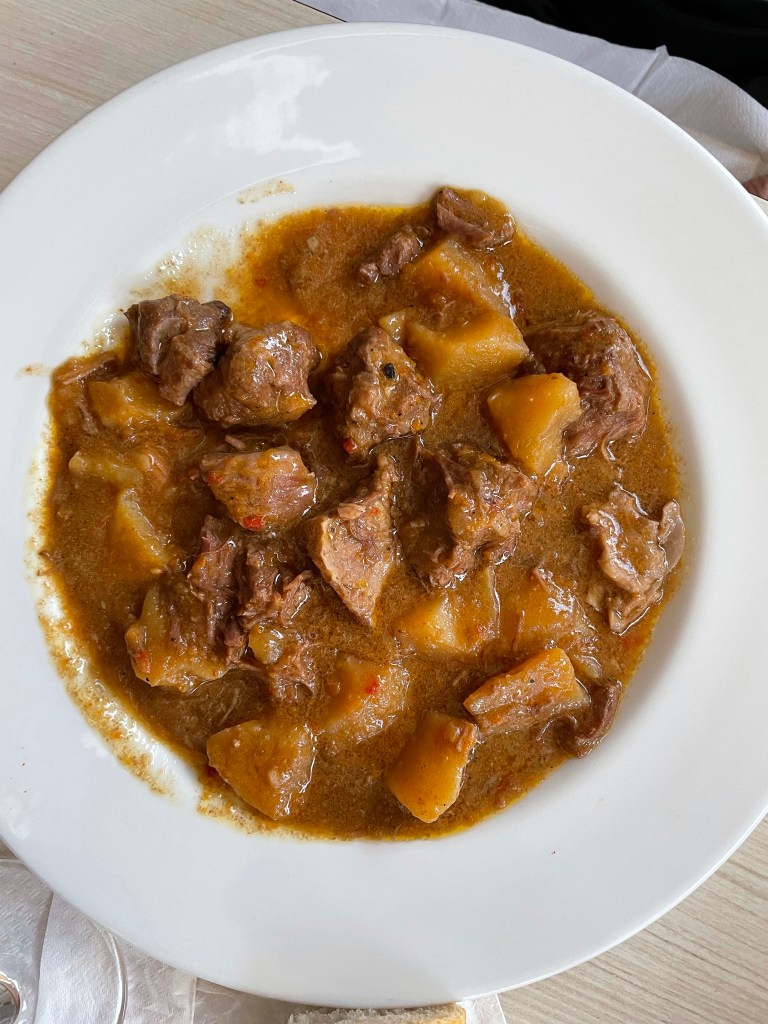
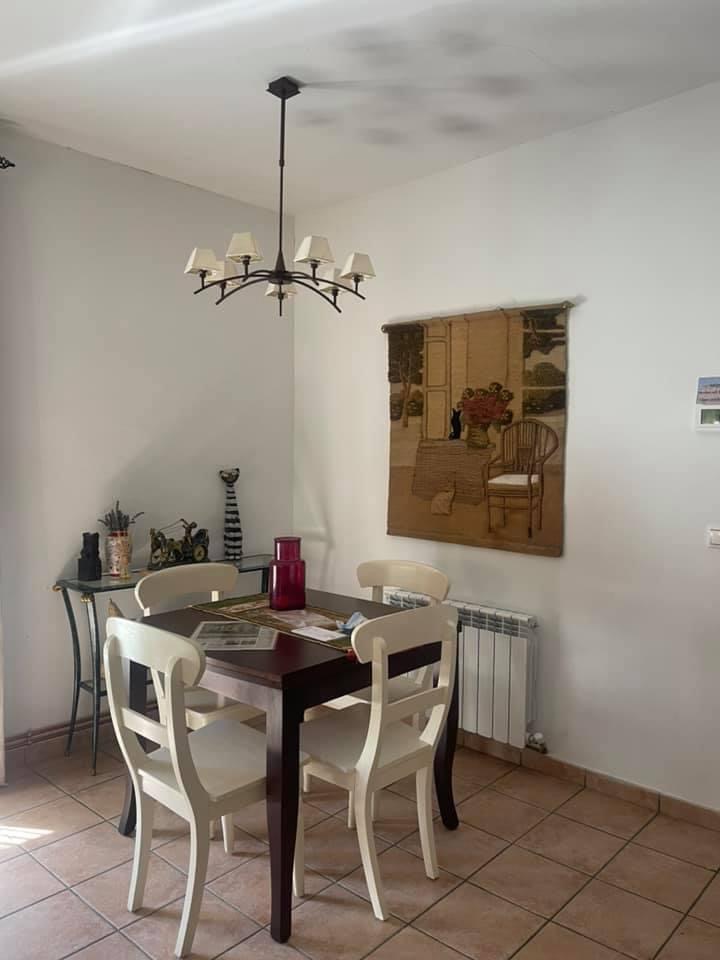
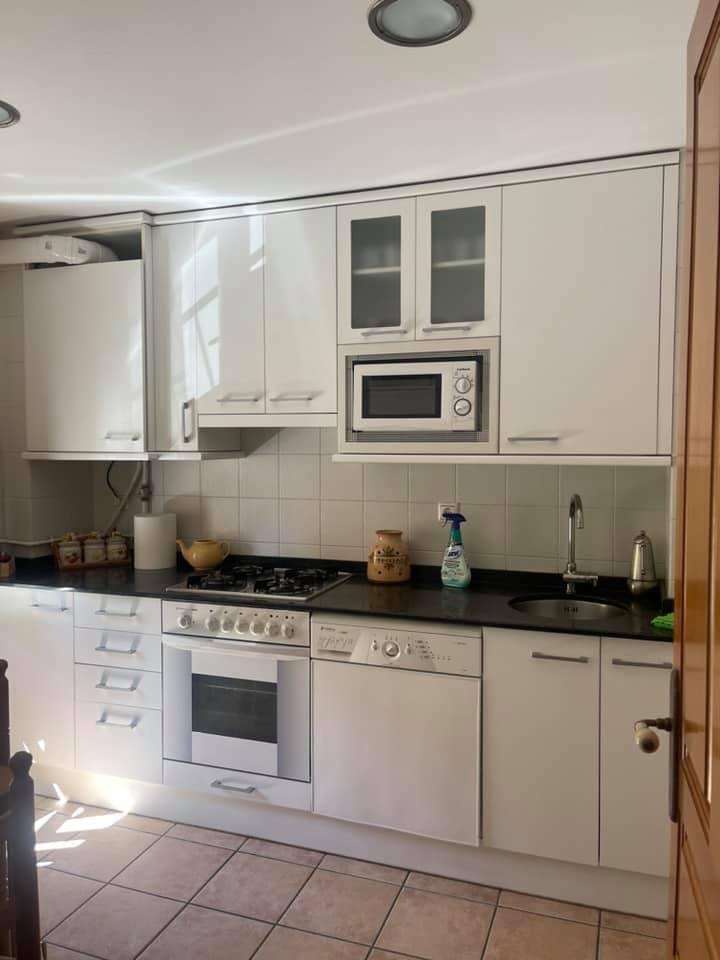
Tonight we are safe and cozy in an historic apartment we secured in Najera. Our 10 mile walk wasn’t difficult from Navarrete, and we arrived in Najera early enough, but were confronted by another logistical challenge. This was our first attempt at booking an apartment, whereas we typically book a hotel or hostel. Because this is a privately owned residential unit, there is no owner present 24/7. So, our luggage transfer company, Jacotrans, had trouble finding a place to drop off our luggage. Fortunately, one of the local albergues allowed them to leave the luggage for us, and I made arrangements for Jacotrans to pick it up there tomorrow and move it to the next location. Also, as today is Sunday, it seems that the market just below our flat closes at 2PM. We weren’t worried until we found that the restaurants were full with reservations for the day. We scrambled back to the market and stood in line for the succulent chickens roasting on spits, only to be told they were all spoken for! Luckily, an English speaking woman pointed out that we could buy a pre-cooked chicken in a different department. We managed to put together a pretty good meal anyway, as you can see:
Viana to Navarrete

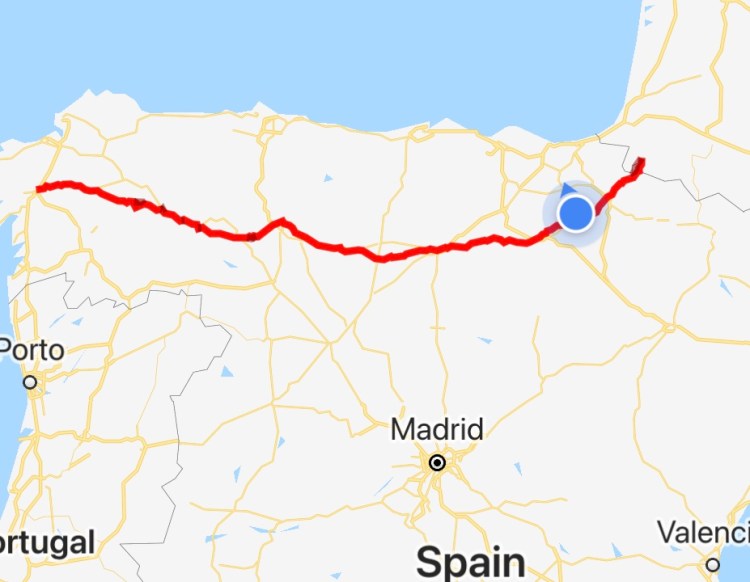
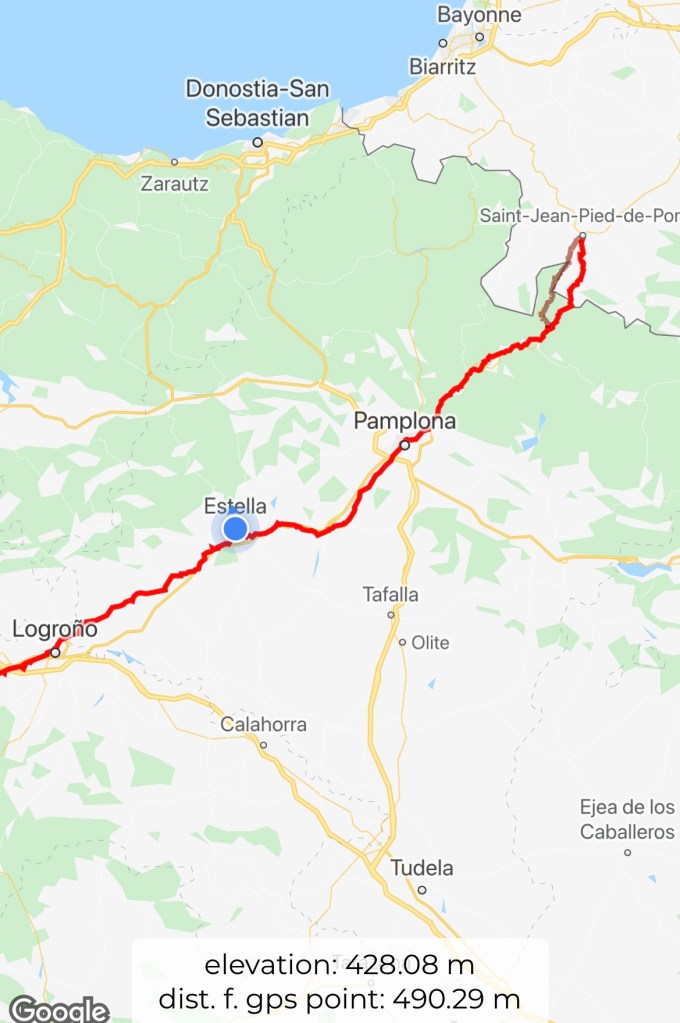
Below is a nice 3D map that was hanging up in our hotel in Navarette, which indicates some of the route we are taking this week. Our walk the last couple of days was not as hard, but we still had long days and were worn out after each one. As of today we have traveled on foot just over 100 miles! Only 400 to go! We wandered through wooded pathways and around a lake as we passed by Logrono, a large busy university city where we came back to for a day of rest.


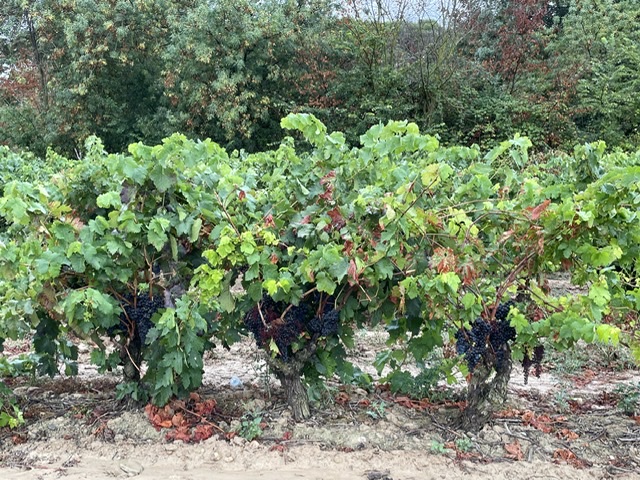
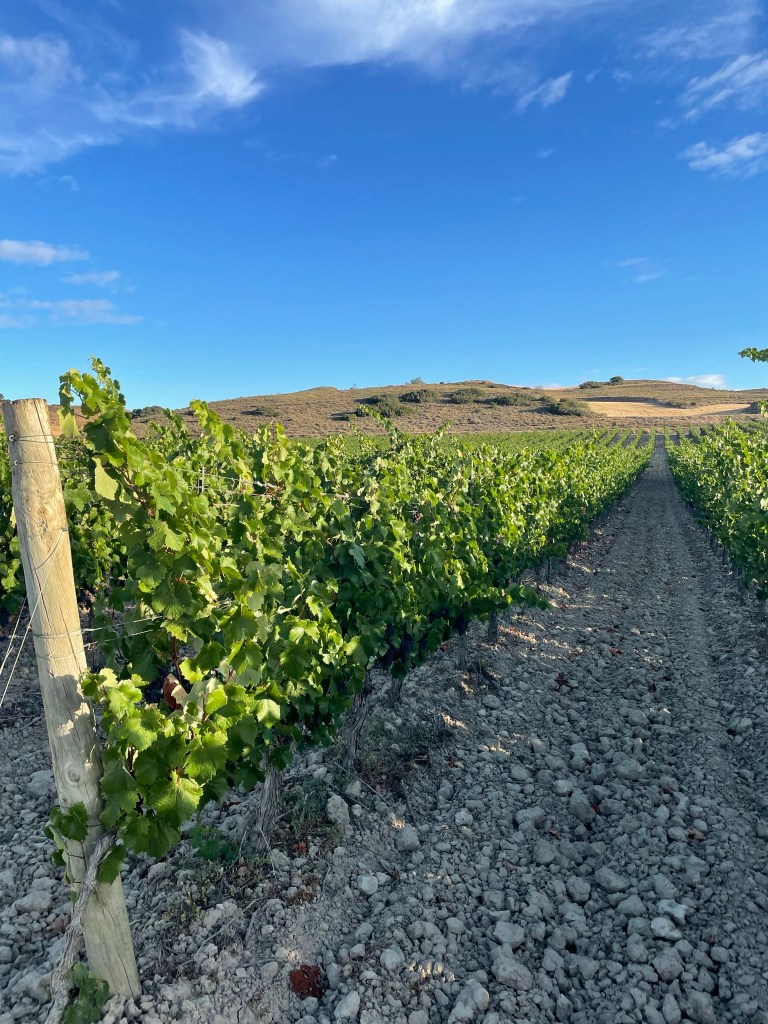
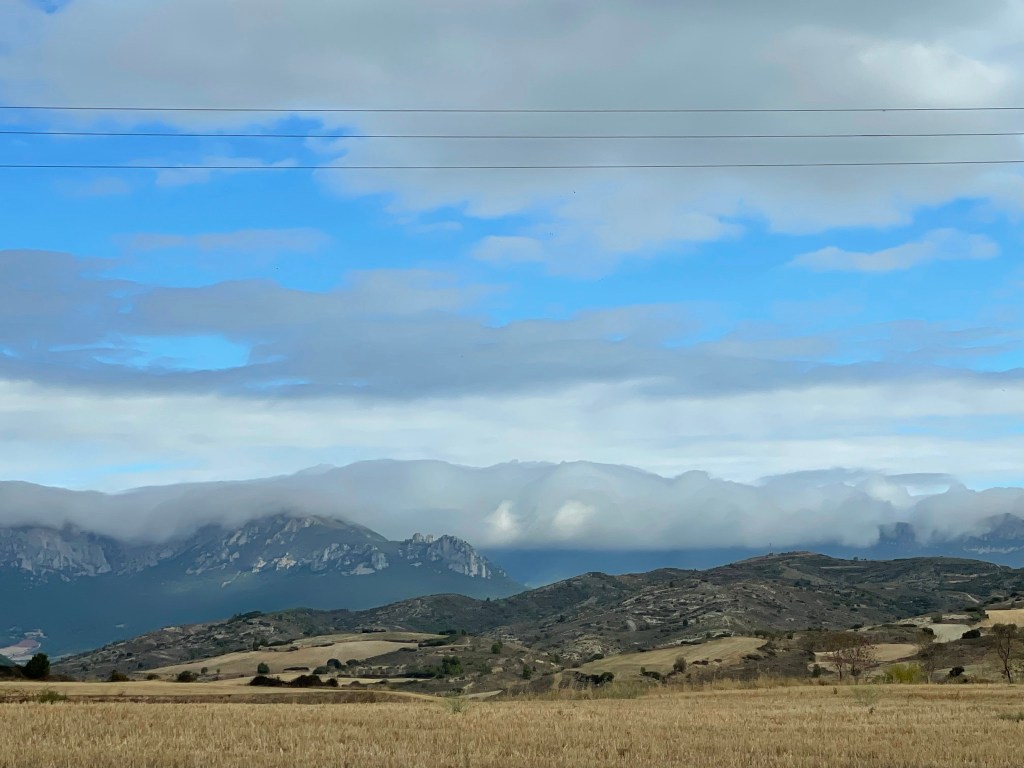
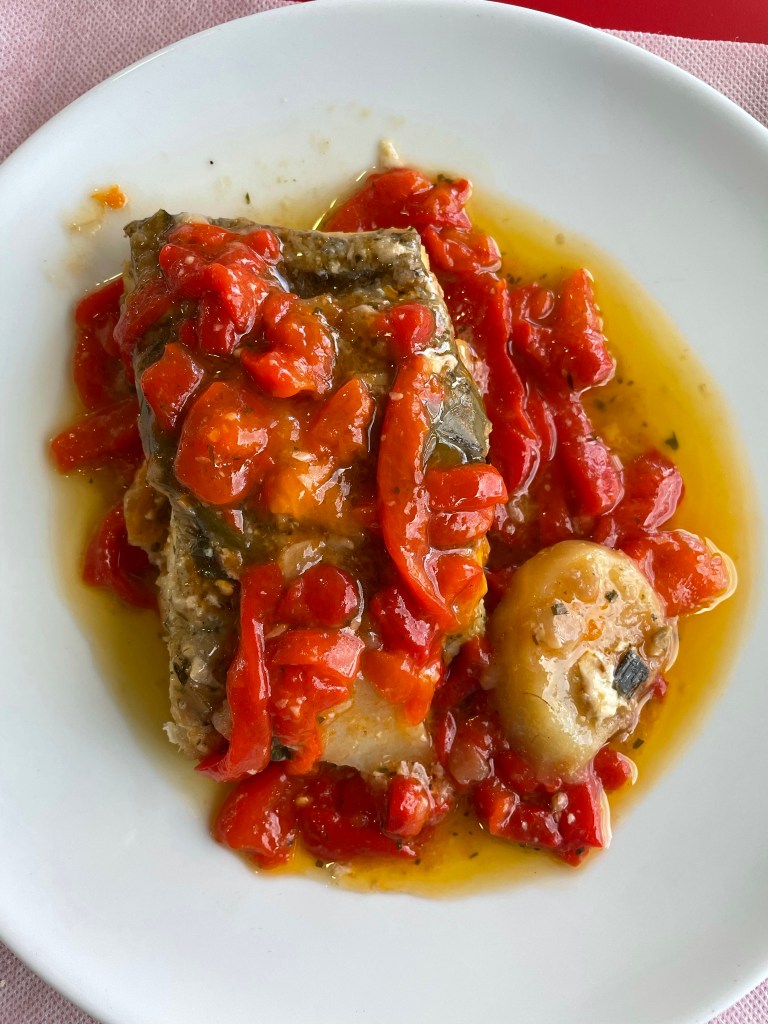
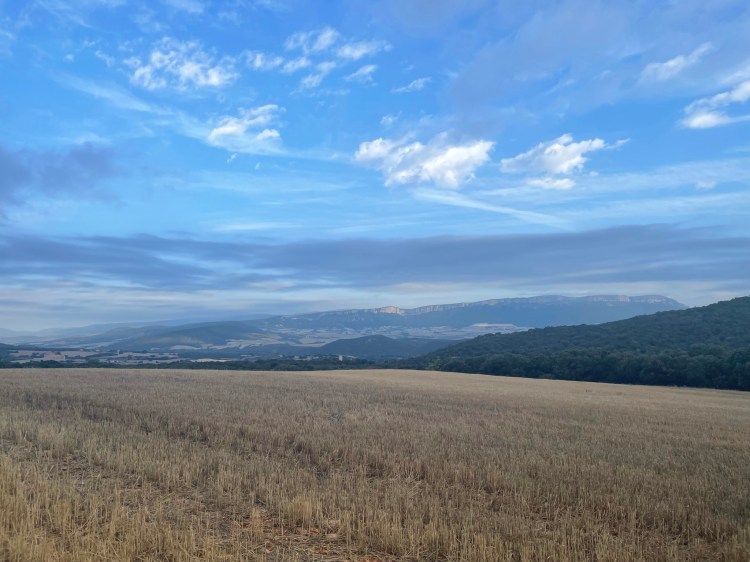
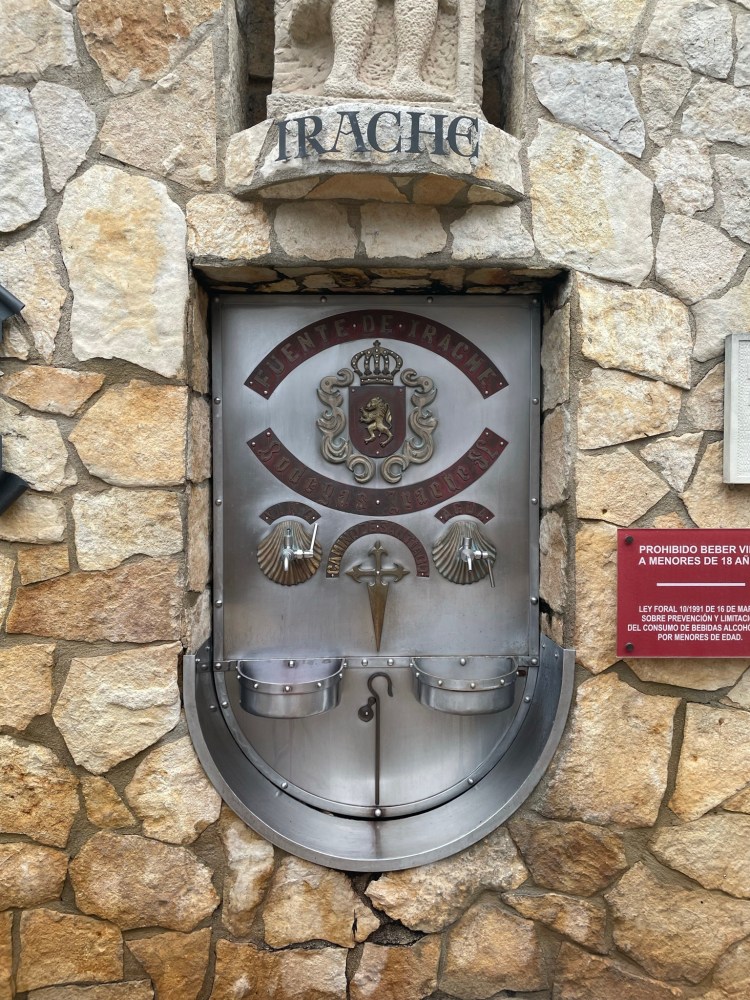
We passed through many more vineyards again this week, with lush purple clusters of ripe grapes drooping from their weight, as we entered into the Rioja Region, which makes some of the best wines in Spain. Along with great wines comes great food! It seems like we can find really good meals at even the smallest villages.


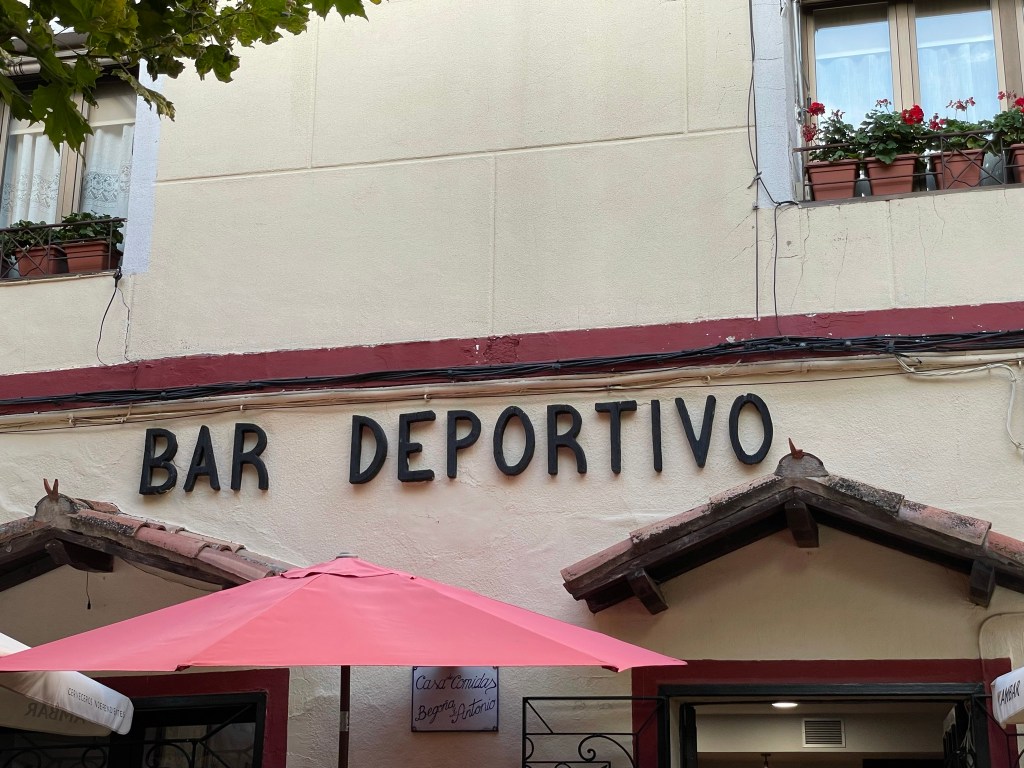
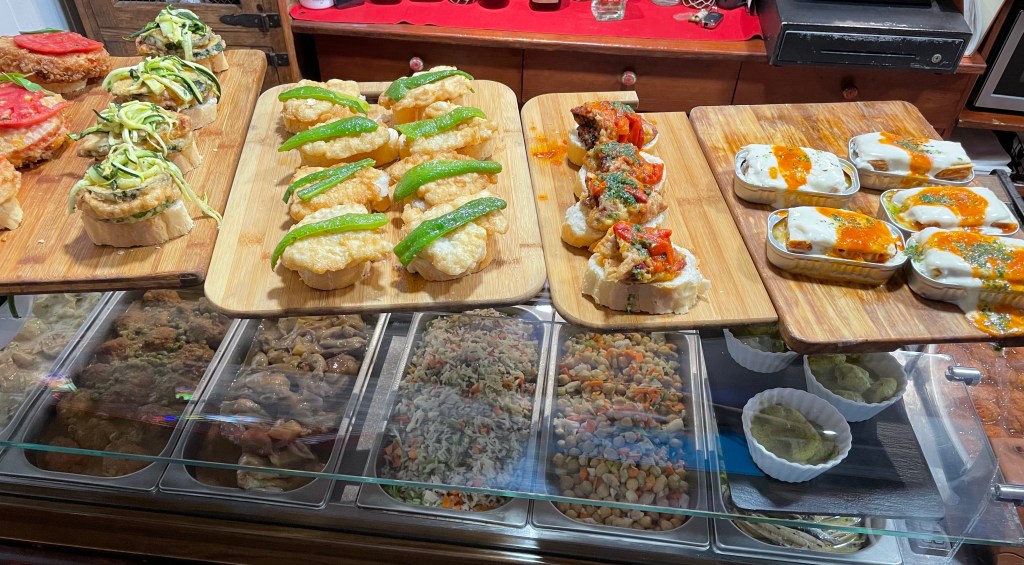
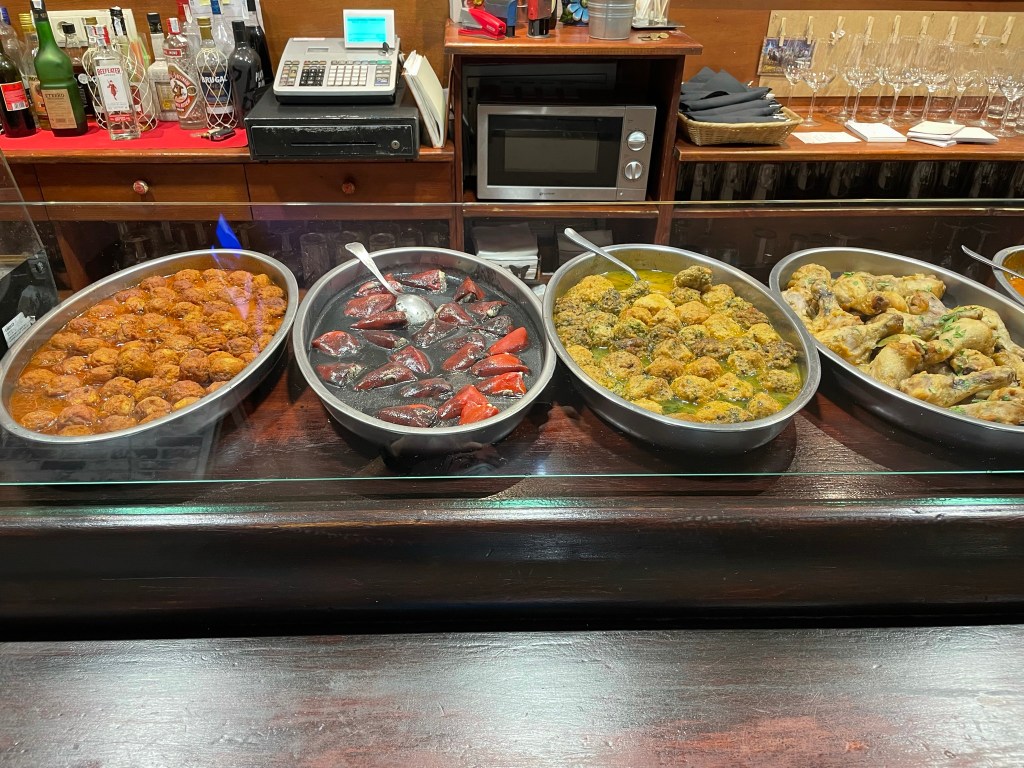
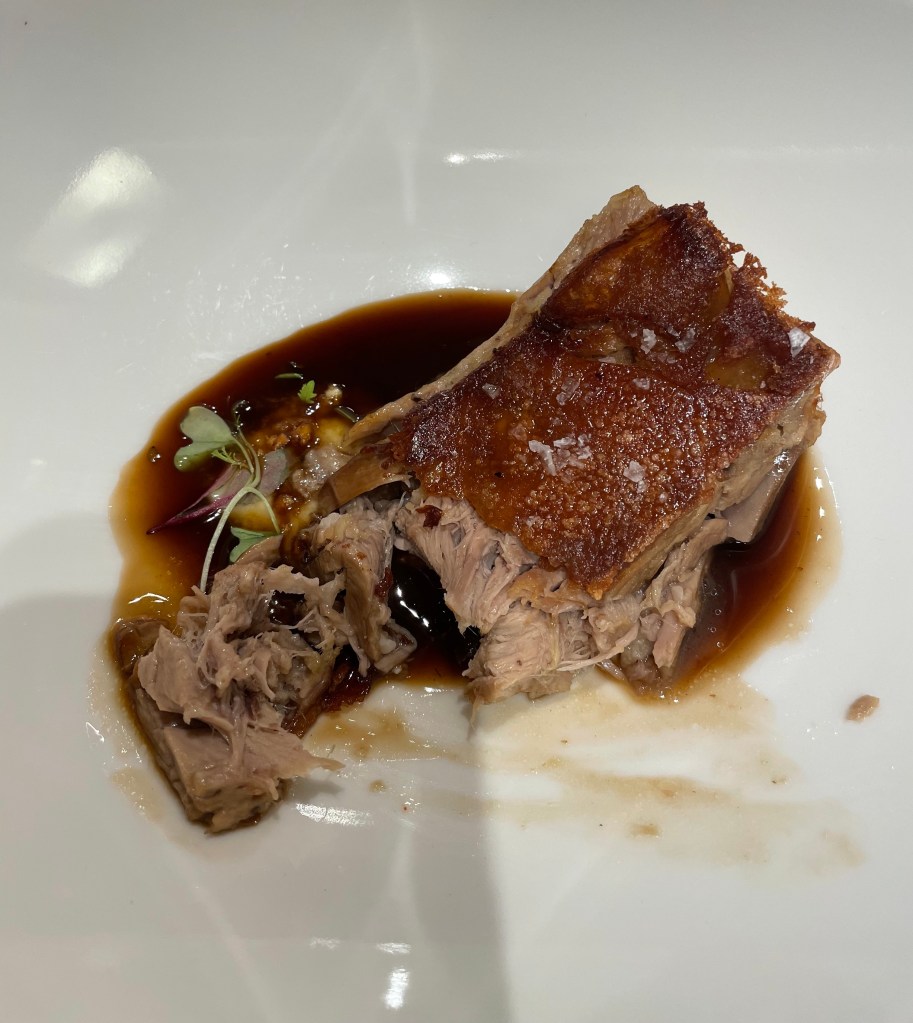
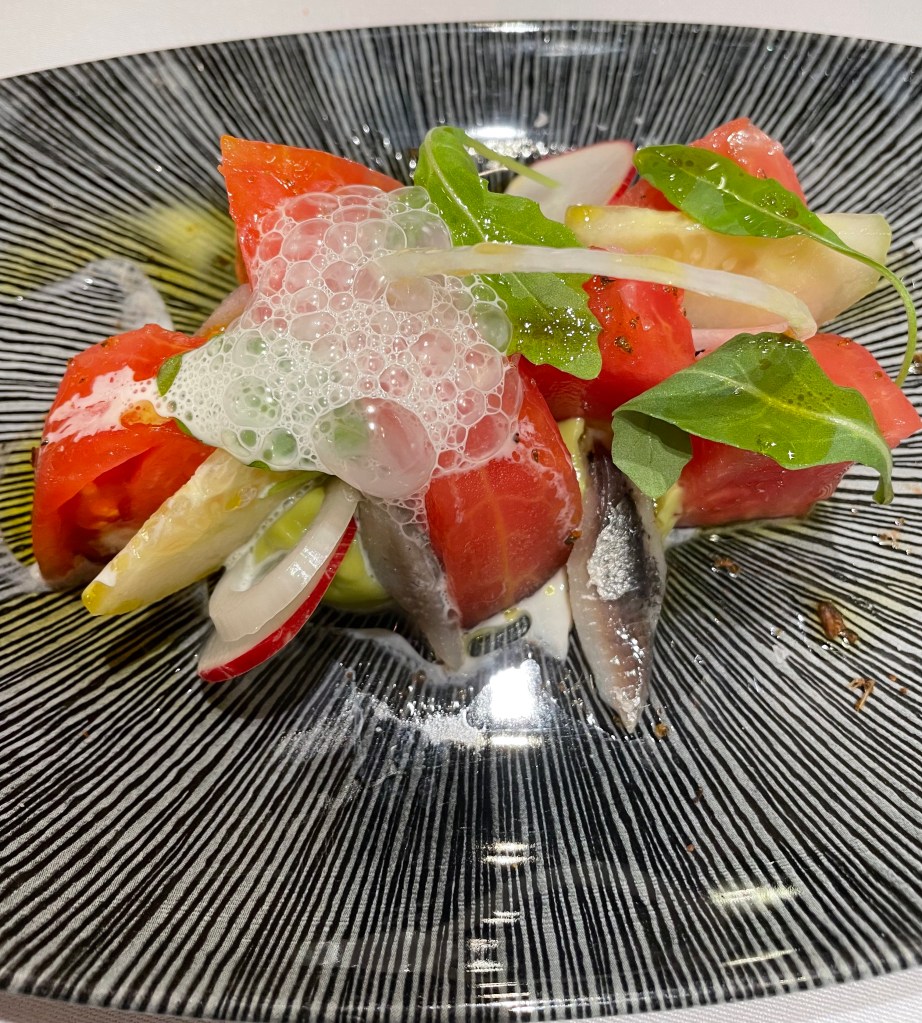
In Navarrete, we dined with some American friends we met on the Camino at Bar Deportivo (translates to Sports Bar), but the food was incredible. Many tapas we have encountered are usually comprised of toast and a tasting topping. Here they were a step above that. See for yourself:
I also want to add that our meals and wine are ridiculously inexpensive. We seldom are served a glass of wine that costs more than $3 per glass (typically 4-5 ounces) and the the quality is very good. We have frequently ordered the ”meal of the day”, which consists of an appetizer, entree and dessert (and sometimes includes a bottle of wine!) for about $15 per person. We love Spain!

From Los Arcos to Viana

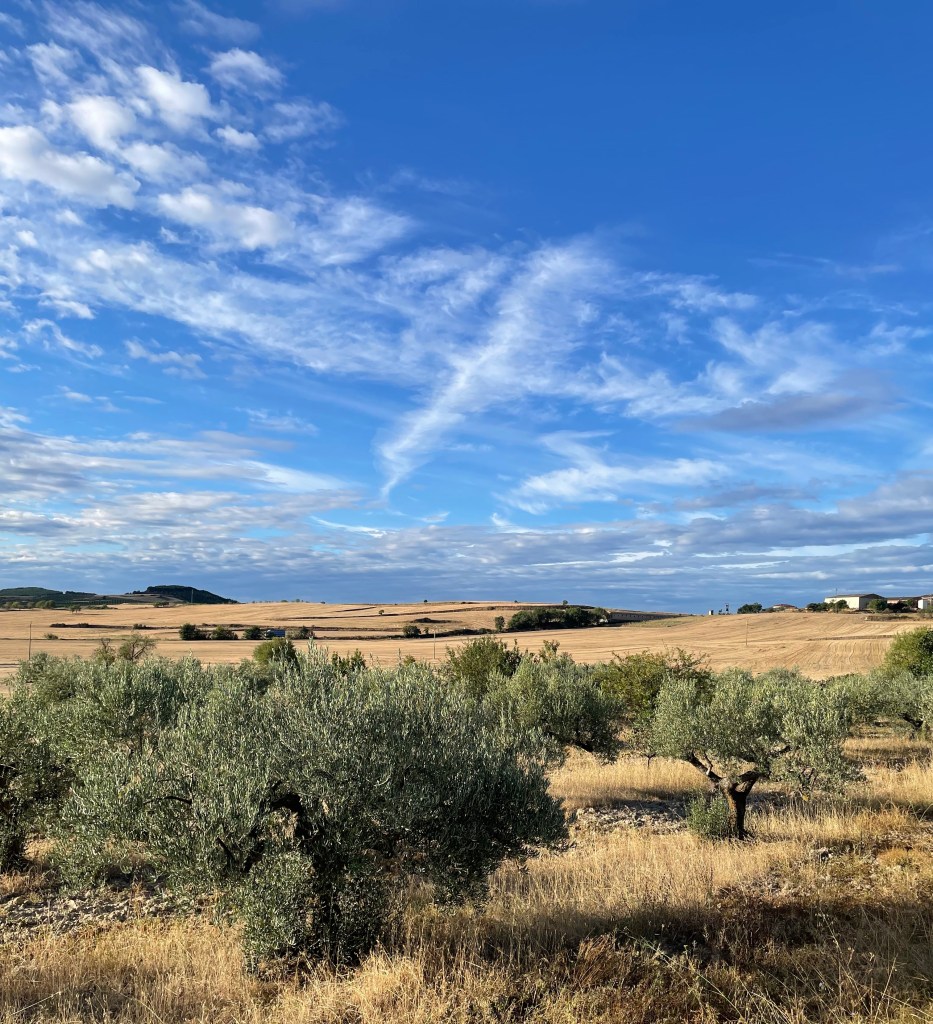
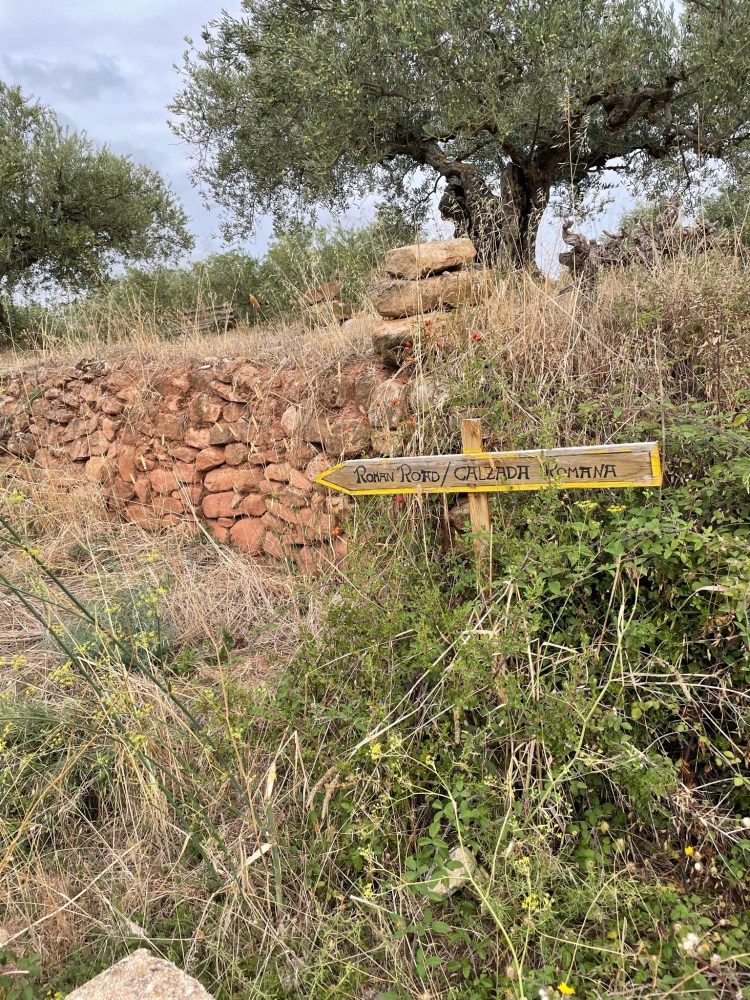
It was a beautiful day to walk today, meandering along country lanes with rows of grape vines on one side and rows of olive trees on the other. These two fruits of the earth have provided sustenance to many for centuries. It was a short walk of only 11 miles with not much elevation change.

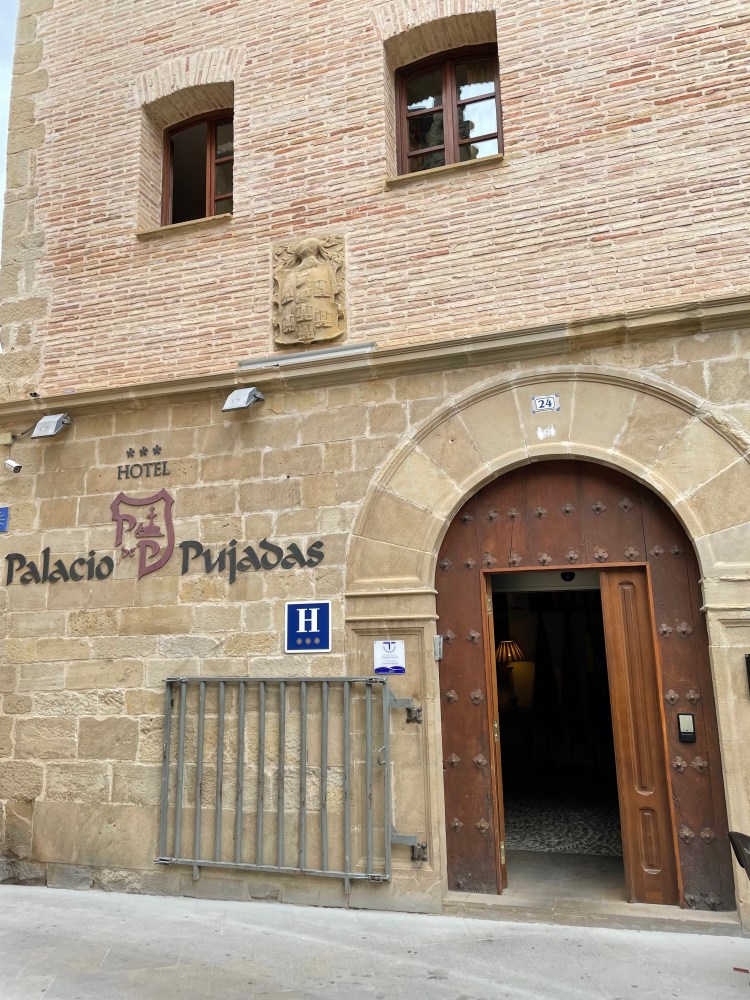
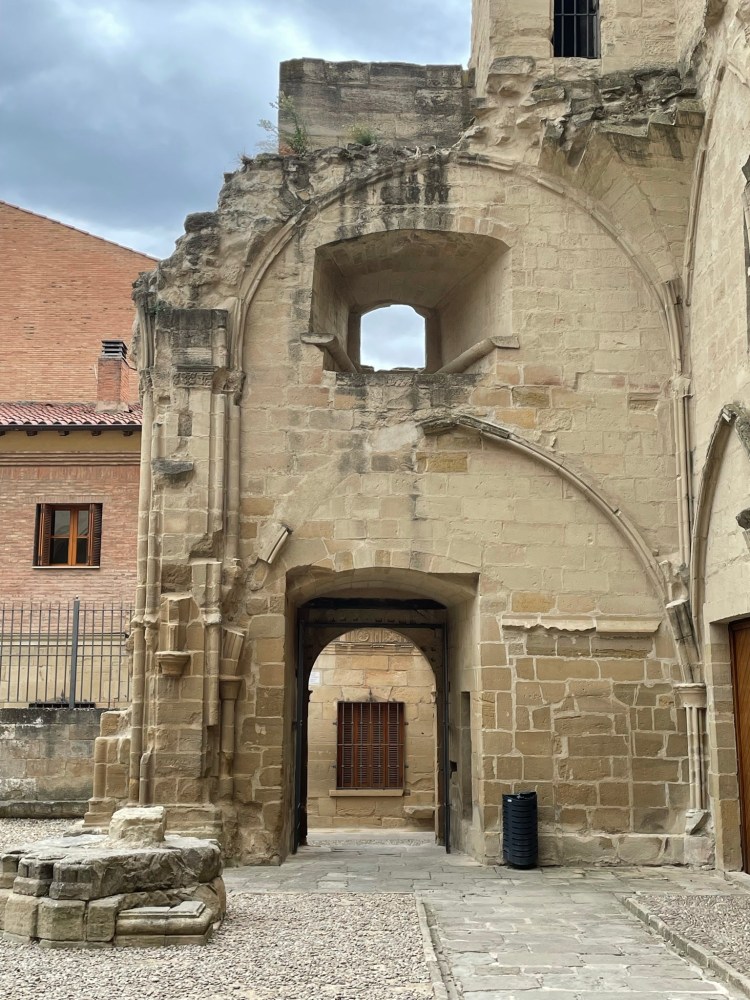
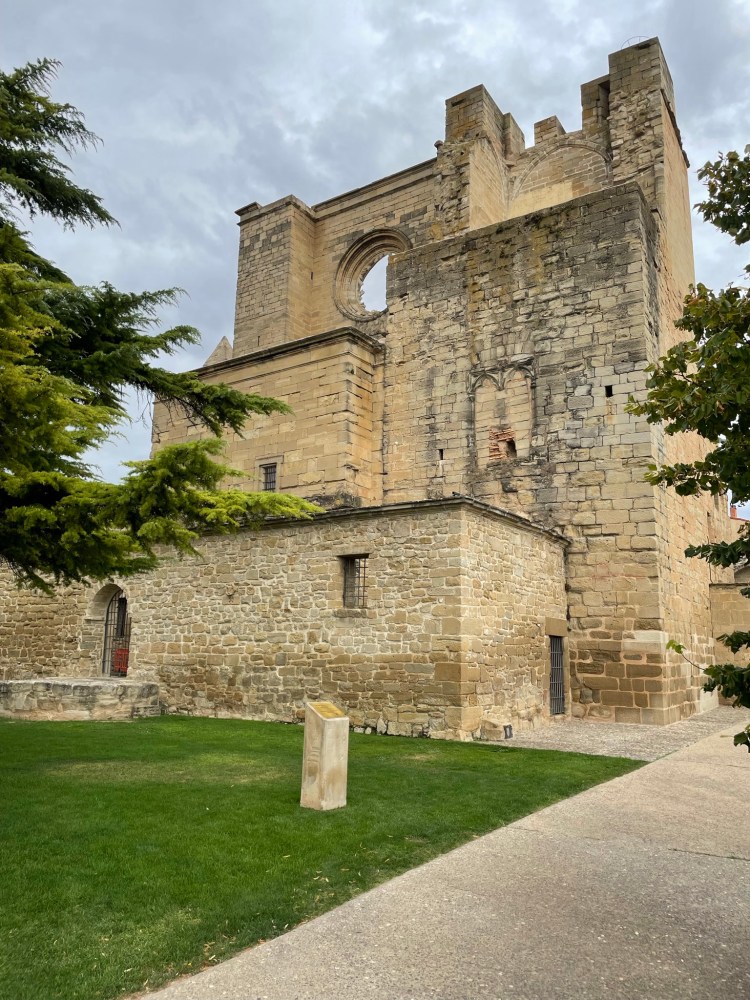
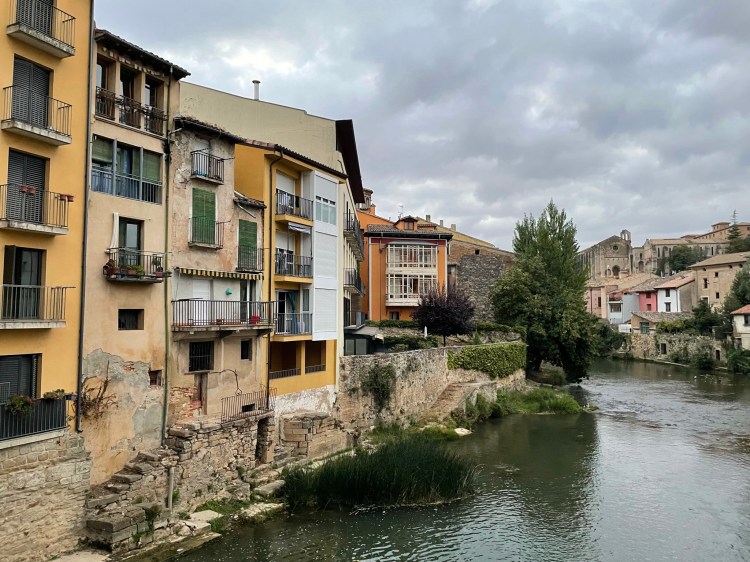
Viana is an ancient village that was especially active with pilgrims back in the 15th century. narrow streets are still vibrant and lively today. We stayed at a restored palace, aptly named the Palacio de Pajudas, across from the ruins of the massive San Pedro church.

When booking our hotel for Los Arcos yesterday I failed to note its exact location. Usually I would book the lodging close to the Camino Trail, which is usually in the historic part of a city. In this case, our hotel happened to be more than a mile away from he city. When we arrived in Los Arcos we had to walk out of the city to the hotel on a busy road with no shoulder, with traffic buzzing by. I hope to not make that mistake again!  However, the hotel was nice and had a restaurant attached. On the next day we taxied from here to the town center instead of trying to walk it. 

We’ve noticed that some pilgrims have a loose idea of how to walk the Camino. Some will taxi from one town to another if they are tired or injured.  Lots of the walkers have developed bad blisters on their feet or heels, or have some pain in their ankles, knees or hips. We talked to a few others who are only walking certain segments at a time, and plan to return. Everyone does the Camino in their own way.

From Puente La Reina to Estella to Los Arcos

Here is a day in the life of someone traveling on the Camino:
Get up at 6AM, pack up our gear in backpacks. Take luggage for transfer to the staging area. Check out of our hotel, if we haven’t checked out the night before. Head out of the hotel by 7AM and hope to find coffee con leche and something to eat before we start walking. Walk 5 to 7 hours stopping once or twice for drinks, snacks or lunch. We usually get to our next hotel about 2PM. Most hotels here are ready to accept pilgrims at this time. We retrieve our transferred luggage, head to our room, shower quickly and then try to get lunch and try to do some laundry. We try to book future lodging three or four at a time in advance. We also book our luggage transfer at the same time. Its difficult to book either service too far in advance because we are never sure how far we can walk or if we will need to change plans. Then we either get a late snack with wine or go to a late dinner. And then do it all again the next day.

As far as meals go in Spain, we are always confused. It’s typical here that lunch is served from 1PM to 3:30PM and dinner usually starts about 7:30PM to 9PM, depending on the city. Or, some restaurants will serve tapas and drinks between 4PM and 7PM That’s just crazy for us midwesterners! We haven’t found what our routine is yet, but we will.

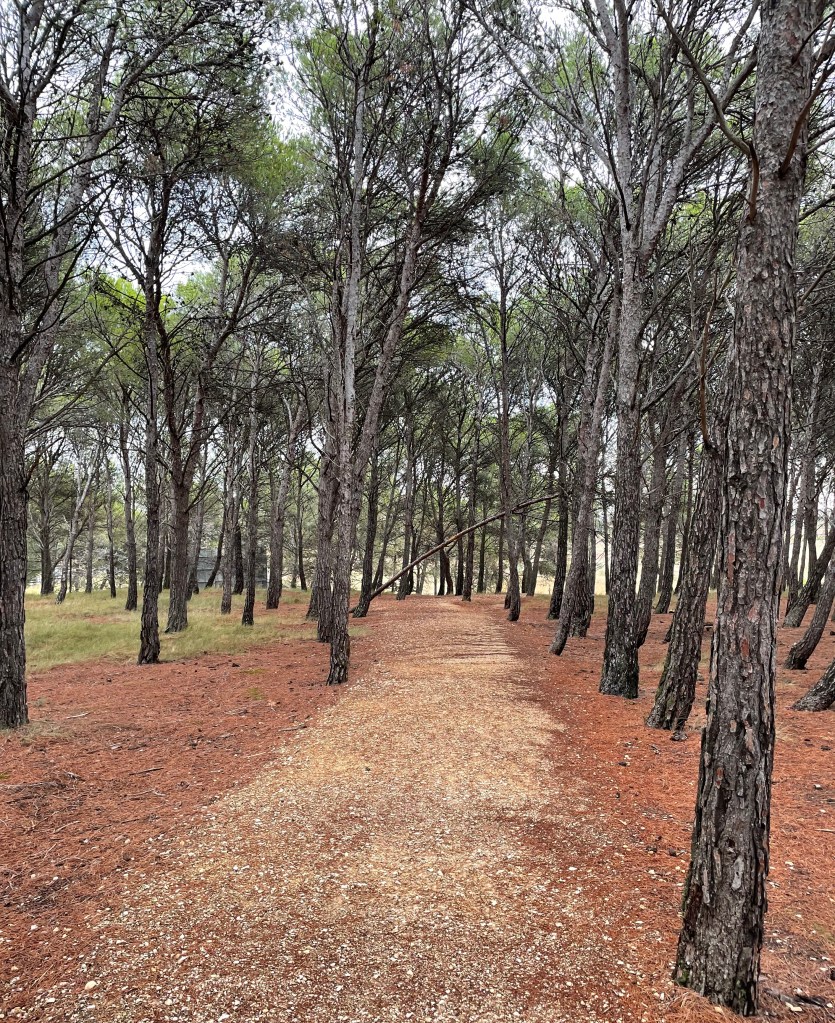
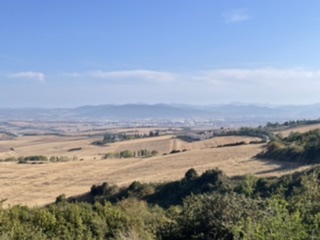
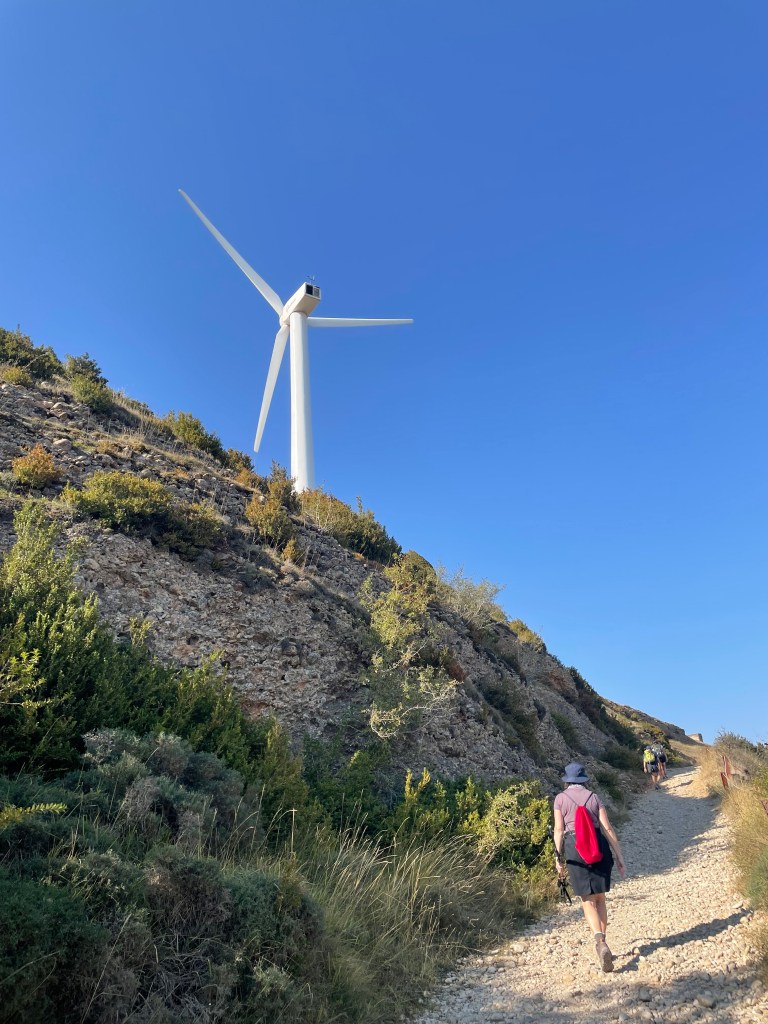
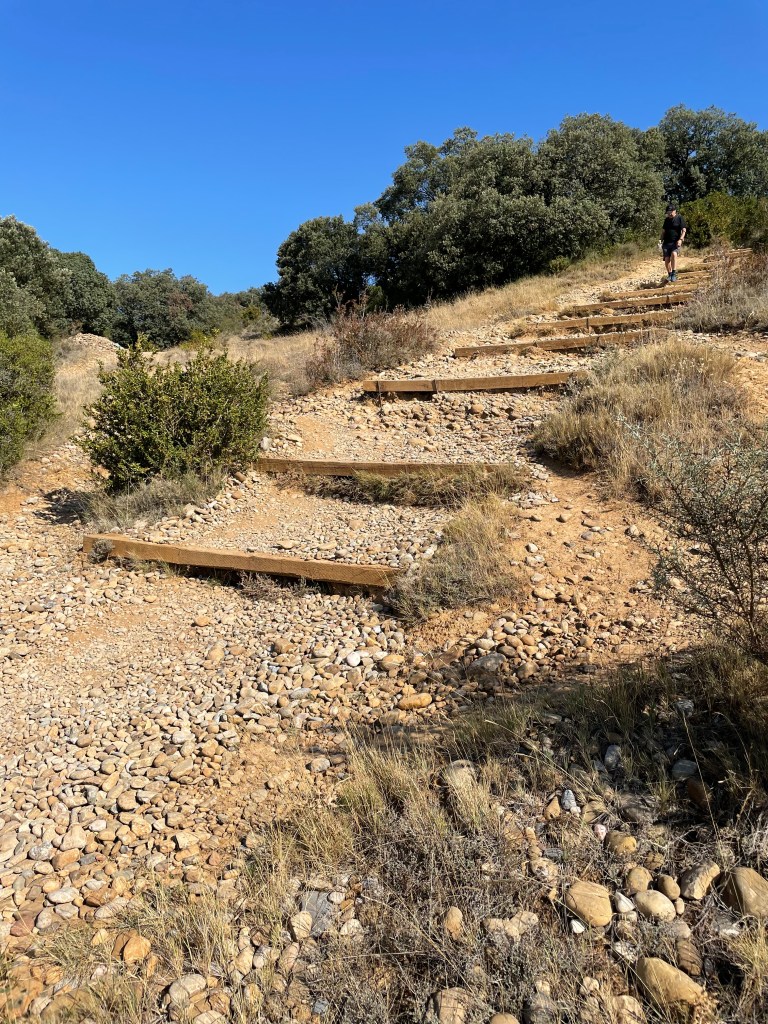
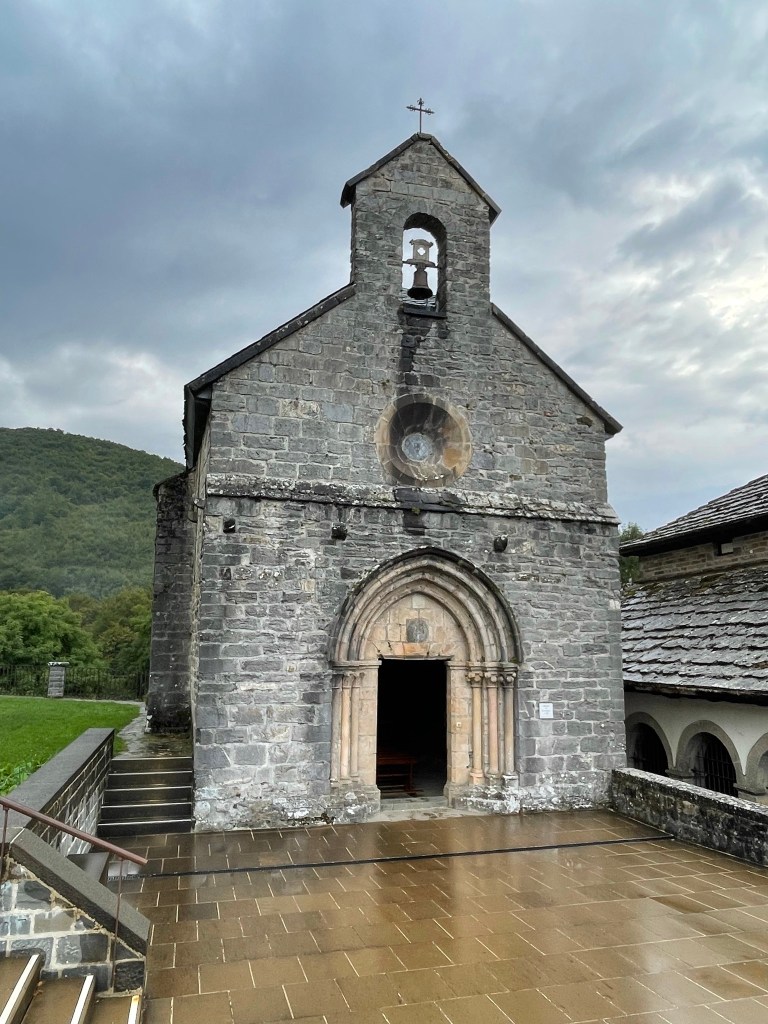
Below are several photos we took on our way through these areas. it’s difficult to post regularly because we’ve had numerous challenges with internet quality, my blog platform (WordPress), and even our apple devices.

From Pamplona to Puente La Reina

We enjoyed Pamplona and were able to get an early start on this next 14 mile trek to Puente La Reina. 

When we planned this trip, we wanted to slow down our travel so that we could savor every moment and not rush though it all.  It’s not easy. We sometimes feel that we have to push ourselves to get from one point to another and not really live the moment. But it’s getting better all the time. Today, after leaving Pamplona we had a long slog uphill towards rows of windmills we could see high on a ridge. The peak, Alto del Perdon, reaches 790 meters, or about 2500 feet. It was a daunting journey. But after the slow ascent, and we arrived at the top, we were greeted by the artistic wrought iron representations of medieval  travelers that we’d seen so many times in photos (see below).  There were also amazing views of both sides of the crest, from Pamplona, across the vast plain in the east, to the small villages spread across the landscape to the west. Here, other pilgrims gathered too, to pause and catch their breath, and take in the views. 

Looking back to Pamplona

Day 2 in Pamplona

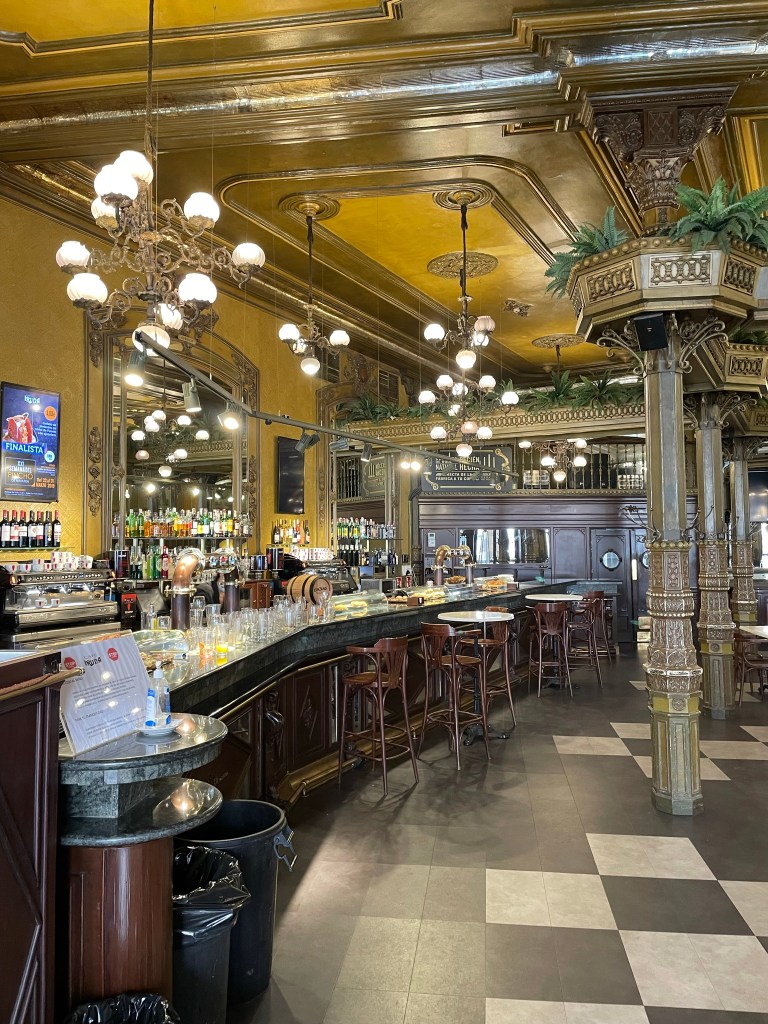
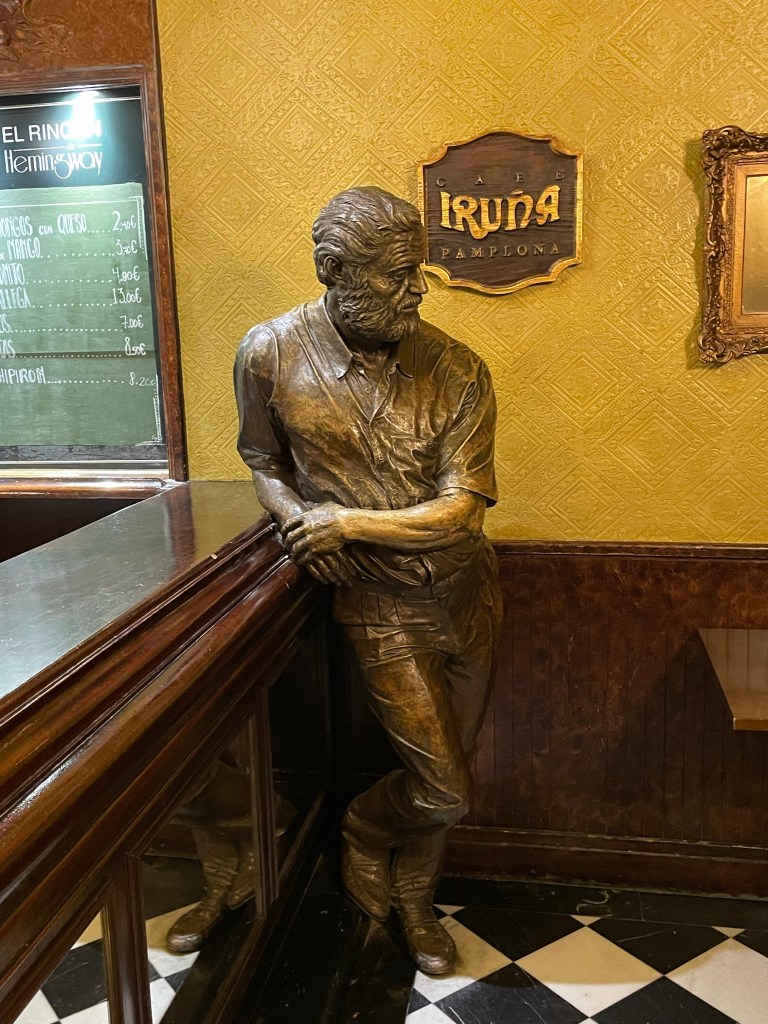
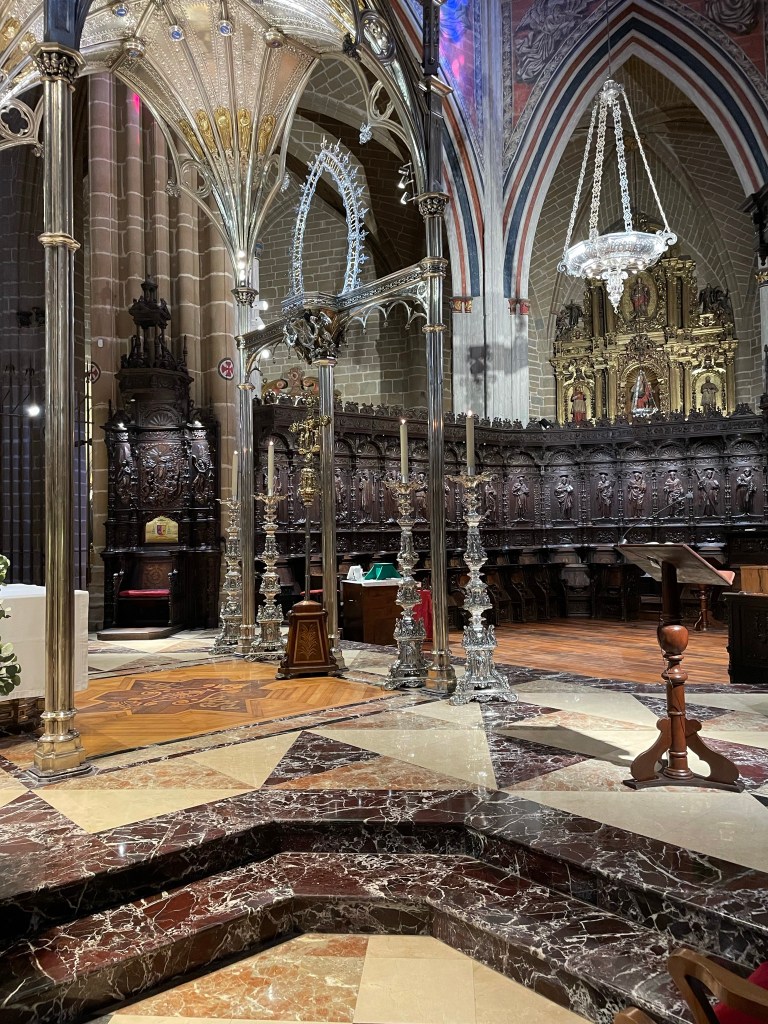
It’s Sunday here today and the streets are much quieter than yesterday with the huge crowds partying all day and into the late evening. We’re staying at the very comfortable and modern Hotel Ciudadela, which is in the old part of town and close to all the major historic sites like the Plaza del Castillo, the bull ring and the Pamplona Cathedral. The Plaza del Castillo is home to the beautiful art deco Cafe Iruna, where supposedly Hemingway frequented and wrote “The Sun Also Rises”. There are many statues, restaurants and stores here that are dedicated to his name. He was an avid bull fight fan and spent much of his time here attending the fights, drinking with his friends and writing. Some say that it was Hemingway who brought fame and attention to Pamplona and made bullfighting and running with the bulls popular worldwide. We wandered down Calle Estafeta, where on the feast of St. Fermin, the bulls run from the town hall to the bull fight arena, and we were happy that the crazy festival was back in July and not now!

Pamplona

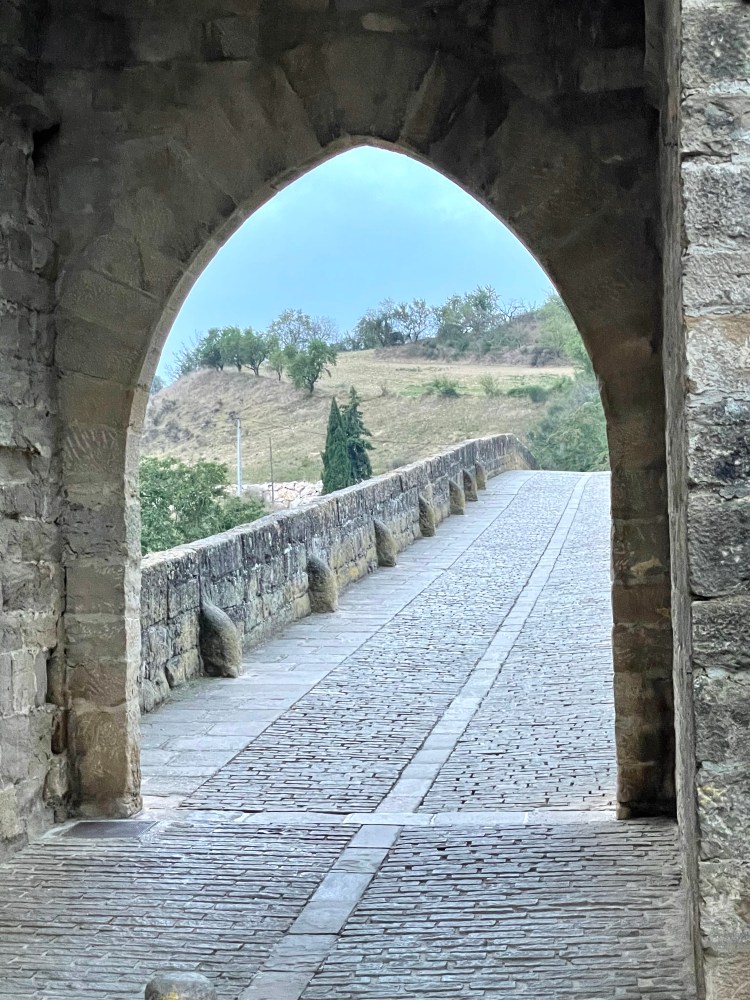
To exit the beautiful village of Larrasoana we had the pleasure of walking over the ancient stone bridge.

The Camino trail wanders along with the Rio Argo on its way to Pamplona. The path through woodlands and fields that crosses the river at a couple of points and the swift current combine to make a serene journey, even though you never get far from the highway nearby. Arriving in Pamplona is a rude awakening after spending several days in the tranquility of the mountains and forests of the Pyrenees. But every place has its advantages and disadvantages. In Pamplona there are innumerable options for great dining, seeing historic sites and people watching. We arrived on a Friday and there was a huge crowd in town for a local equine event. The streets were packed with revelers despite all the COVID restrictions in place.

Approach to Pamplona

We’ll spend an additional day and night here in Pamplona, taking in the sites and resting up for the next leg of our trip.

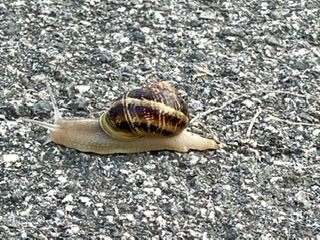
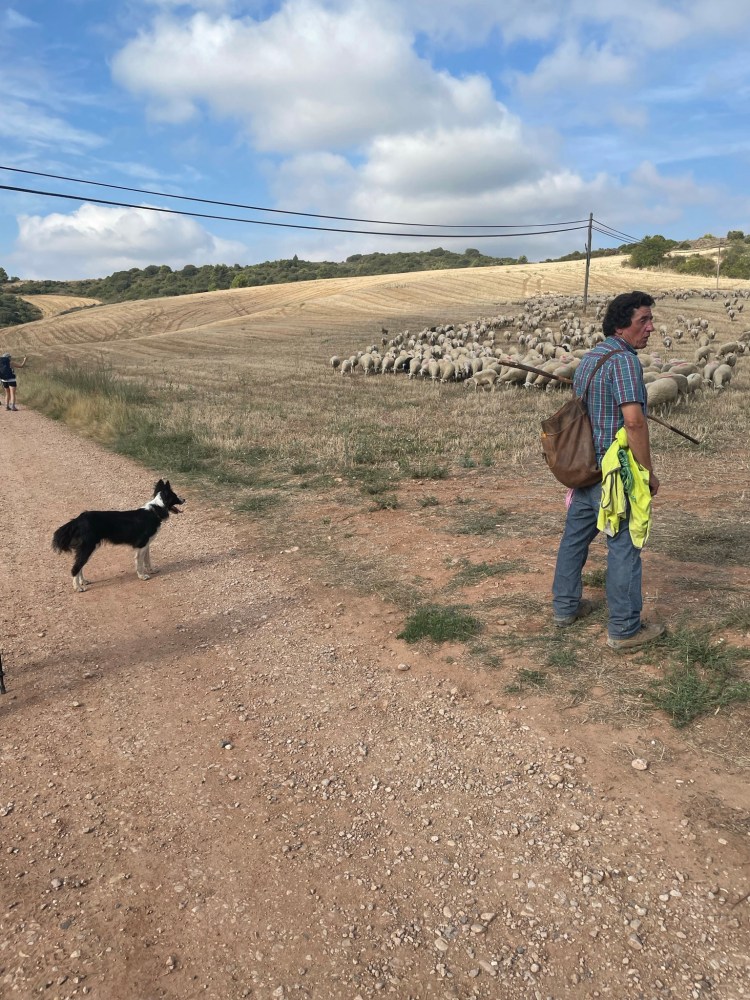
Funny, but after our four days of traveling through the mountains and woodlands we saw almost no wildlife, only a few birds and lizards. But one thing we crossed many times were the giant snails common to this area. They are striking in their size and various colors. Here are a couple of examples:

From Roncevalles to Larrasoana

We hated to leave Roncevalles because the hotel was so nice and cozy. It was once a monastery and now converted to rooms to accommodate pilgrims and tourists.

Here we are, happy to get going again. We had no idea what was up ahead!

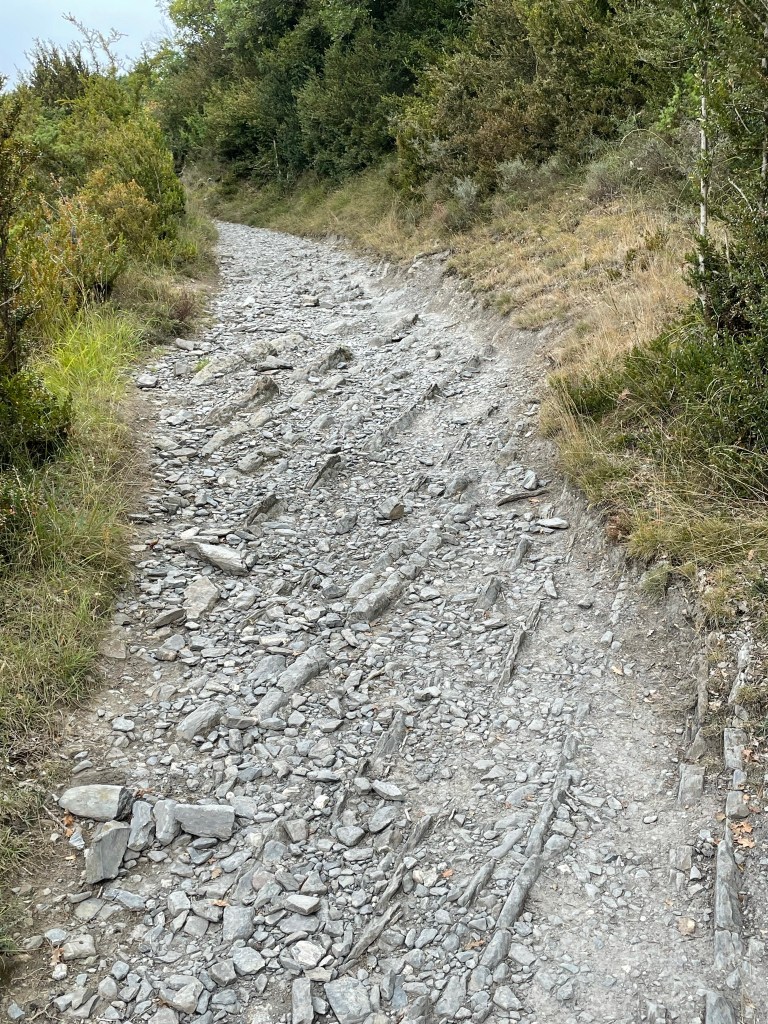
We knew we needed to go 17 miles to get to Larrasoana, but we had no idea how difficult the terrain would be. Lots of ups and downs and rough pathways.
We’ve read that the Camino gave one time to contemplate life, where you’ve come from over all the years, who you have become, and how you want to direct your days and years ahead. But the only things I’ve been thinking about on the trail are how sore my calves are. Will that sore spot on my toe develop into a nasty blister (it did)? Why is there so much walking!? Will my racing heart explode on these steep up hills?

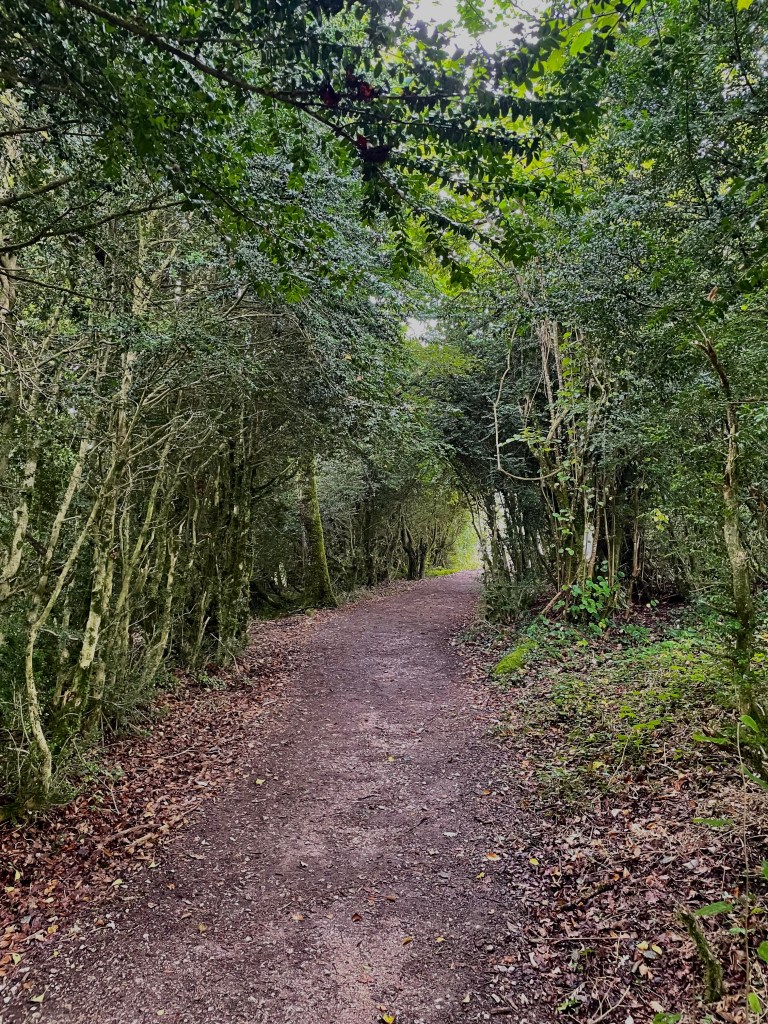
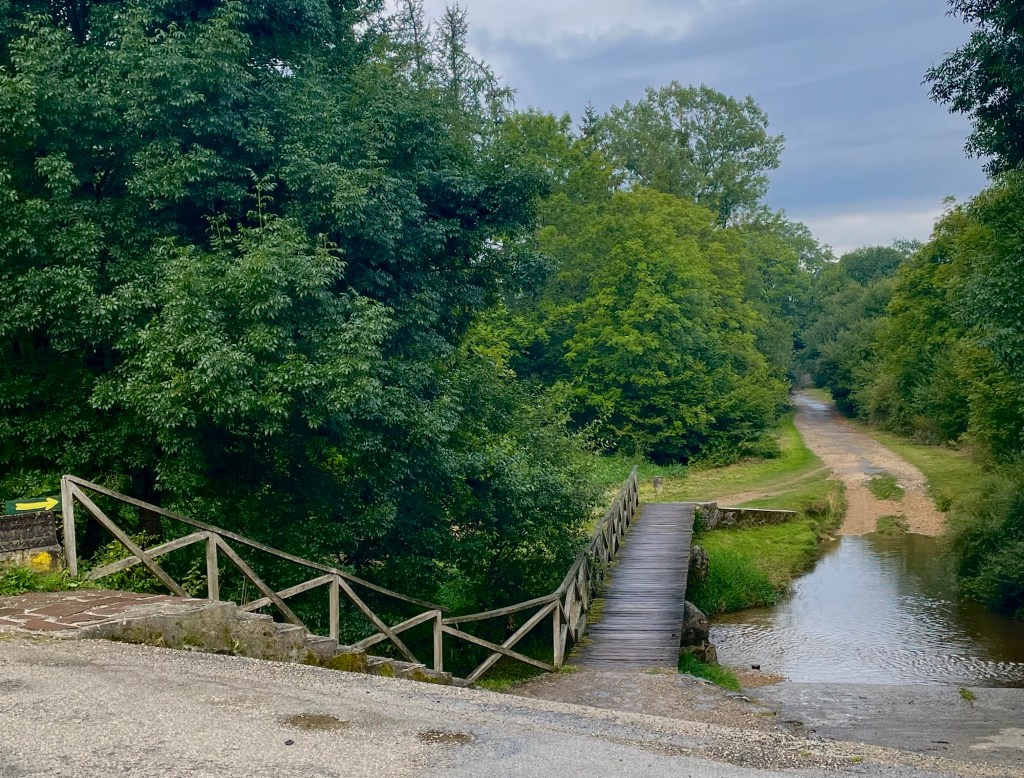
Of course, there was so much beauty along the way. Some of the rocky roads were very hard, but we also wandered across wooden bridges over calm waters and through pine forests that left their scent on you as you passed.
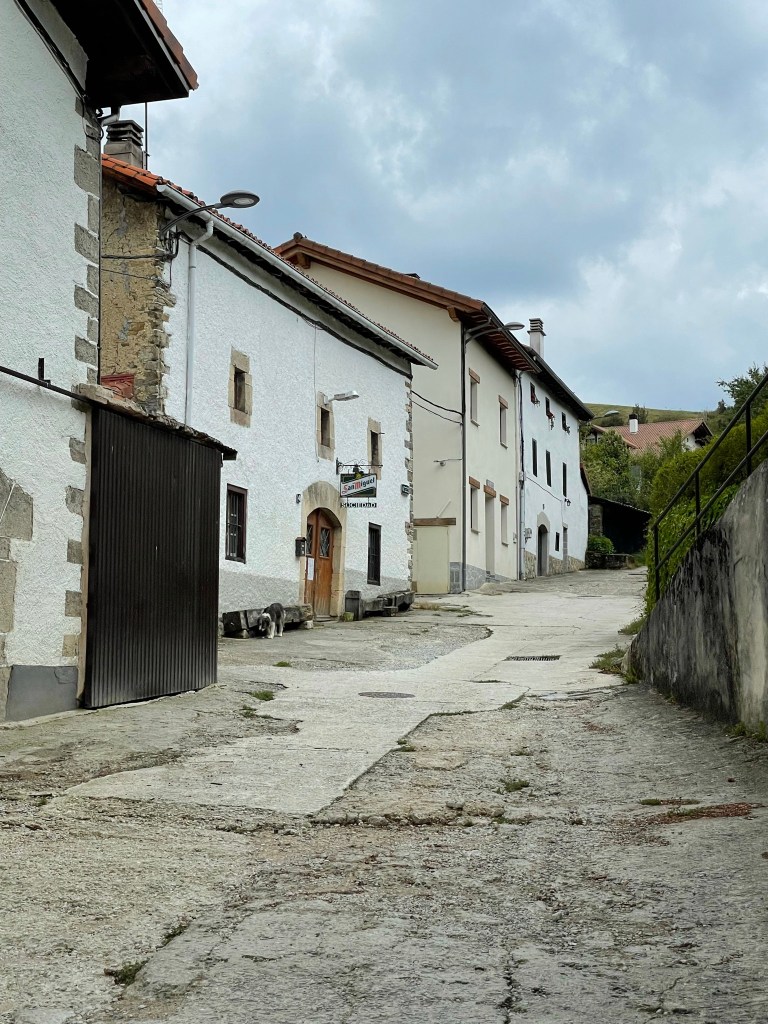
By the time we reached Larrasoana we were ready for a shower and a good dinner. Our host at Pension Peregrinos, in this tiny village (most pilgrims choose to stay at the larger city, Zubiri, which is a couple miles back) says there is a Michelin starred restaurant here. However, being humble pilgrims, we ate a local restaurant and were not disappointed by the quality of the meal and the very reasonable rate.

On to Orisson and Roncevalles

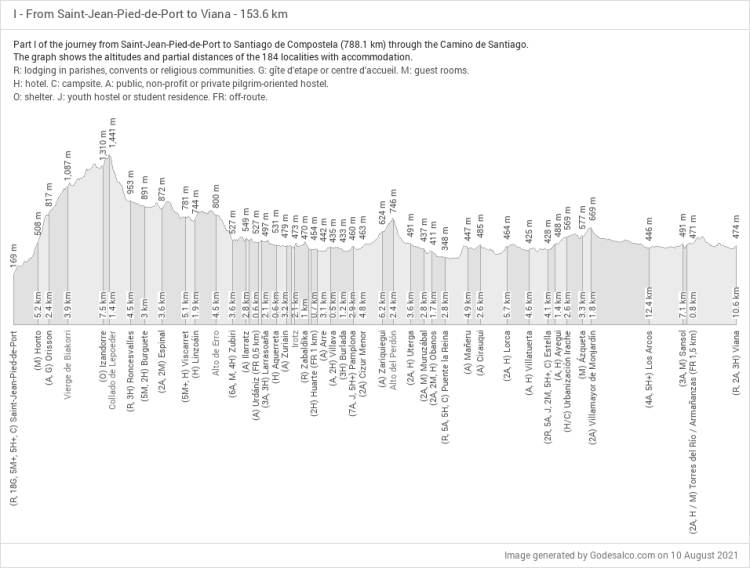
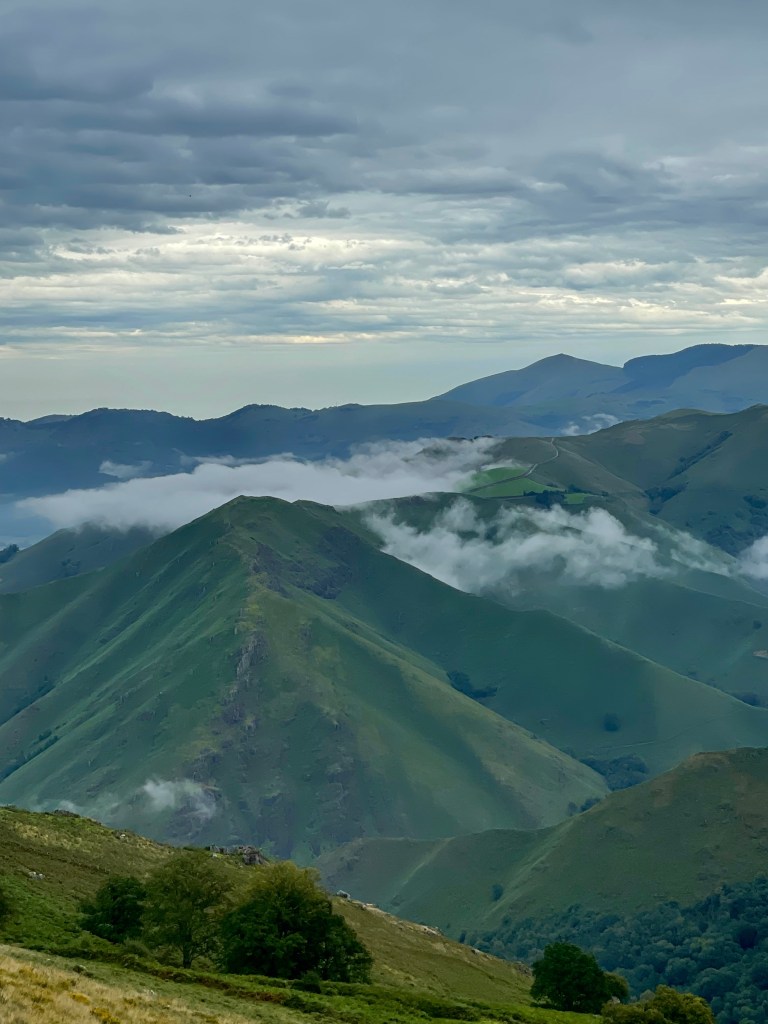
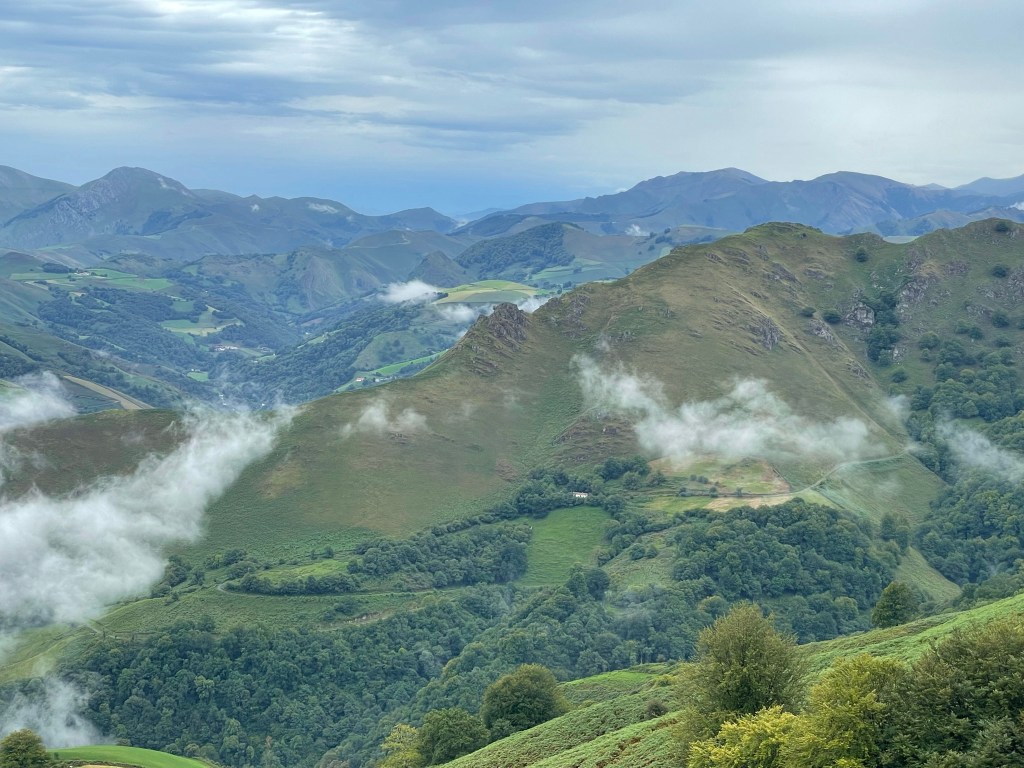
We left St. Jean Pied de Port, France on September 1 and headed up the Pyrenees Mountains that straddle France and Spain. This is called the Route de Napoleon because in one of his military campaigns he marched his troops up this same mountain trail. We walked 7.5 kilometers and climbed 677 meters (5 miles and 2221 feet), which will got us halfway up the mountain. Here is a chart showing elevation changes and distances between points for the first of the six sections of the Camino.

We stopped at Refuge Orisson to spend the night before continuing the next leg over the mountain pass. It was a grueling march much of the way, especially as we ran into rain after a couple of hours and were completely drenched by the time we arrived. However, we were rewarded with beautiful vistas as the rain drifted north and met new pilgrim friends upon arrival. Refuge Orisson is a dormitory style hostel featuring about six beds to a room. All the pilgrims ate dinner and breakfast at a communal setting that was festive and relaxing. We enjoyed this atmosphere and had a great time (but I think we’ll be booking private rooms as much as we can down the road. We need our privacy!).

Our cozy bunk beds at Refuge Orisson

Continuing the hike from Orisson to Roncevalles was difficult as well. The first third of the 10 mile hike was heavily inclined as we approached the 1300 meter peak. After that the path leveled out for the second leg and then descended in Roncevalles for the last third. Our bodies ached by the time we reached the Hotel Roncevalles but it was worth the effort.

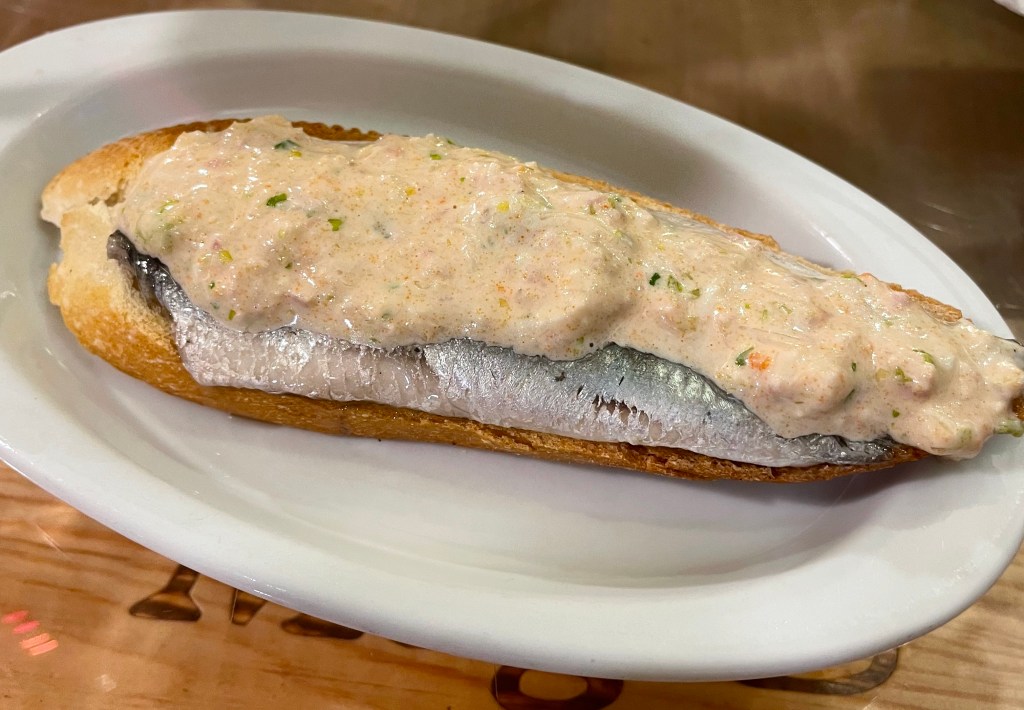
Just a Few More Pinchos Before We Go

Ok, some of you might have issue with my spelling of those delicious appetizers so famous across Northern Spain. Many of the Basque spell pinchos as “pintxos”. But no matter how you spell it or pronounce it they’re delicious and come in so much variety.
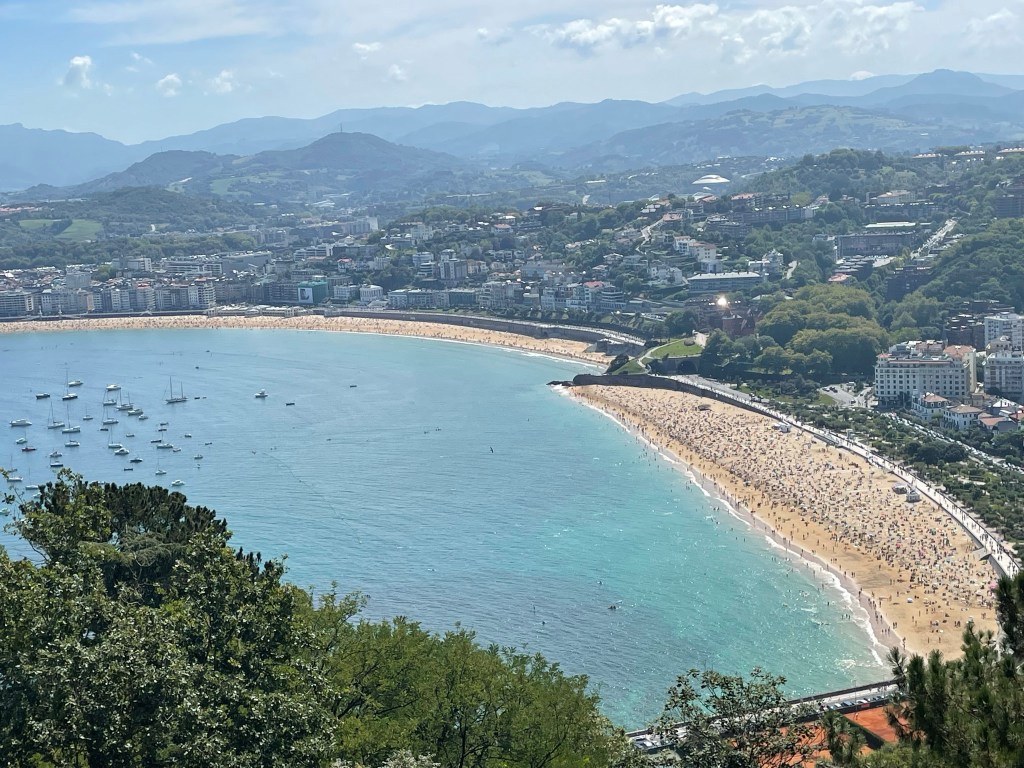
Our last stop before heading to St. Jean Pied de Port, France, was at San Sebastián, Spain, home to those wonderful delicacies and also a beautiful seaside resort frequented by many European vacationers. Ernest Hemingway and some of his literary buddies played and wrote here. San Sebastián wraps itself around a shimmery beach of white sand and deep blue water, with jagged rocks acting as bookends to where the bay meets the sea. Here are some pictures of all the beauty and tastes that abound:

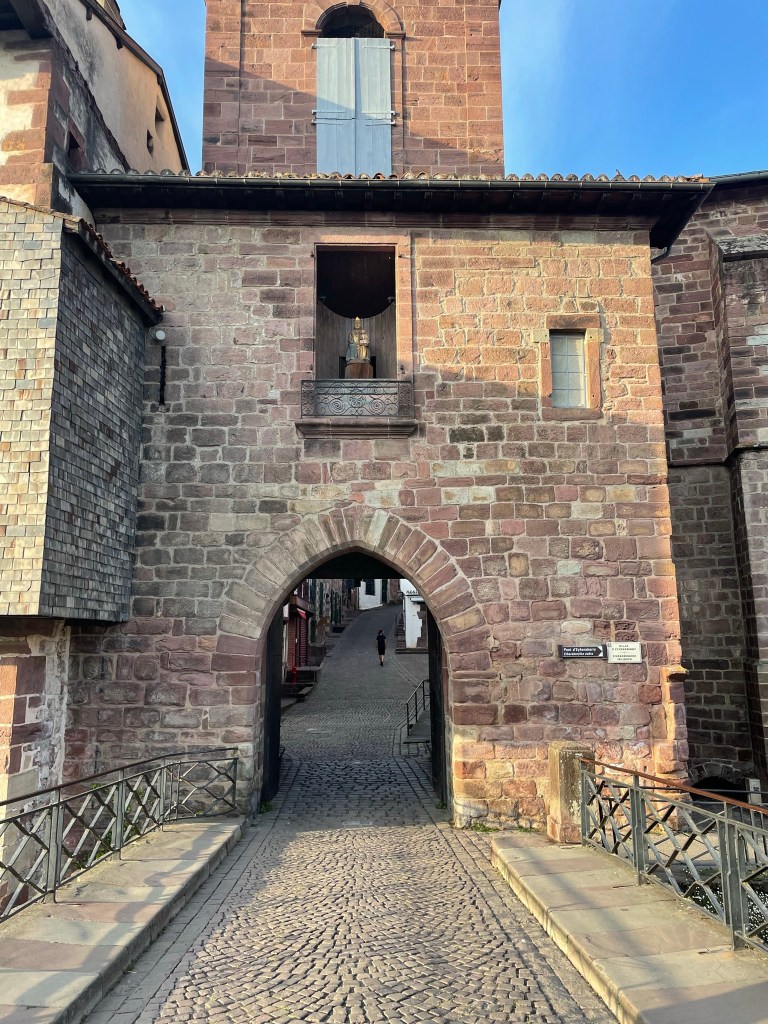
After a relaxing couple of days in San Sebastián we headed by train to St. Jean Pied de Port, France to prepare for our walking trip across Spain. We spent a day and a half taking in the sites in this medieval village meeting some of the other pilgrims and preparing mentally for the harsh realities of walking about 15 miles per day, rain or shine, and at various elevations.