Honoring the Queen in Windsor

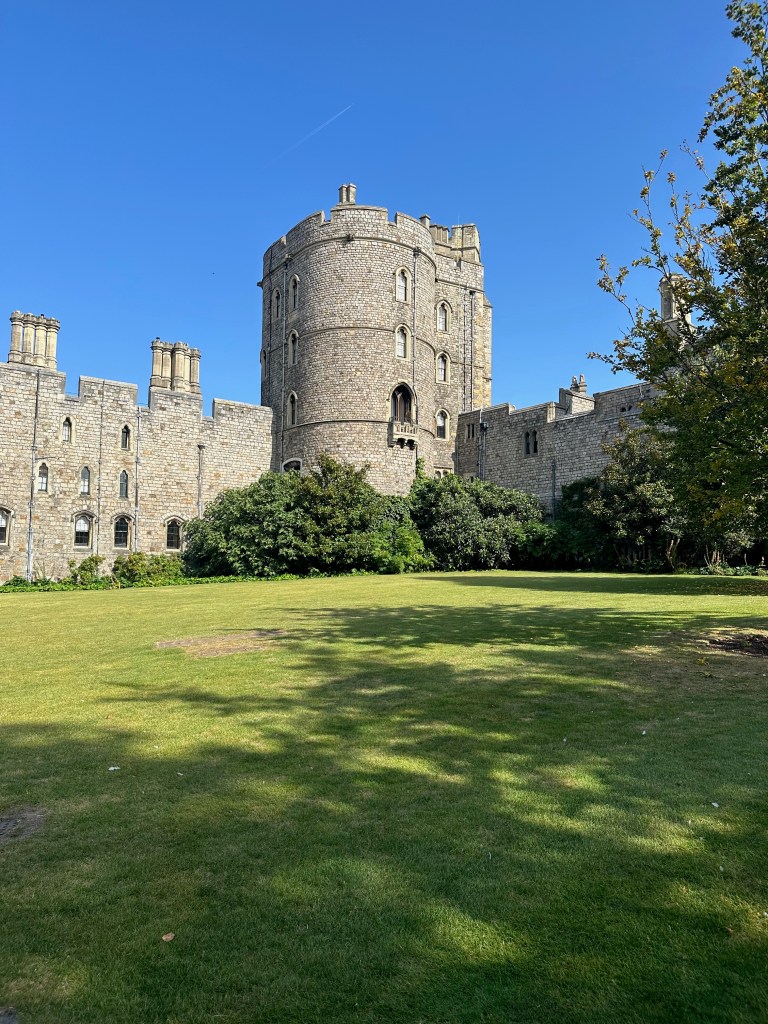
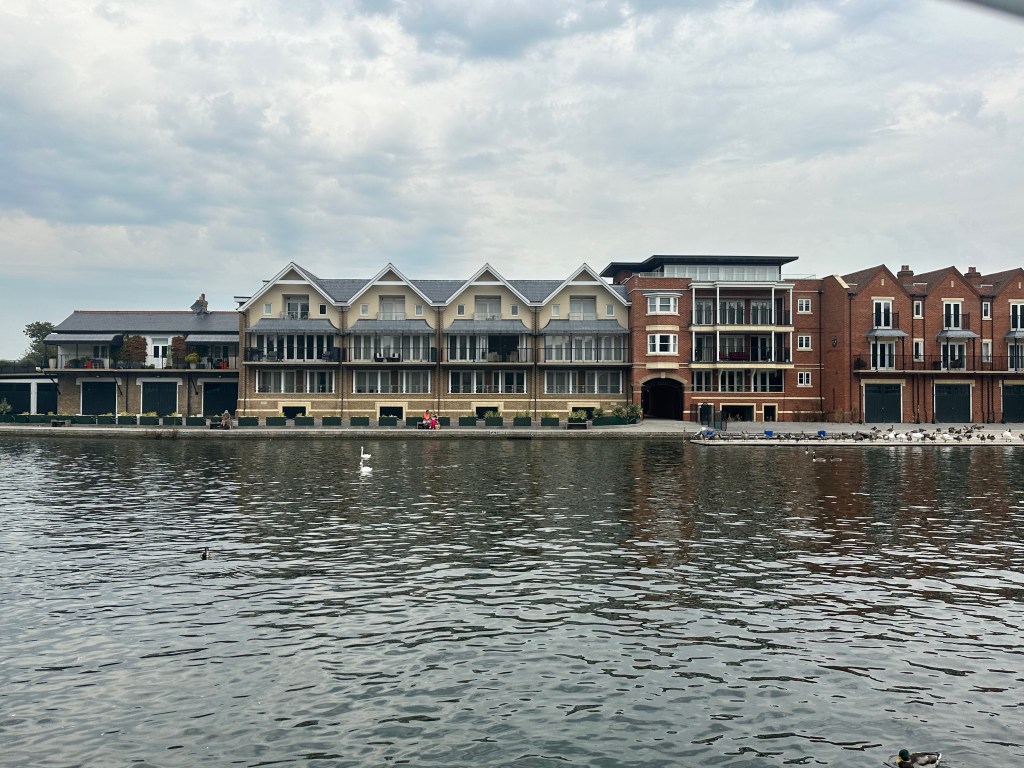
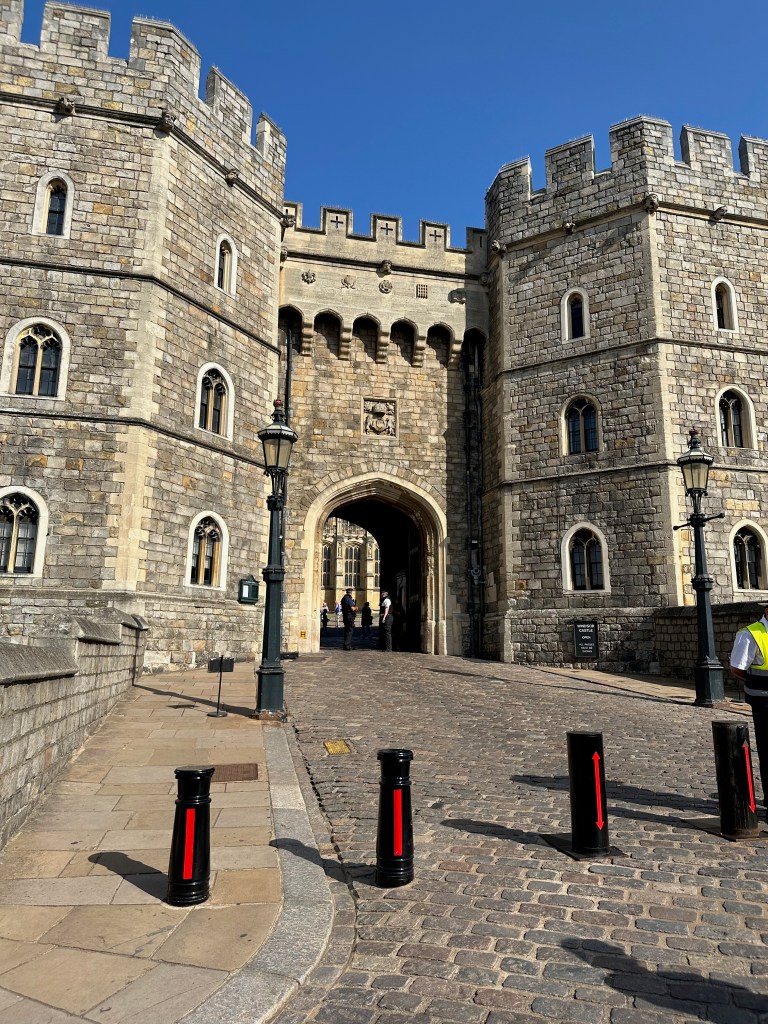
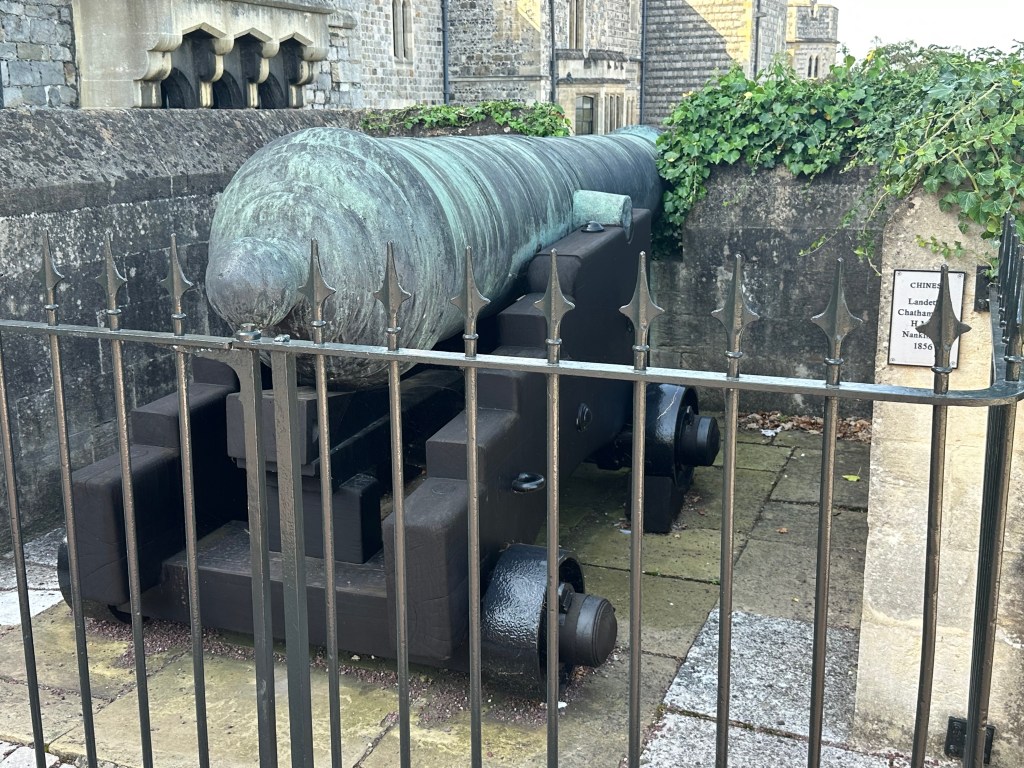
Carrie loves all things royal, and for her, a trip to England wouldn’t be complete without a visit to Windsor Castle, one of the homes of the Royals and the resting place for Queen Elizabeth and Prince Phillip as well as others. We toured the castle and St. George’s Chapel and also boated down the Thames to take in the views from the water.
After Windsor, Where to?

Windsor was our last stop in England and we knew we’d be heading to the continent for more travel adventures. We had planned to go straight to Brussels and then Bruges. However, our plans changed.

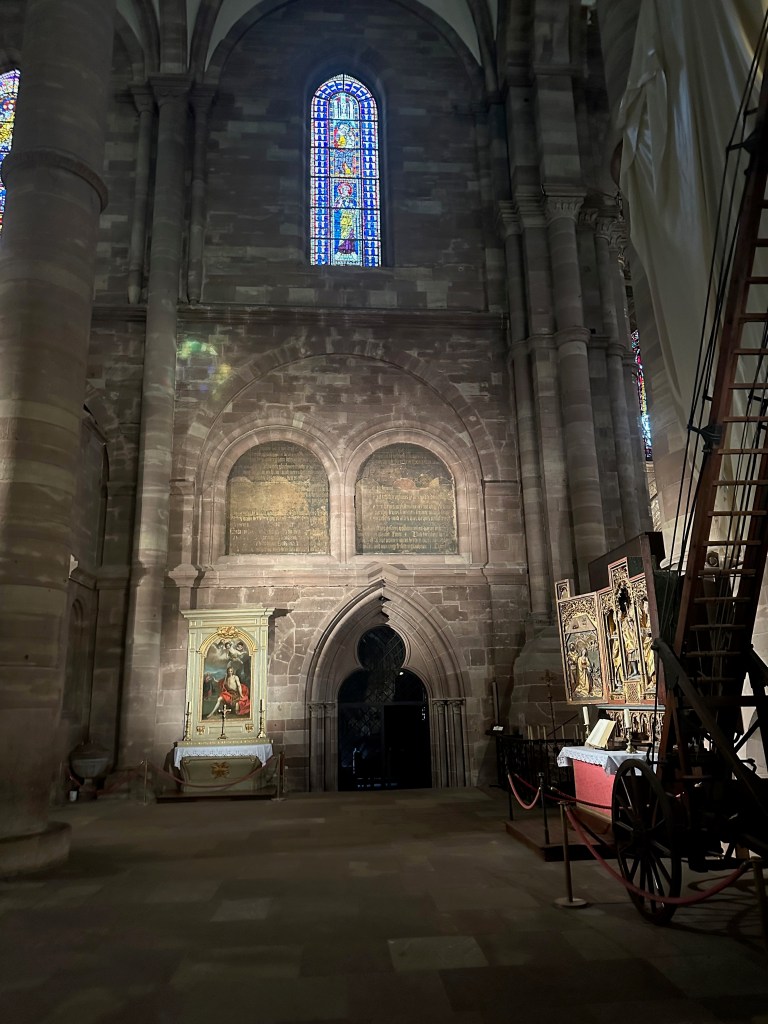
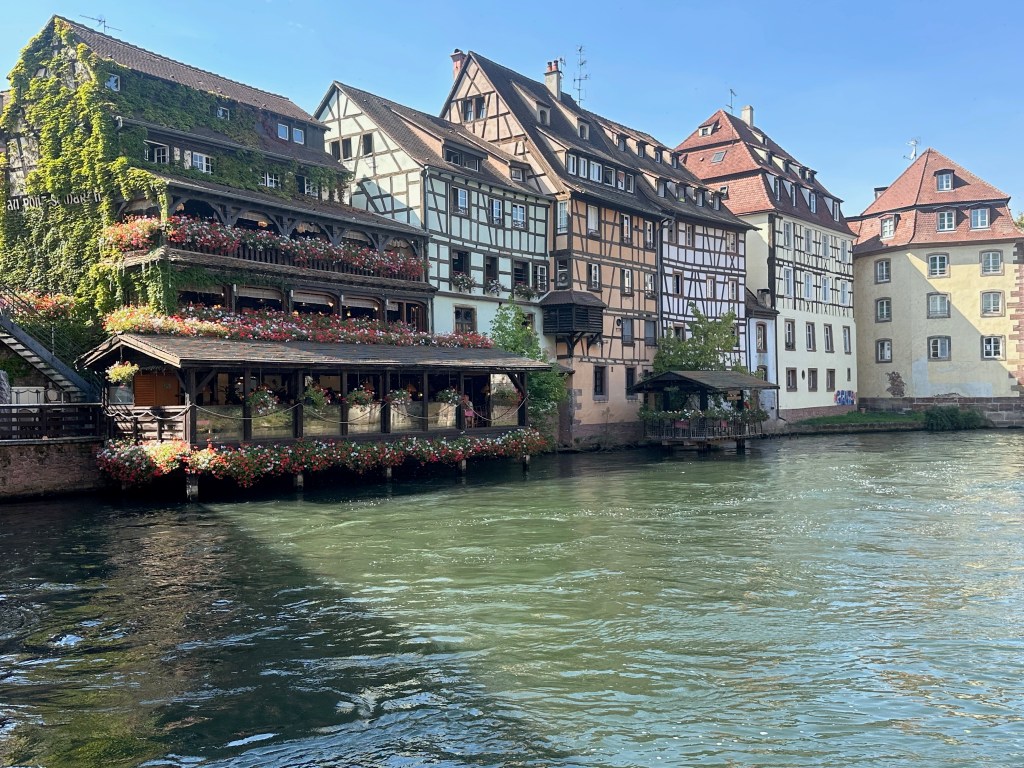
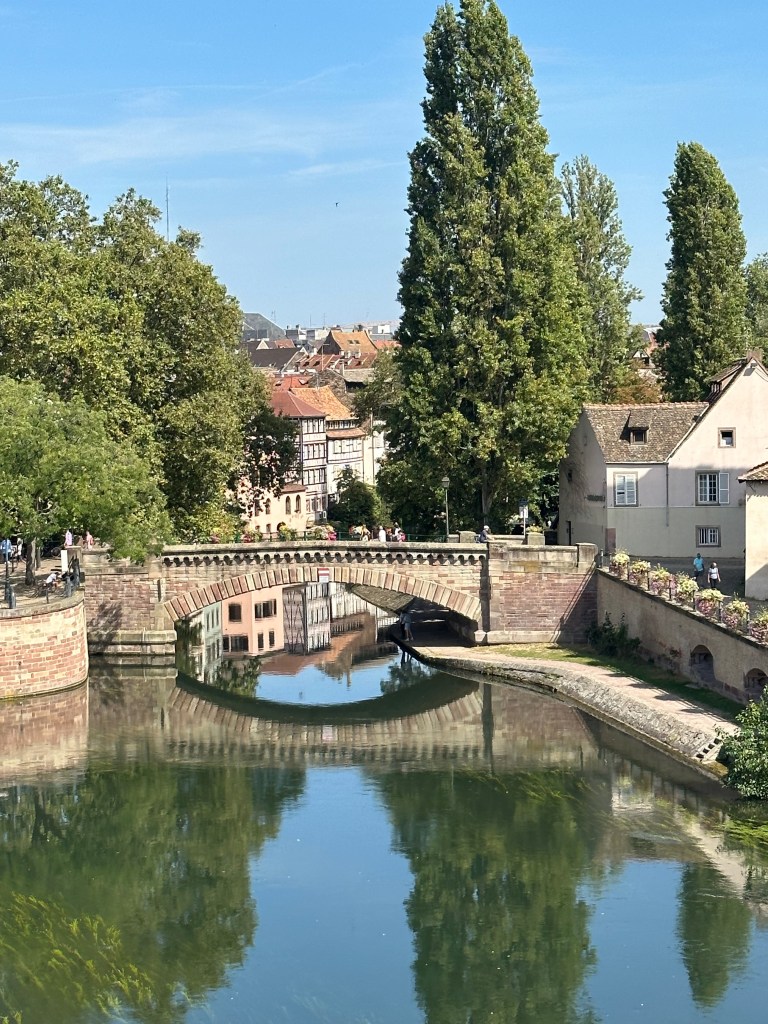
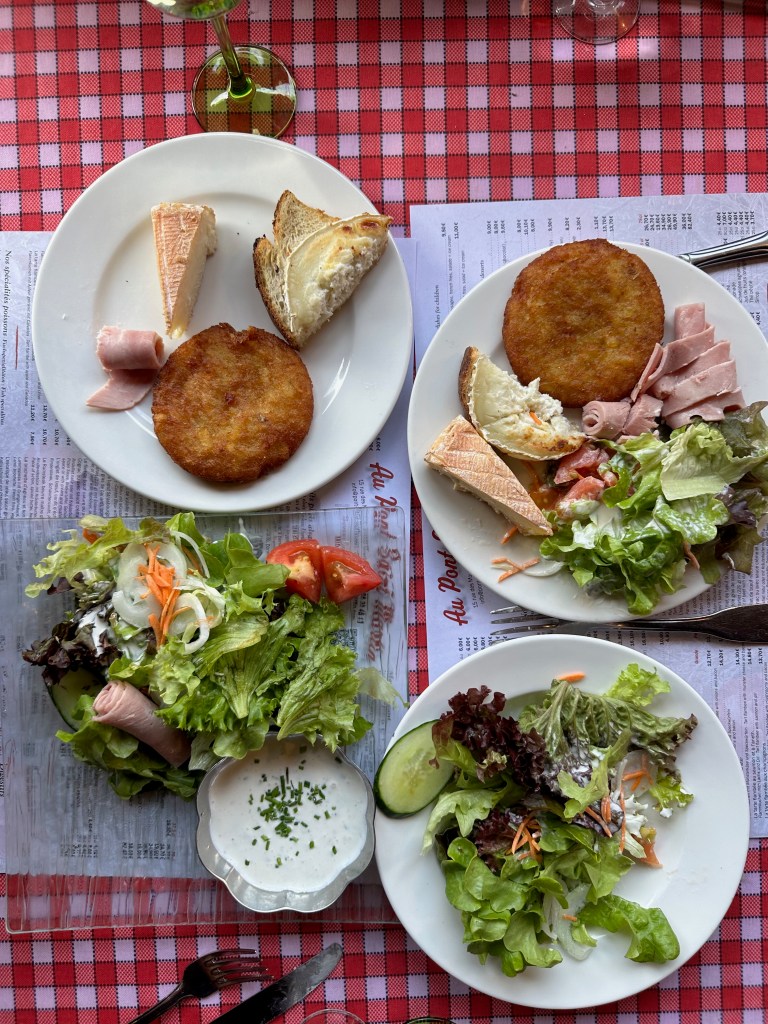
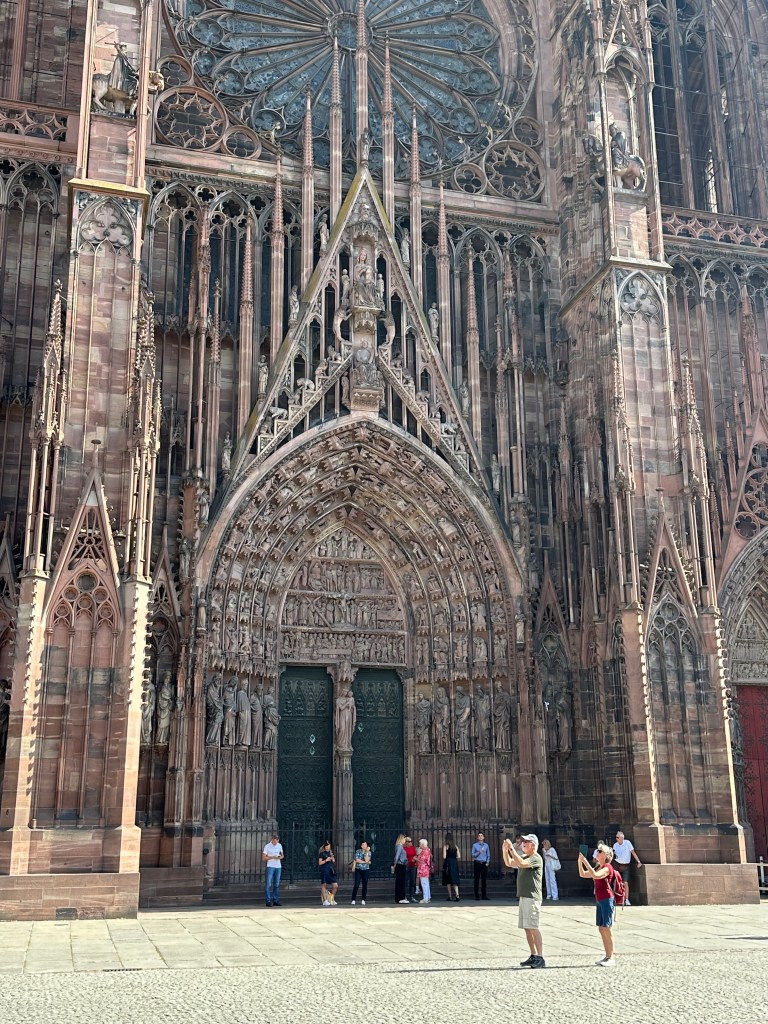
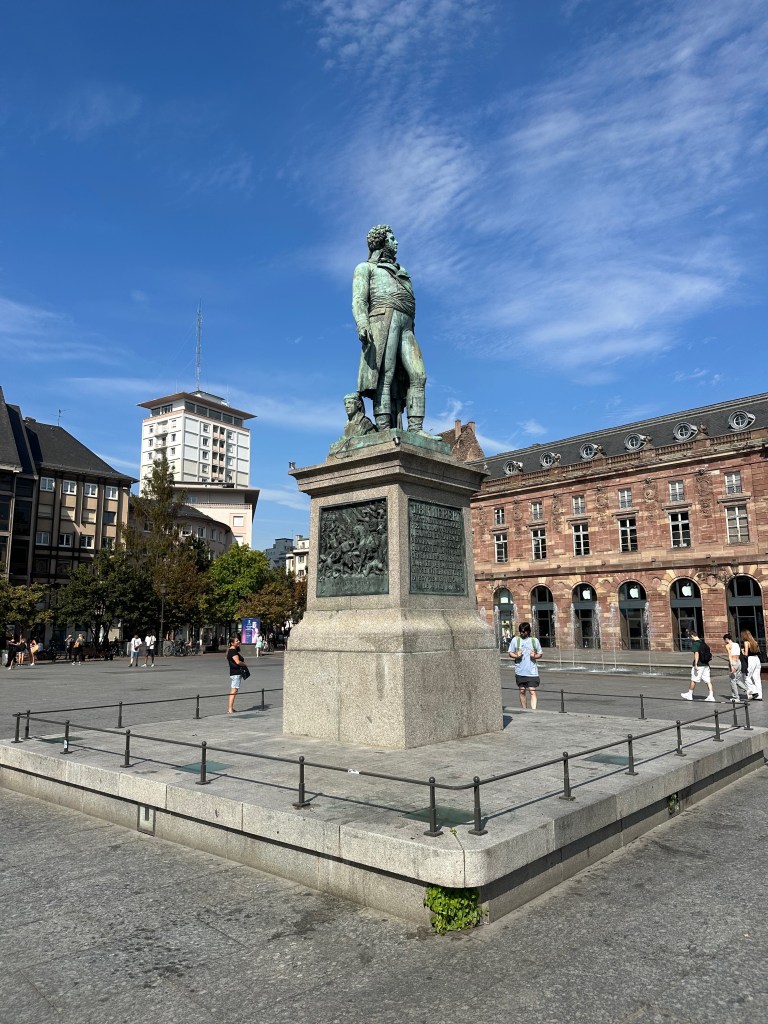
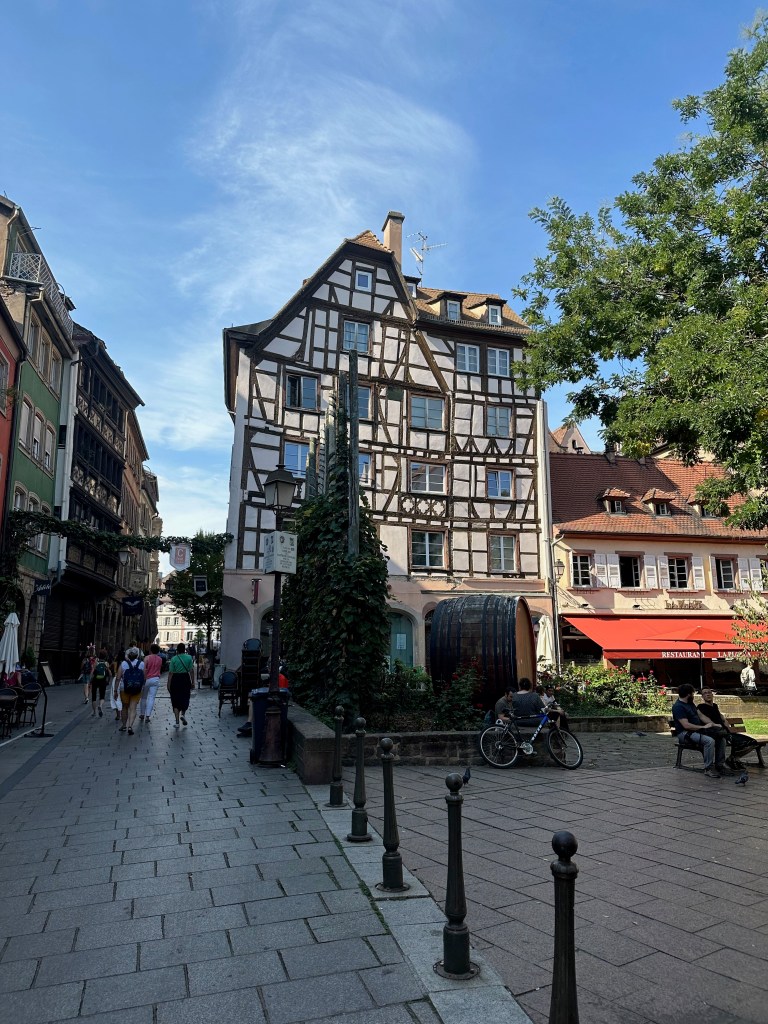
A few months ago we purchased Eurail passes good for 60 days, and we have the freedom to travel just about anywhere in Europe we want. So, when we spent several hours trying to find reasonable hotel rates in several Belgium cities, but couldn’t find them, we put into action our freedom to alter our plans. We knew we were heading to Berlin later this week to visit my nephew and his family, and so trying to head into that general direction, we thought why not go to Strasbourg. We booked ourselves on a couple high speed trains and went to Strasbourg, France. We had been to the scenic Alsace region before, but not to Strasbourg. We took a walking tour of the old city and enjoyed the wonderful French cuisine and wine.

We love our Eurail passes, but we’ve noticed that they don’t seem to work very well. The passes reside on our Rail Planner app. The app itself is very easy to use and helps us plan trips and keeps track of our itineraries. Every time we need to board a pre planned train, we simply open the app, bring up the QR code, and scan it at the security point at the train station. The QR code is supposed to give us access to the train. However, this has not worked that way. Ever. We have to call one of the rail personnel over to let us in. They acknowledge that the passes don’t work real well. Now that we are in non English speaking countries, we are wondering how we’ll communicate this issue to the train staff.

A Screenshot Of My Rail Planner App

Berlin is next on our list.
Finishing Up In The Cotswolds

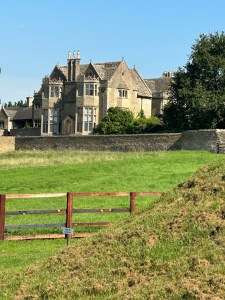
On our last day in Stow -on-the-Wold, we laced up our hiking shoes and wandered though meadows and pastures along some of the public hiking paths that meander from village to hamlet. We would love to do more of this as it reminds us of hiking the Camino de Santiago.

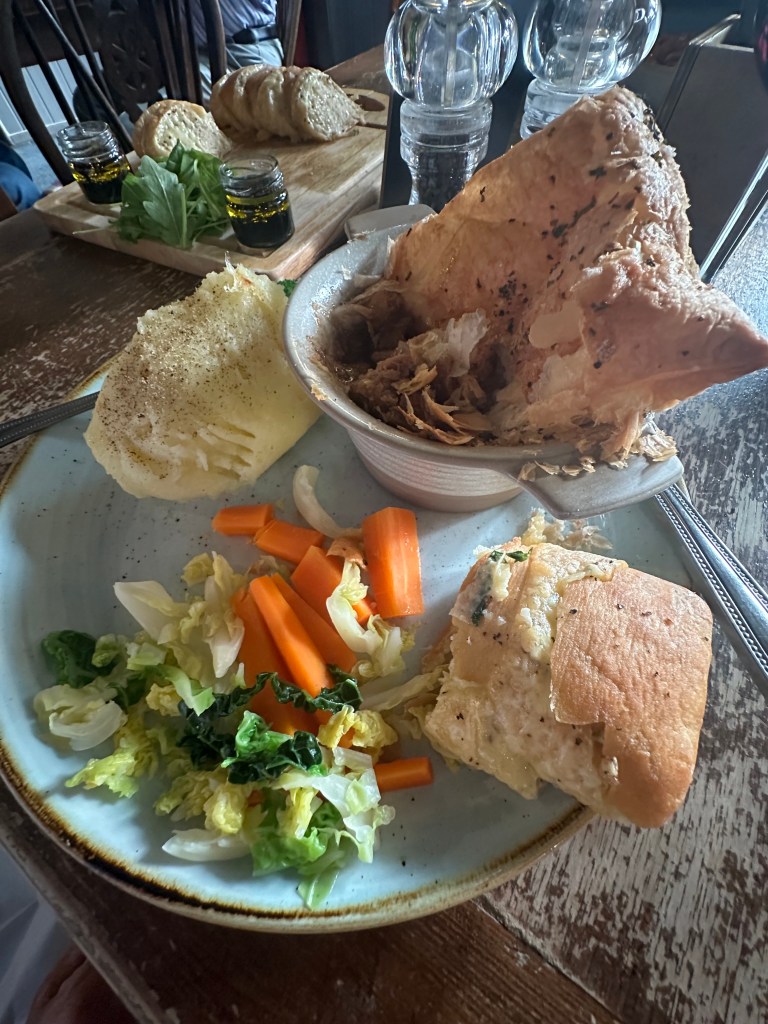
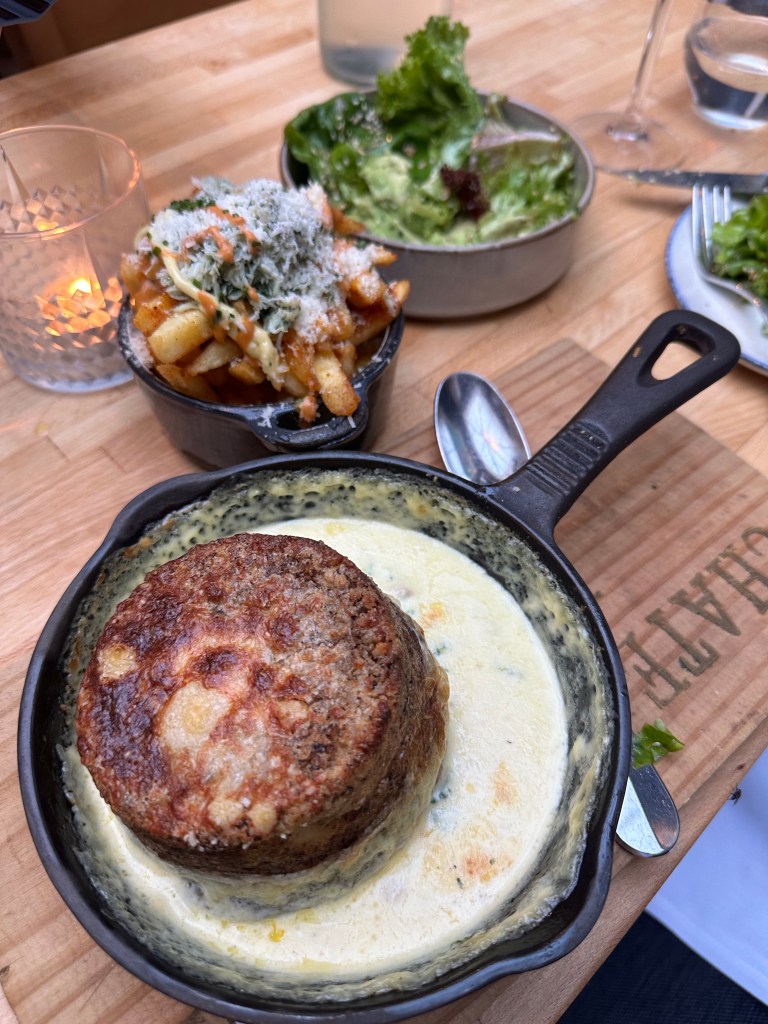
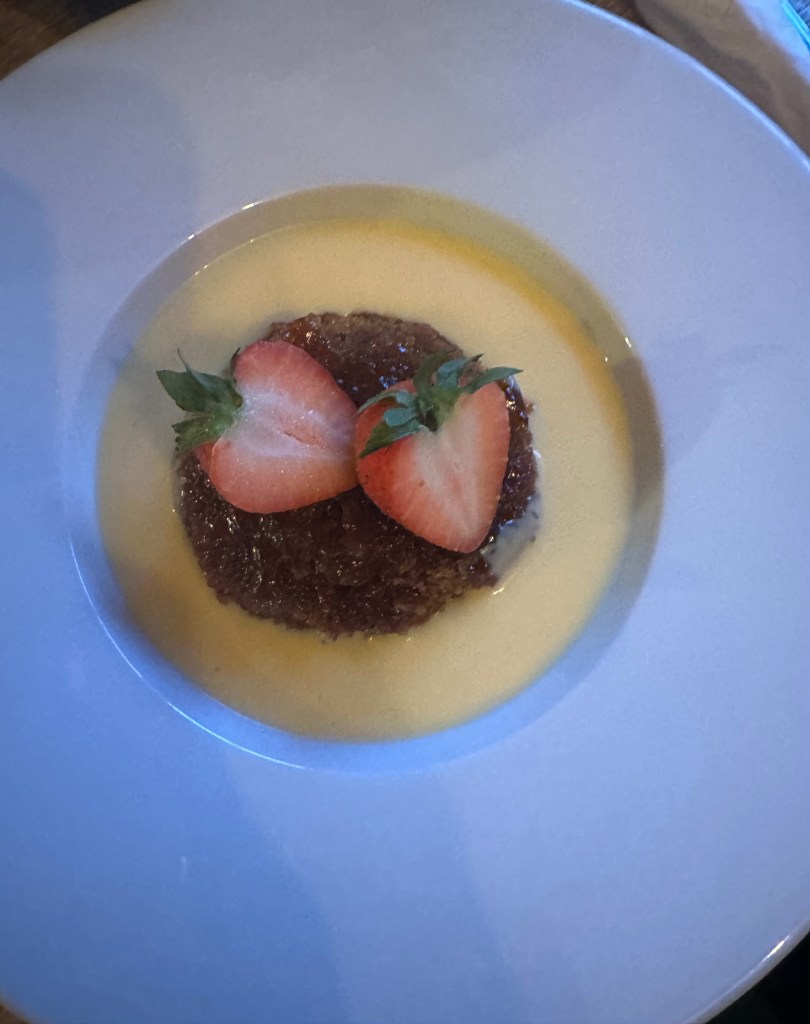
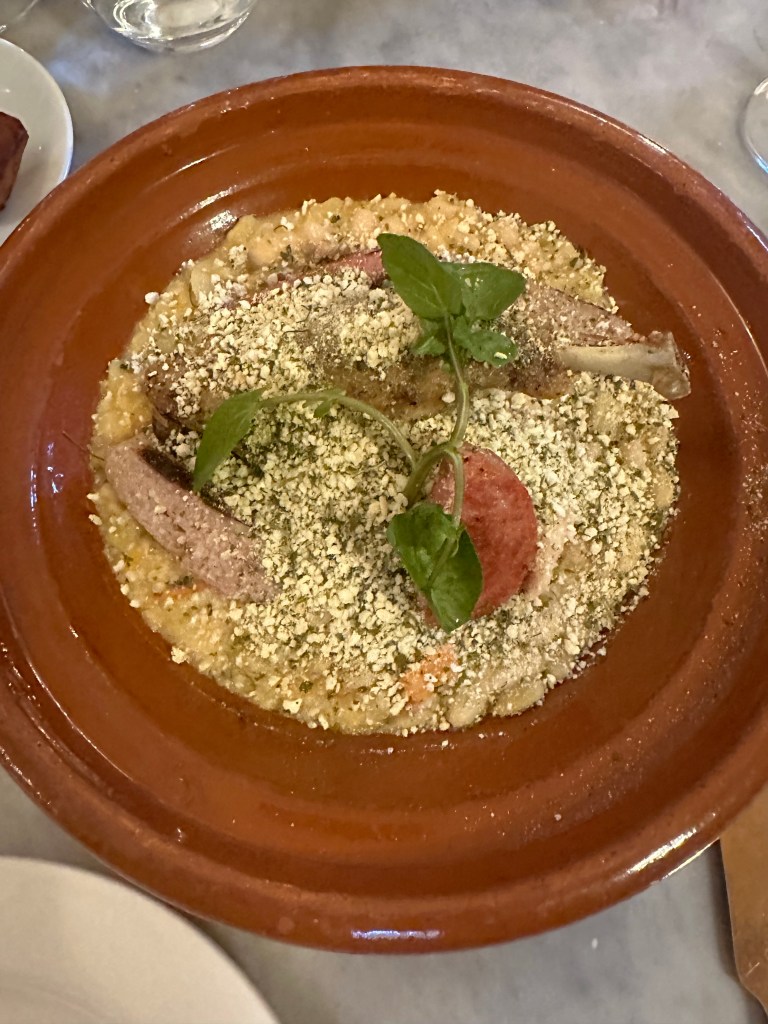
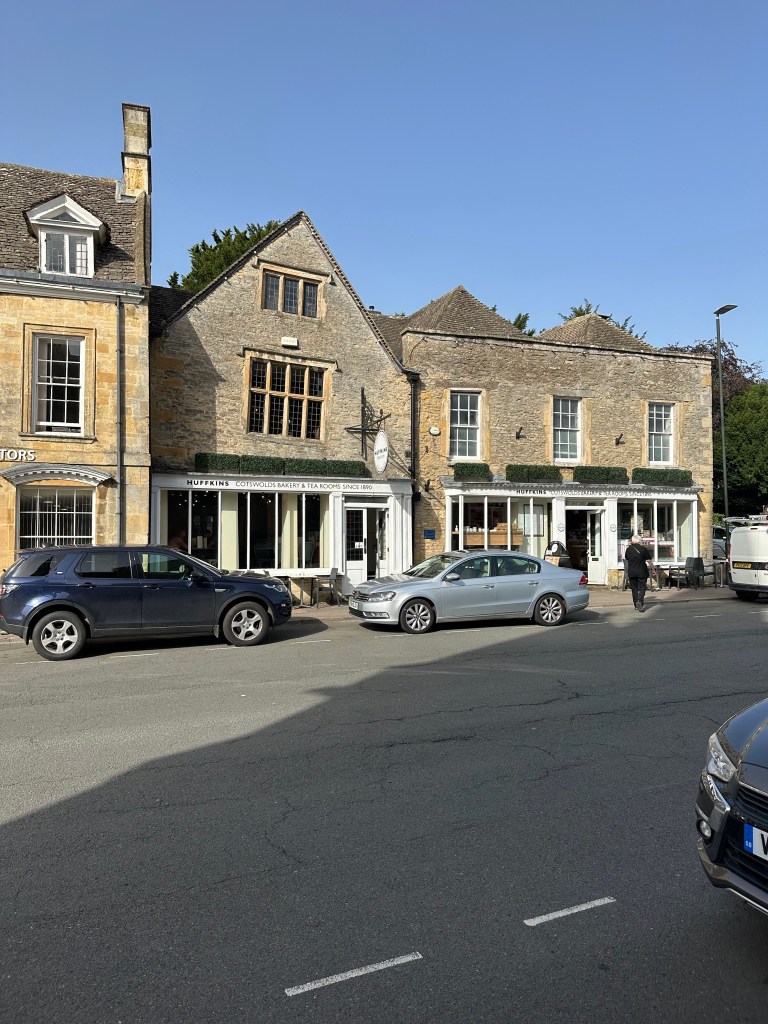
We’ve had a variety of meals here. Some were traditional hearty English fare, such as pot pies and fish and chips. All very good. Our favorite dish was the crispy Swiss cheese and spinach soufflé we enjoyed at the The Old Butchers. It was fluffy, light and not overwhelmingly Swiss. Delicious.

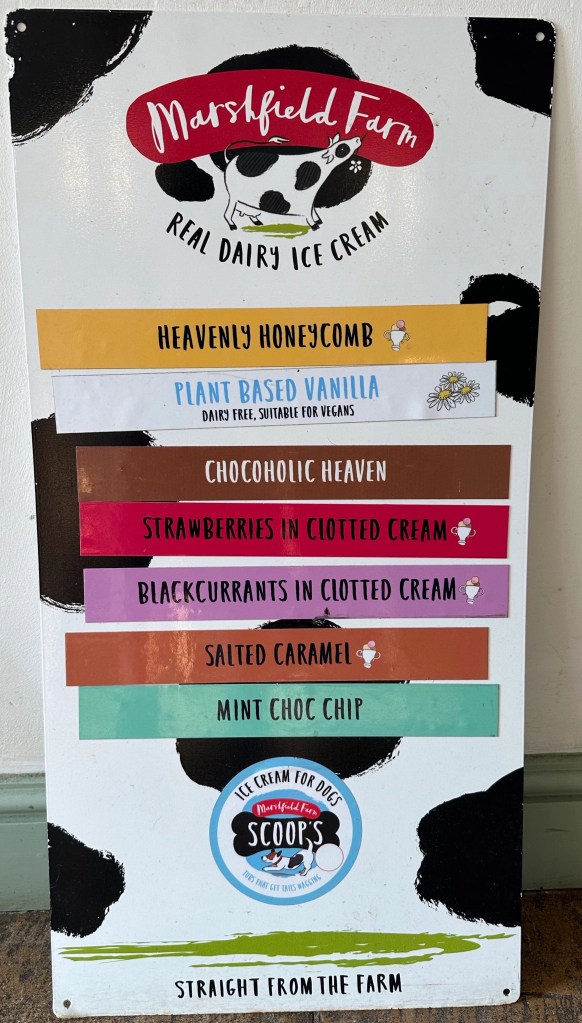
This area is also known for its clotted cream, which is a thick cream with high fat content that is great for spreading on scones along with a dollop of your favorite jam. We tried it that way and in ice cream too. Wow!

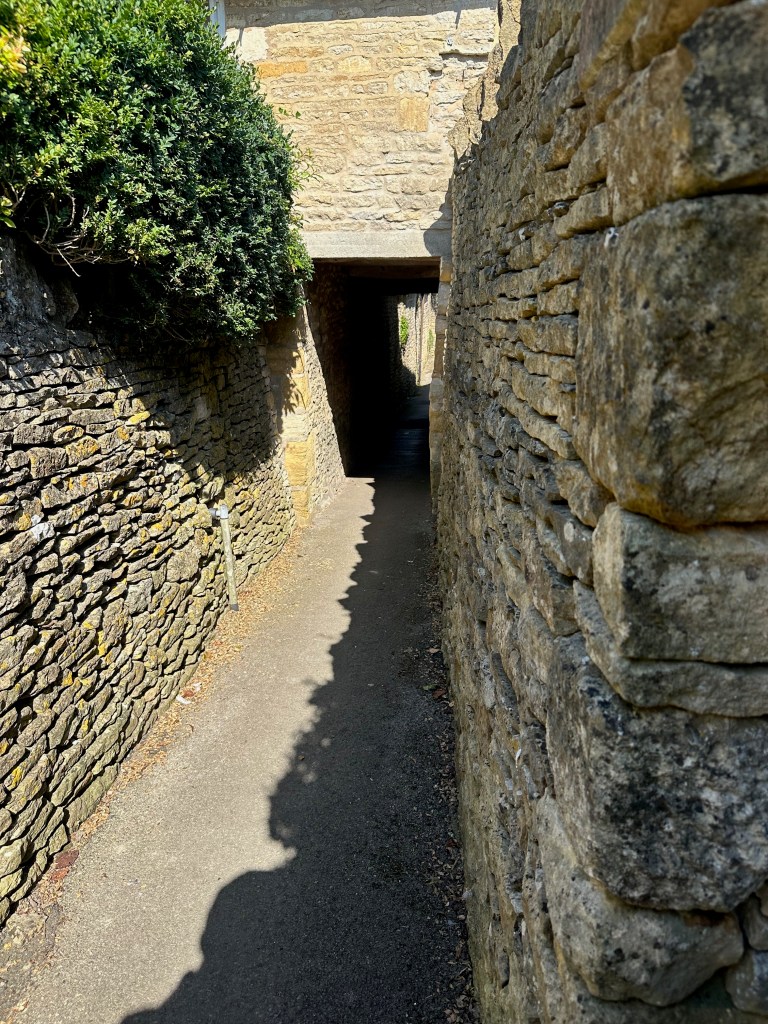
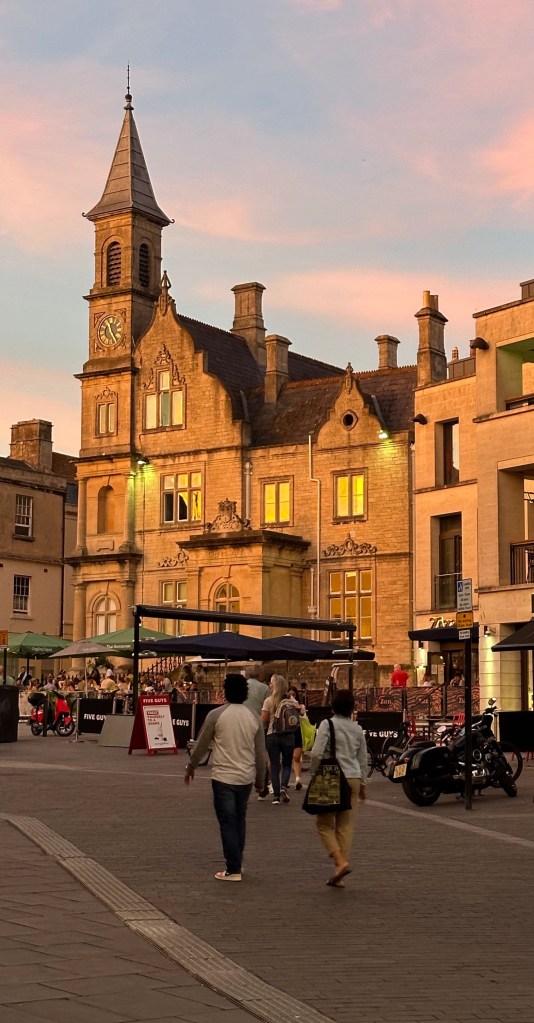
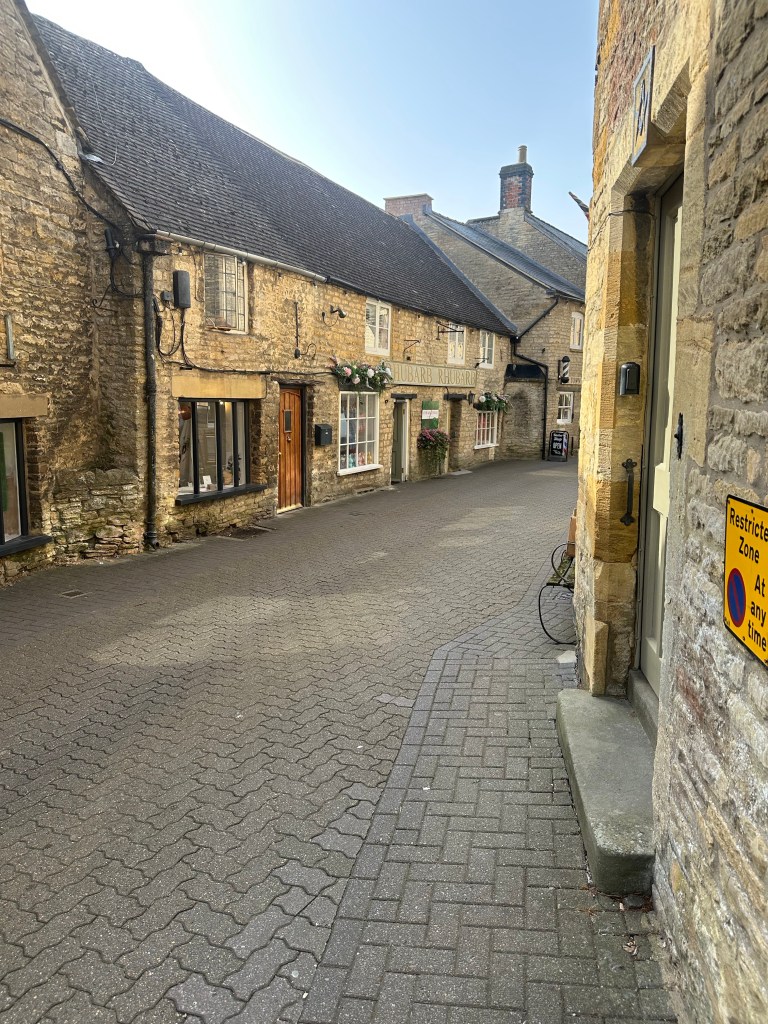
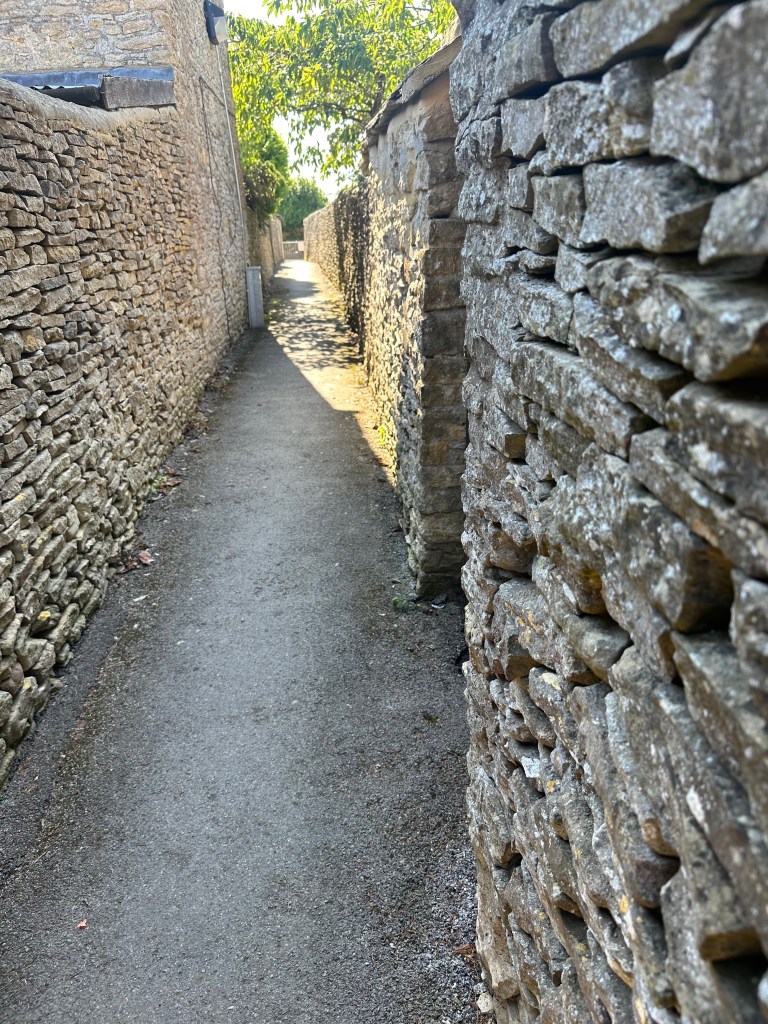
We loved wandering through the scenic town and found several narrow walled passageways tucked between the ancient stone buildings. It is easy to imagine what life was like here ages ago. Carrie pointed out that this was historically a market town and that on a busy day up to 20,000 sheep could be sold. I think that would have made the streets a little messy, and the smell would keep the tourists away!

We’ll say goodbye to the Cotswolds and to Renae, who is heading back to Bath to join in with the Jane Austen festivities. We are off to Windsor to see the castle and maybe run in to some royalty.

Not Knowing Where You’re Going Is The Best Way To Get To Someplace You’ve Never Been

The words above I paraphrased from an episode of Seinfeld, where the character J. Peterman meets a lost and bewildered Elaine Benes. However, it really does describe how Carrie and I are traveling right now. We don’t have any firm itinerary, just a mental list of places we want to see and the freedom to make changes on a moments notice. We had planned to fly to London, see the sights and then hop a train to some of the other spots we’ve had on our radar. After that, who knows.

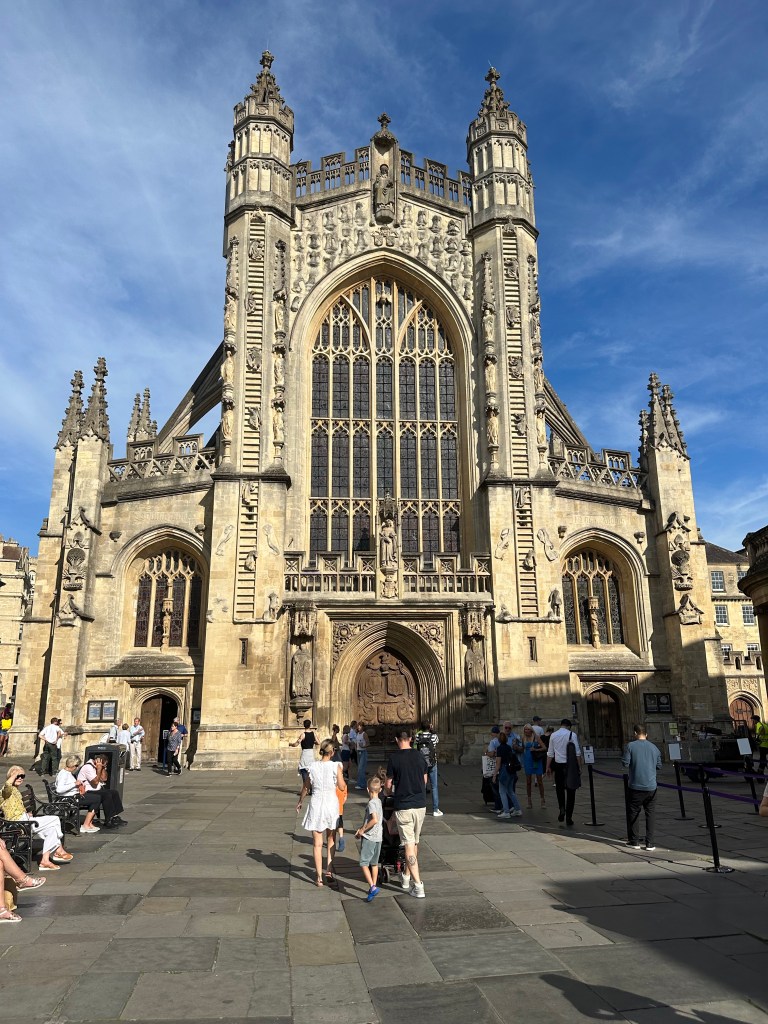
Midway through our stay in London we were joined by our good friend Renae, who was already exploring parts of Europe on her own. Together we traveled to ancient Bath, the natural spa that was popular with the Romans and then to the Cotswolds, the tiny hamlets that were frozen in time and remain just as they were centuries ago.

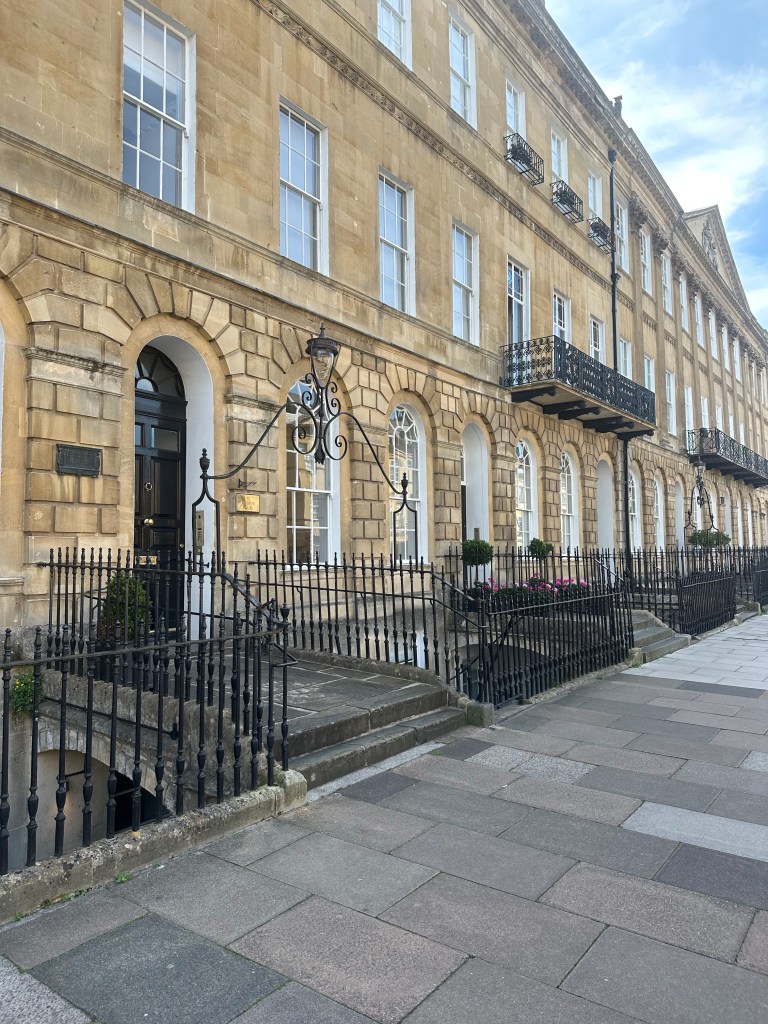
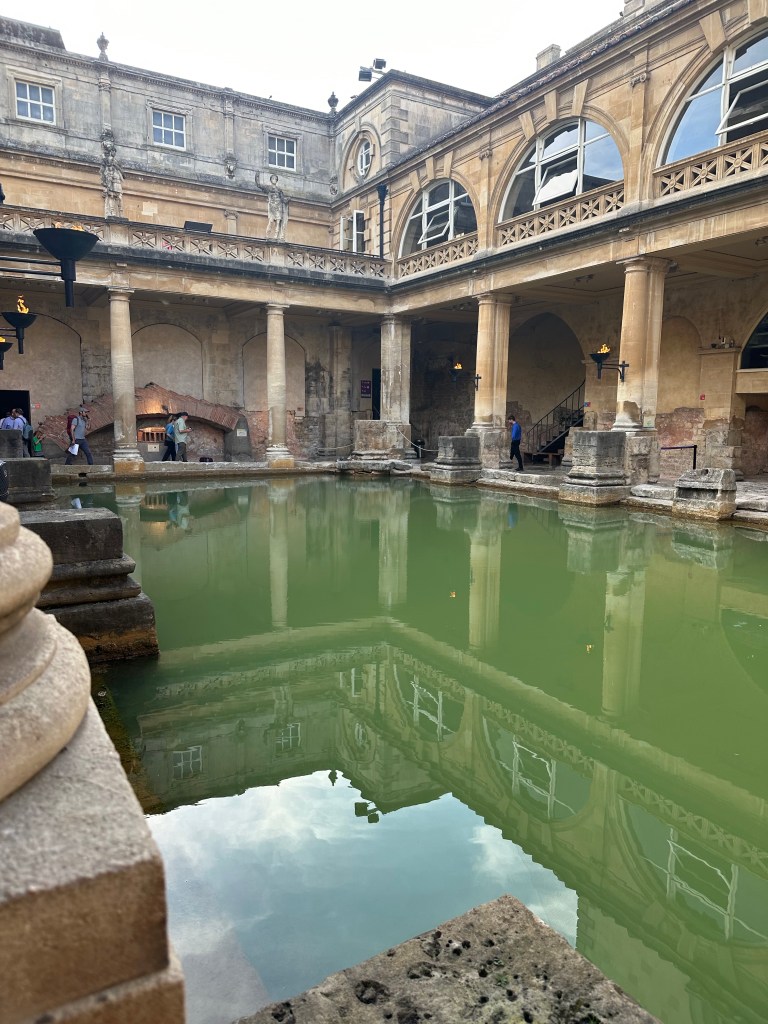
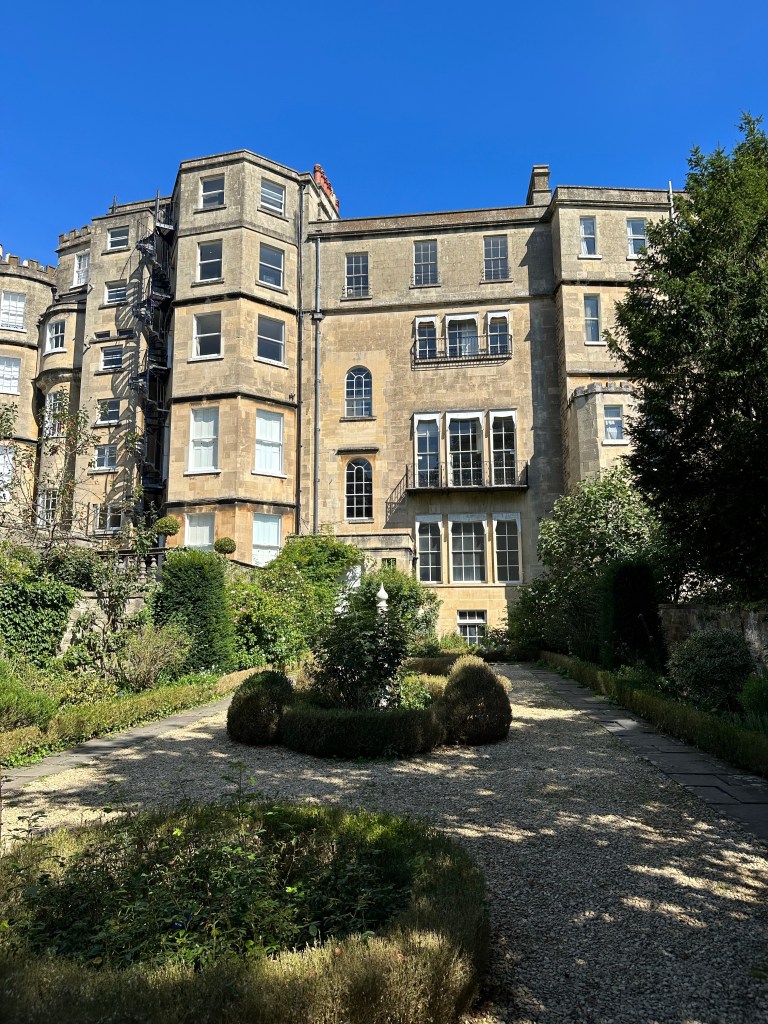
Bath was established as a must see destination for the Romans, who built a complex of temples and baths for the wealthy to enjoy. Centuries later it was brought in to relevance again for the same reasons, but this time entrepreneurs built majestic homes for their spa goers to enjoy as well.

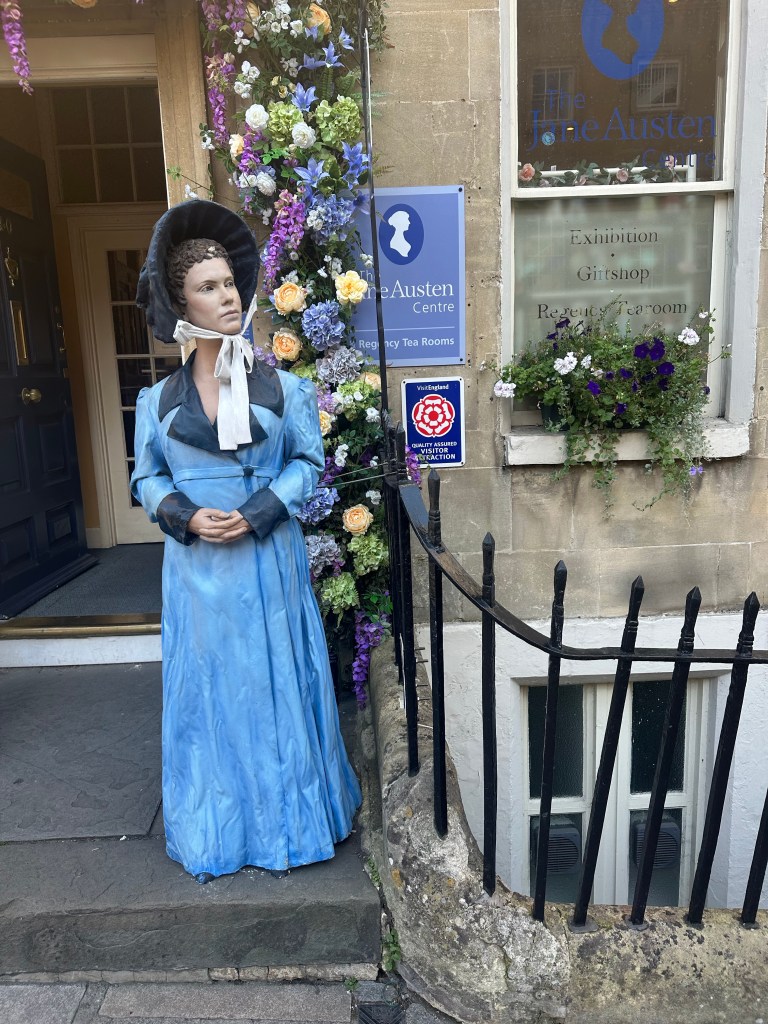
Jane Austen, the famed author of novels such as Sense and Sensibility once lived in Bath. She is celebrated every year by a festival in her name where hundreds of revellers, wearing period attire, host several balls and events throughout Bath. This years shindig starts next week.

After a few days in Bath we tried to make our way to the Cotswolds, the collection of villages frozen in time. Getting there was not easy! We knew it would take a combination of buses, trains and maybe taxis to get to our destination, Stow-on-the-Wold, but we didn’t realize how difficult and time consuming it would be. But one train and two different bus lines brought us to this idyllic town.

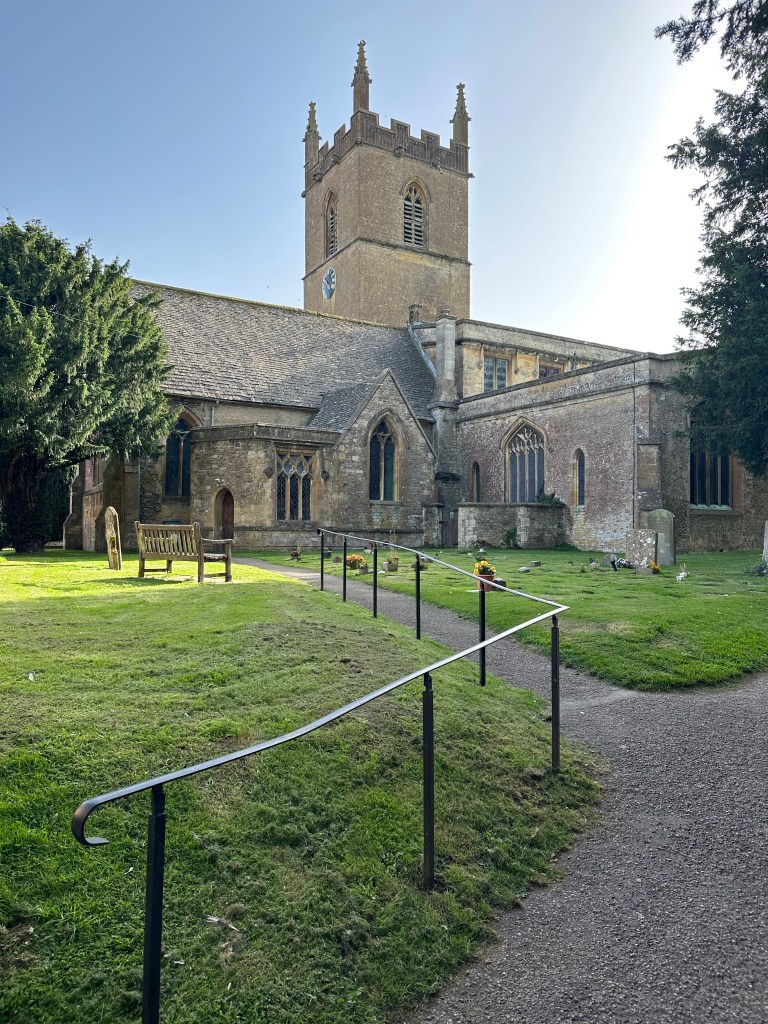
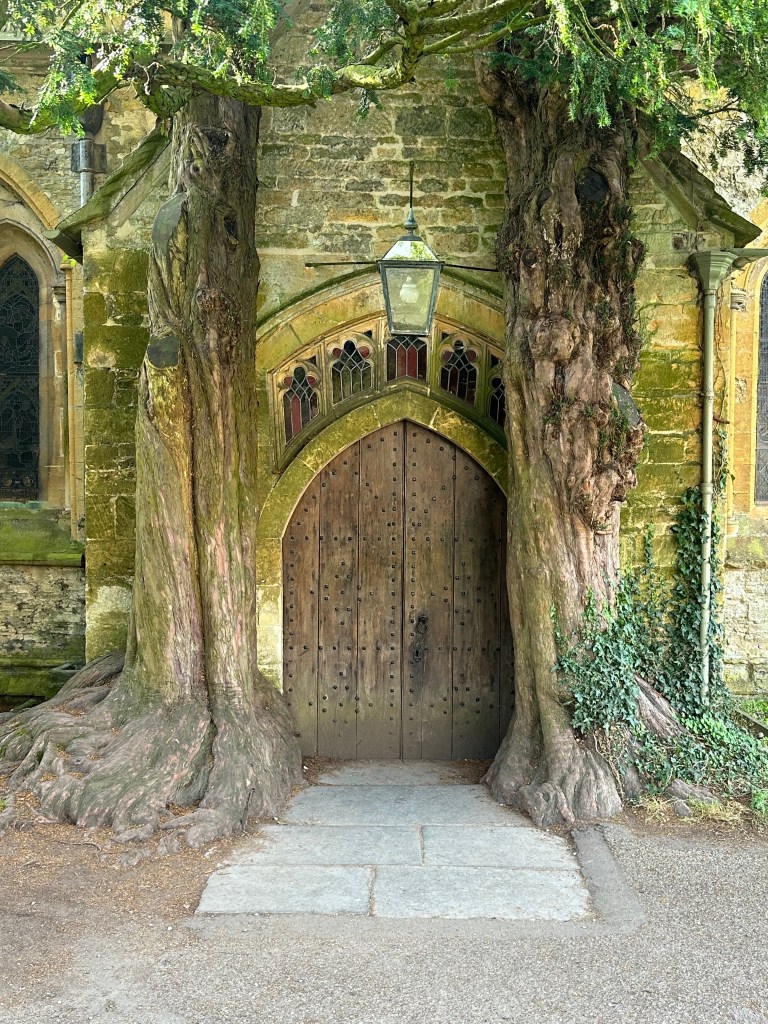
At St. Edwards it is said that J R R Tolkien took inspiration from this tree that seems to be part of the structure of the door.

St. Edwards Living Door

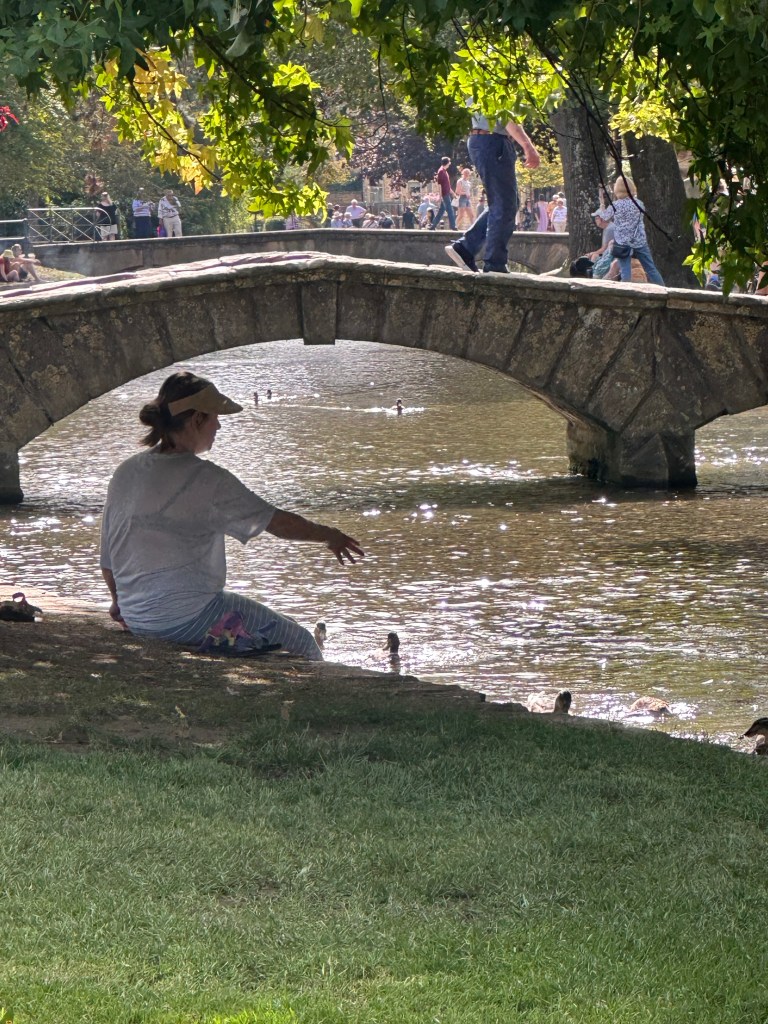
Burton-on-the-Water, sometimes called the Venice of the Cotswolds, is another picturesque village near Stow. The River Windrush divides the town with walkways on either side. There are numerous pedestrian bridges for the hordes of tourists to cross or stop on to pose for pictures.

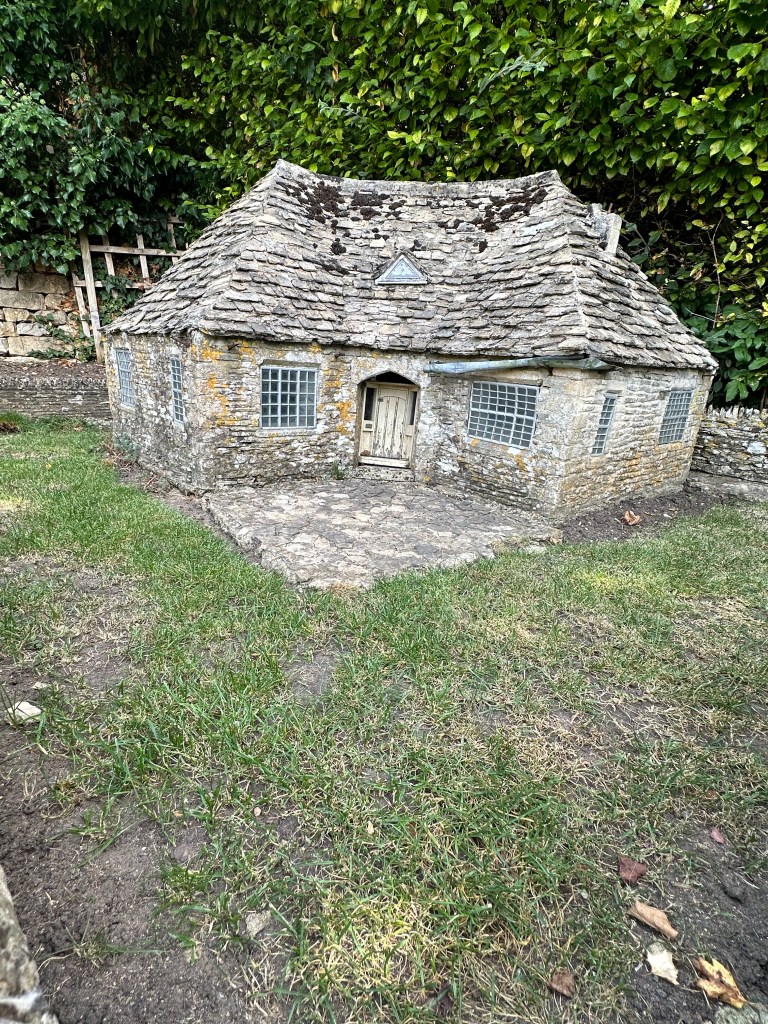
Another treat was at the Old New Inn where they have a museum which features a miniature mock up of the entire town. It was incredibly realistic.

London

We finally arrived in London and started visiting all the popular tourist sites. I was last here about 20 years ago, and this is Carrie’s first visit. London is a vibrant modern city but it is still defined by its rich history. Everywhere you look in central London you are reminded of centuries of its great kings and queens, its wars and its global reach, from its early Roman settlements through the current monarchy.

There is tremendous diversity here. London has alway had colonies scattered throughout the world so it’s no surprise that the city is filled with a variety of nationalities, foods and communities. At our first dinner our friendly waiter Ricardo reminded us that there are more than just Brits in Britain. He is originally from Lisbon and has worked in London for about eight years, but plans to return home soon. He was excited to discuss politics in the UK as well as the US. When we talked about movies and US culture he was proud to display his Johnny Cash tee shirt hidden under his starched white uniform.

Cultural changes aren’t always accepted here. On a recent taxi ride we noticed dozens of horse drawn carriages, similar to the type they use in harness racing in the US, racing up a busy London street, disrupting the normal traffic flow. Our taxi driver complained that these were gypsy travelers, who camp outside the city, but occasionally venture into the busy urban areas just to create chaos. He griped that the travelers use the British social system but don’t contribute to it as everyone else does.

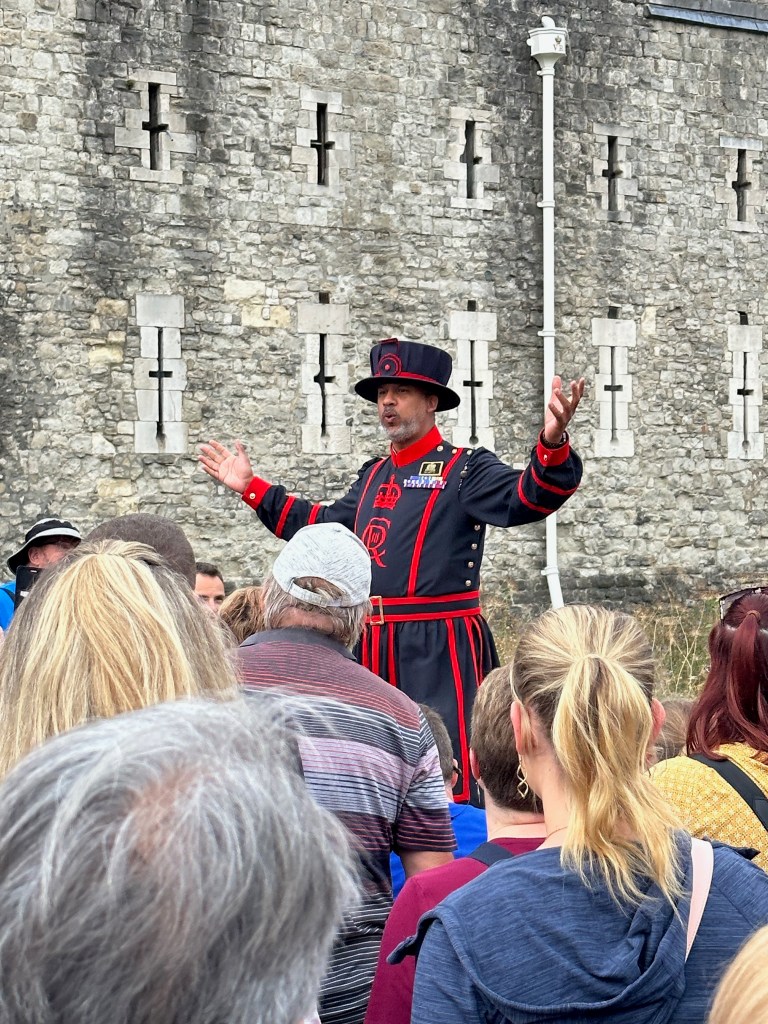
Guided tours of the main attractions can be a hit or miss thing. If you are lucky enough to get a great guide it can make the event fun and memorable. Our guide at the Tower of London, one of the famous Beefeaters who are full time service men who also guard the tower and the Crown Jewels, was wonderful. He regaled his large audience with bloody tales of bloody beheadings and regal intrigue. We loved his story telling but I think the kids there enjoyed it the most.
Beefeater Guide

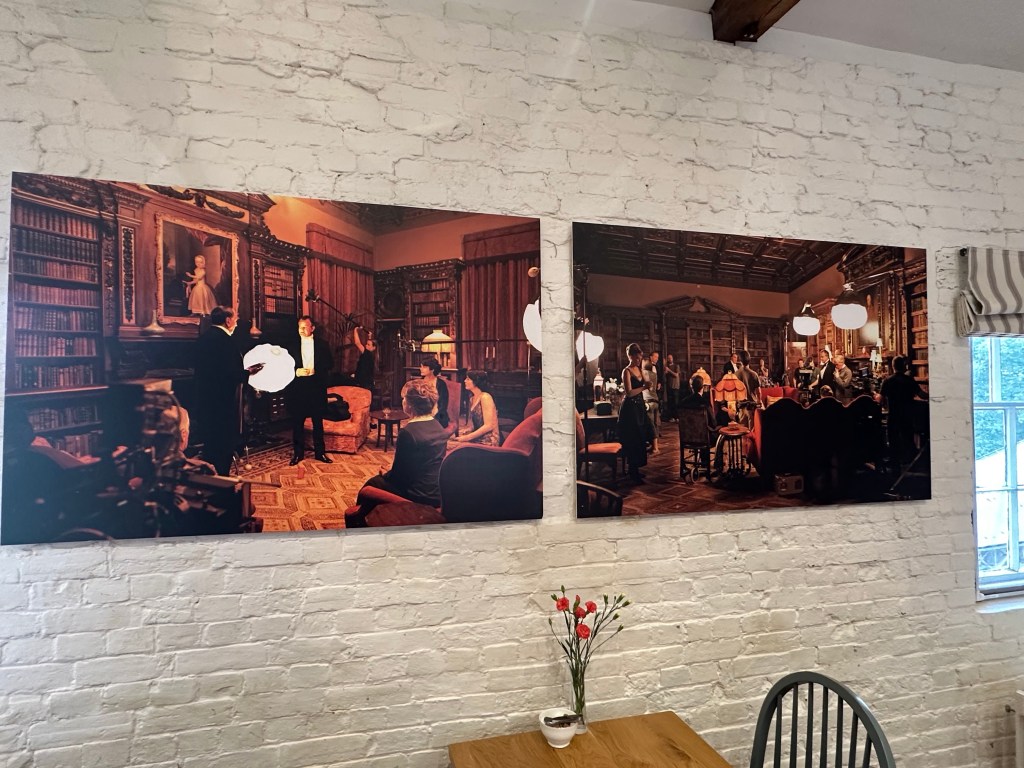
After a few days in London we ventured out to Highclere Castle to visit the real life setting of the television series Downton Abbey. We both enjoyed the series, and the two movies, and were excited to see the real thing. When reading about the family who own and live in this famous estate we were surprised to see that the fictional story followed some of the historical events of the real family. The estate did indeed help out as a hospital after WWI!

Another surprise was that the 5th Earl of Carnarvon, the historical owner of the estate, helped finance his friend and archeologist Howard Carter in finding the tomb of Tutankhamen in Egypt. As a reward for his sponsorship the Earl received numerous pieces from the dig, which are actually on display in a separate section of the estate.
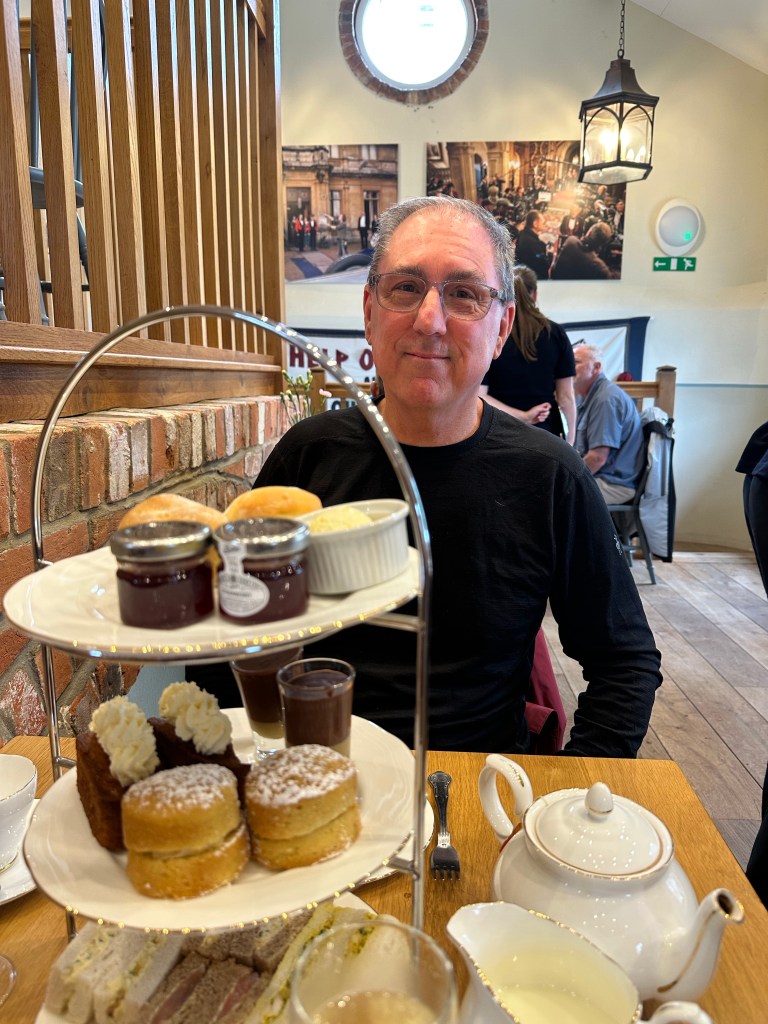
The weather was drizzly and cool while we were at Highclere so we weren’t able to walk and explore the property as we wished. We weren’t allowed to take photos inside the estate. However, we relaxed and enjoyed the afternoon tea with all the goodies.

A Funny Thing Happened On The Way To Retirement

Carrie and I retired in July of 2021 and were fortunate enough to go on some awesome travel adventures in Spain, Portugal and Morocco. You might have read about them in this blog! We thought we were retired forever, and would continue to travel and chronicle our experiences. Well, in the summer of 2022 Carrie’s former employer, Indiana University, asked her to come back on a part time basis and help them with some new studies. Of course she was happy to help out. At the same time, my former company asked me to come back as well, on a part time basis, when my replacement abruptly resigned. Carrie and I knew that we were just filling in until permanent replacements were found, but we weren’t able to separate from our positions until July of this year. Now, on to more travel!
In April this year we found some great flight deals using United points to London and started planning a trip to Europe for about 10 days in Great Britain before moving to parts unknown, with just a vague plan of wandering through Germany and Italy.

As we all have crazy travel stories to tell, this one starts out ominously. On Monday morning we caught an early flight from Indy to Dulles. Once in Washington we boarded our 8:35AM flight to London. All was well as we taxied down the runway, excited to begin our journey, when the pilot announced that Great Britain air traffic control just had a major computer crash, and all traffic in and out was either cancelled or dramatically slowed down. Our flight was cancelled and we spent the next 12 hours in the United Polaris lounge until we could catch the next flight out. We are now in London, rested and relaxed, and ready to get out and about this beautiful city.

Merida, Tomar and Sintra

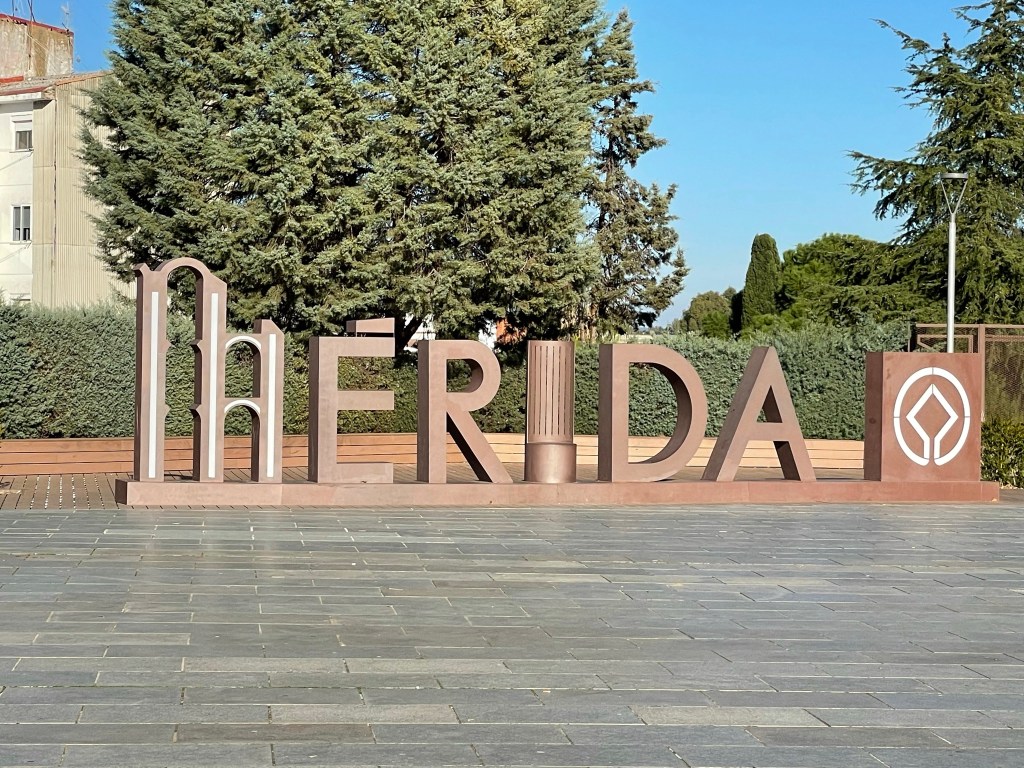
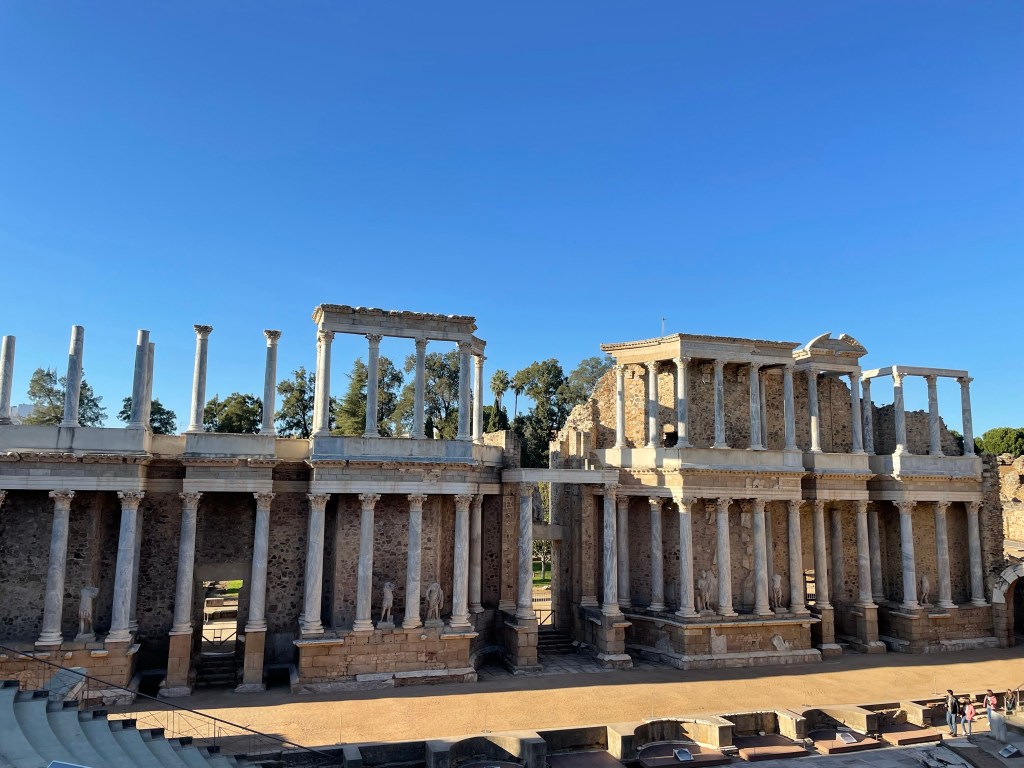
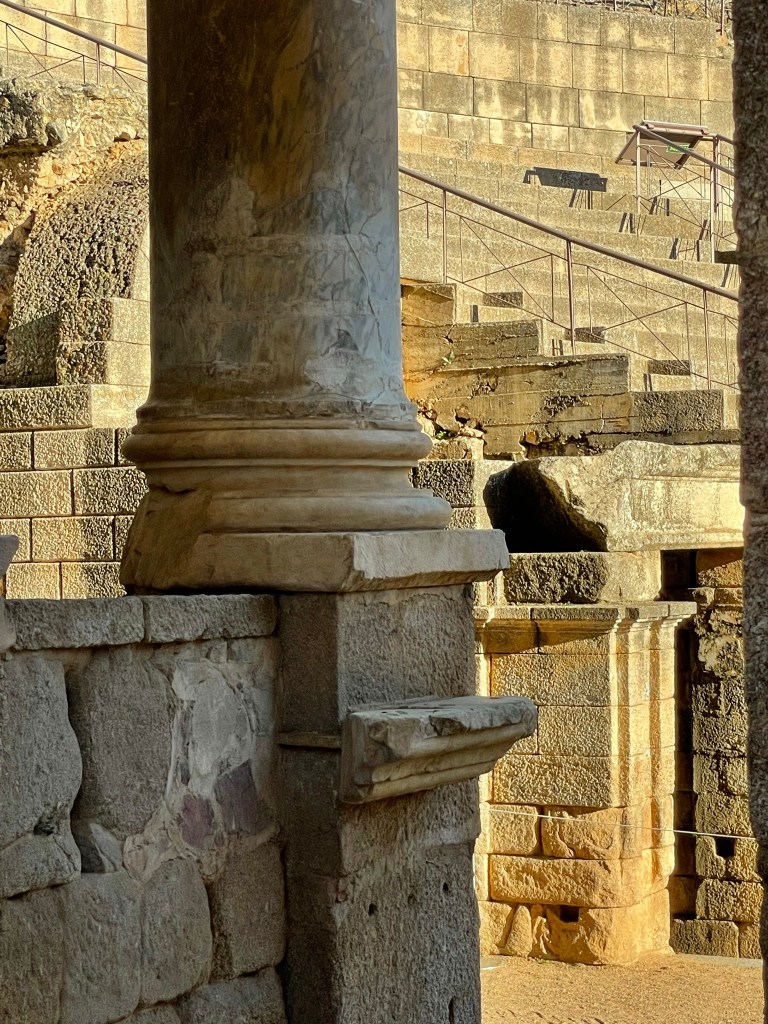
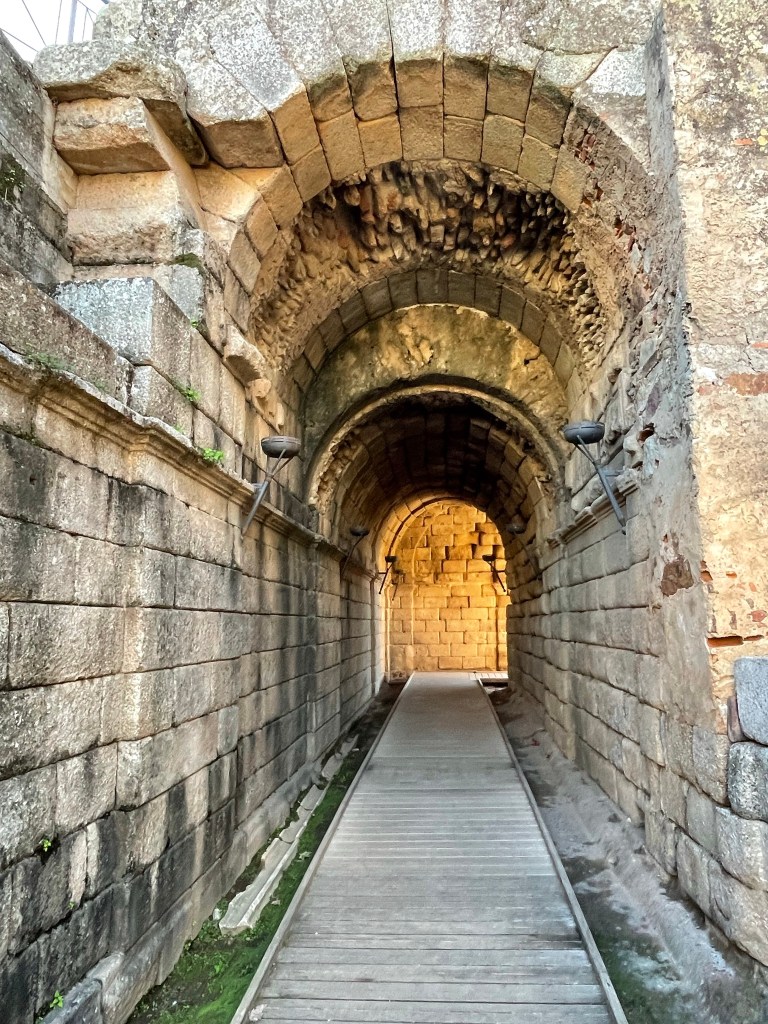
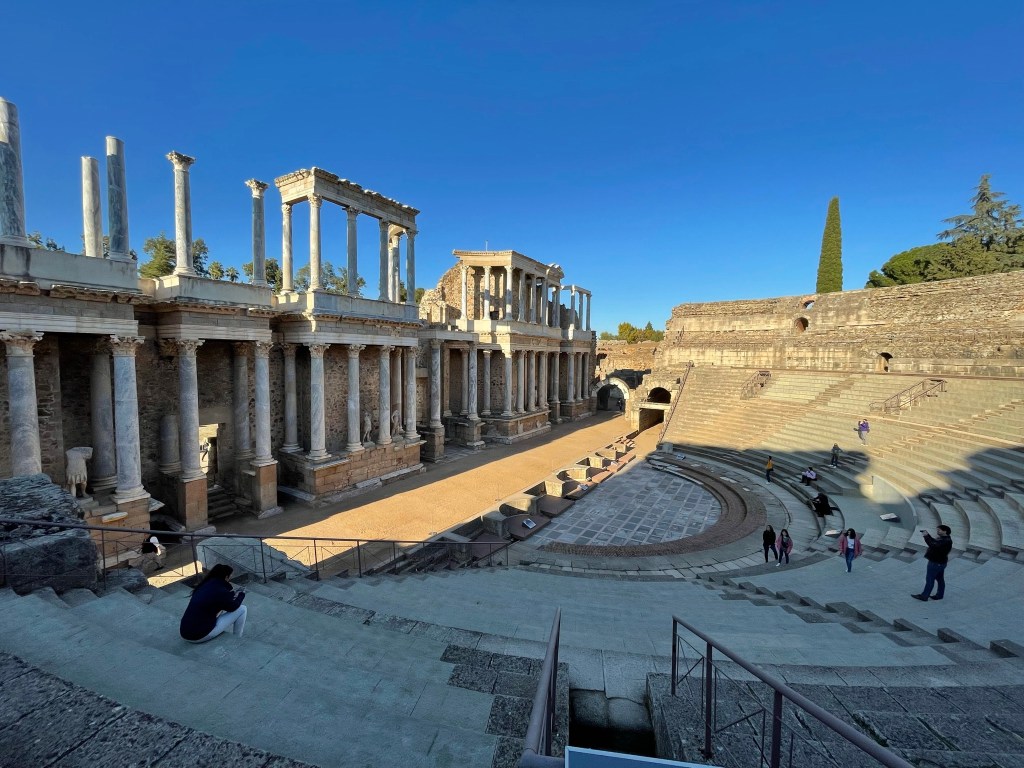
Even after spending almost three months on this trip, we’ve realized that we just can’t see it all. There’s so much more history, culture and art left to experience. On our way back to Portugal, Carrie and I made a brief stop in Merida, Spain, which showcases some of the best Roman ruins in Spain. We could only see a few of the ruins, but the ones we walked through were fabulous. Merida (Emerita Augusta) was founded by the Romans in the 1st century B.C. as a home for discharged Roman soldiers, and it was outfitted with all the luxuries of home, such as a theatre and a fighting arena. One can easily imagine what life was like for those retired legion fighters in this sunny Spanish city.

Tomar, Portugal

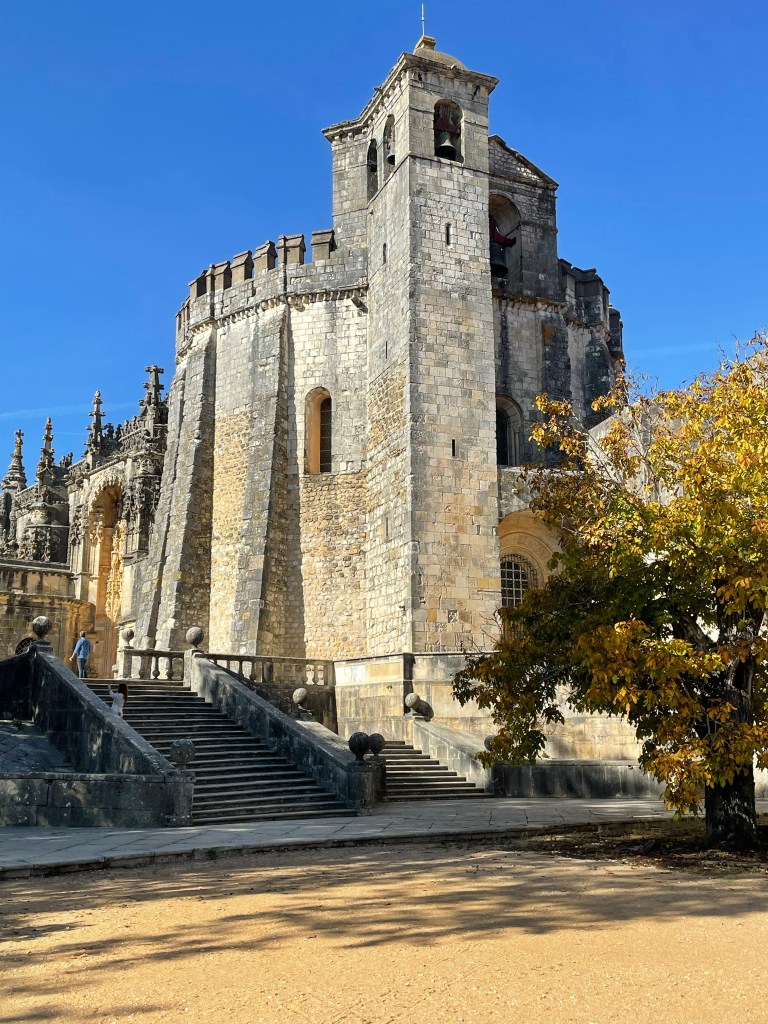
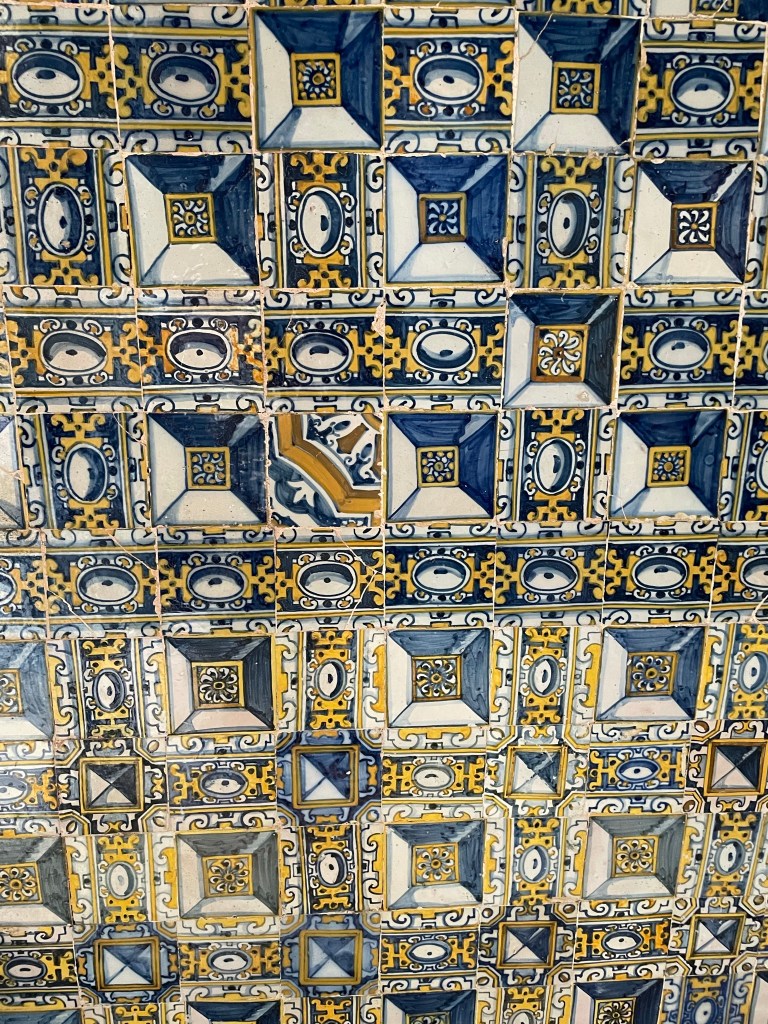
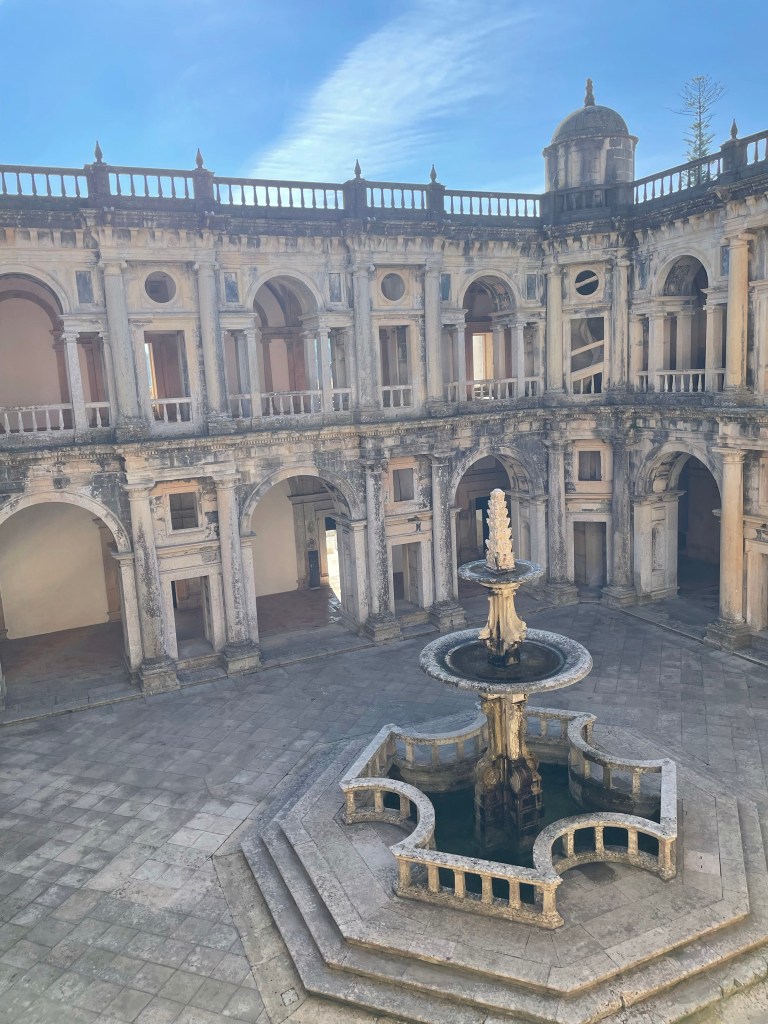
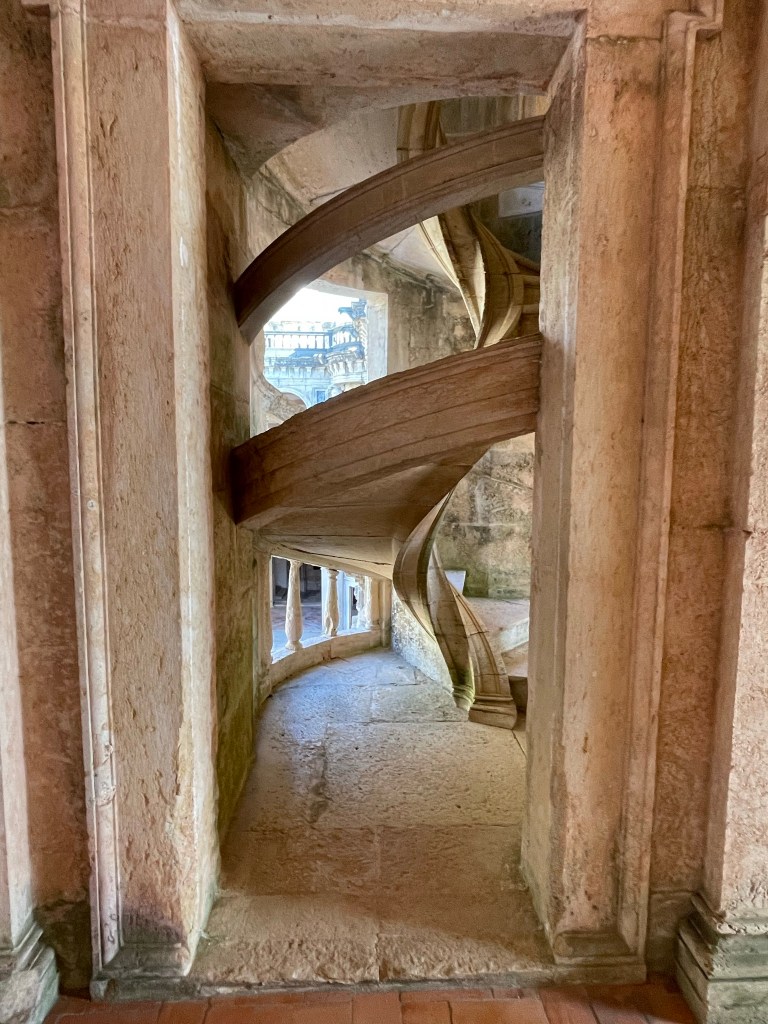
From Merida, we drove back into Portugal, working our way towards Lisbon. Tomar has a major place in history as the last Templar Knights town to be constructed in the late 12th century. Although the Templars were disbanded soon after, and succeeded by the Order of Christ, this convent/fortress and city stayed viable, and played a role in Portuguese overseas exploration in the 15th century under Henry the Navigator.

Sintra

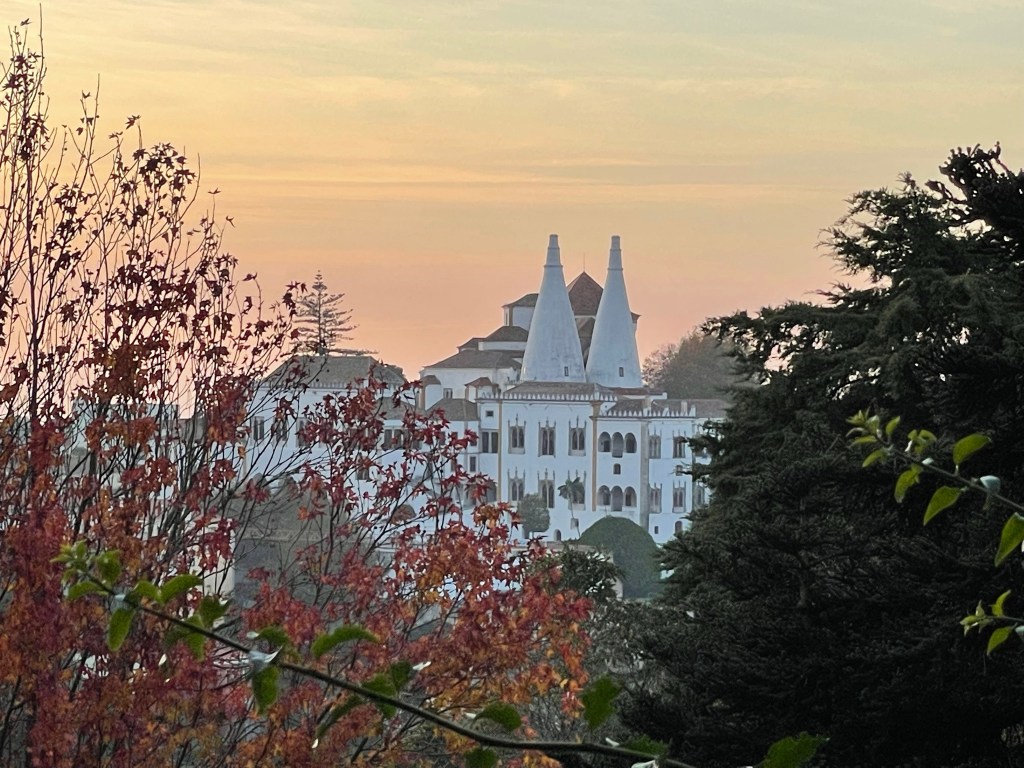
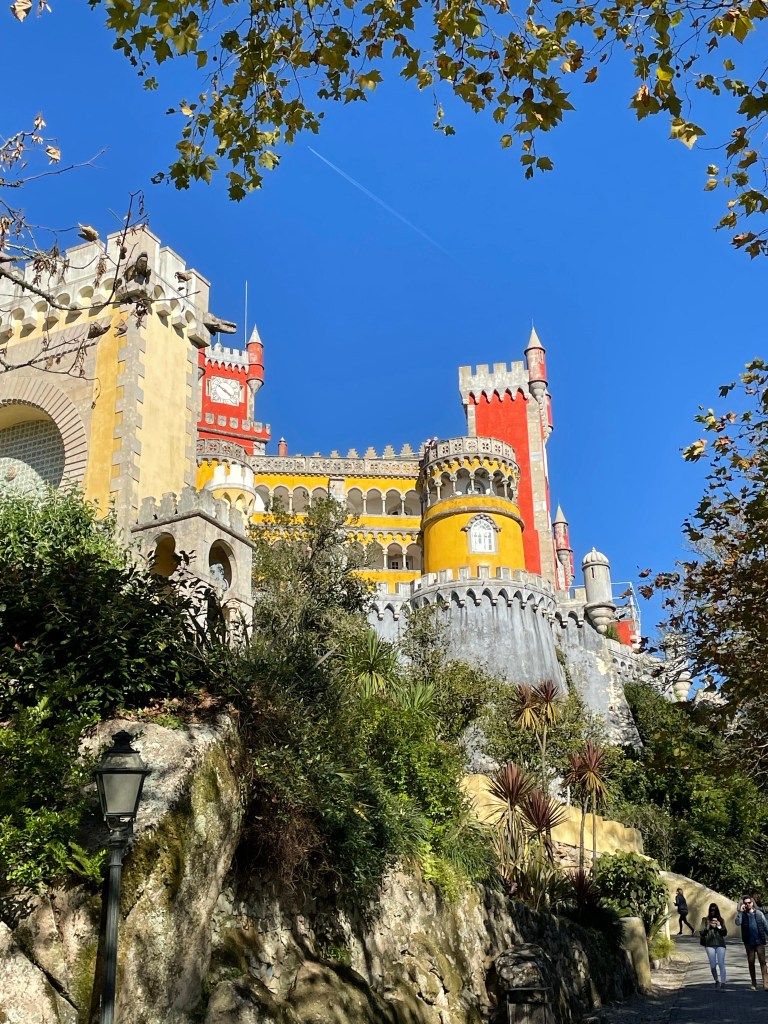
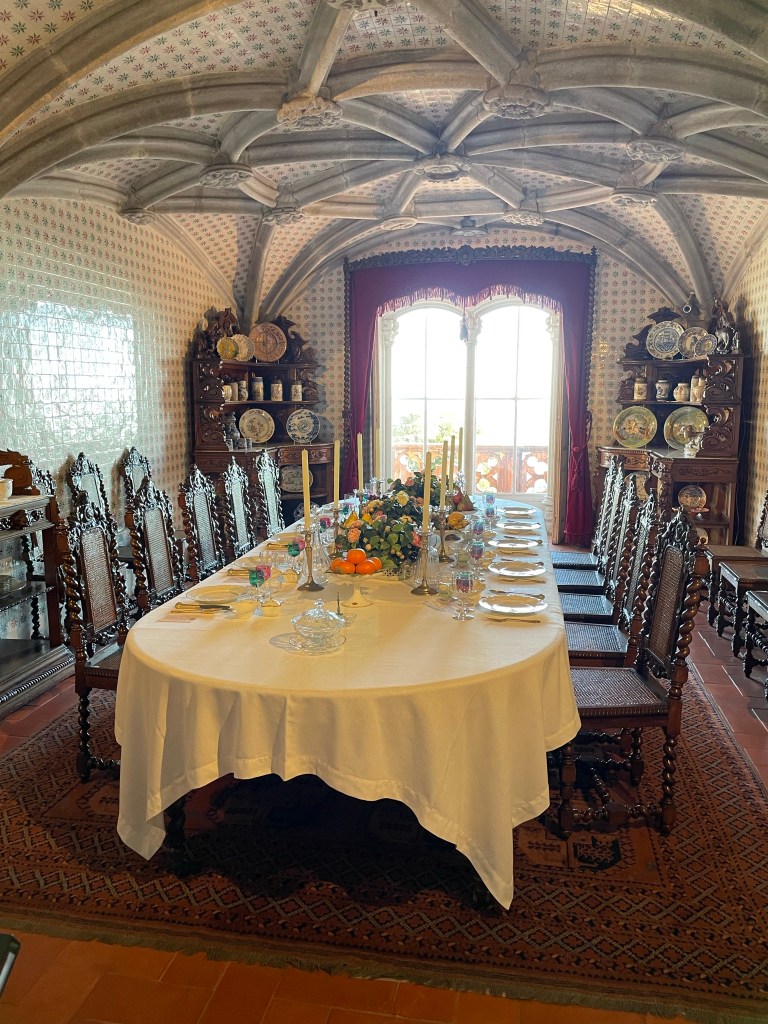
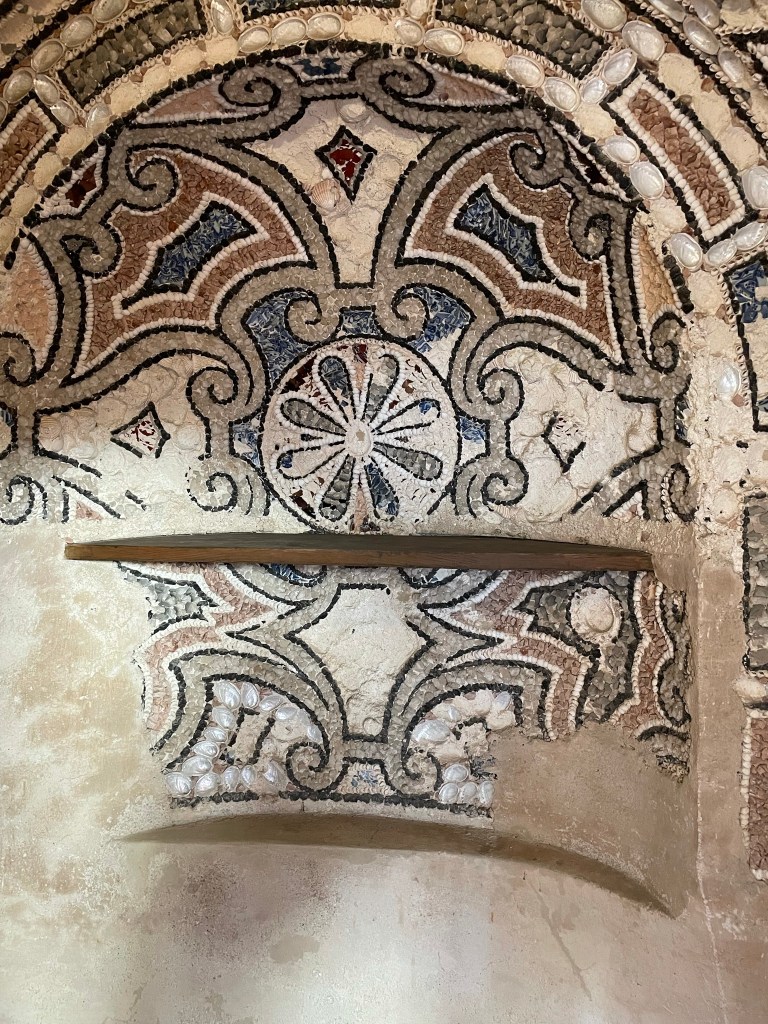
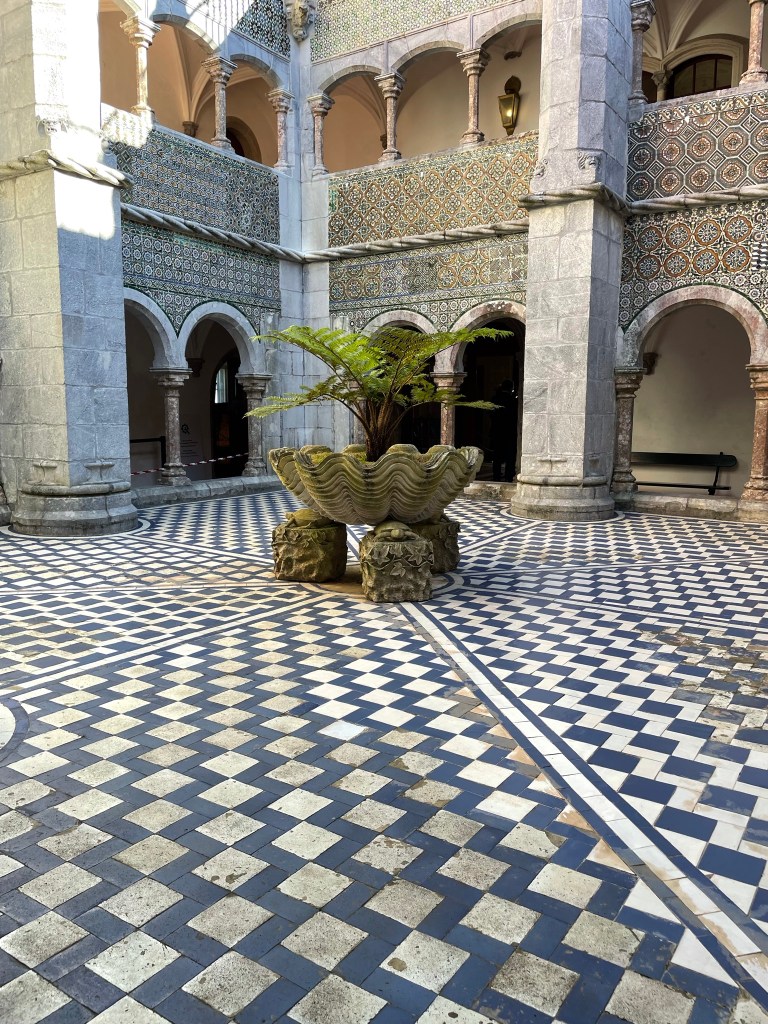
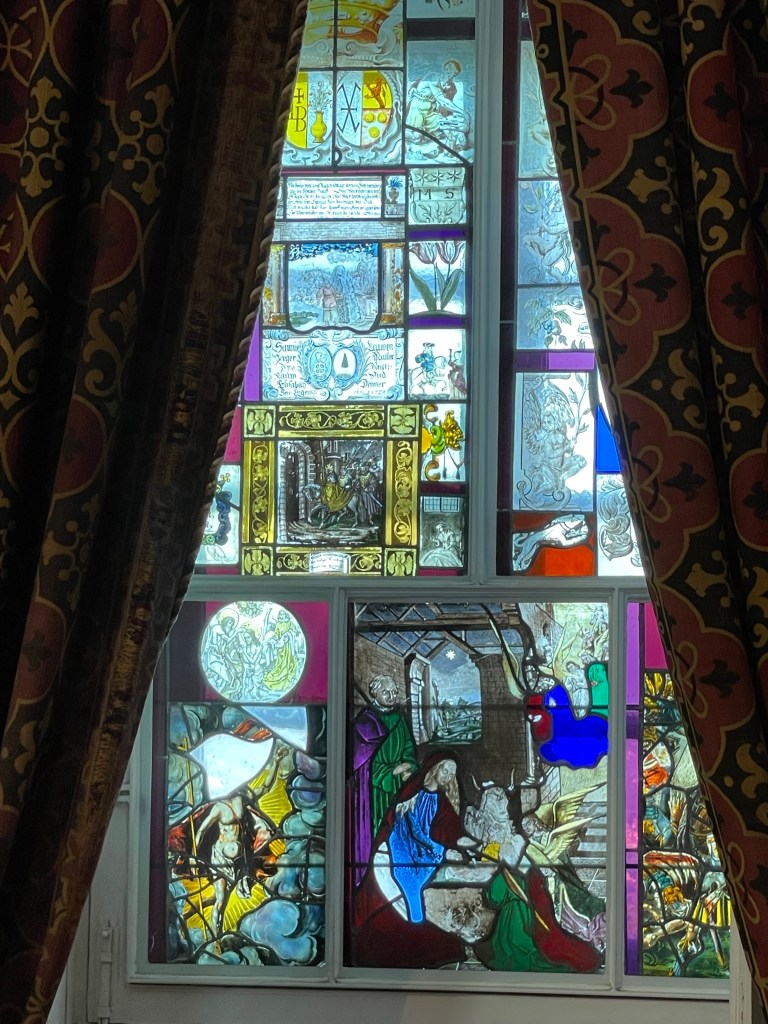
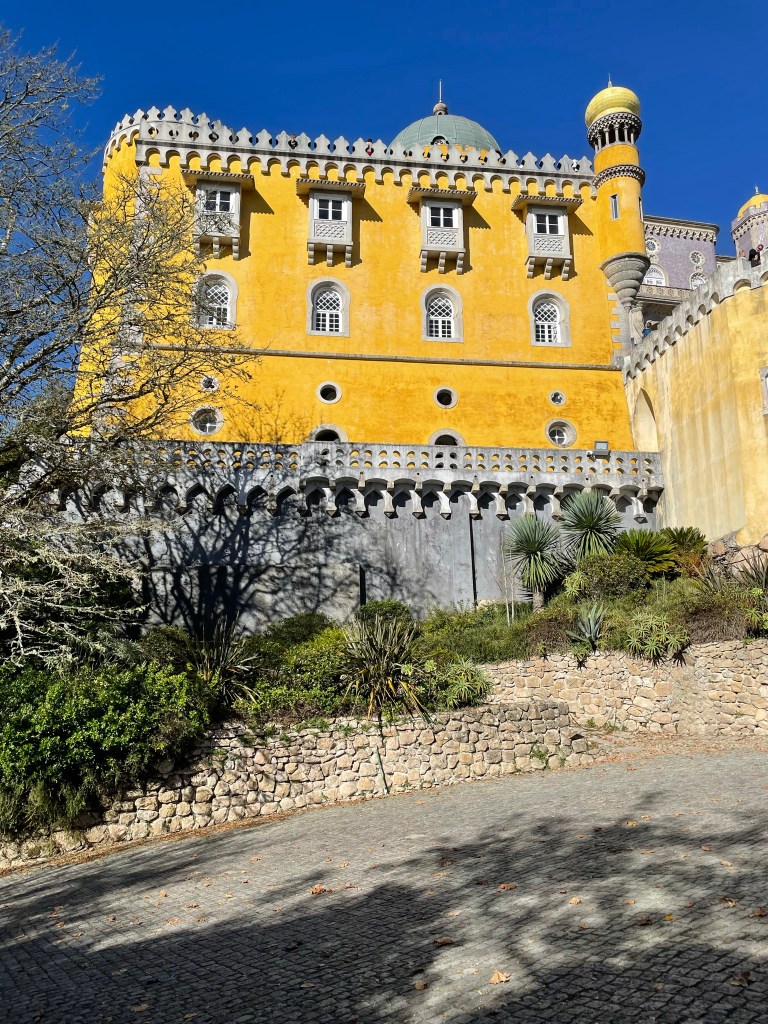
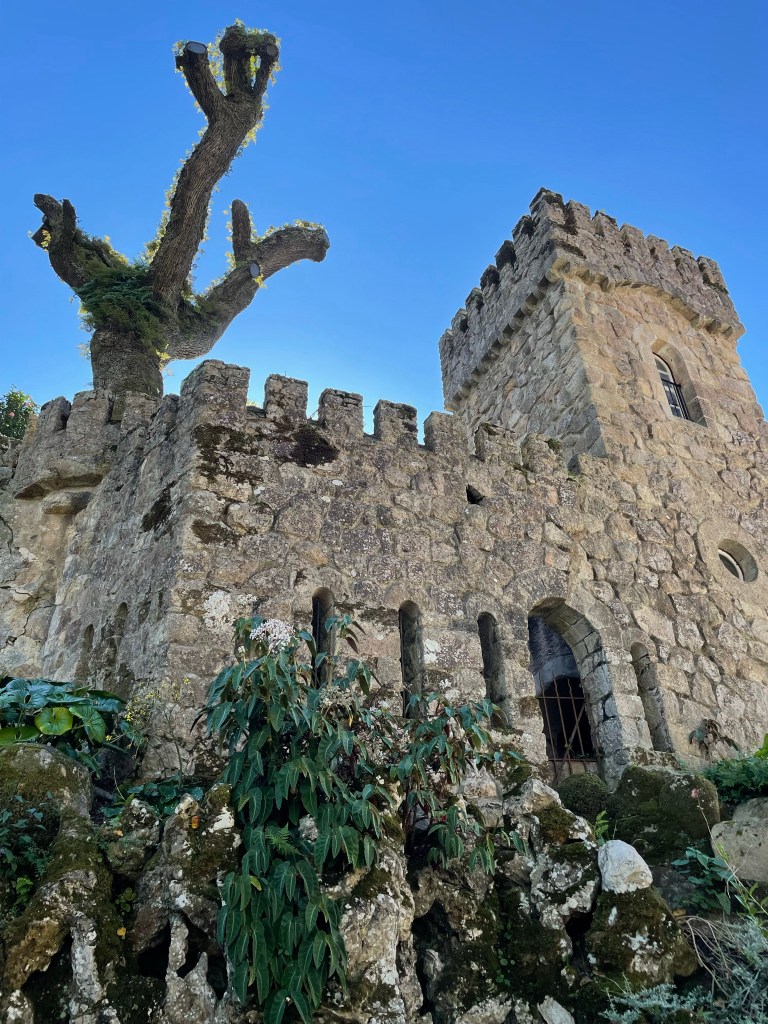
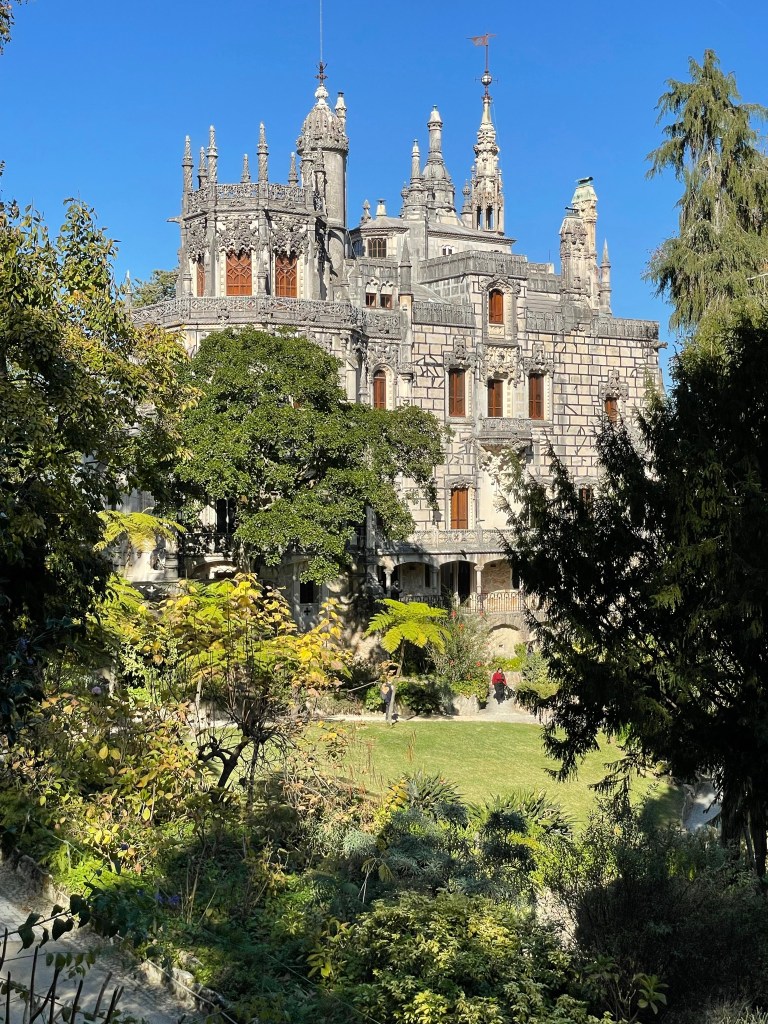
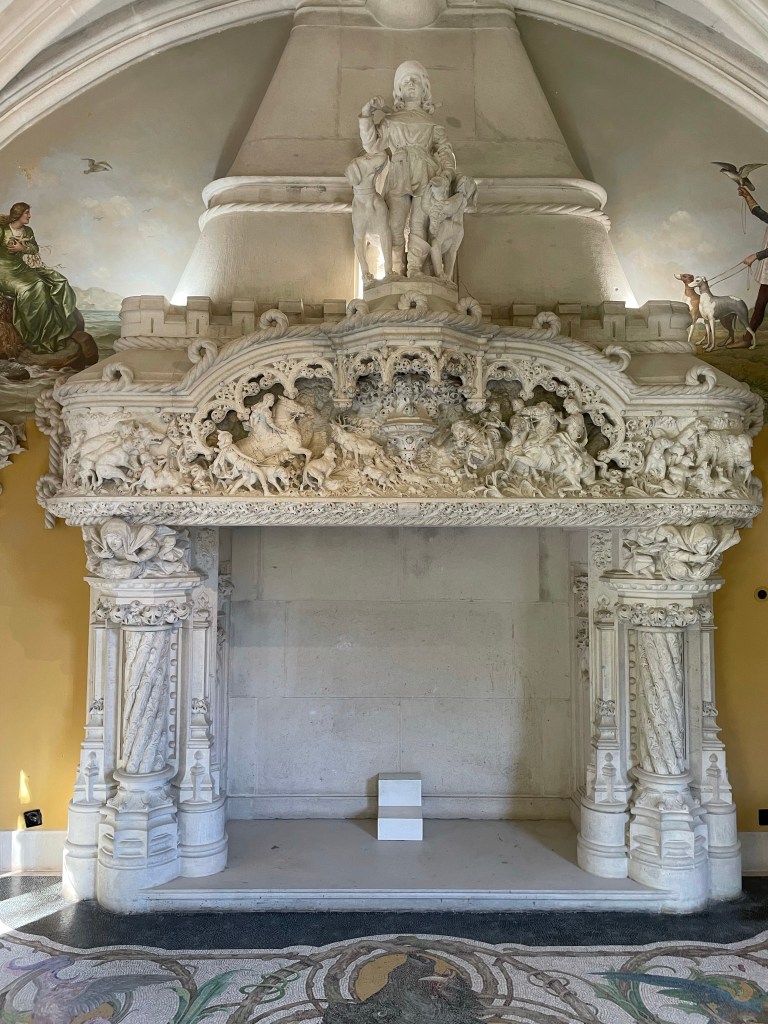
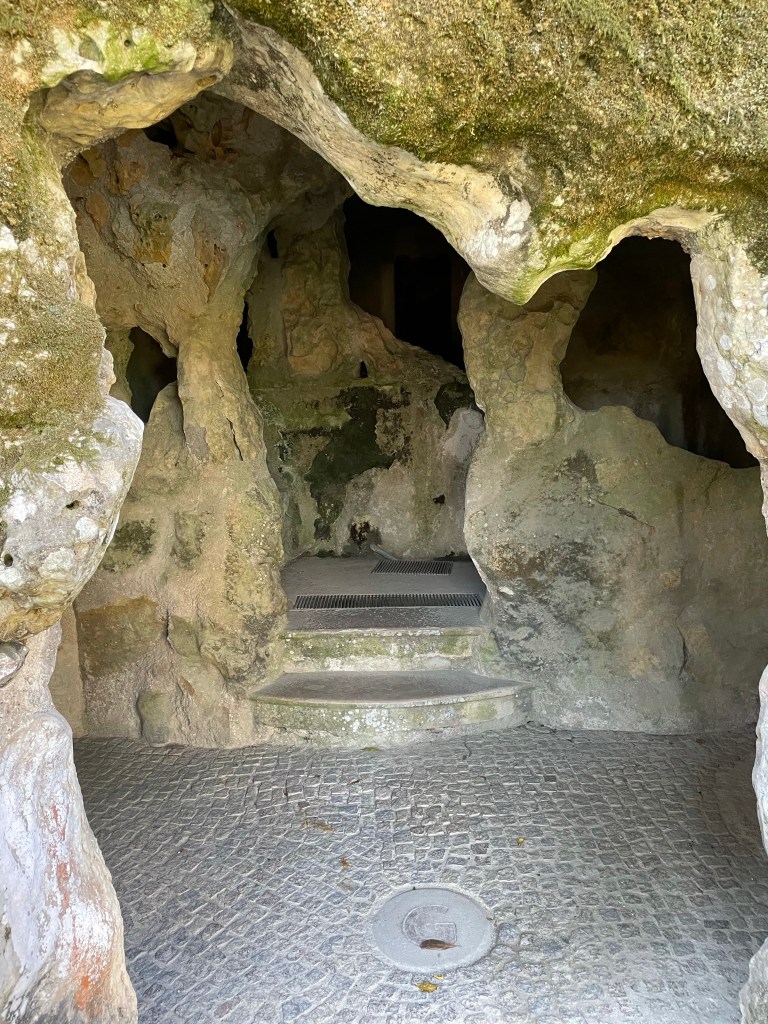
With just a couple days left in our adventure, Carrie and I headed to Sintra, which we seem to keep missing when we are in Portugal. Many guidebooks say that Sintra is best seen as a day trip from Lisbon, as it’s only about 30 miles west and has good train service. However, spending a night or two in Sintra is like spending time in a Disney fairy tale. One is surrounded by brightly colored castles, turreted buildings and narrow walled roads. There are more splendid eye catching sights and castles, gardens and tunnels to explore than one can do in just a day. In the day that we visited here, Carrie and I toured the extravagant mountaintop Pena Palace and then on to the fun Quinta da Regaleira house and gardens. There are many other worthwhile historical homes and museums to see in Sintra and we were sad that we couldn’t see more.

Carrie and I left Indiana 81 days ago, and while we love traveling, we are ready to go back home and see our family and friends again. We fly from Lisbon back to the US tomorrow. We have had a wonderful trip, making new friends and seeing places that we have always wanted to visit. But we will be happy to again be in the comfort of our home and start planning for the upcoming holidays.

Marrakech and Casablanca

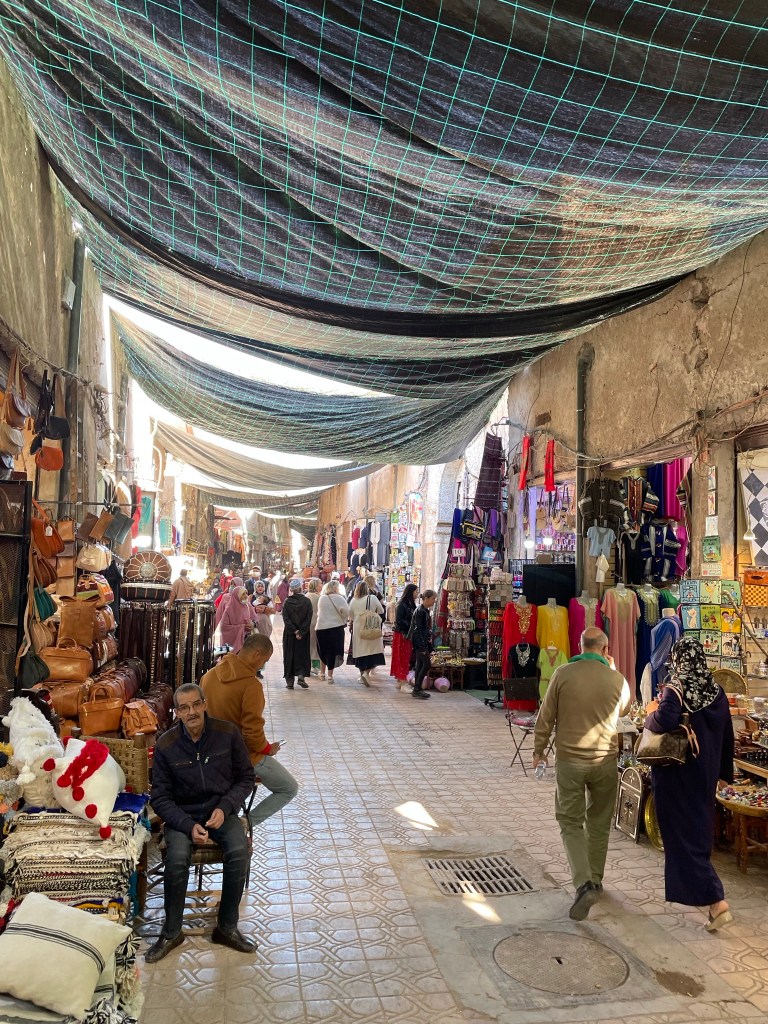
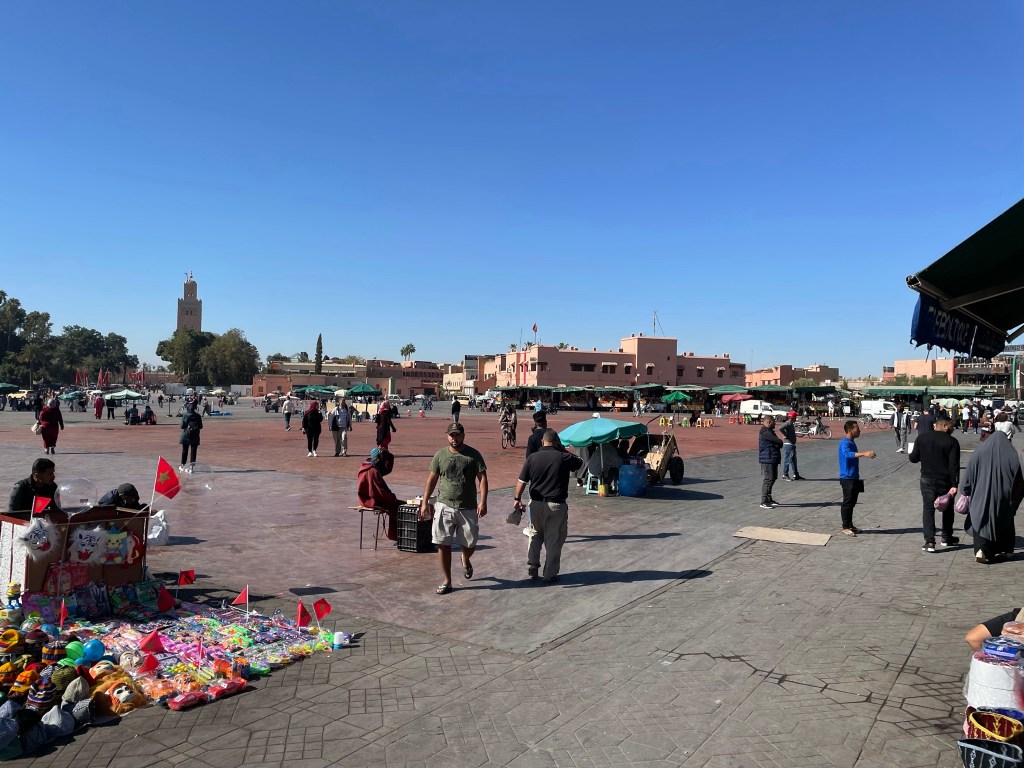
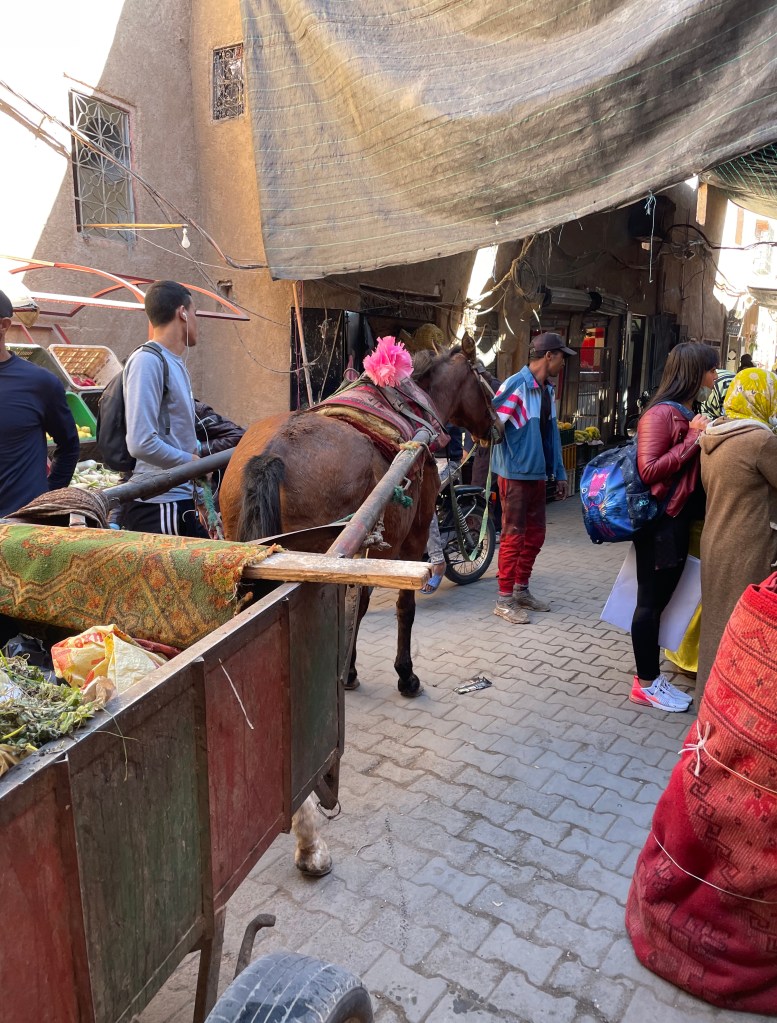
The medina of Marrakech is arguably the most famous in all of Morocco. There are miles of narrow covered streets lined with vendors offering leather goods, ceramics, metal lanterns and wall decorations, shoes and every kind of trinket that a tourist might want to bring home as a souvenir. In this time of Covid, there were more vendors than tourists, but we were told that the situation is improving. We shopped a little too, but paused when we arrived at the big plaza (Jamaa El-Fna), and admired this historic square, which has been featured in books and movies (Hitchcock’s “The Man Who Knew Too Much”).

I have mentioned the congestion of the streets and that I am amazed that I haven’t seen more accidents or people injured by automobiles. In the medina today, we decided to take a horse drawn buggy ride back to our riad. Part way through the ride an older Moroccan man was bumped by one of our horses and knocked down. He was shaken up but otherwise okay. Of all the opportunities for injuries that we could have encountered by bus, scooter or automobile, the first one we see is by a horse!

Casablanca

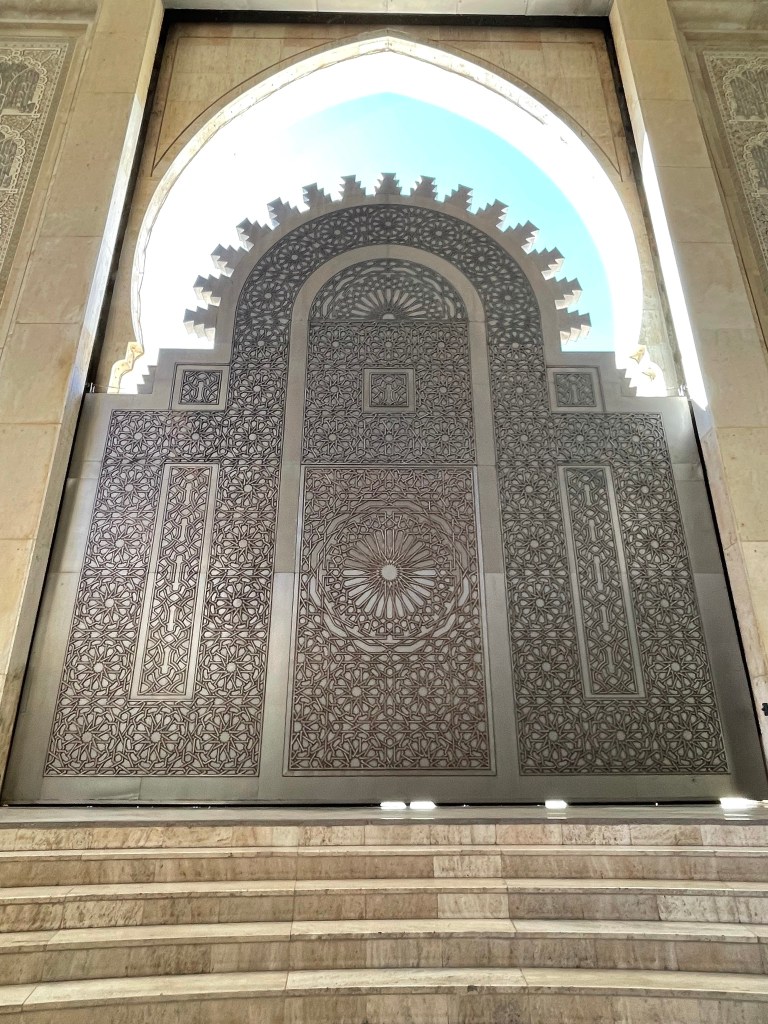
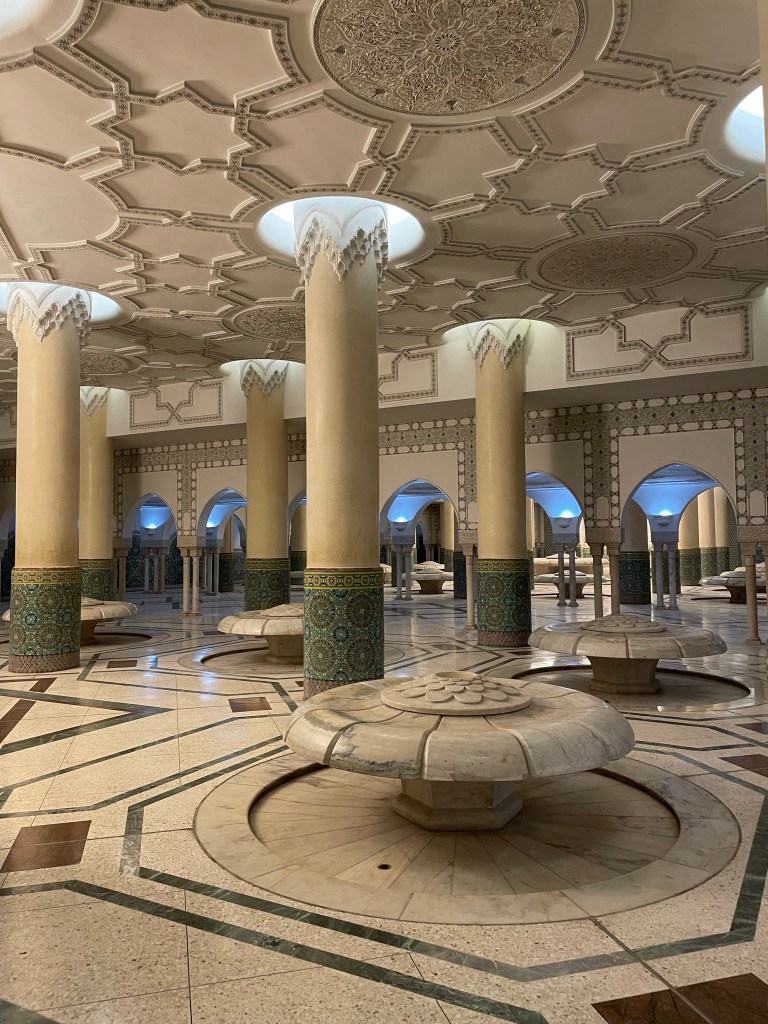
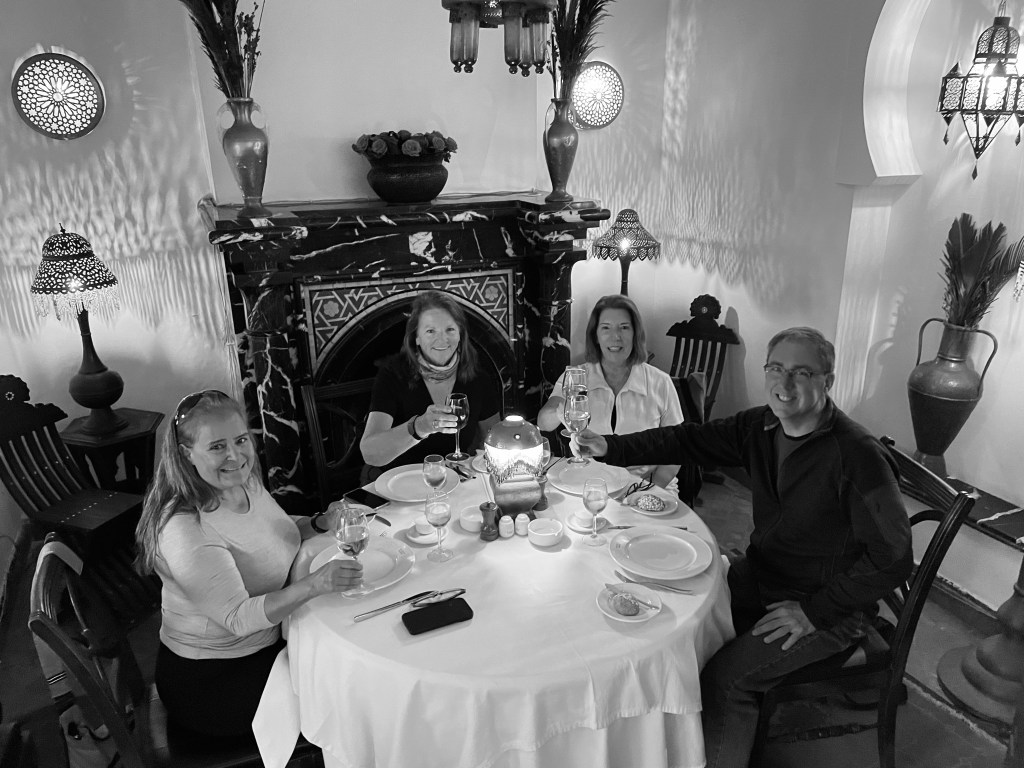
Casablanca wasn’t on our original itinerary, but several of our group were nostalgic about the old Humphrey Bogart movie “Casablanca” (the night prior to our day trip we sat around our riad eating pizza and viewing the old black and white favorite). So we all jumped in a car and drove north to see what the city had to offer. We weren’t disappointed. We toured the incredibly ornate, third largest mosque in the world, Hassan II Mosque, built prominently on the waterfront. We ended the short trip with lunch at Rick’s Cafe, a “Casablanca” themed restaurant that made the trip worth while.

We leave Marrakech and Morocco tomorrow and fly back to Malaga, Spain. We have just a few more days of sightseeing left as we make our way back to Lisbon, where we’ll fly home. Once in Europe, its so easy and inexpensive to fly to other parts of Europe. For our flight to and from Morocco, we found excellent fares at http://www.kiwi.com. We booked separate one way flights. From Malaga (which boasts a nice modern international airport) to Tangier, we flew Air Arabia Moroc, and our flight tomorrow from Marrakech back to Malaga is with Vueling Airlines ($142 total, one way, for Carrie and I, including 2 checked bags and assigned seats!). Not bad. Some of our frequent flyer friends try to book one way flights only and claim that the strategy saves them money and allows them more versatility.

Southeast Morocco

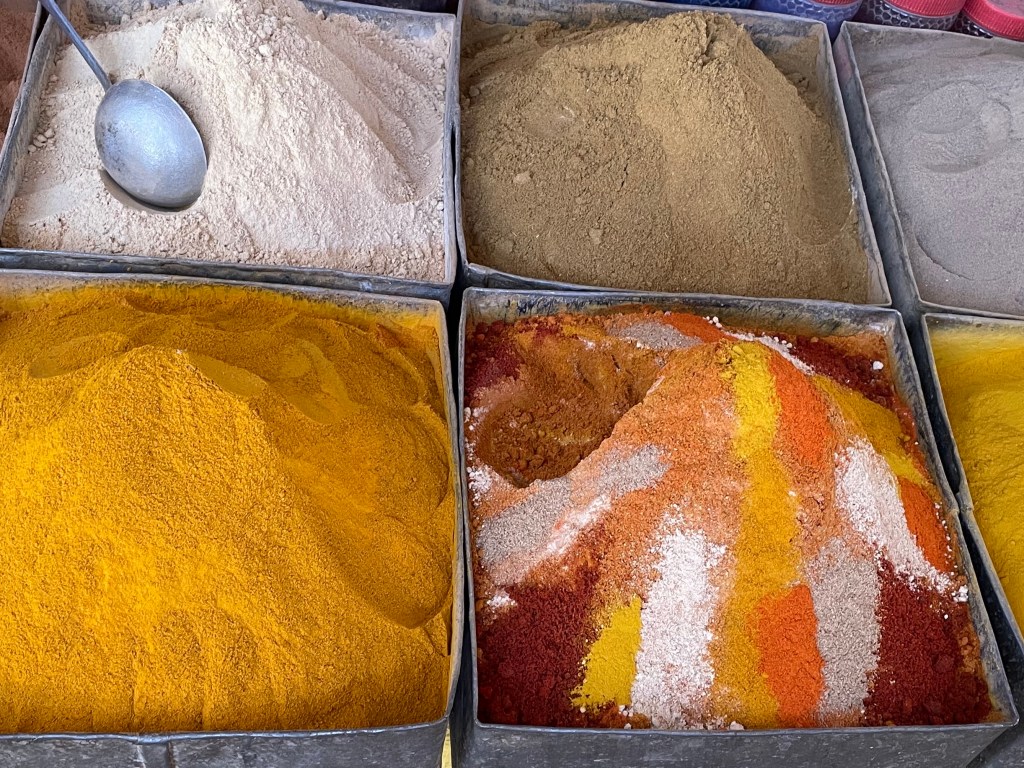
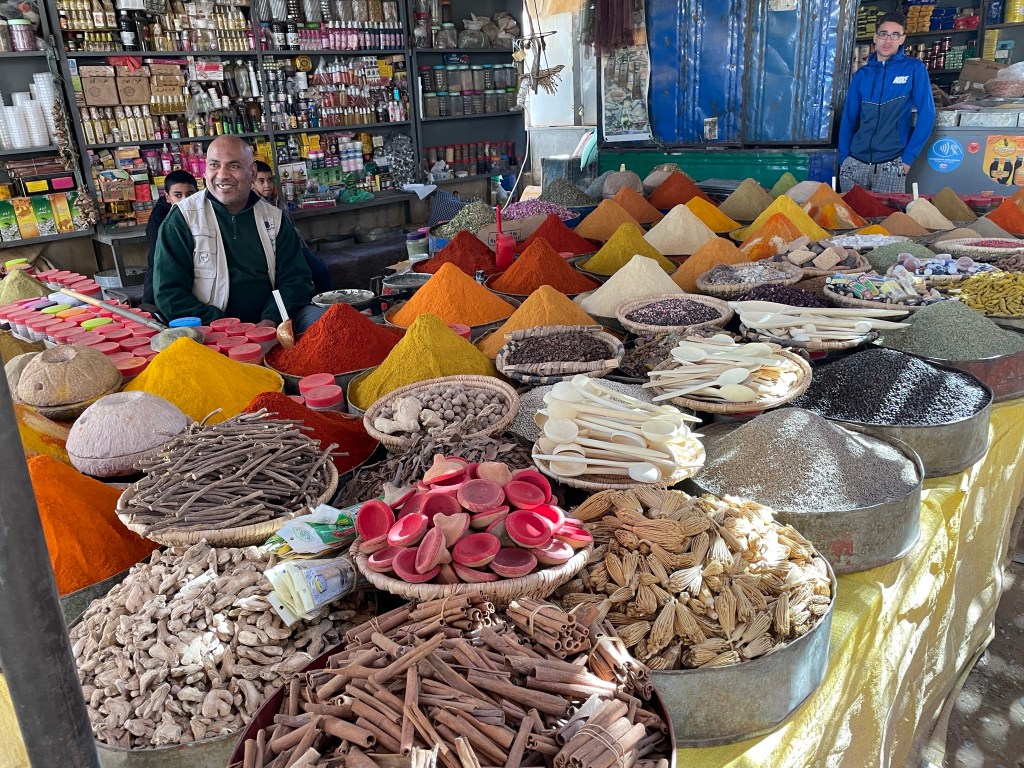
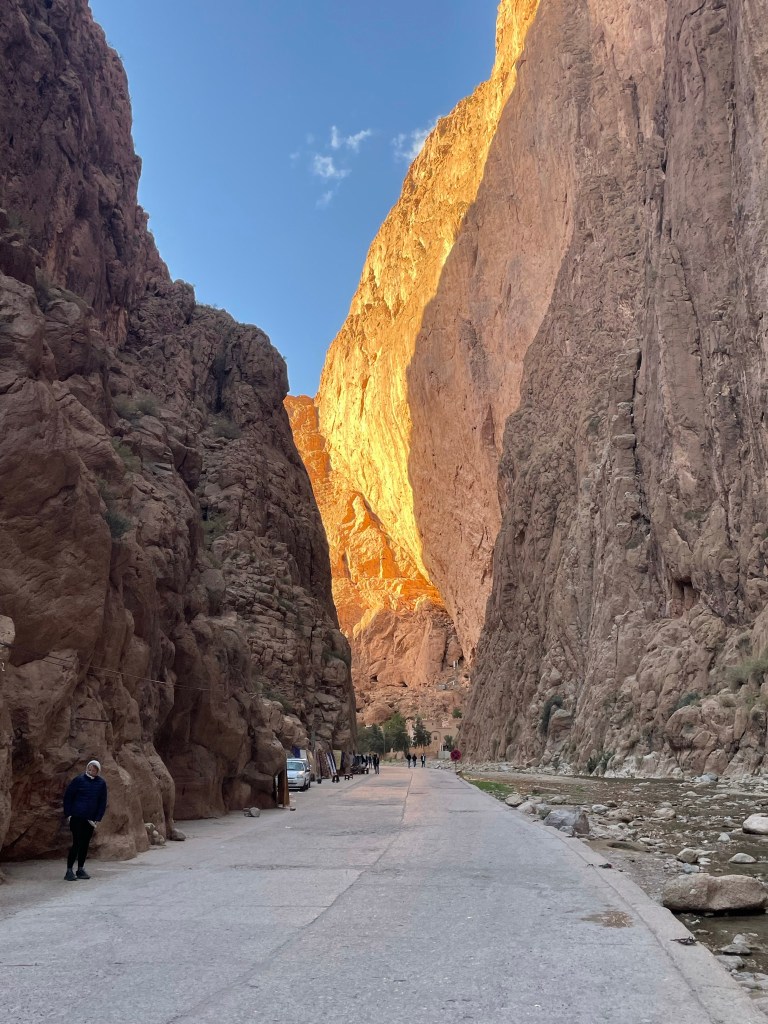
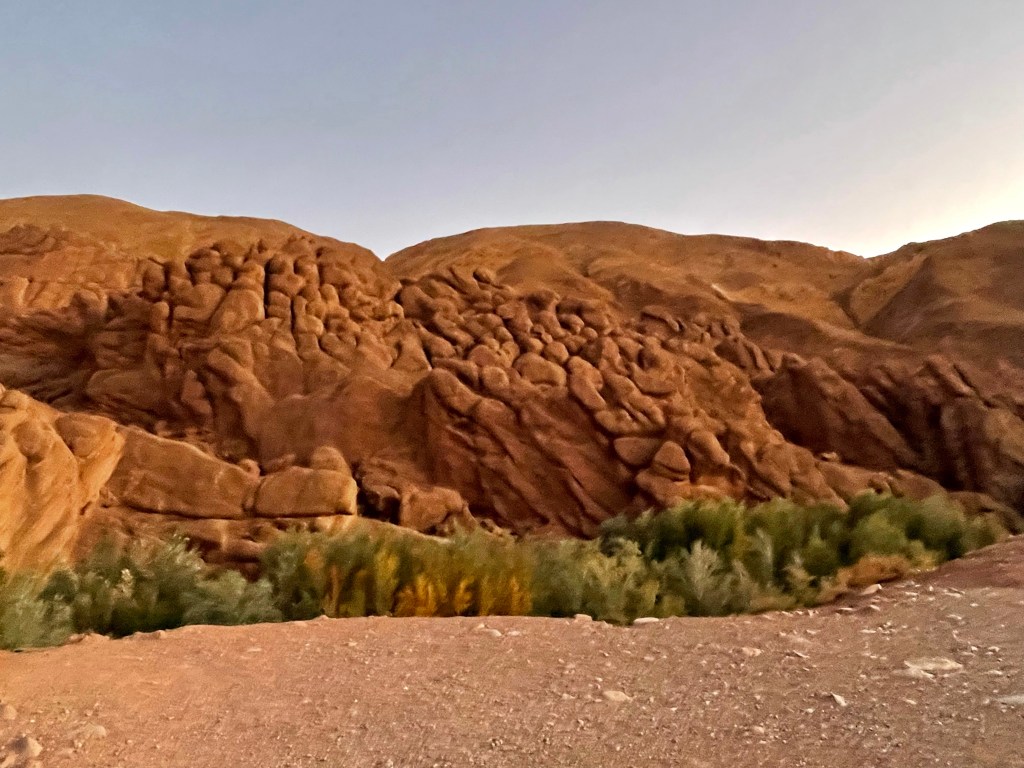
We left our desert oasis behind us and headed out along the Ziz Valley and again through the Atlas Mountain chain. There are several cities of significance we encountered. The first was Rossani, known for its spice market. Carrie and I loaded up on 100 gram packages of fresh ground cinnamon, turmeric, argon and other delicacies, along with a blend of 35 spices perfect for just about any tajine recipe. We can’t wait to get home to try them out!
Another stop we made was in Kalaat M’gouna, famous for distilling oil from roses, products that both smell pleasing and are beneficial to the skin. We also passed through the mountaintop city of Ifrane, which at 5600 ft. could pass for a Swiss village complete with Alpine architecture. When we arrived it was a brisk 36 degrees! We weren’t ready for that, as we had packed for a desert road trip.

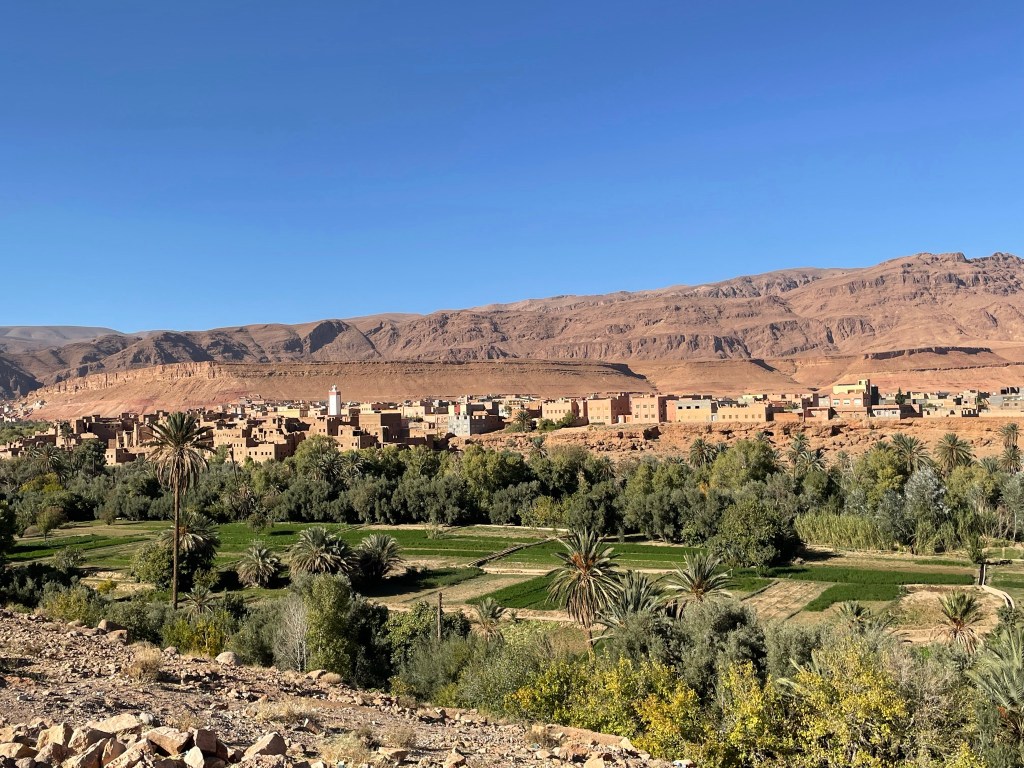
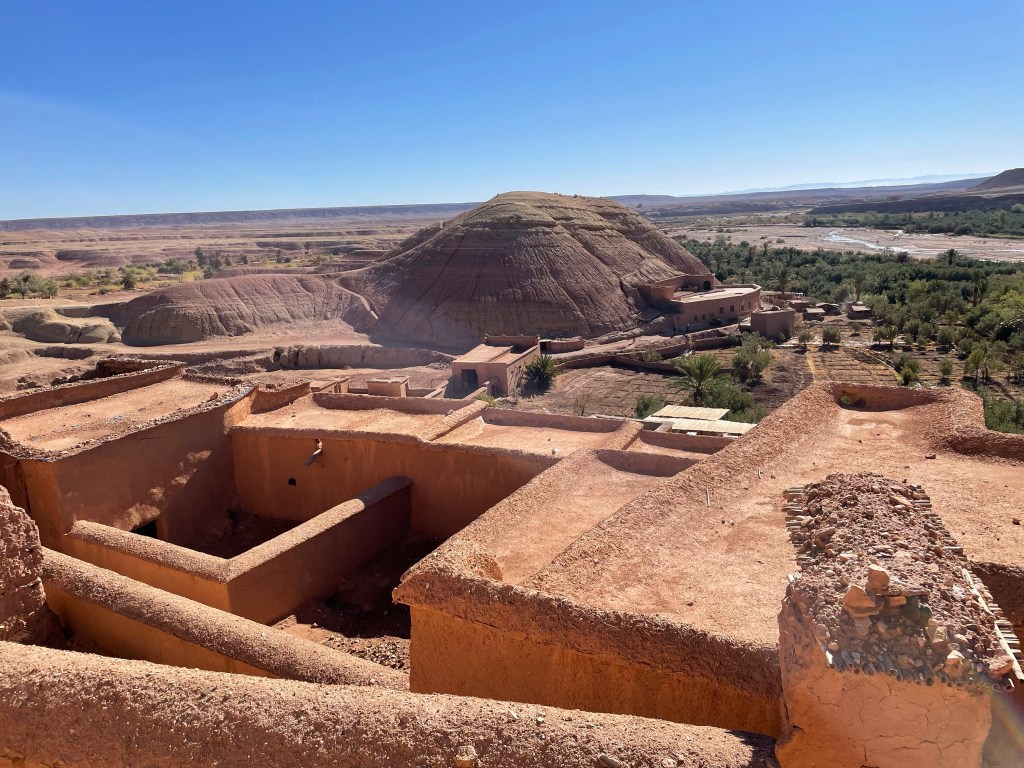
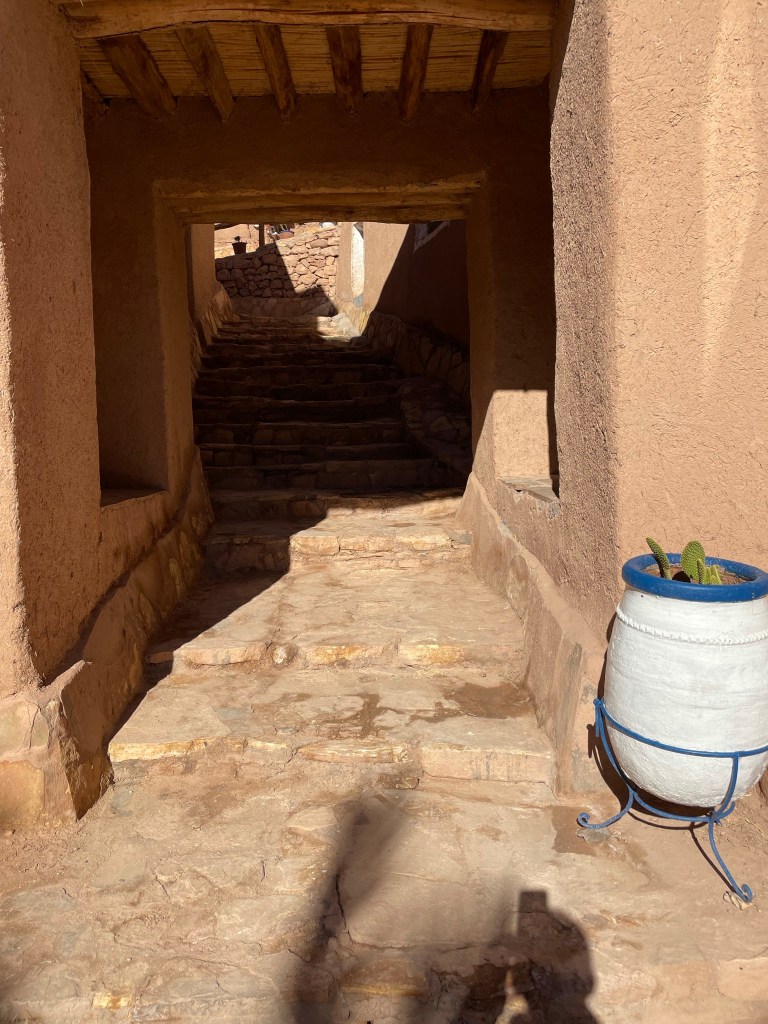
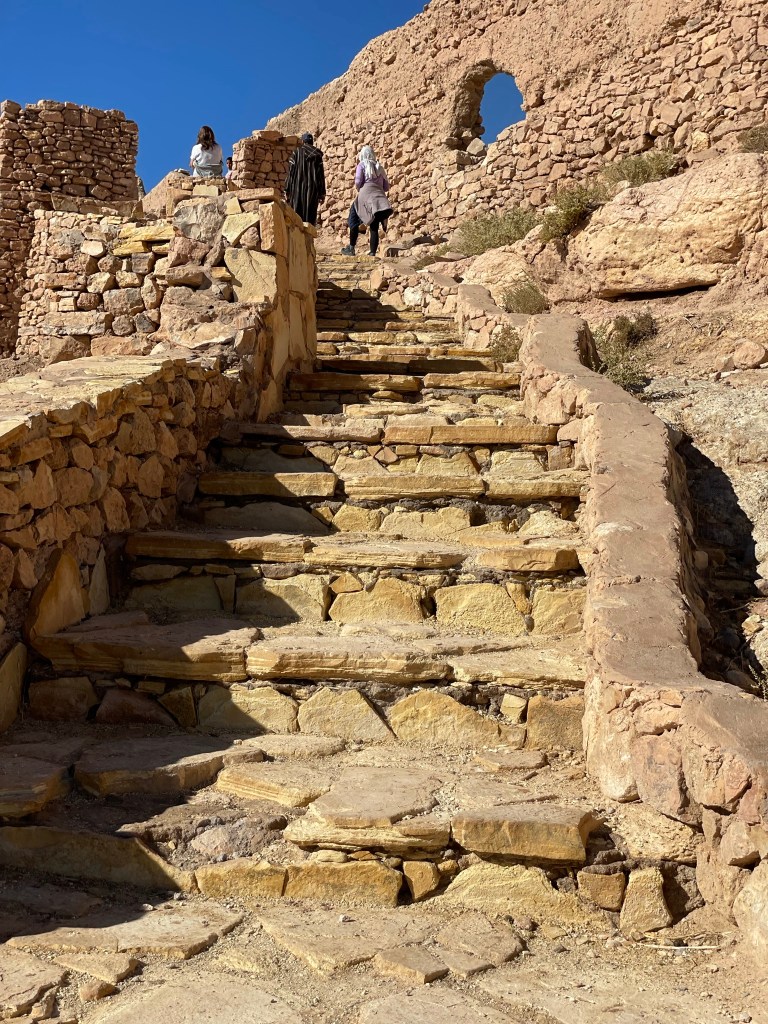
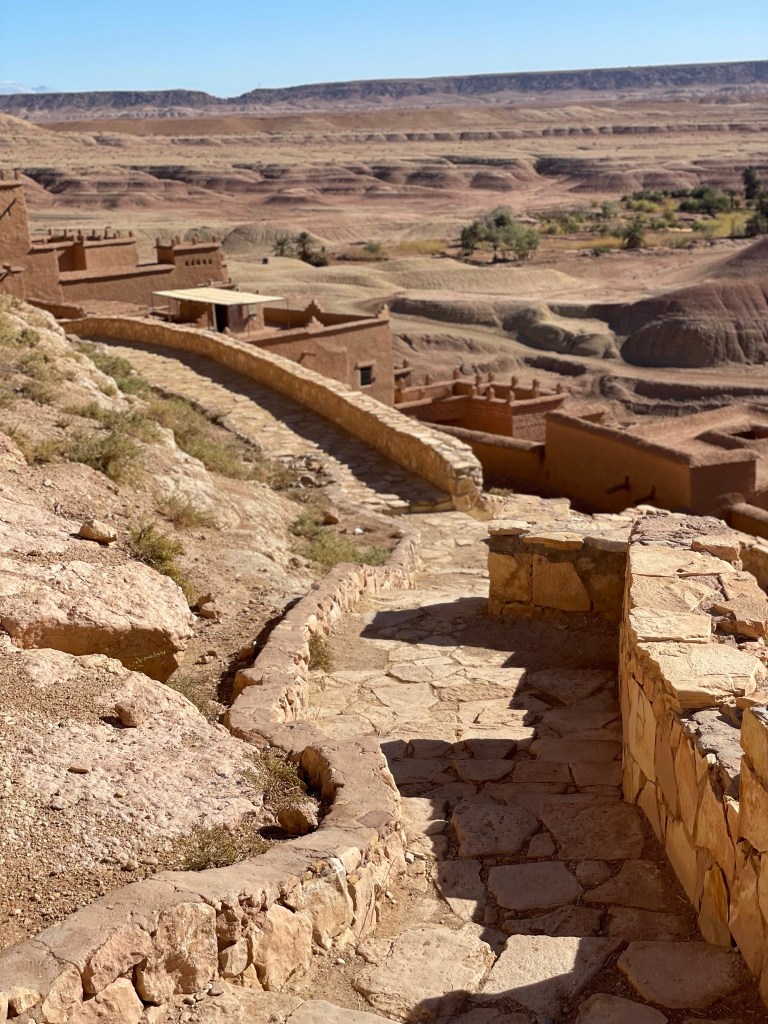
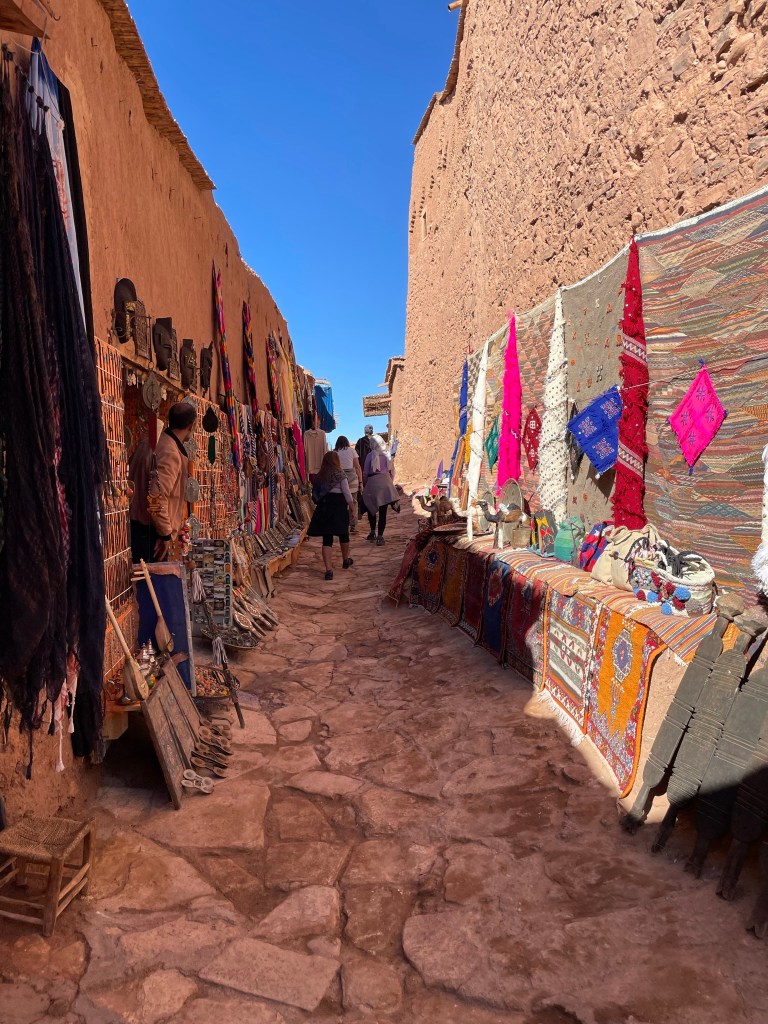
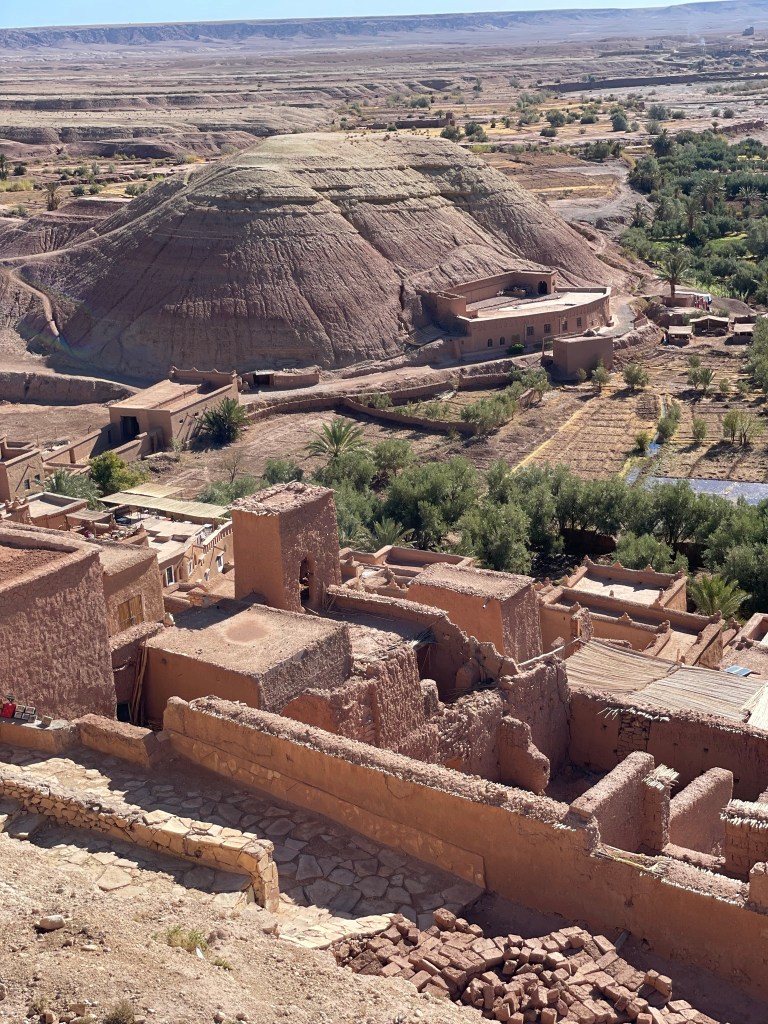
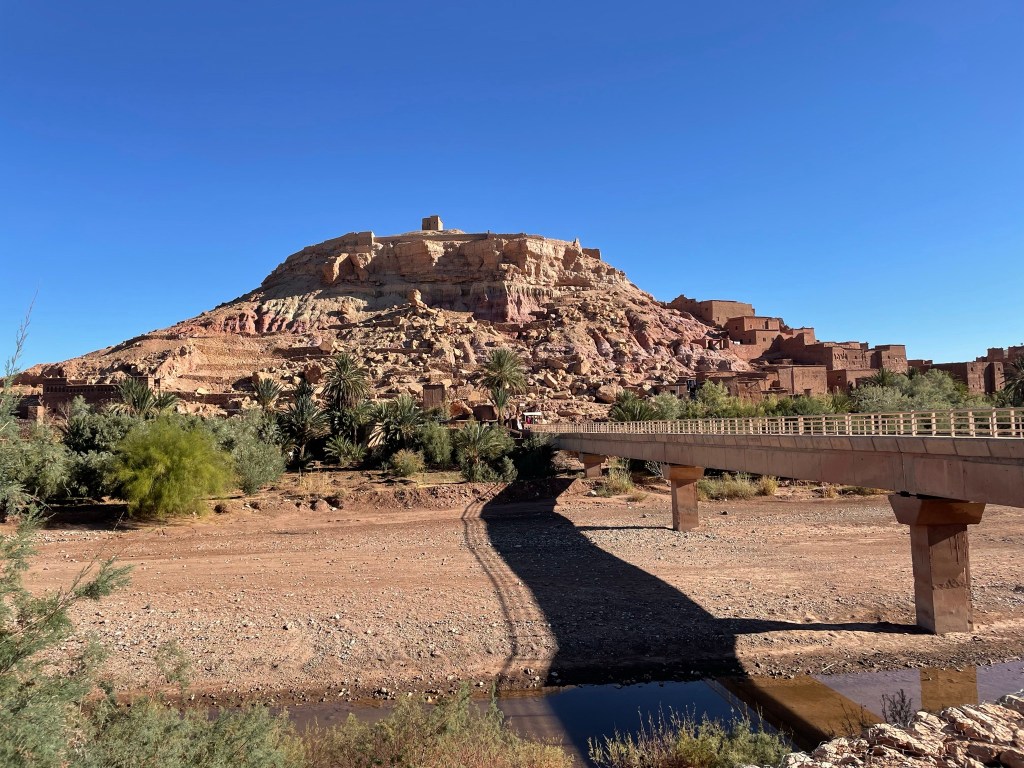
The Unesco city of Ait Ben Haddou sits on a rocky crag across a mostly dry riverbed from our riad just north of Oaurzazate. The old mud built homes and shops are mostly deserted from full time inhabitants, but vendors are plentiful, giving the village a life of its own. This city was a major stop for caravans moving goods north and south and its mountainous location alone made it a formidable fortress.

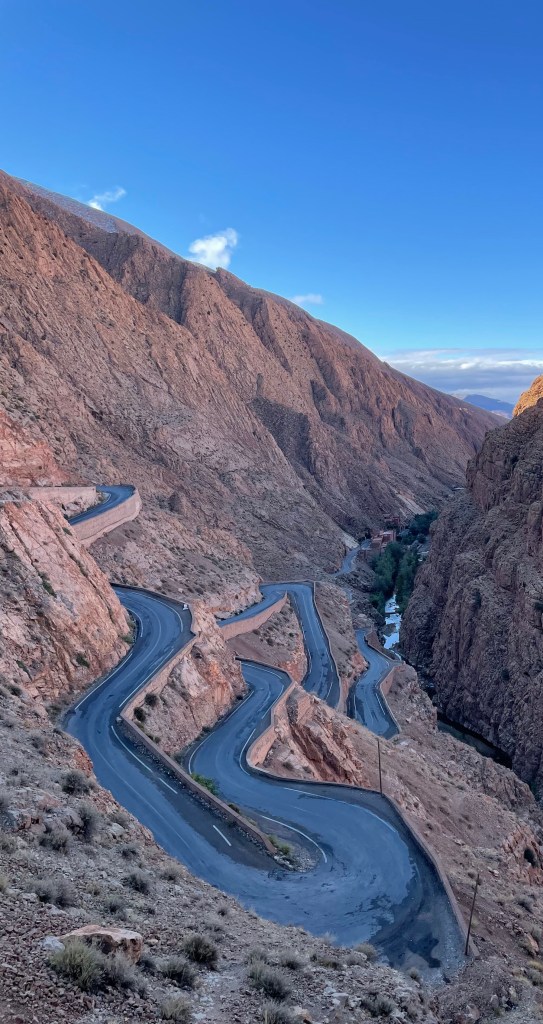
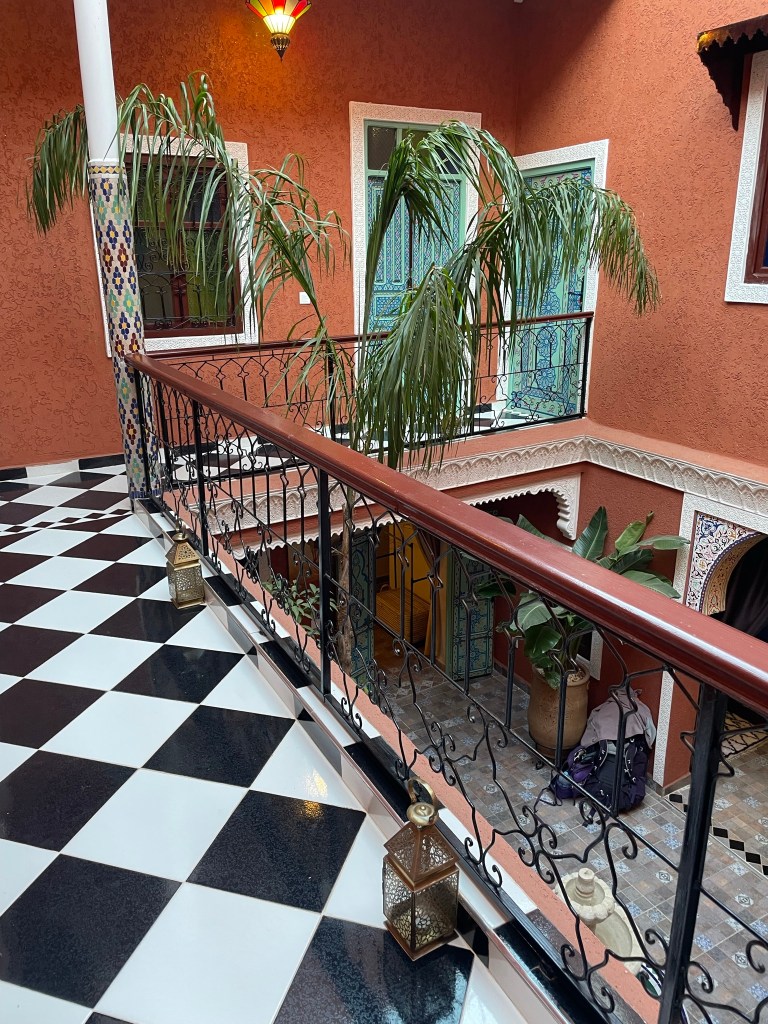
We drove across the serpentine roads of the High Atlas Mountains to get to our next destination, Marrakech. Our riad is located just inside the medina walls and is the nicest and most charming of all that we’ve stayed at. We rented through Airbnb, and were a little concerned because while the riad looked beautiful in the photos, there were no customer ratings to help us. However, the friendly owners met us when we arrived, helped us relax with cups of mint tea and gave us a tour of their beautifully restored riad, which took one and a half years to complete. The reason for no reviews so far? We are only the second guests to stay here! We will help them along with a good review on Airbnb.

Volubilis and Into the Sahara

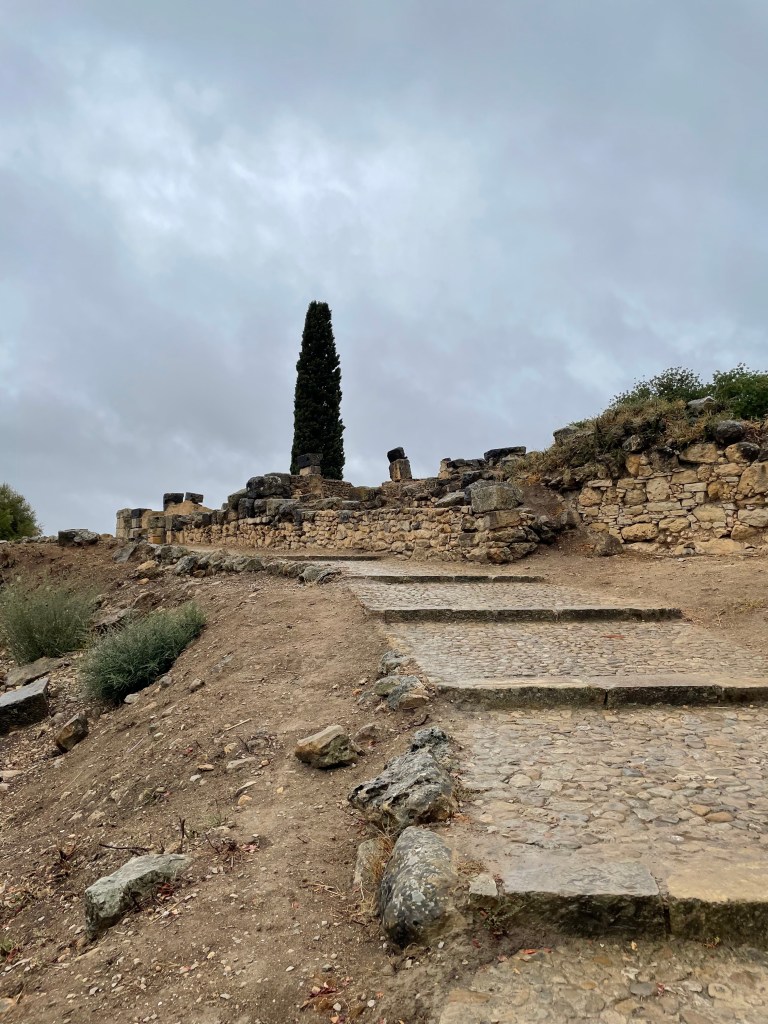
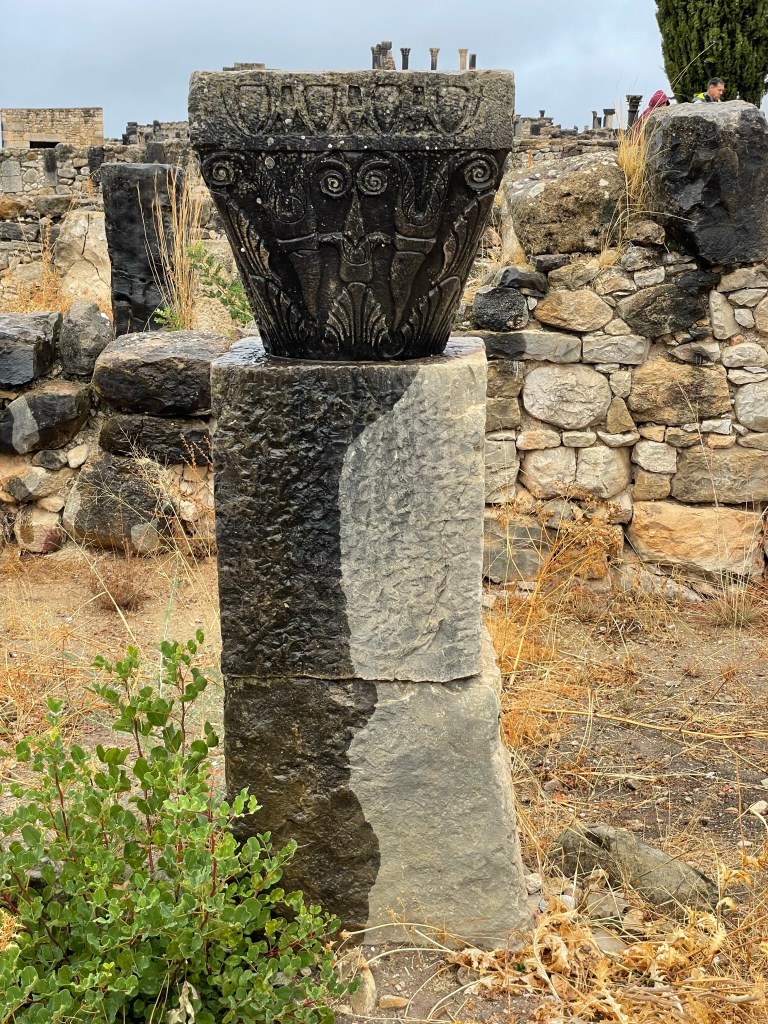
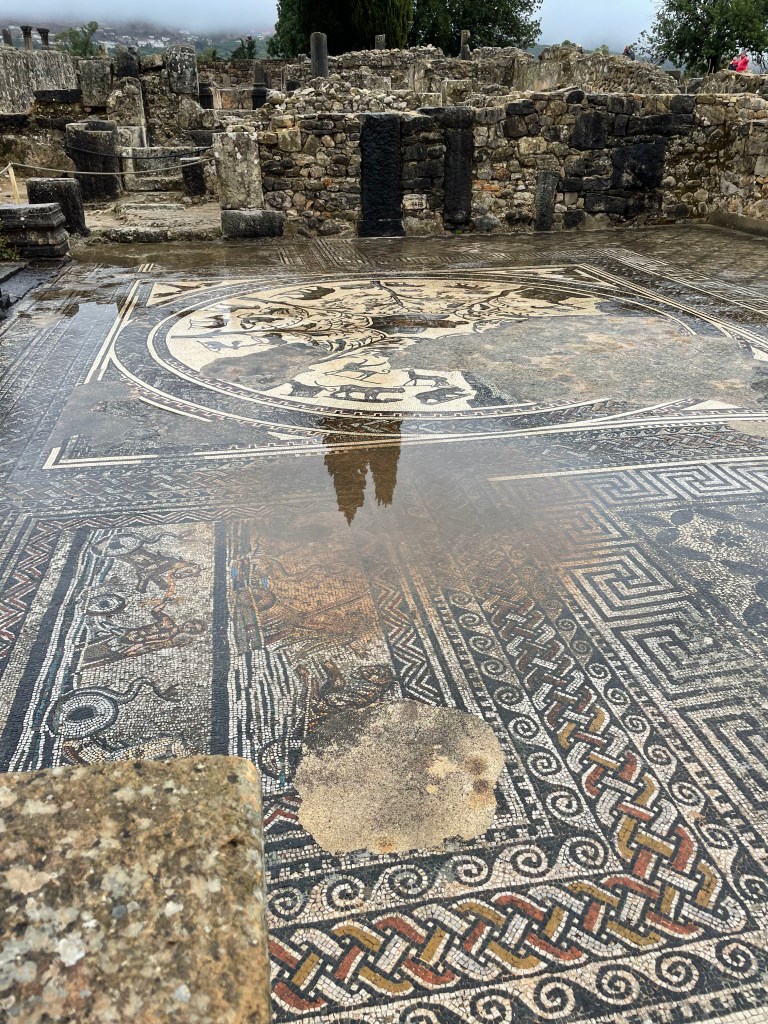
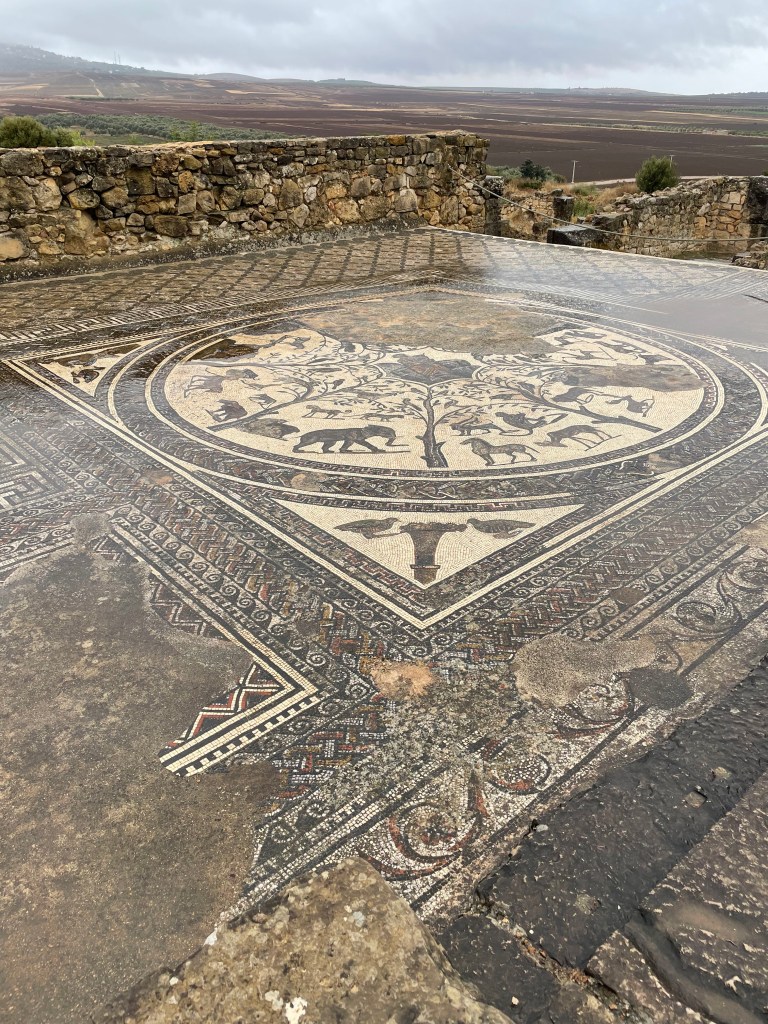
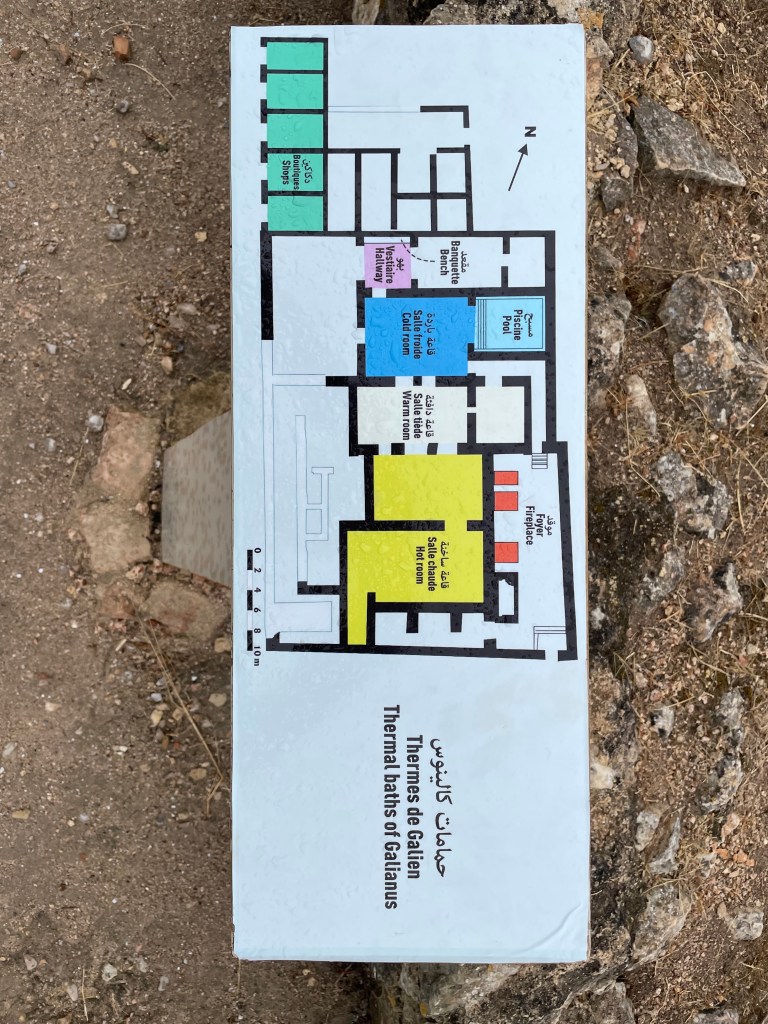
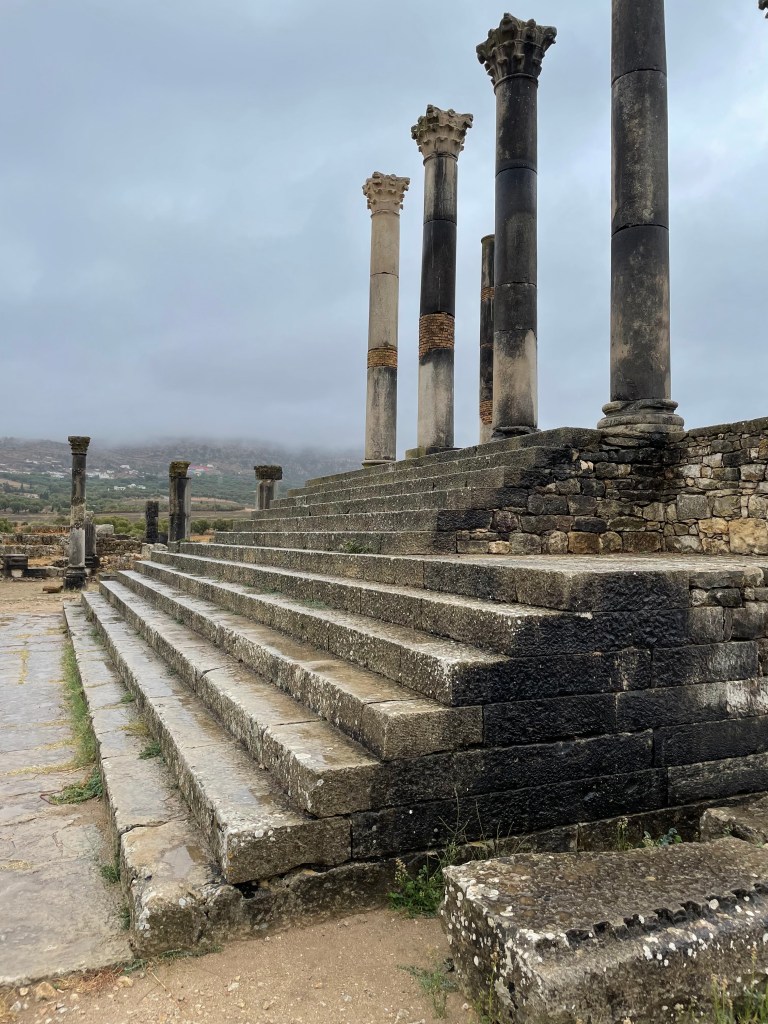
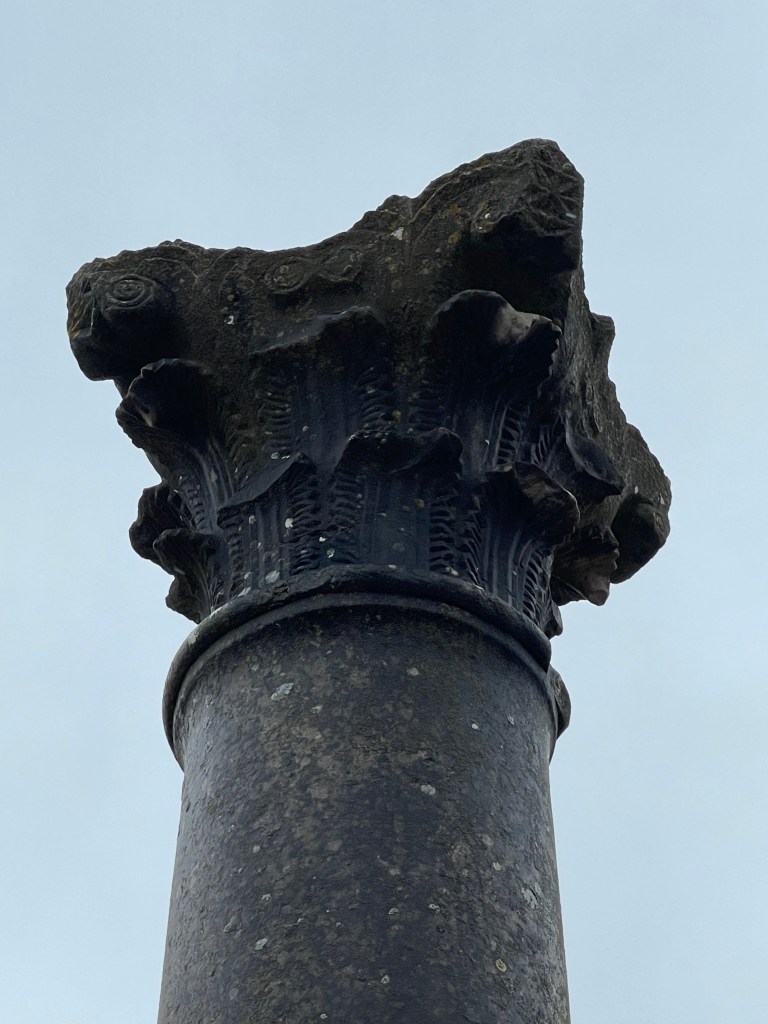
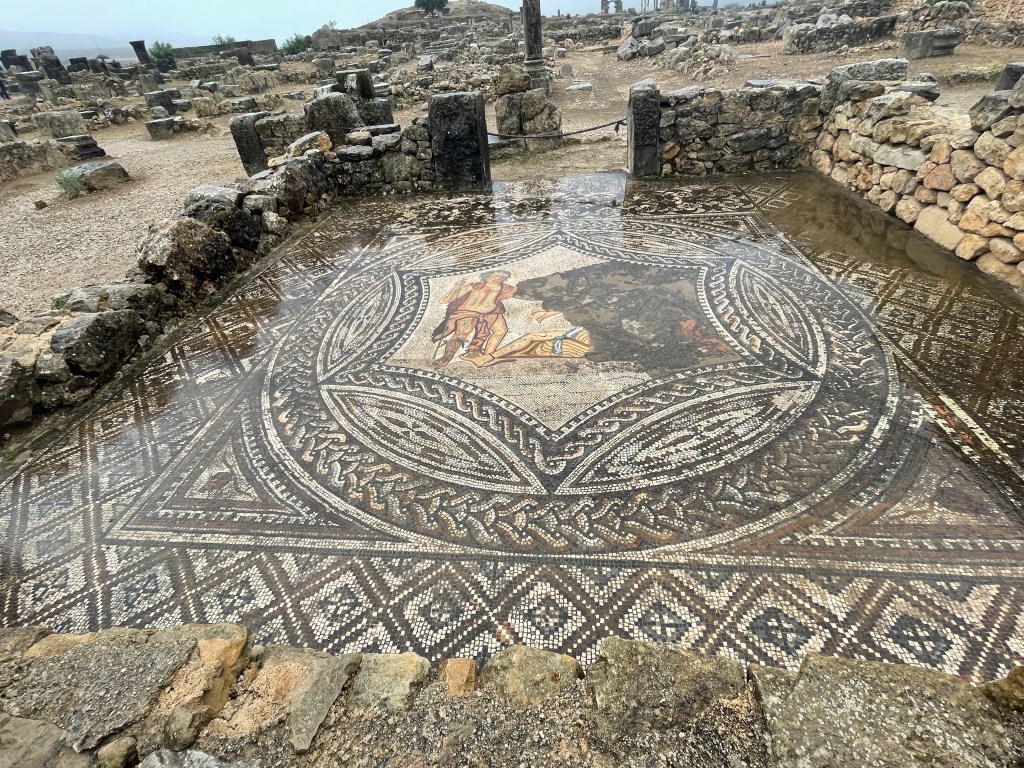
Volubilis is a partially excavated roman ruins near the city of Meknes, a city which is considered to be the ancient capitol of the kingdom of Mauretania. There is scant evidence of the ancient cultures that settled this area, but the Roman remains are abundant and splendid. Roman columns and forums frame a network of roads, homes and markets indicating a vibrant life during that period.

The Desert

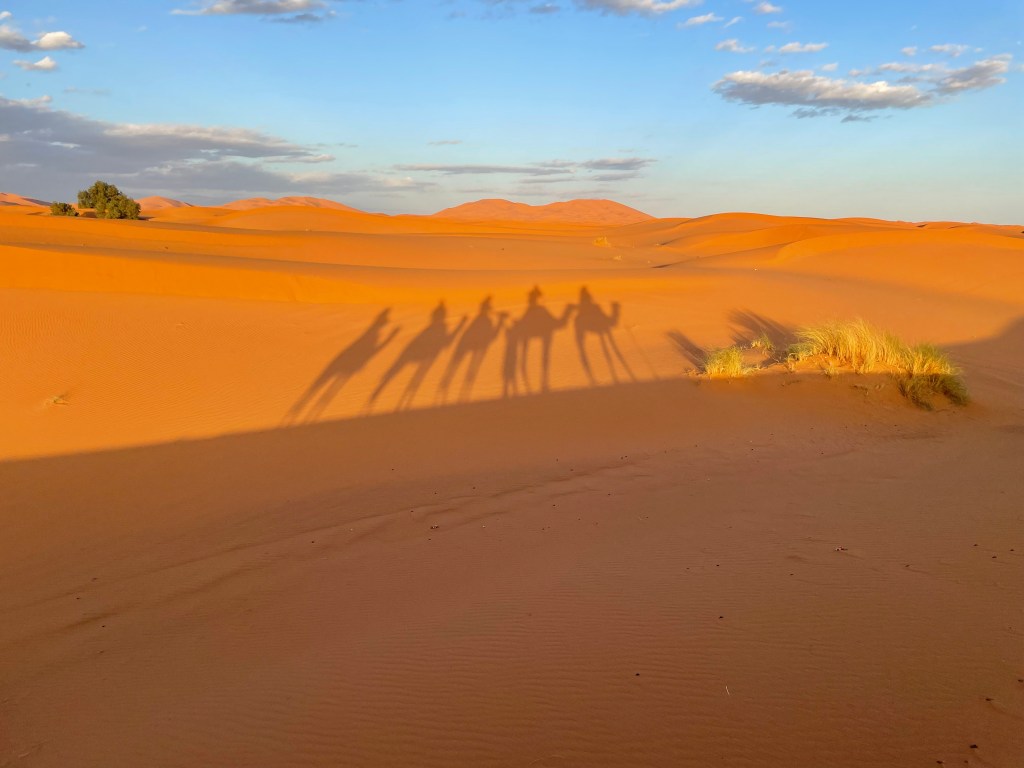
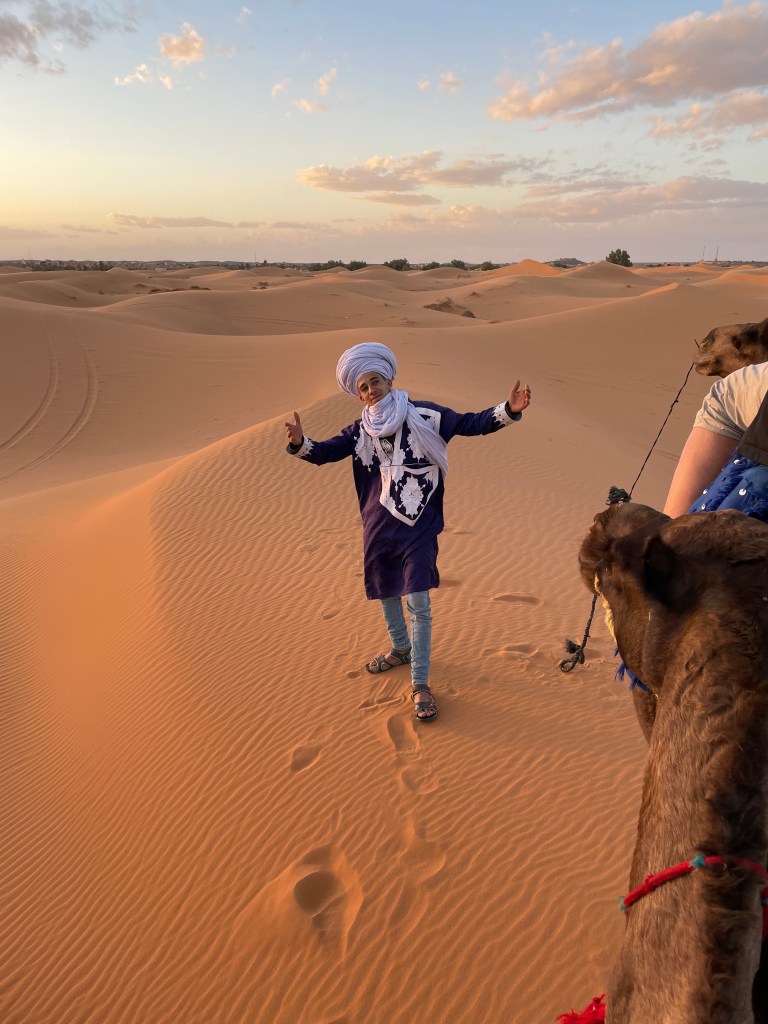
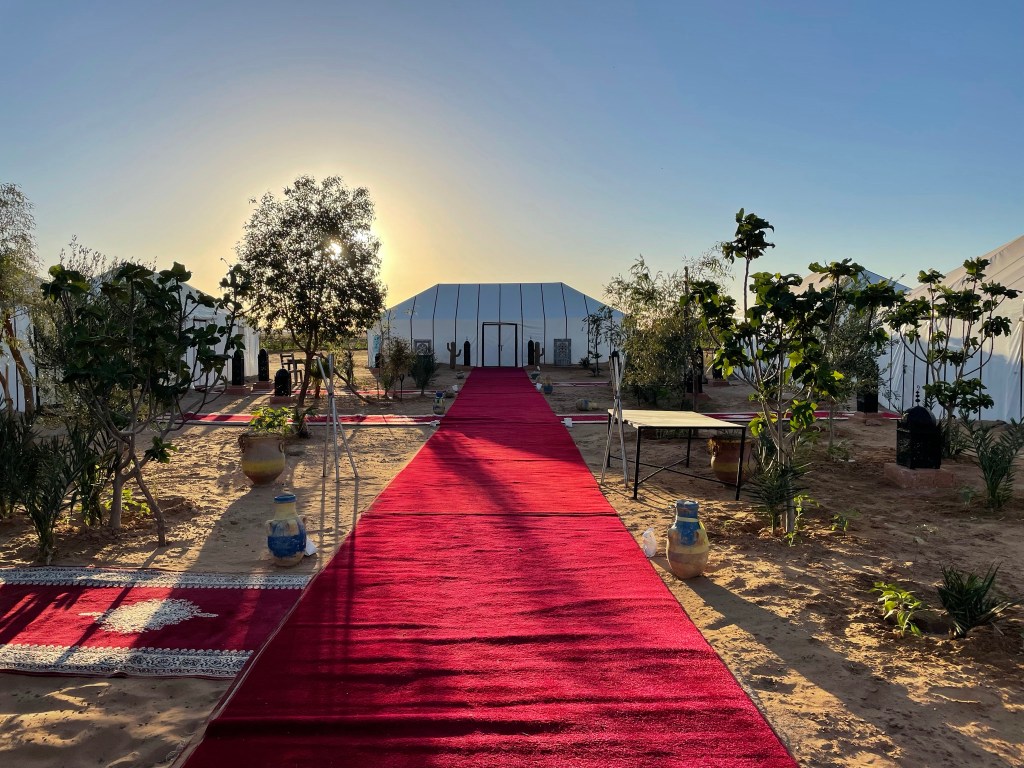
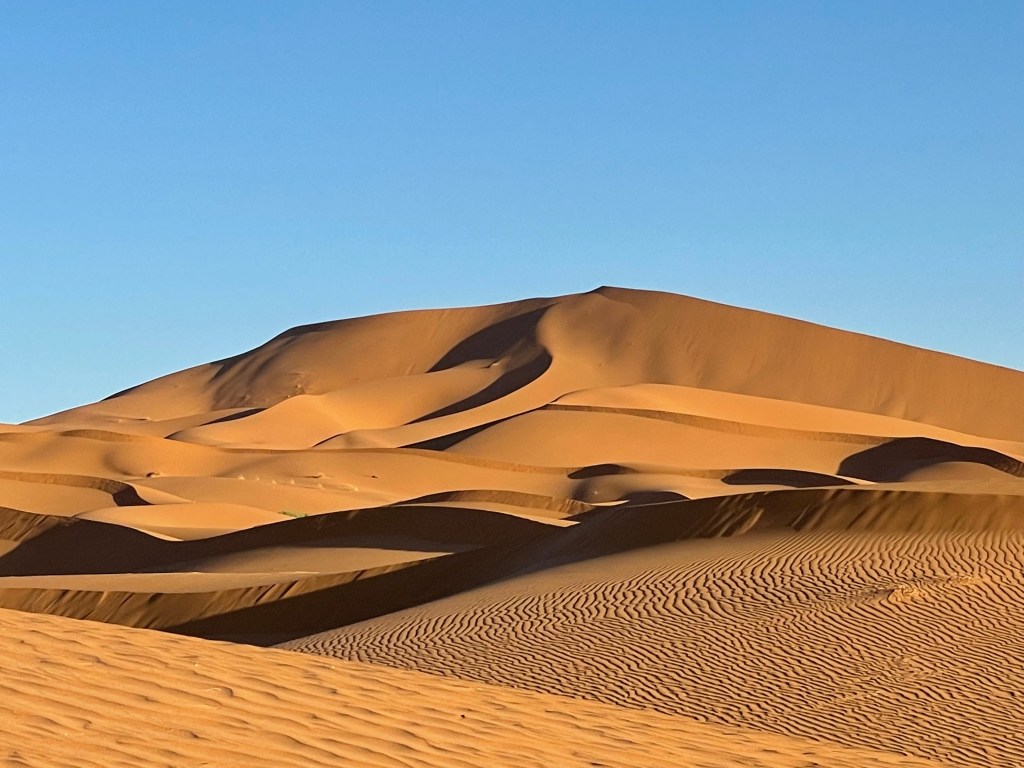
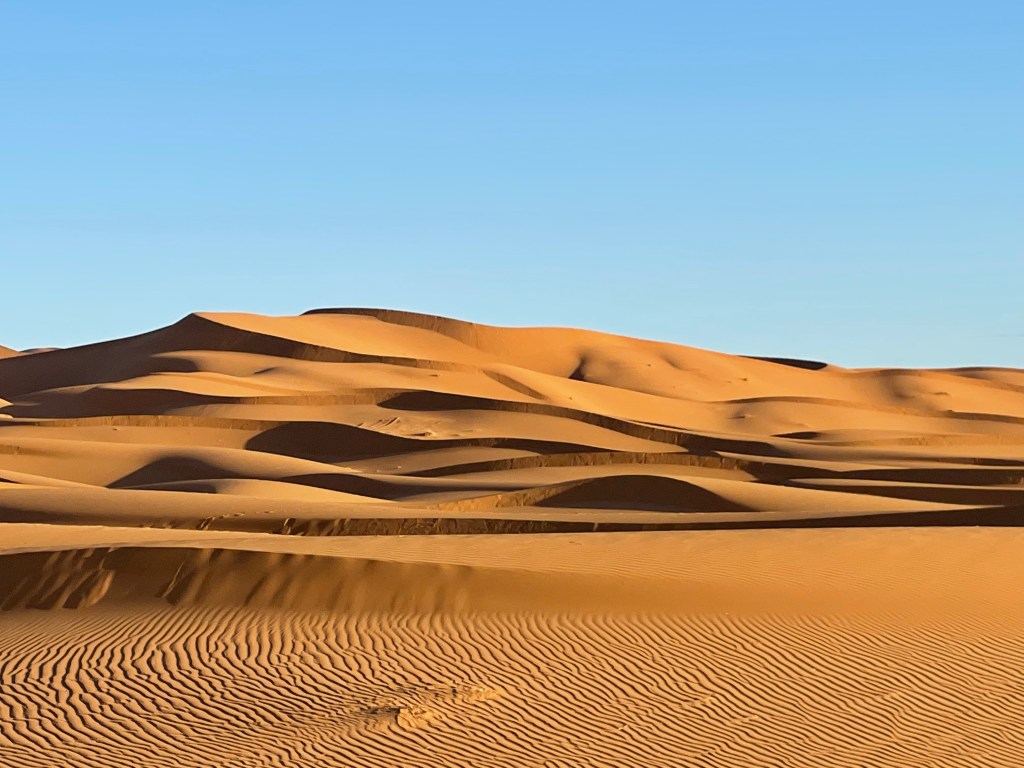
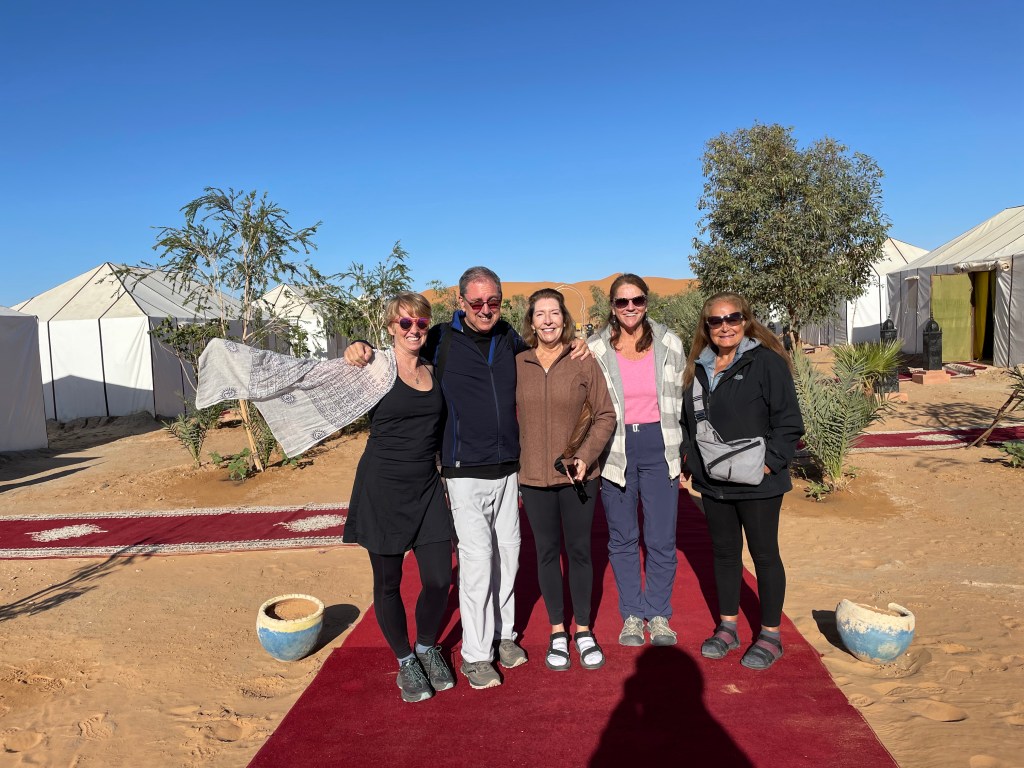
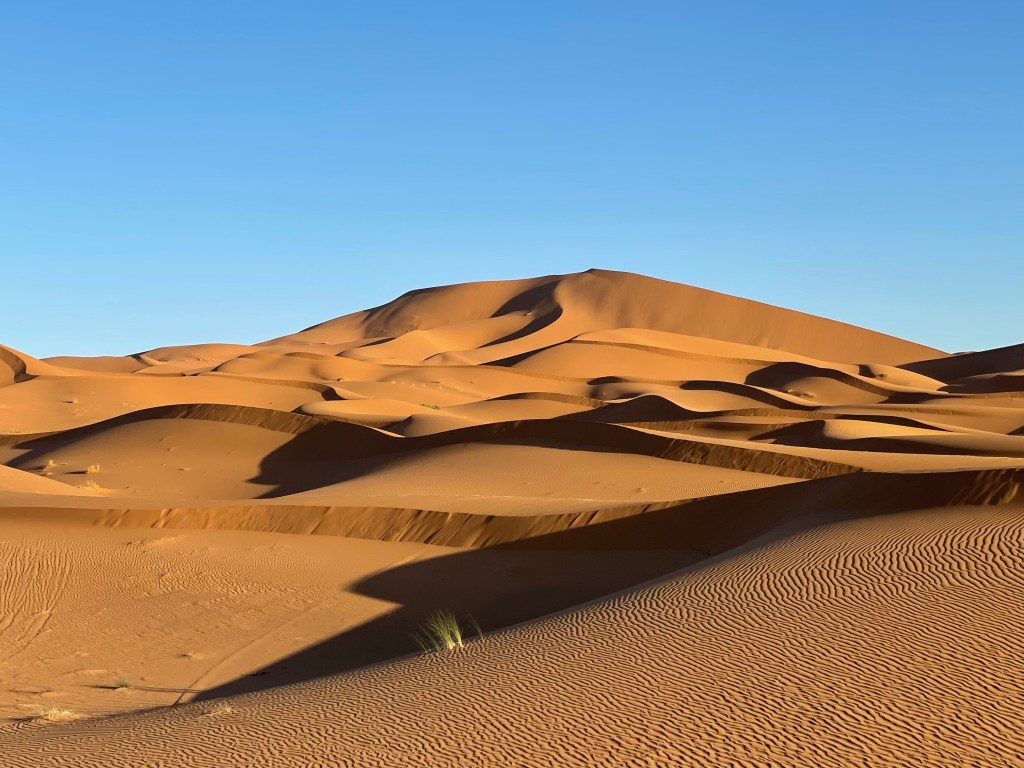
In planning this Moroccan adventure we knew it would not be complete without a venture into the rose gold dunes of the Saharan desert. Our tour guide set up an overnight stay at a luxury camp, where the tents were equipped with toilets, showers and comfy beds. We started out mounting camels and trekking several miles through the soft sand to find our oasis. This simple ride near sunset turned interesting when one of our riders had difficulty with the makeshift saddle on her camel. Our group had to stop several times to make adjustments, which delayed our walk. By the time we reached camp, it was pitch dark and cold, but our intrepid guide Mohammed led us through the star filled night to find our sanctuary.

Rabat and Fez

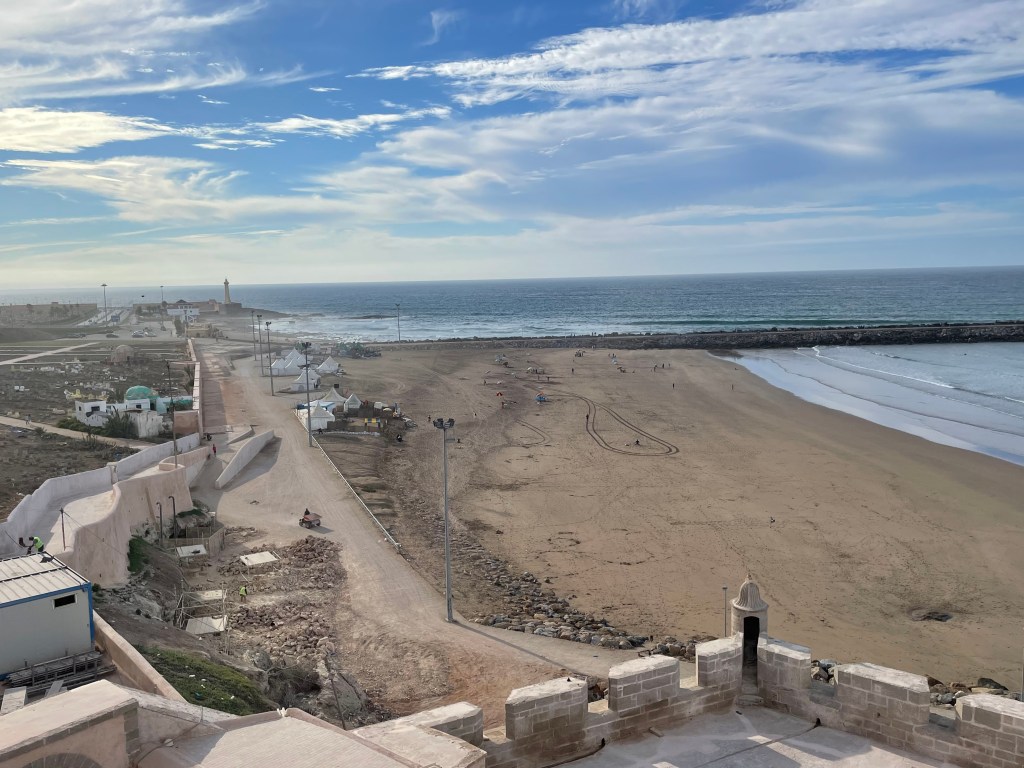
Rabat, the capitol of Morocco, lies along the Atlantic Ocean and is a more modern city than some in the interior of the country. The ultra modern Zaha Hadid designed theatre looks like a cobra raising its head from the sand, and the in-progress Mohammed VI tower, at about 750 feet, will be one of the tallest multi-use buildings in all of Africa.

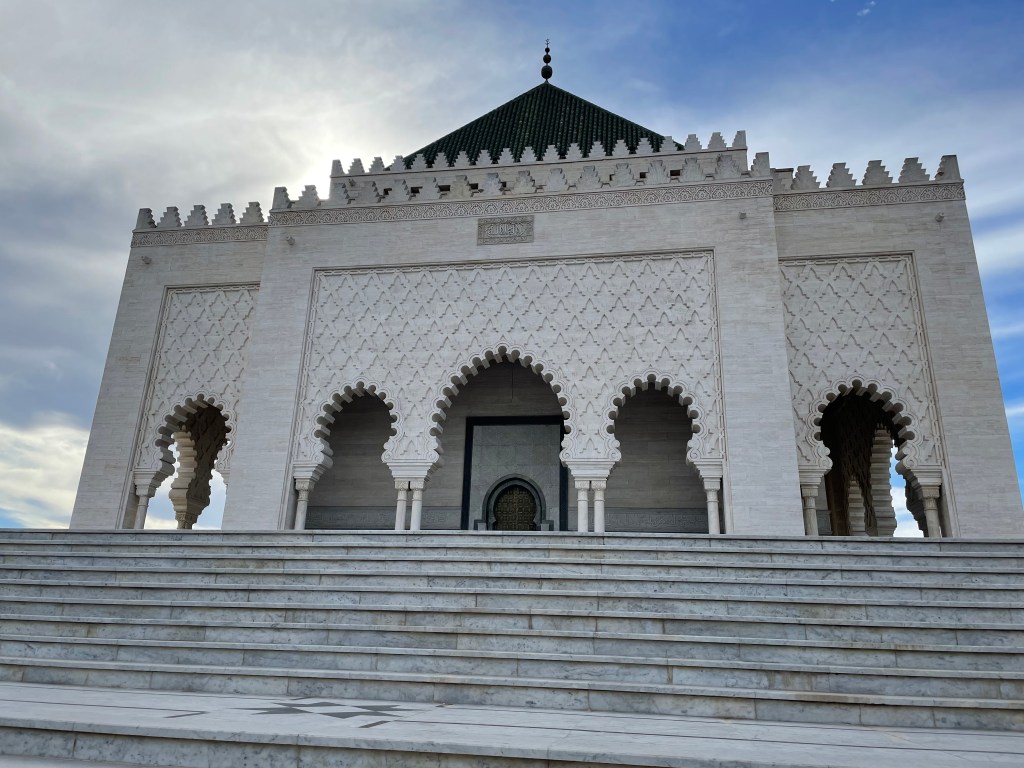
The Unfinished Rabat Mosque


Things We’ve Observed in Morocco:

  • As we drive through the small towns in rural Morocco, there are people everywhere along the roads and highways. Many travel on foot, but others are on bicycles, scooters, or on carts drawn by donkeys. I can’t believe there aren’t more accidents.
  • Car parking guys: Every time one parks a vehicle, whether it’s in a private or public lot or on the street, there’s a guy who comes out of nowhere and will help you get in or out of a space, and watch over the car while you’re gone. Of course a small fee is involved.
  • Morocco is a great meld of French, Spanish, Jewish and Arabic culture and language. Arabic is the main language here, but French is second and after that its Berber. I’m happy because I get to practice my rusty French!
  • Because Morocco is influenced so much by Europe, and is a close ally with the US, most stores and services readily accept Euros and American dollars along with their own currency, the Dirham. We’ve had a lot fun and confusion working with the three currencies.
  • Prices of goods: Morocco is very reasonable in the cost of living. Meals and products are generally lower than you would find in the US, or even compared to Spain.
  • Cash is king: While some shops will accept credit cards, most would rather have cash. ATMs are widely available and safe, so its easy to get money. The problem is that it is difficult to get small change for things like tips and small purchases. We went to a Roman Ruins park and were required to have exact change to enter (and the bathroom attendants wanted a tip too!).

Fez

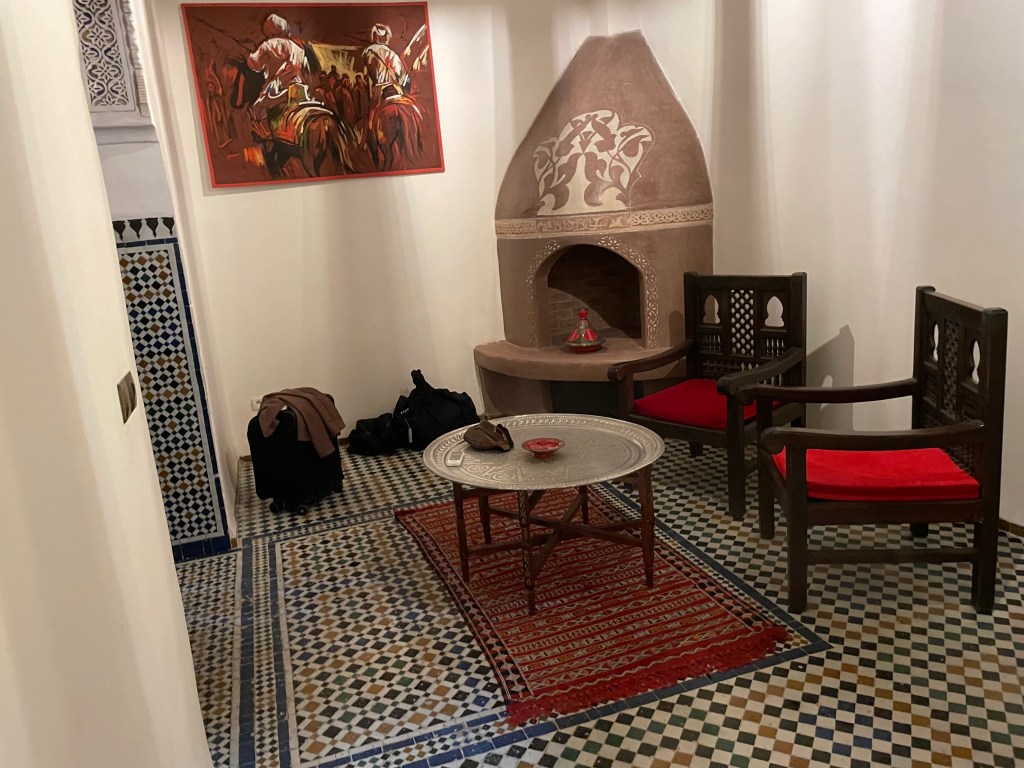
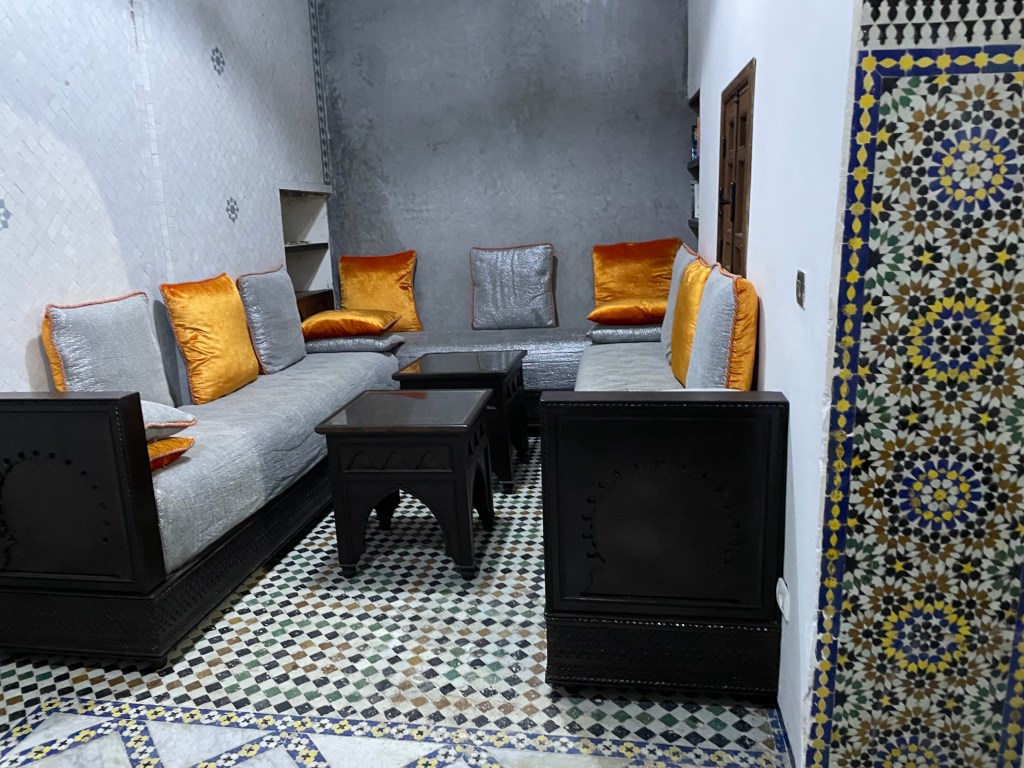
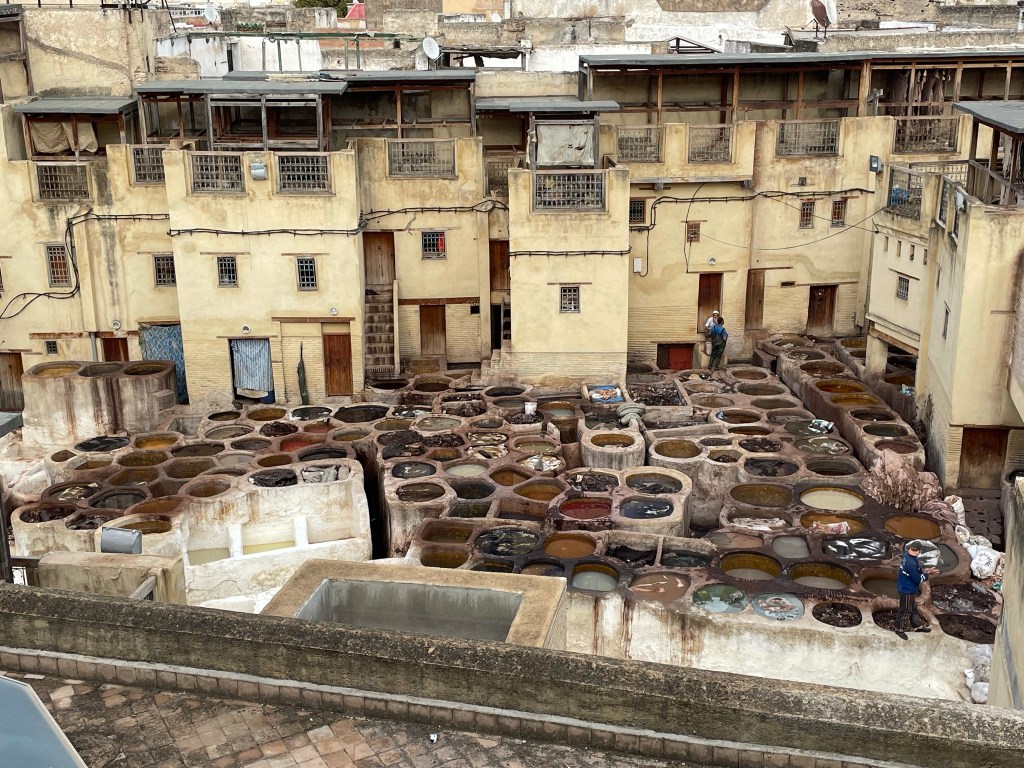
Fez has one of the largest medinas in Morocco. We stayed at a beautiful restored riad in the heart of the old city. The medina is so tight and congested that we had a 15 minute walk from where our guide dropped us off to get to our riad. We were very happy that the riad caretaker helped us with our luggage and guided us through the maze of streets every time we came or went. Fez is know for its artisans, with specialties in leather, ceramics and jewelry.