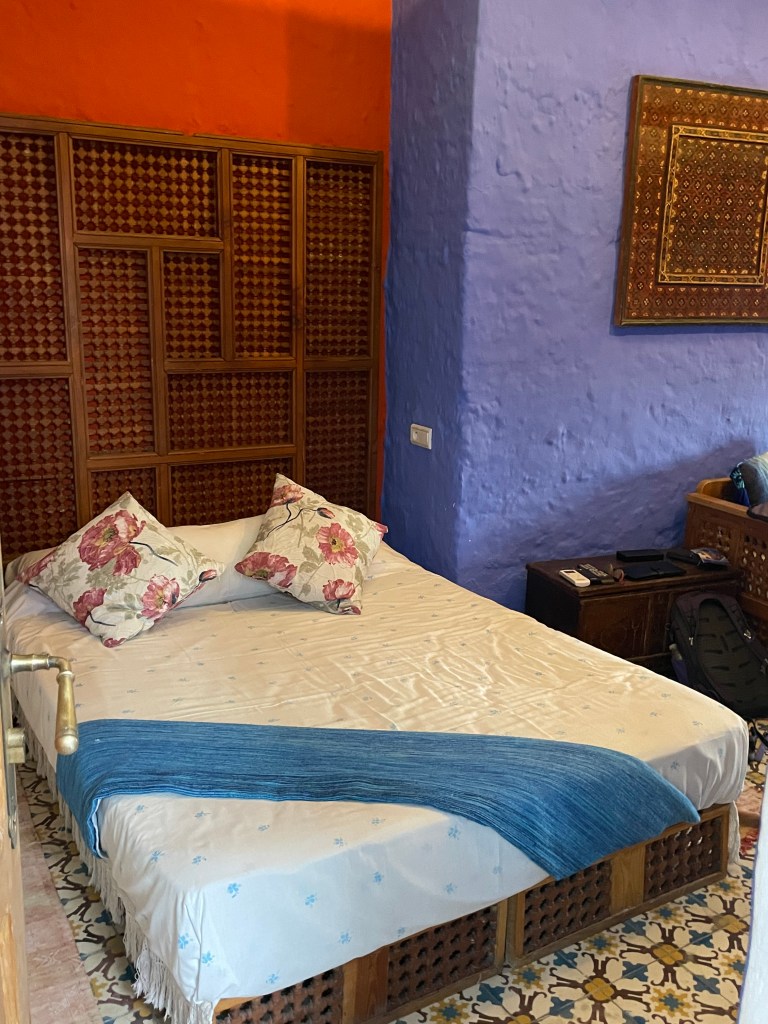
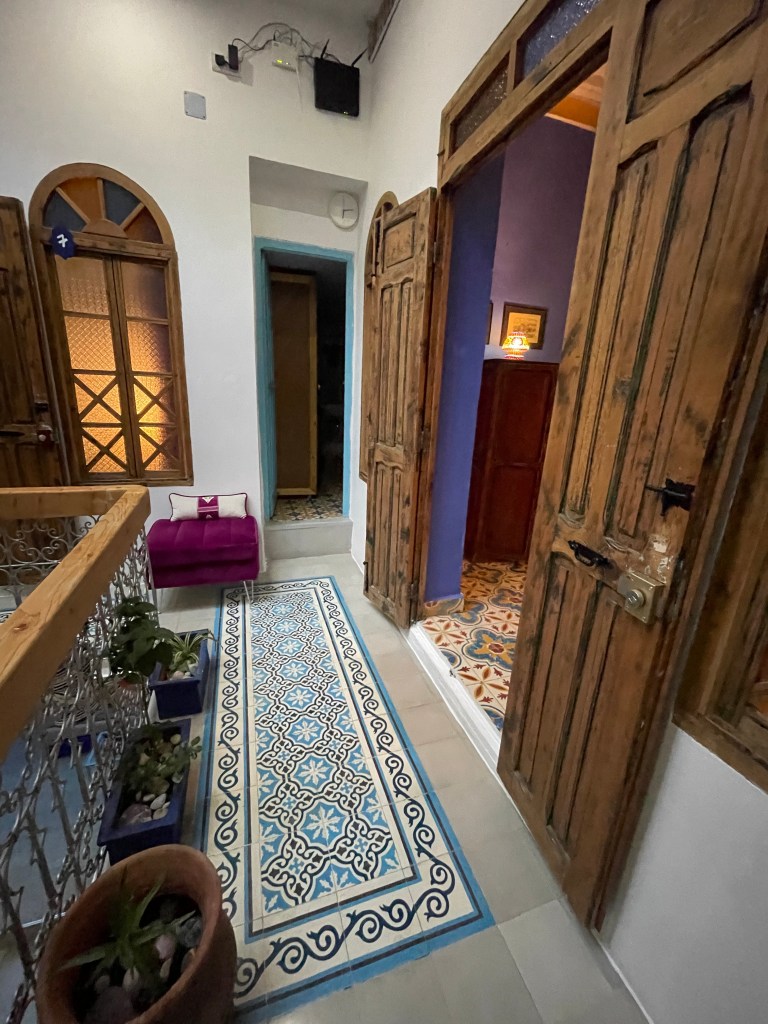
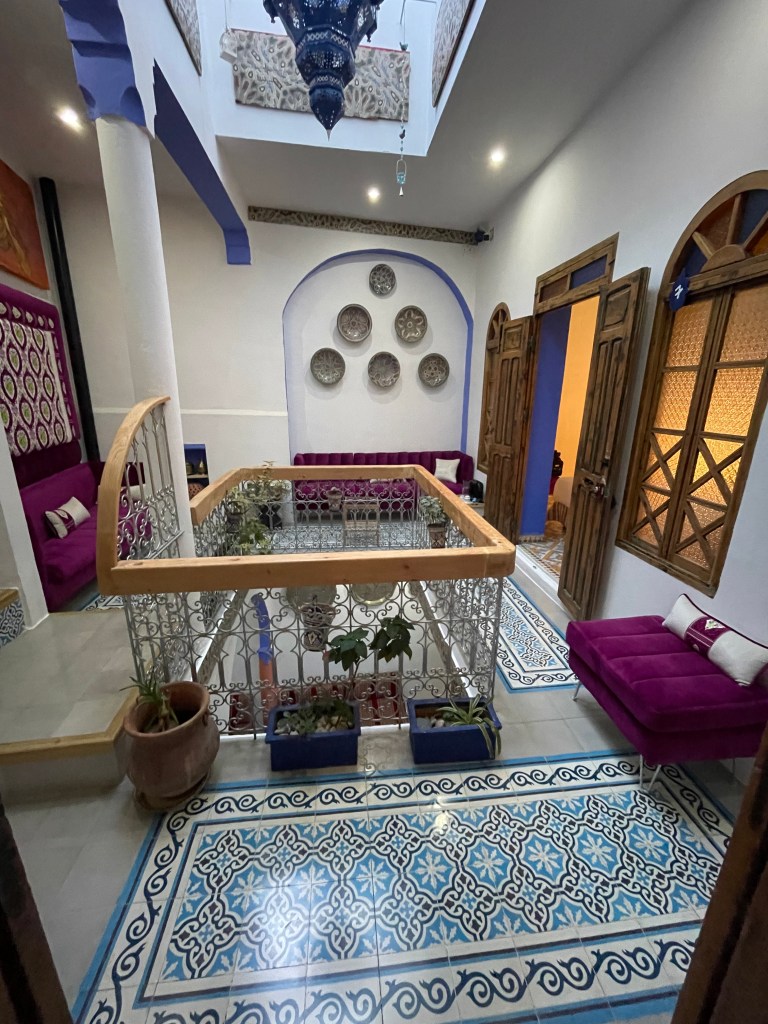
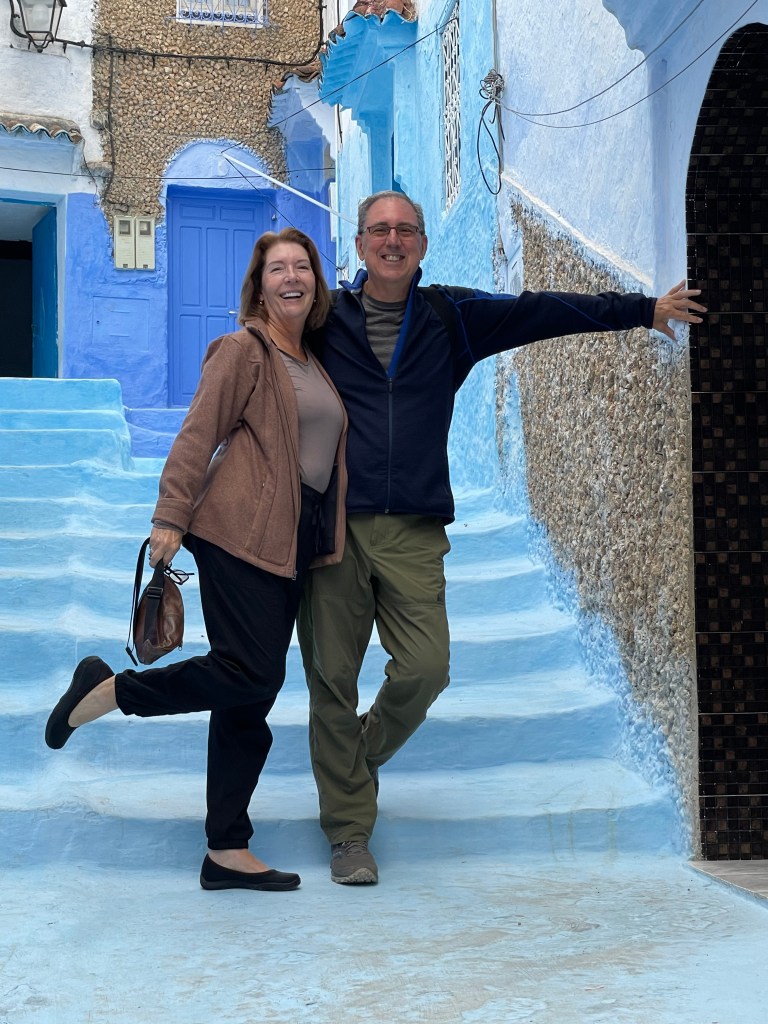
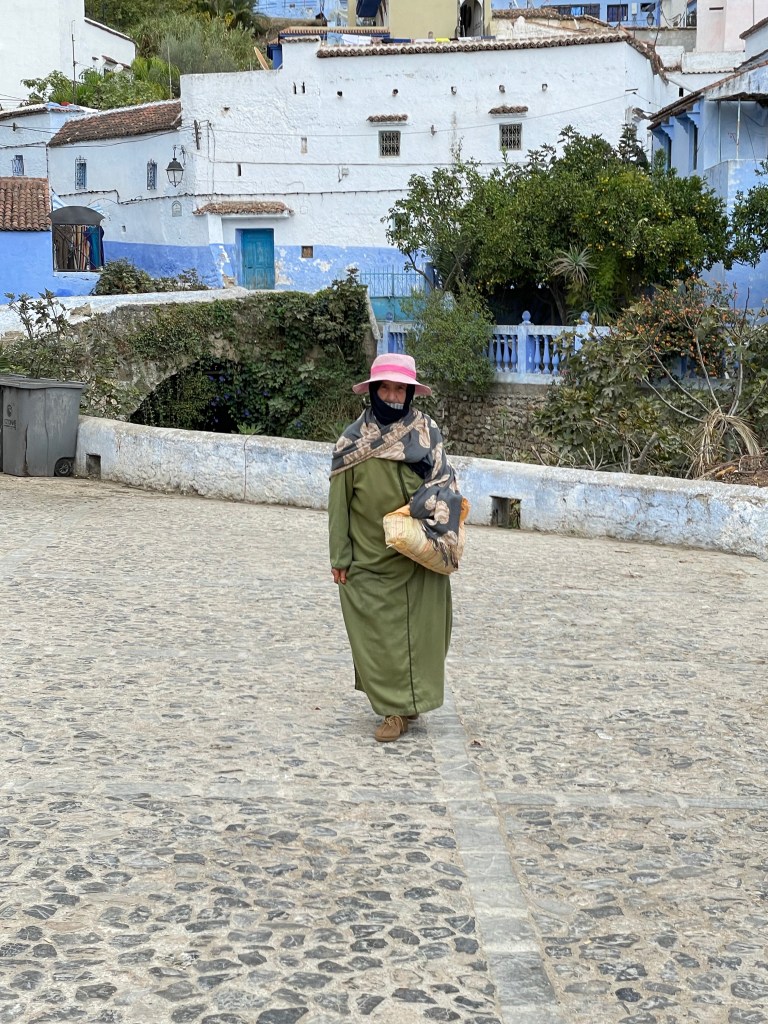
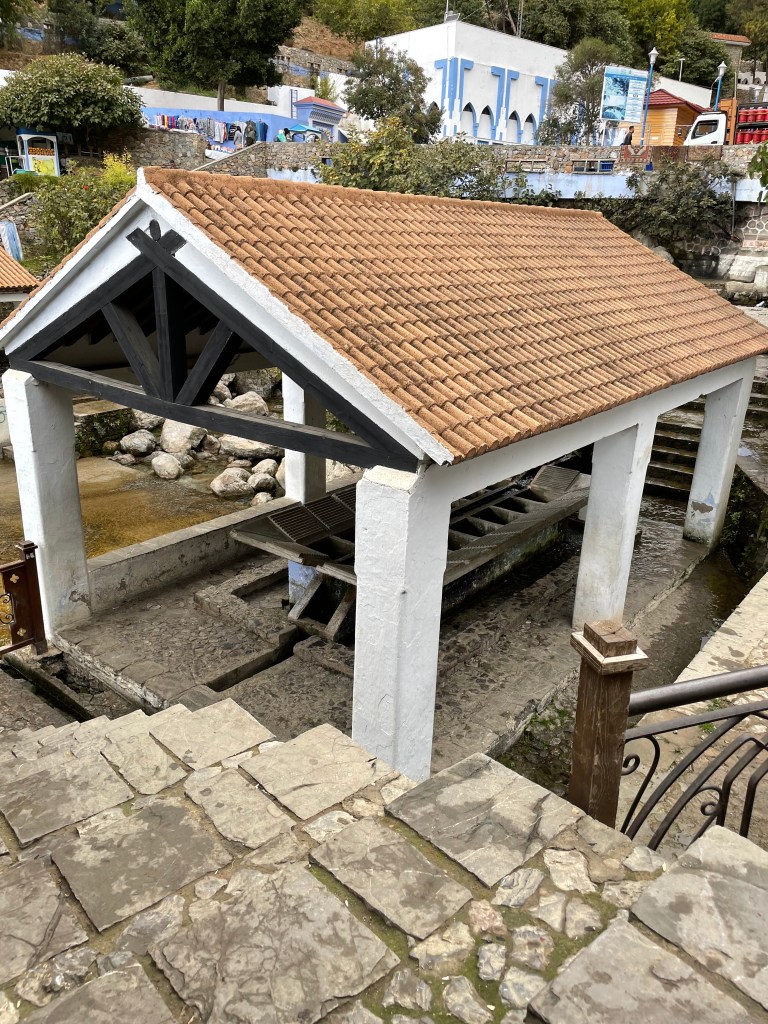
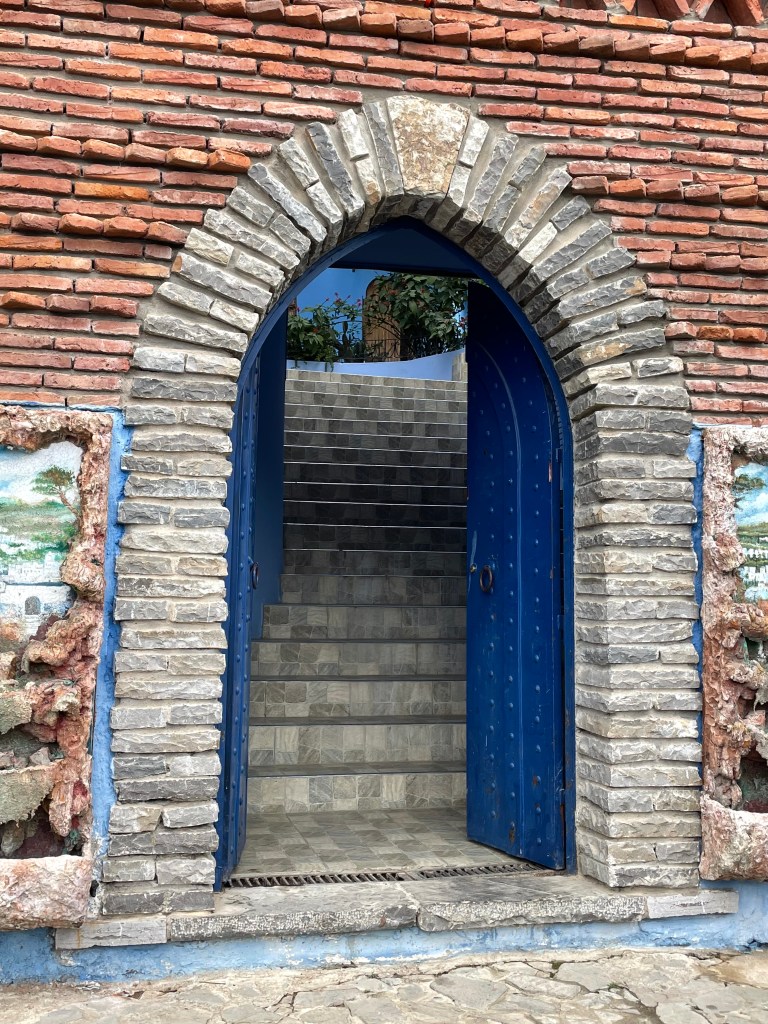
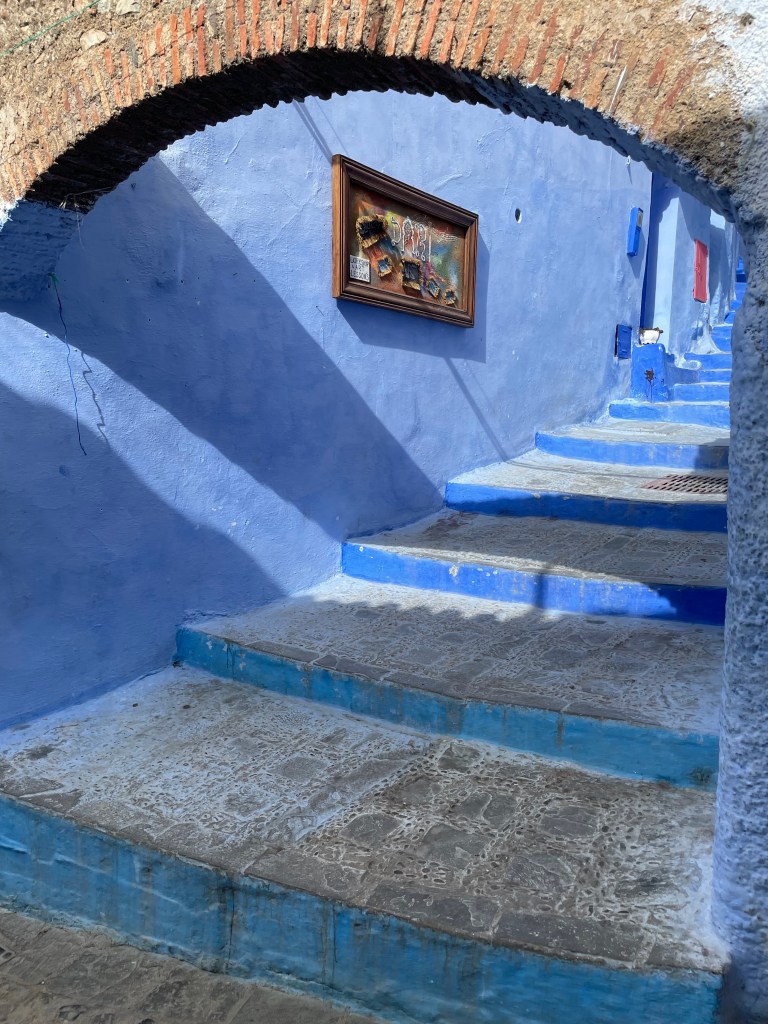
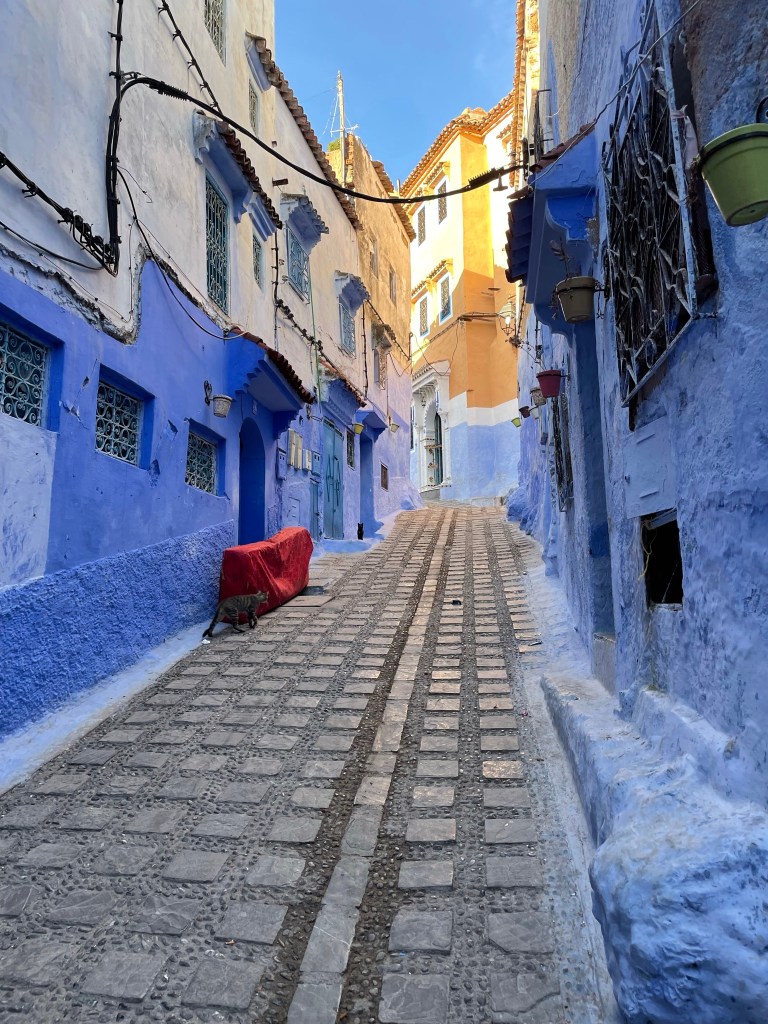
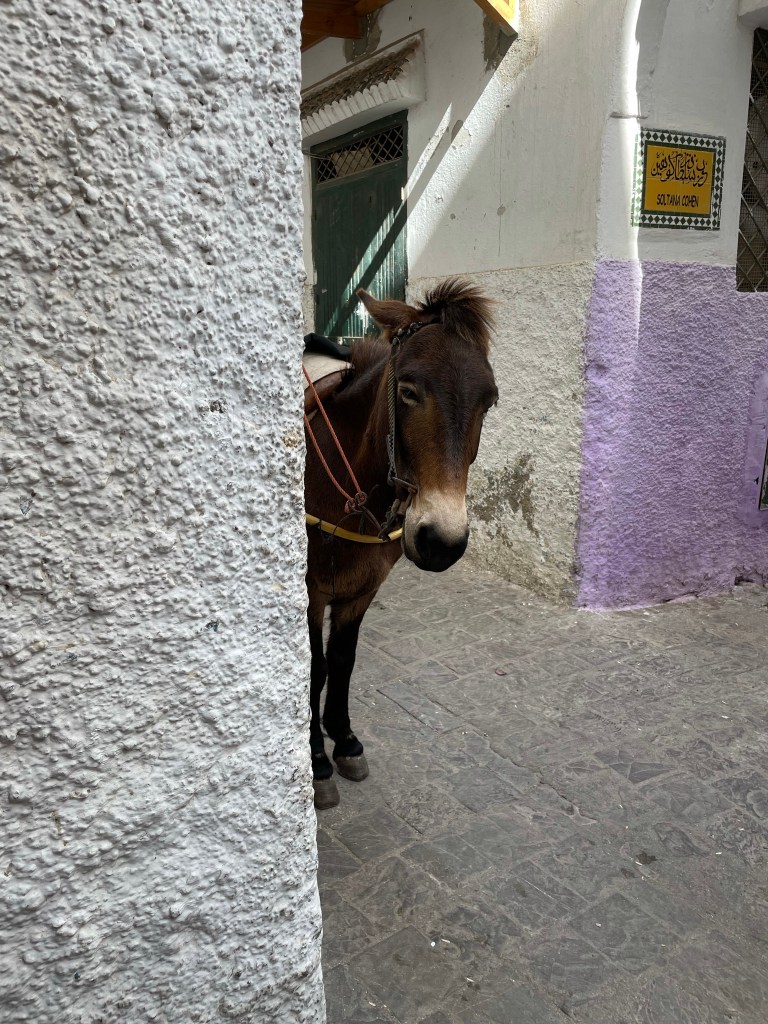
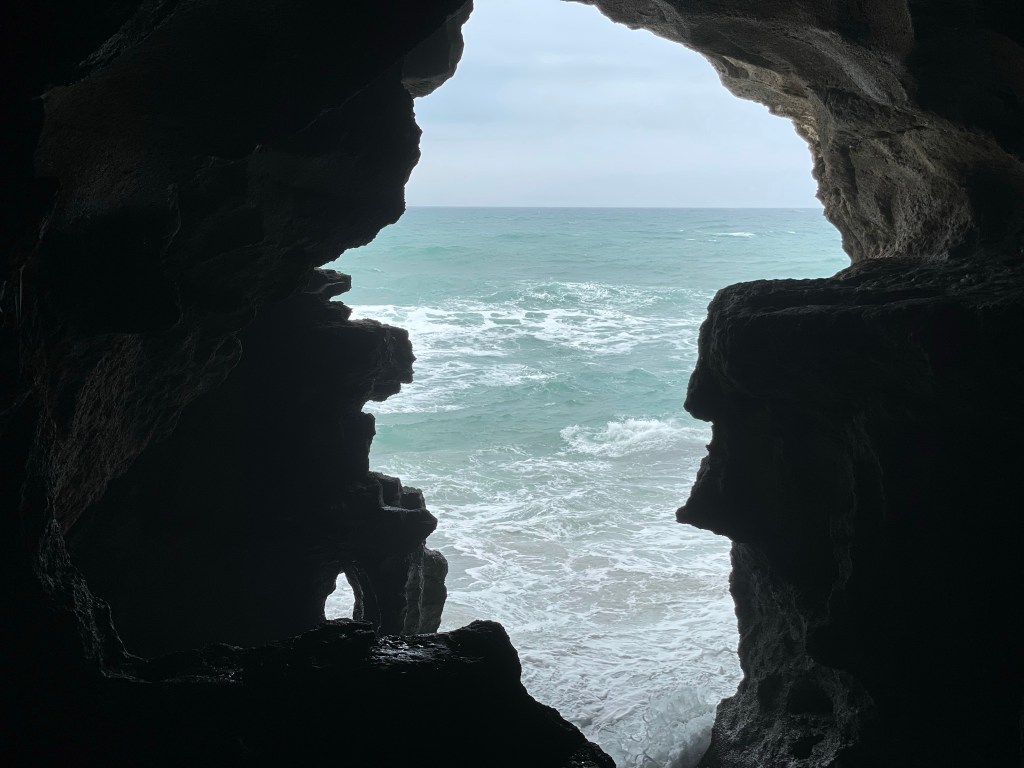
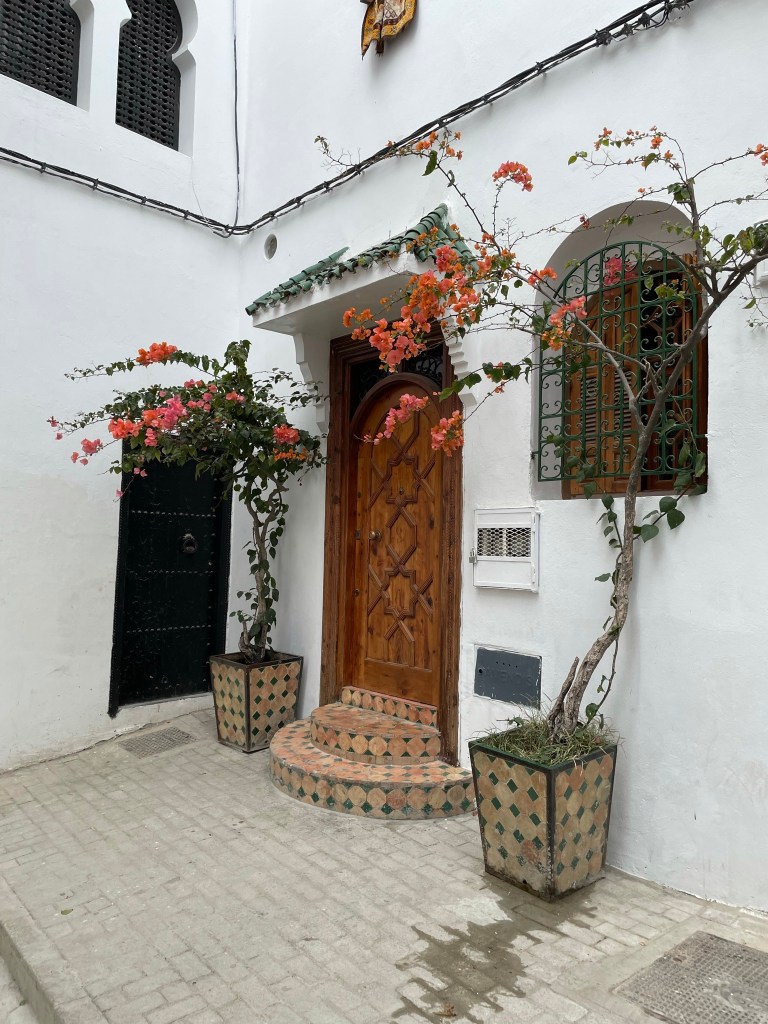
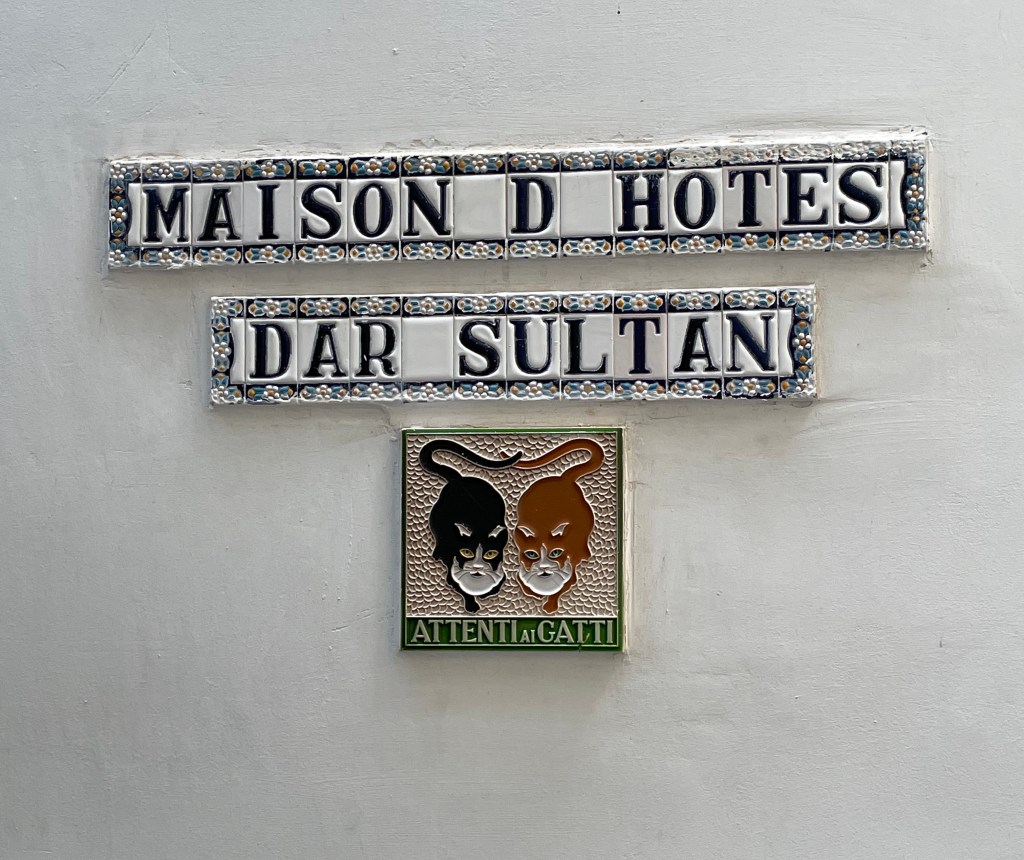
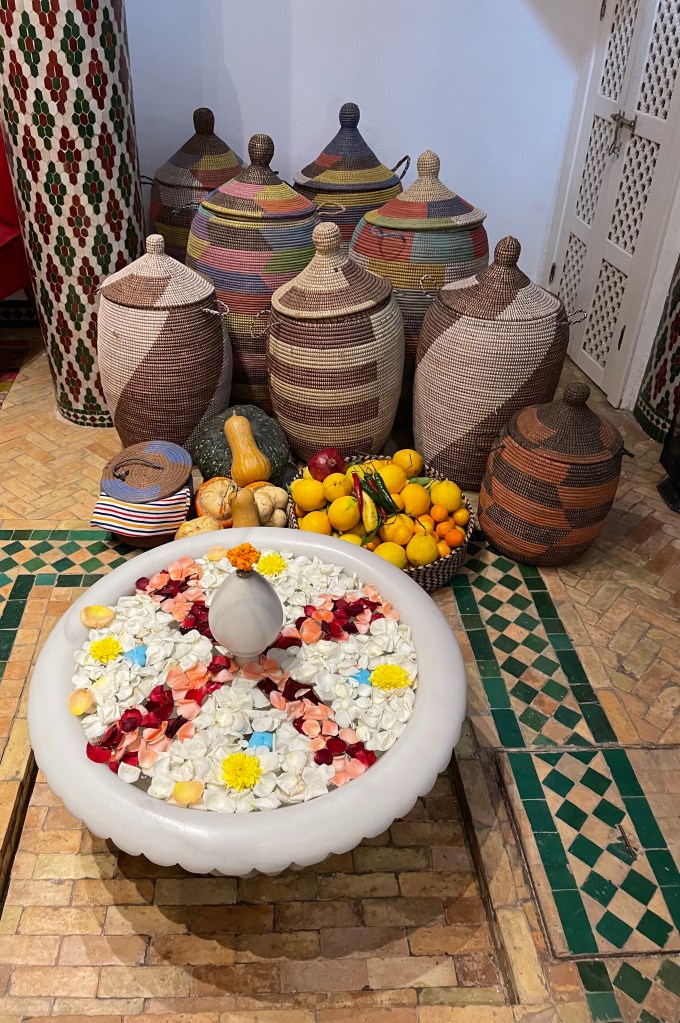
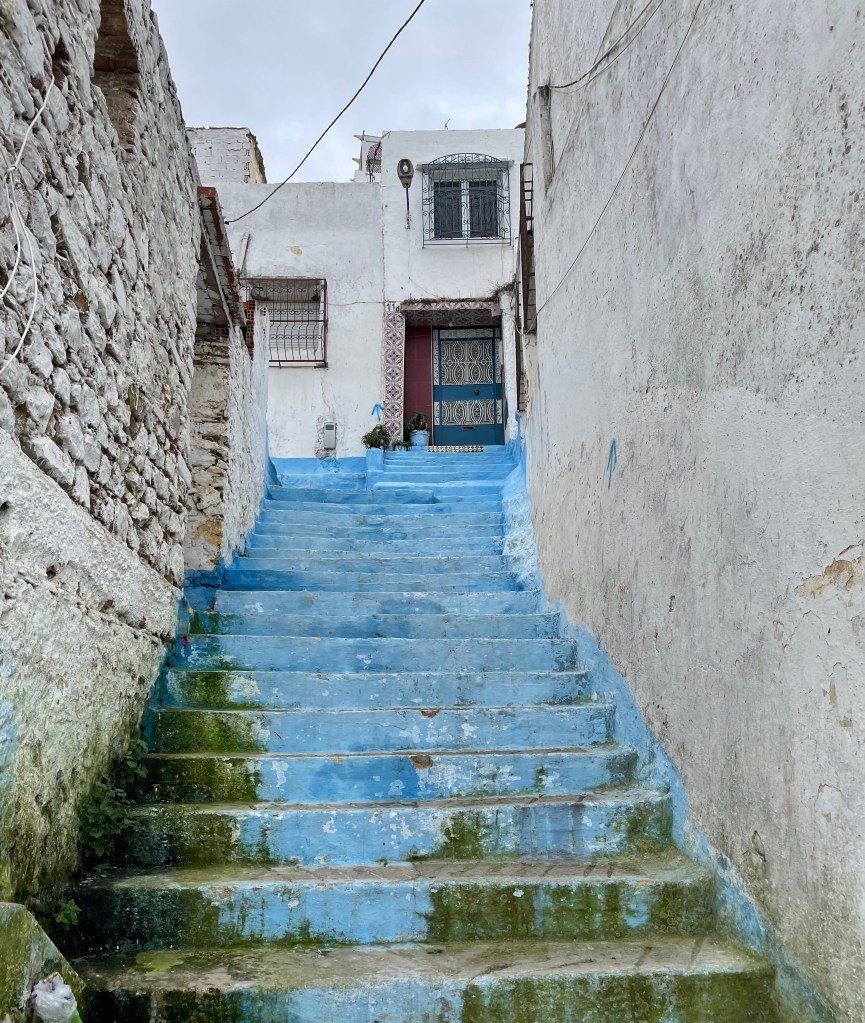
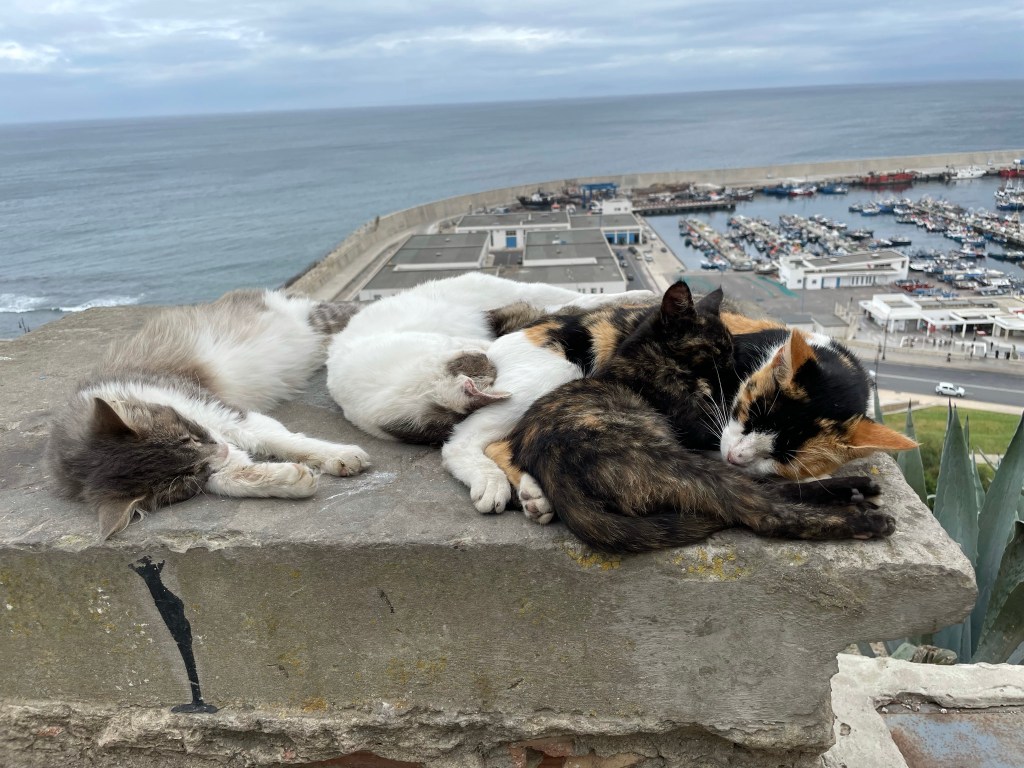
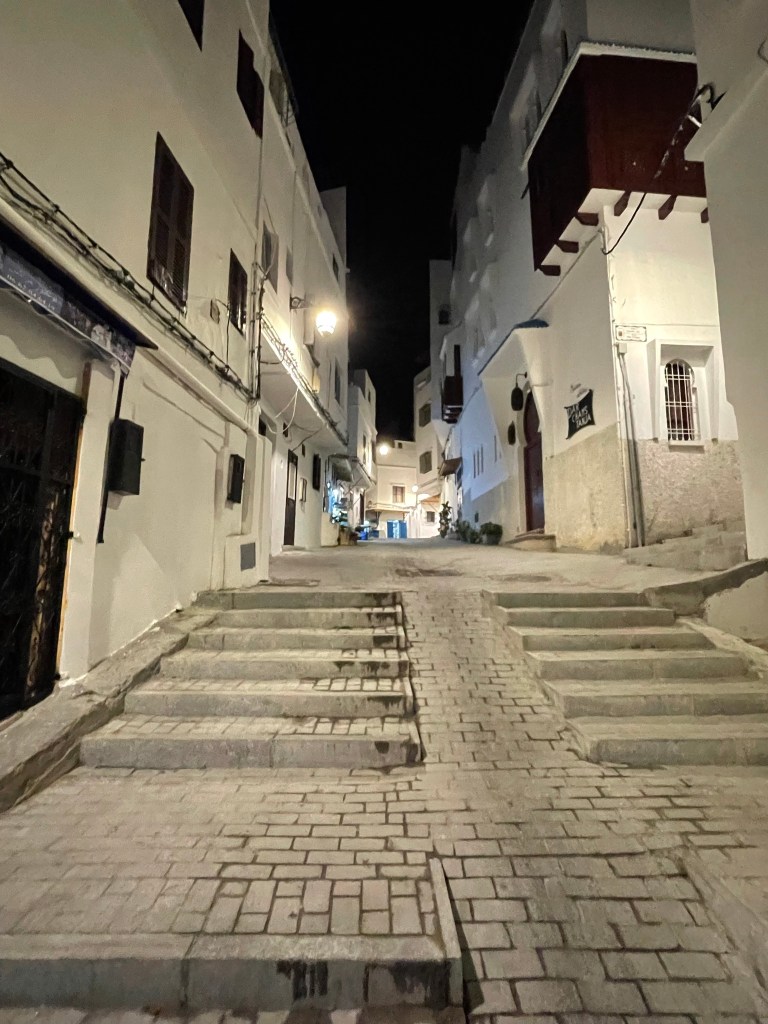
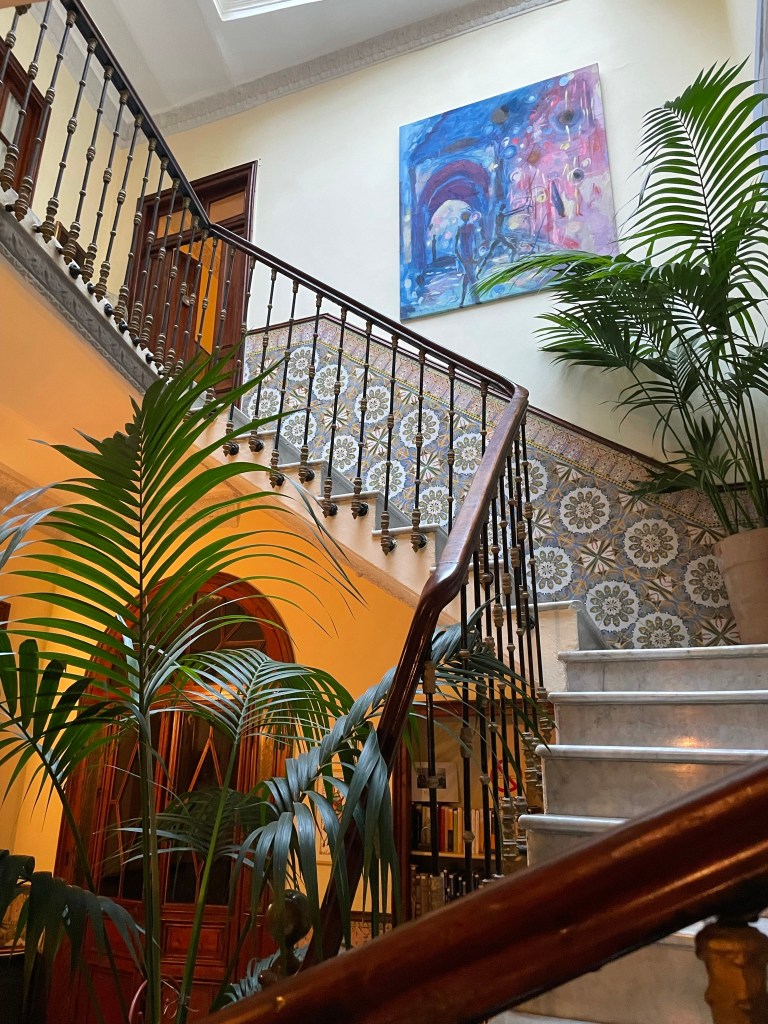
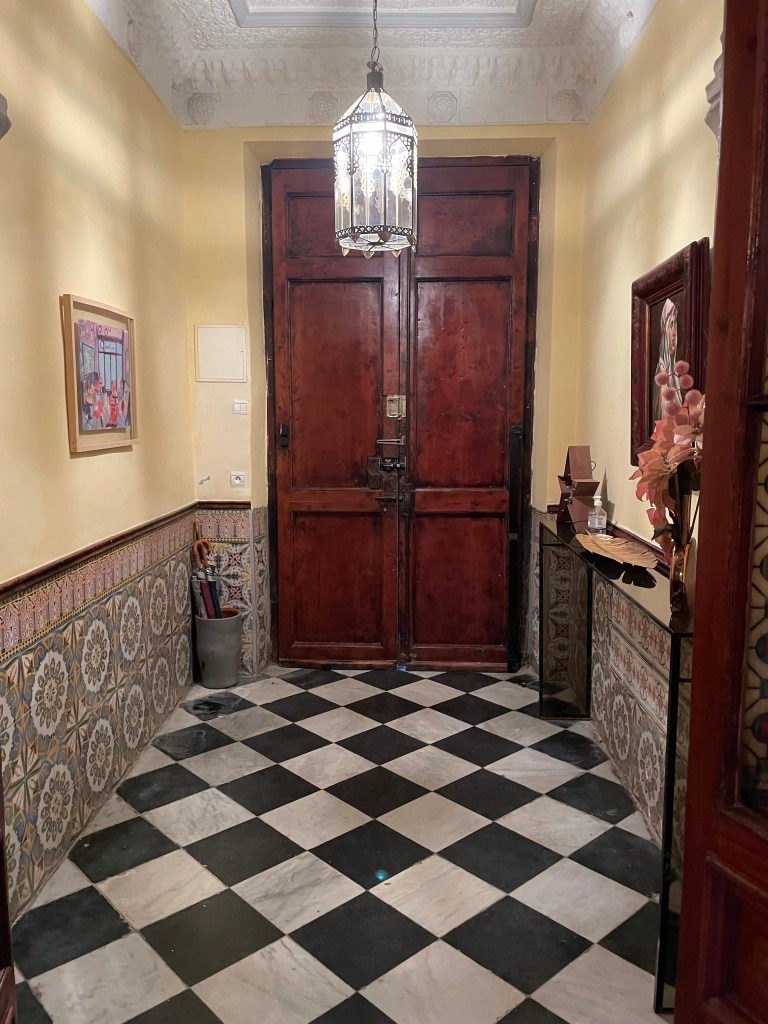
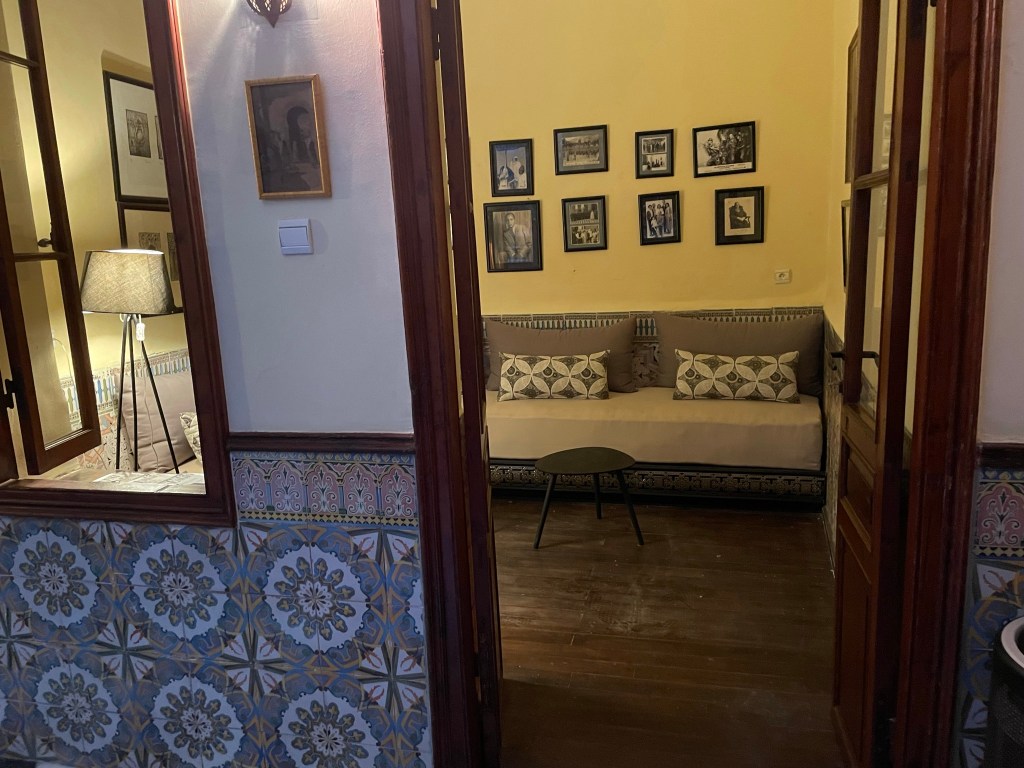
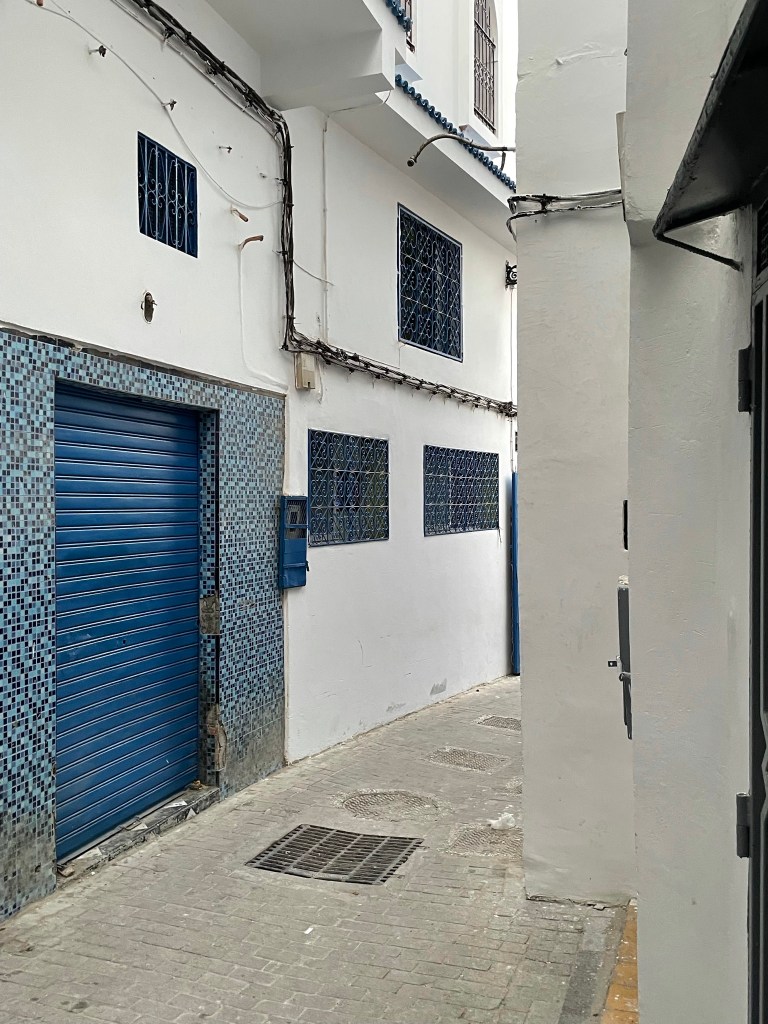
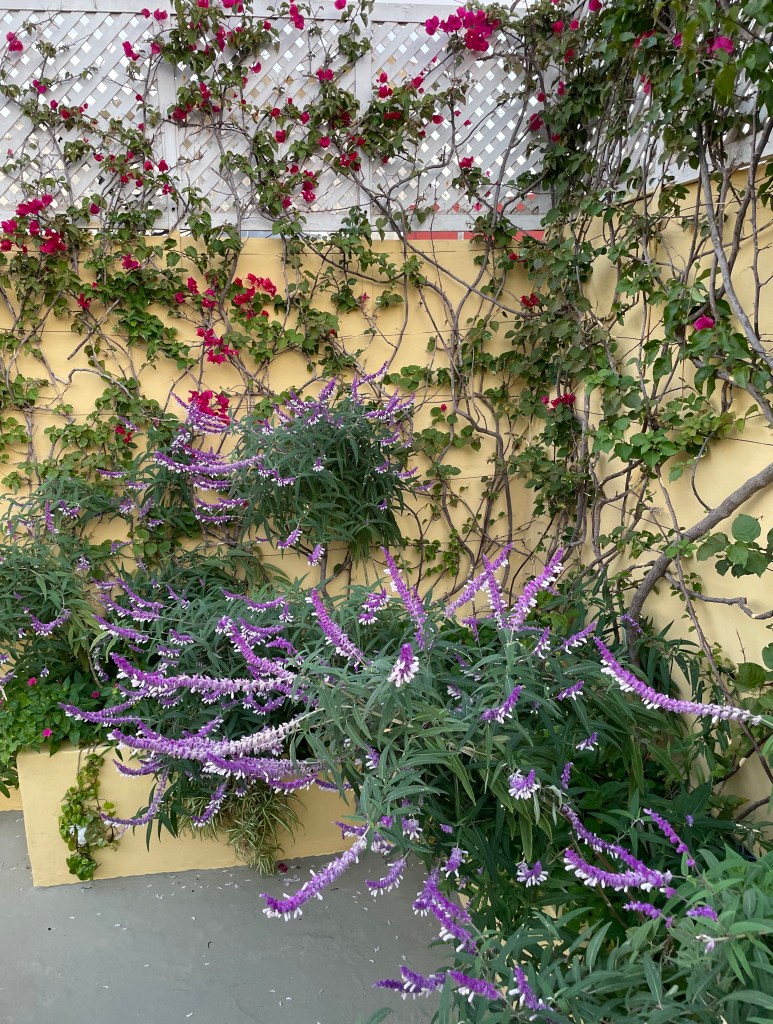
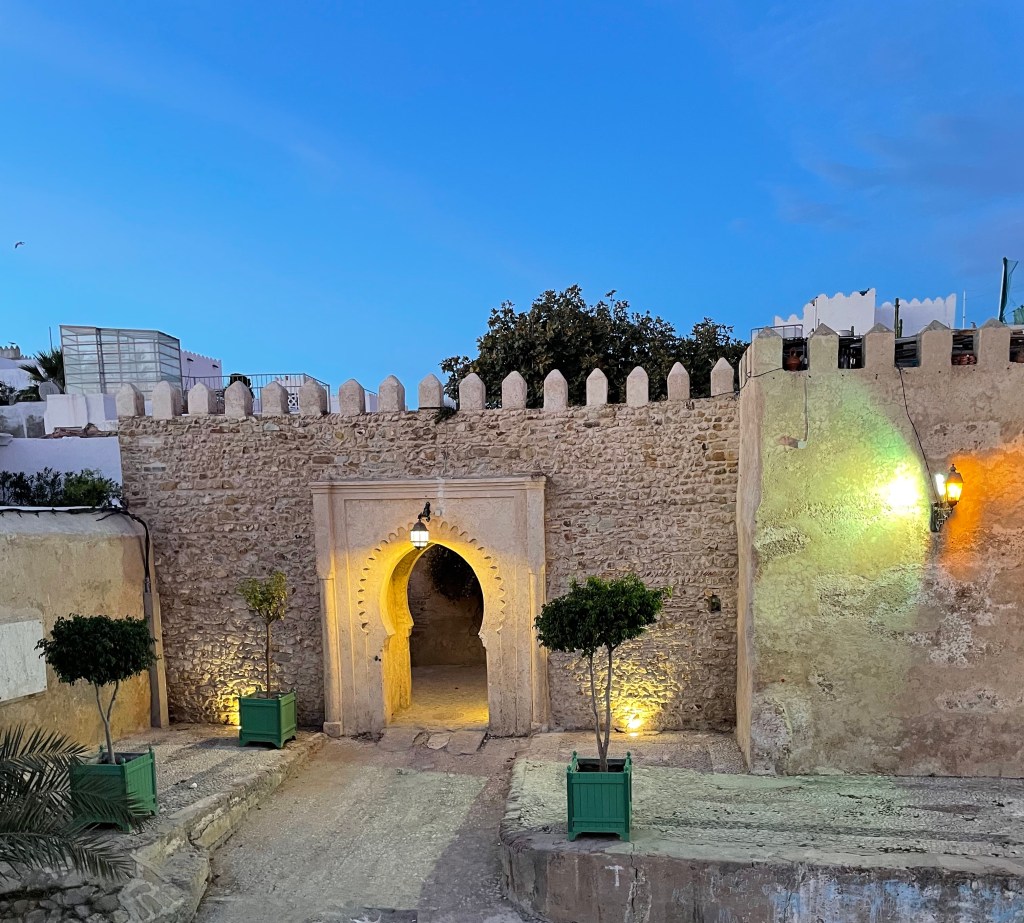
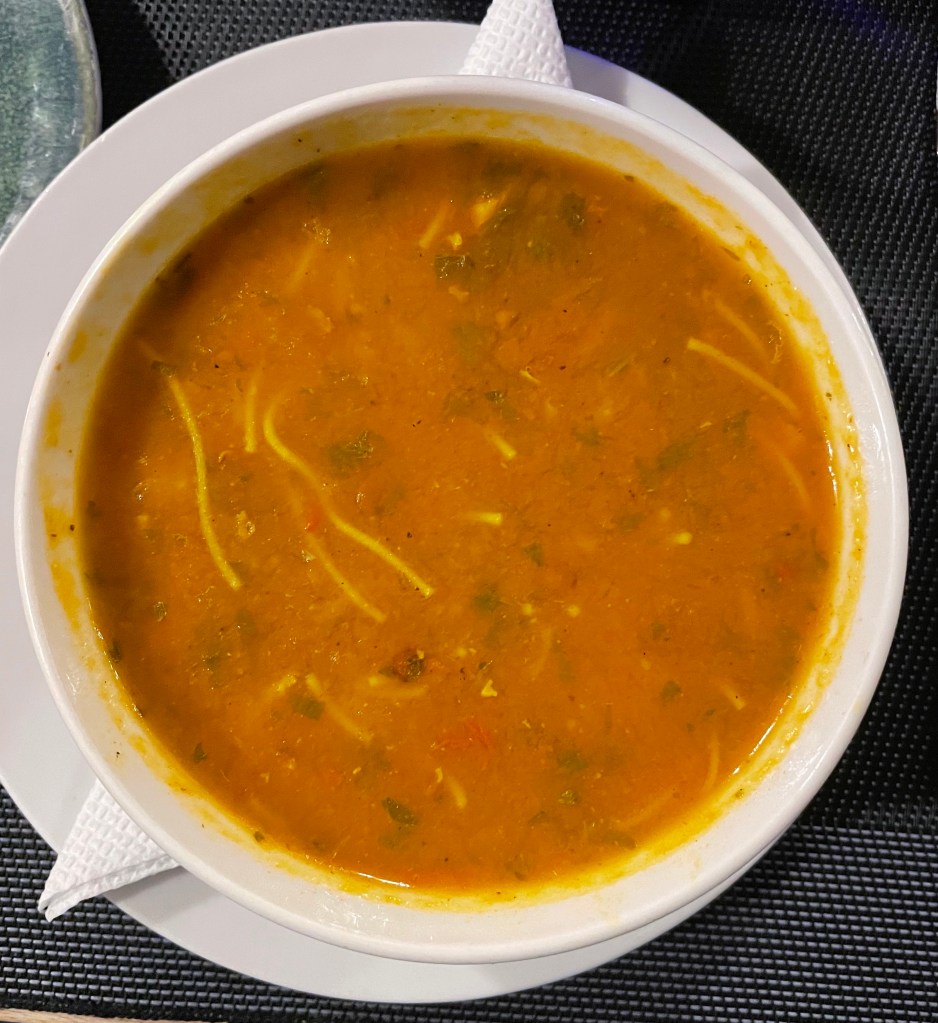
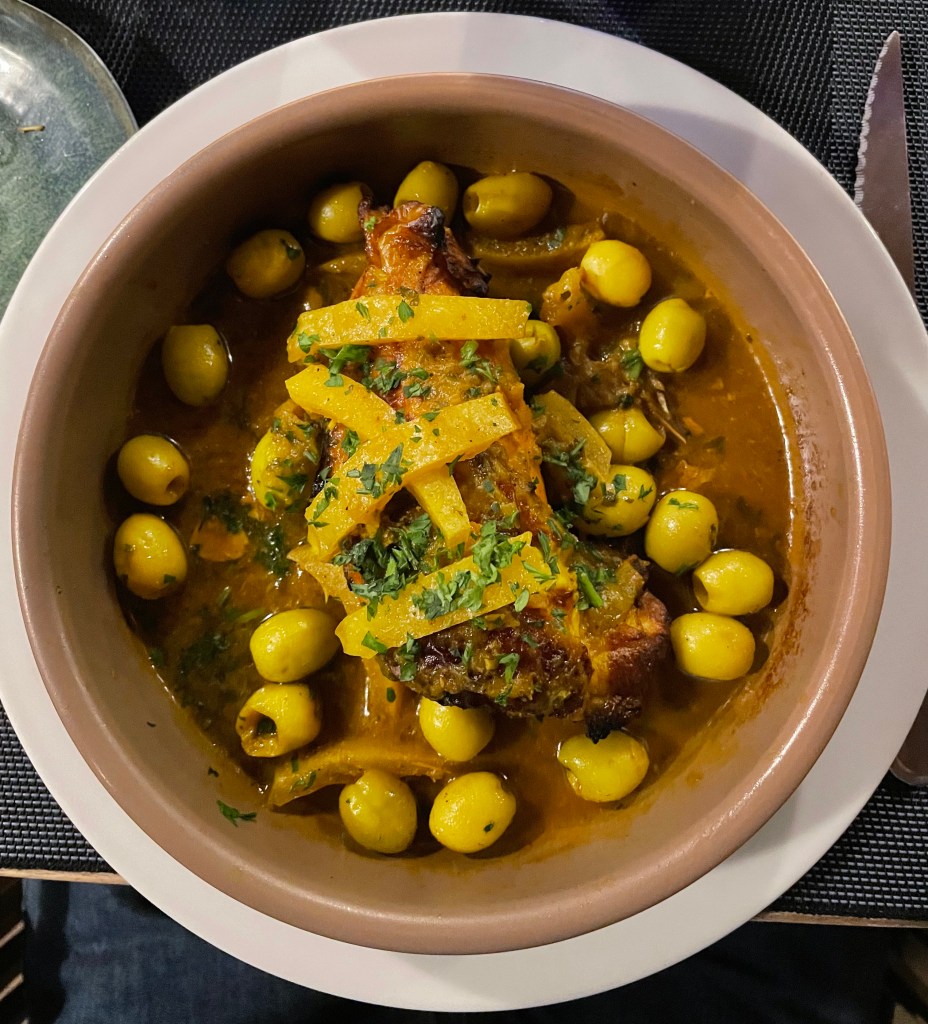
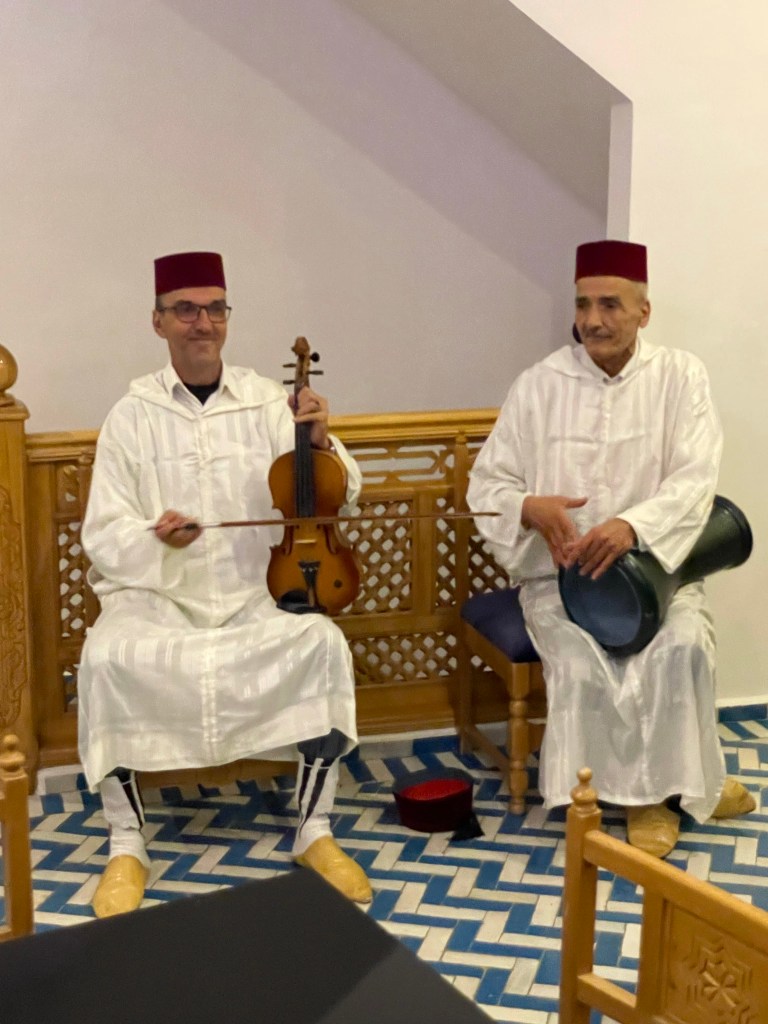
We loved lodging in the riad in the Tangier medina, but found another equally charming one in our next stay in Chefchaouen, which is also known as the Blue City, because many of its buildings in the old town are washed in variations of blue paint. This friendly city is perched high in the Rif mountains and the rooftop views from our riad were spectacular.
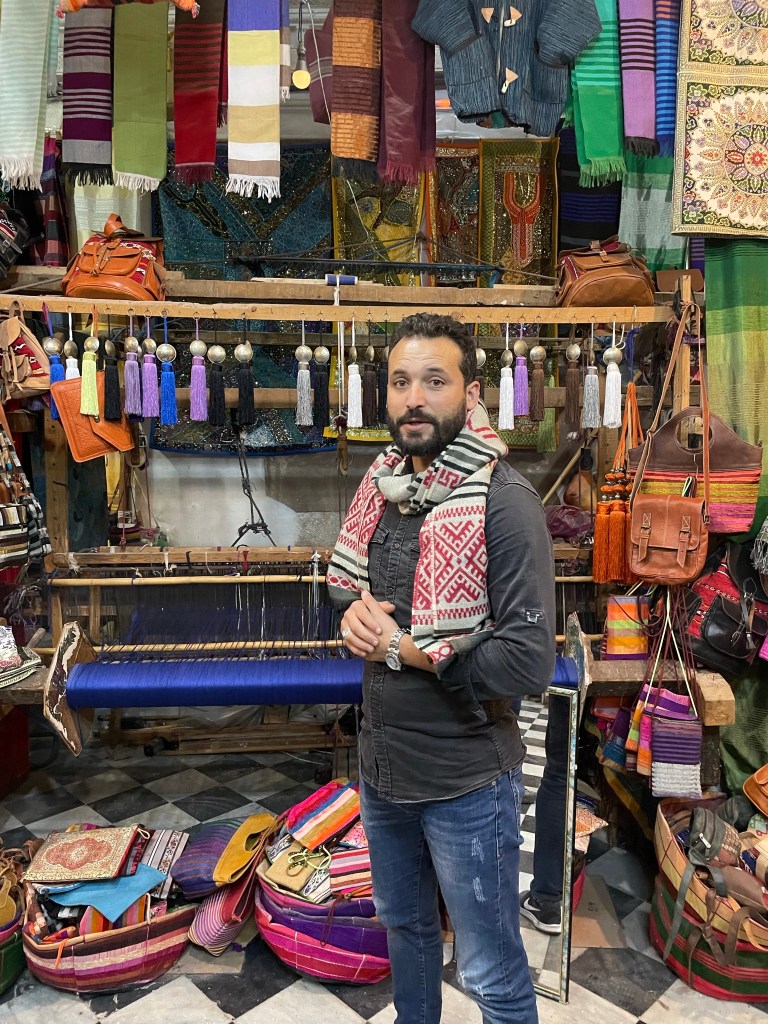
Because we knew there would be challenges with the language and culture in Tangier, and because we were lodging in the Medina, we knew we would need a guide. Renae had commissioned the services of one for the 13 days we were traveling throughout Morocco. Sami picked us up at the airport in his large modern van. He is Moroccan, is adept at knowing how things work in Morocco and is always available to help translate our needs to other Arabic speakers. We toured Tangier for the day and were getting a first impression of this African country. Tangier is a modern country by Muslim standards, but still pretty conservative to the typical American. The Islamic call to prayer is blasted over loudspeakers five times a day! The call starts out like our Indiana tornado warning signal and winds up to a powerful pitch for devotion.
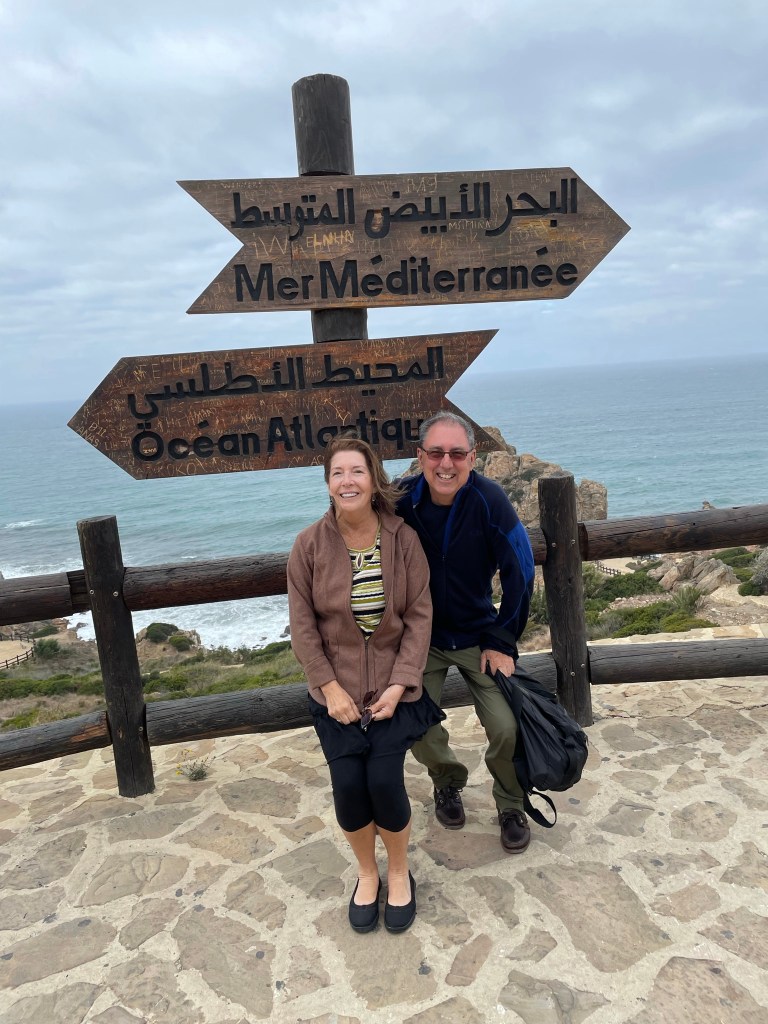
Tangier is strategically located where the emerald waters of the Mediterranean Sea meets the dark blue Atlantic Ocean, and has historically been an important military point. It has many historical landmarks, and has been frequented by luminaries from rock stars to literary giants to the 50’s and 60’s Beat Generation.
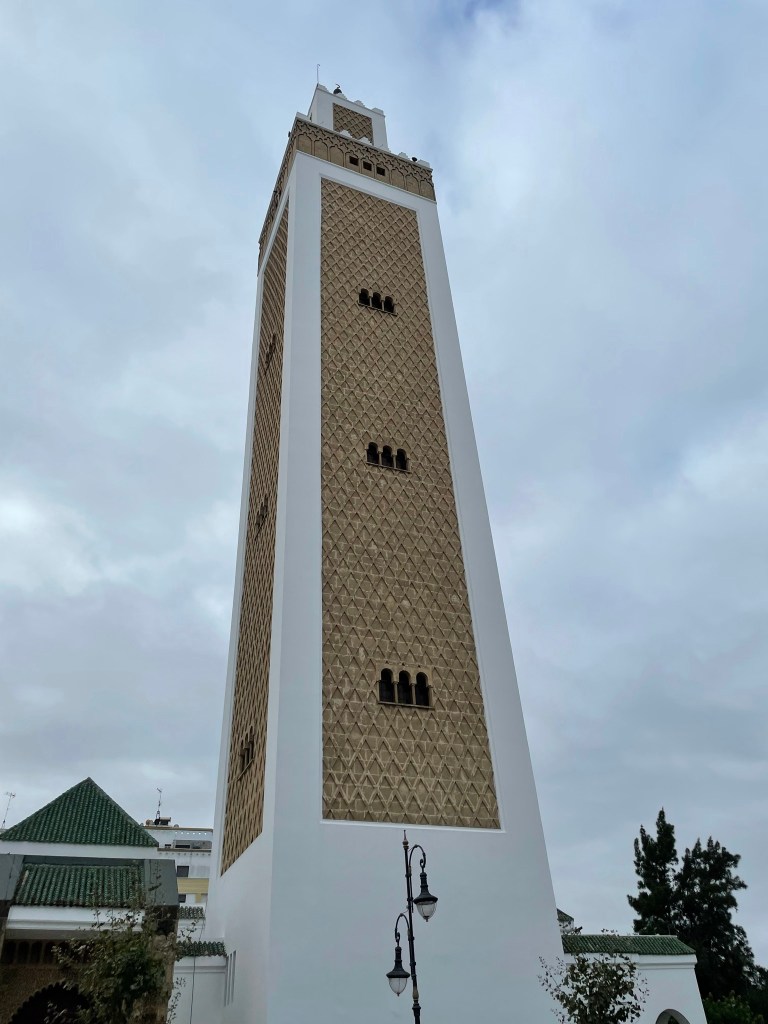
Tangier Mosque
The Point where the Atlantic meets the Mediterranean
As I mentioned in an earlier post, we had been staying with our friend from the Camino, Renae, at her apartment in Marbella, Spain. She had been trying to put together a trip to Morocco and needed a few friends to join her and to help defray the costs of the trip. She had already planned much of a two to three week action packed itinerary with visits to Tangier, Fez and Marrakech, topped off with three nights of luxury camping in the desert. We readily agreed to join her, and so did Trinity and Jan, two other Camino veterans who were still in Spain.
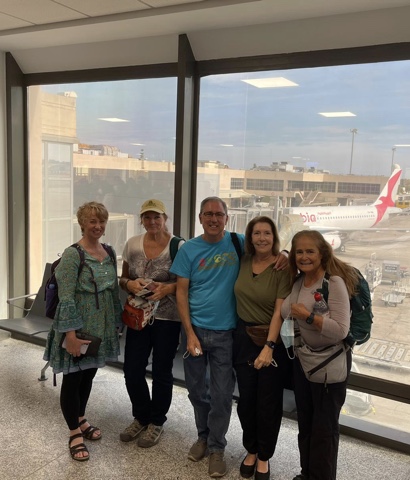
We knew we wanted to go to Tangier while we were on the Iberian peninsula, and had tentatively planned to take the ferry from Tarifa, Spain. However, because of Covid (and political differences between Spain and Morocco) the ferries weren’t running. Renae told us we could still enter Morocco, but only by flying. The five of us all booked reasonable flights (just under $300 roundtrip for Carrie and I) and here we are!
Flying out of Malaga, Spain on Air Arabia was interesting and made us realize that we were departing Europe and entering Africa, with all its varied languages, cultures, religions and people. On the flight, the flight attendants spoke to the passengers in Arabic, French and English. An Islamic prayer was presented on the tv monitor to all of us (and then followed up by a Roadrunner vs Wile E. Coyote cartoon!).
As we passed through customs at the Tangier airport the agents asked each of us several questions, one of which was where we were staying in Tangier. We each gave different answers, such the name of the Riad we were staying at, or just an Airbnb rental, or a non specific address in the Medina area. All the agents accepted those answers except one, who retained Renae, and sent her to security because she couldn’t give a specific address of our lodging. Luckily, our tour guide was close by and was able to rescue her and explain in Arabic where we we headed to.
We are staying at a Riad, which was once a private home, which has been renovated and turned into a rental unit. These are located throughout Morocco but are especially charming in the old parts of the city such as here in the Medina of Tangier.
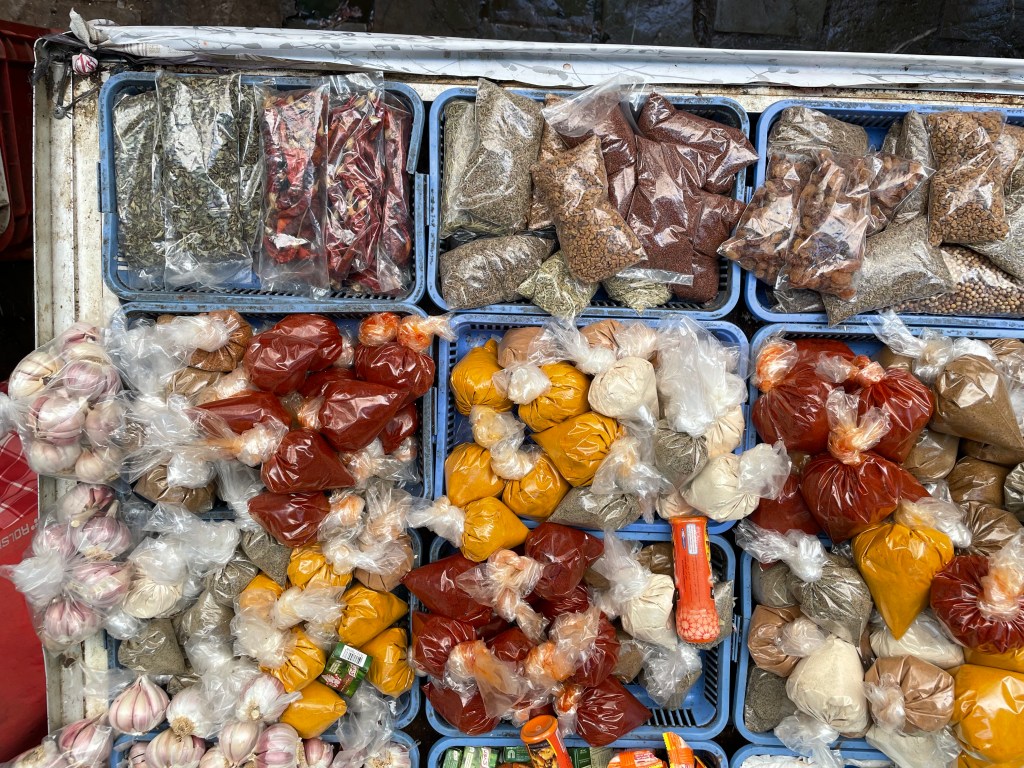
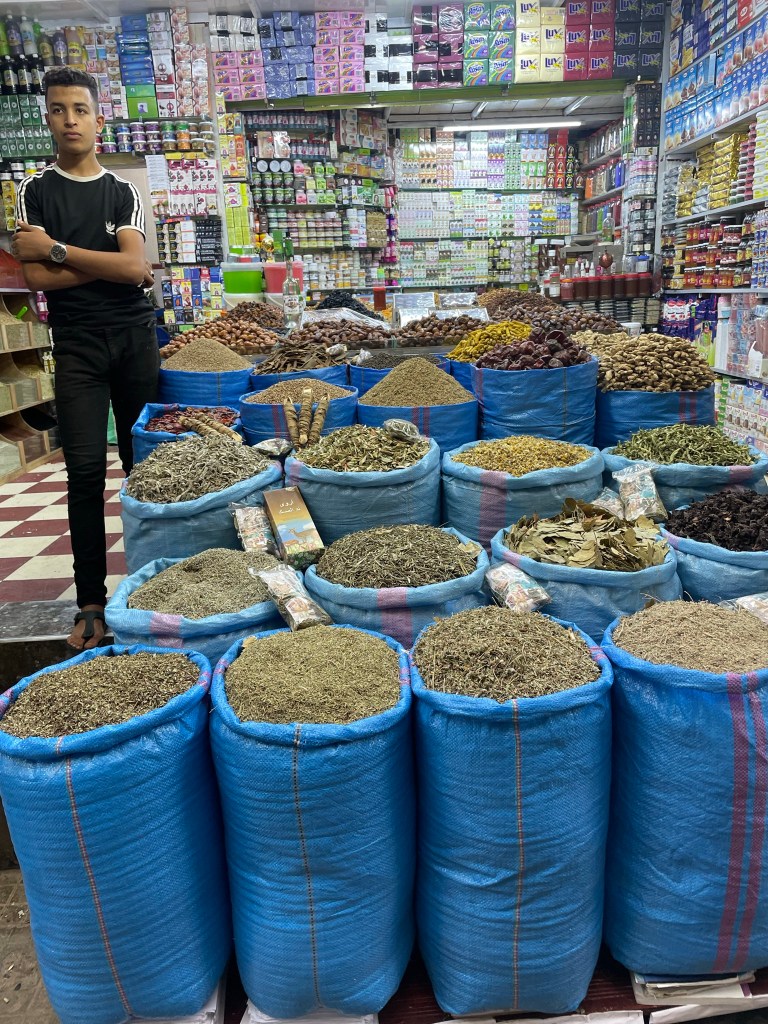
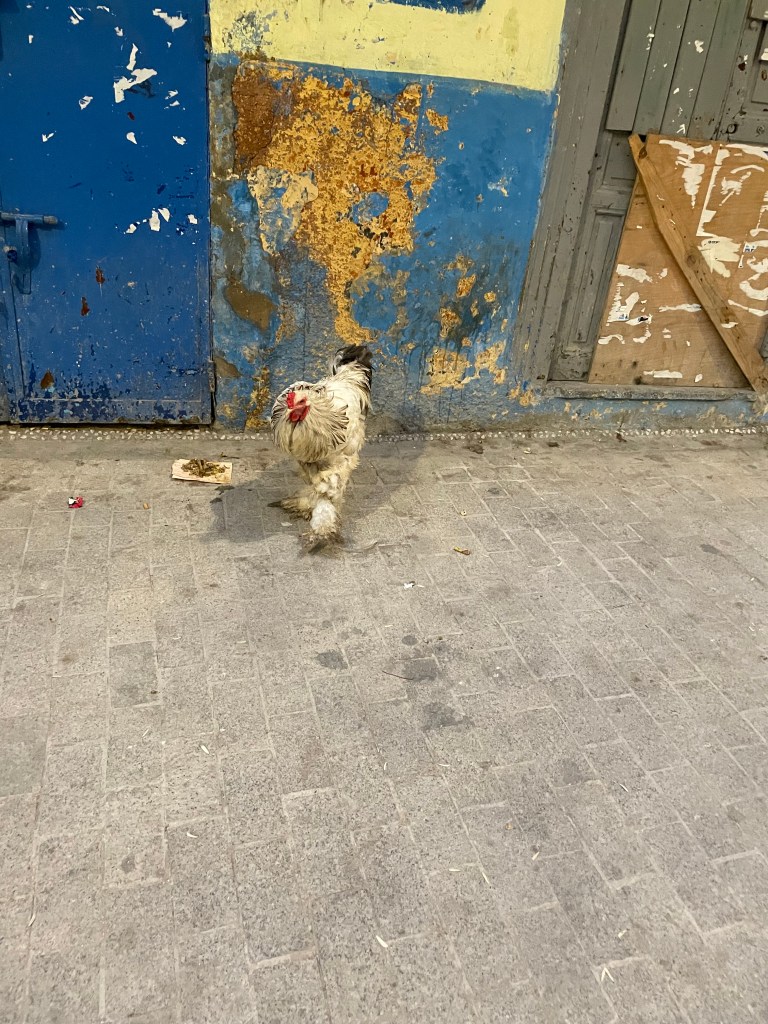
Our first day in Tangier was a blast of sights, vivid colors and smells that reminded us of why we all wanted to see Morocco and Africa.
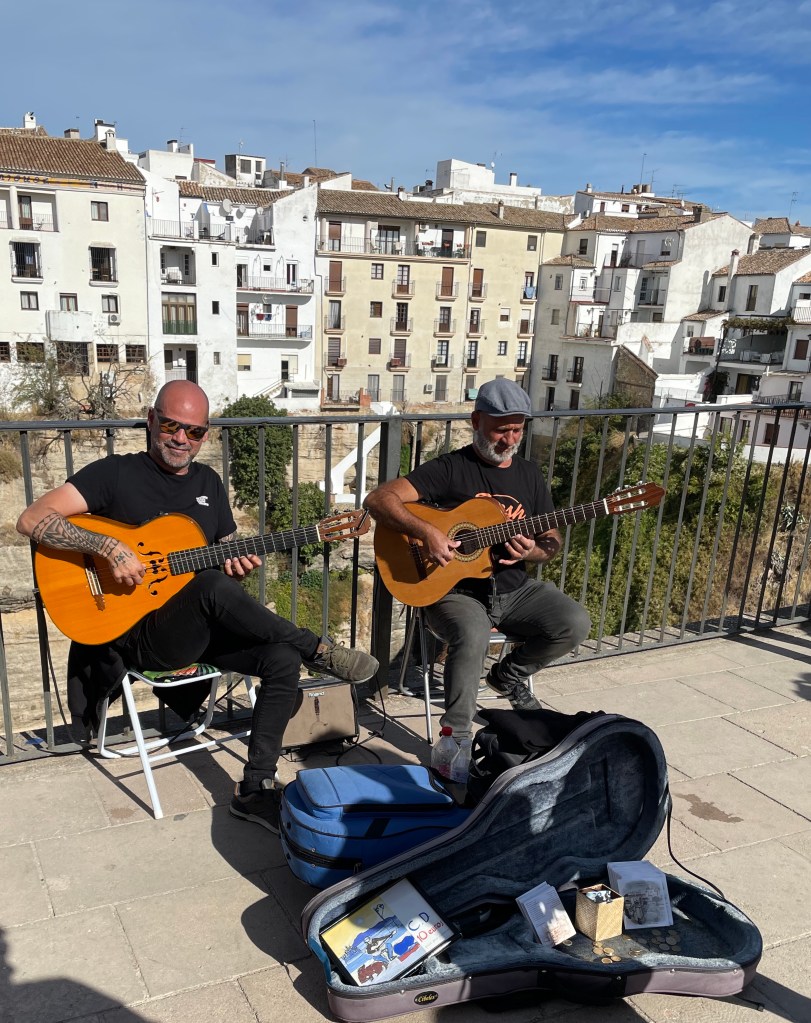
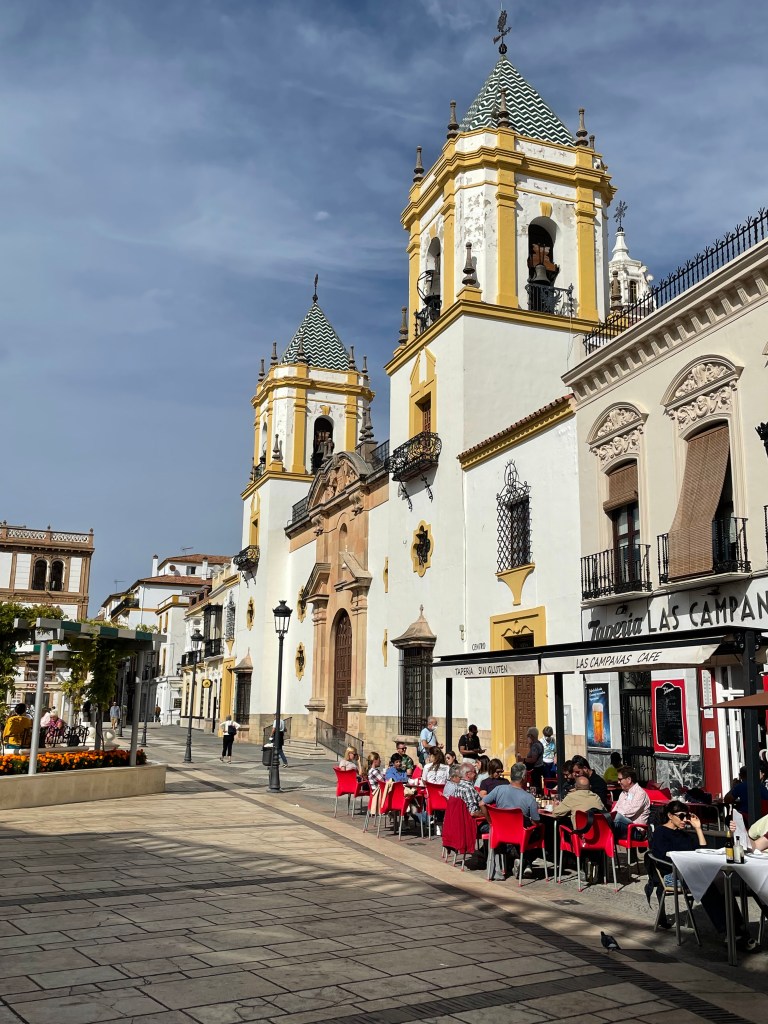
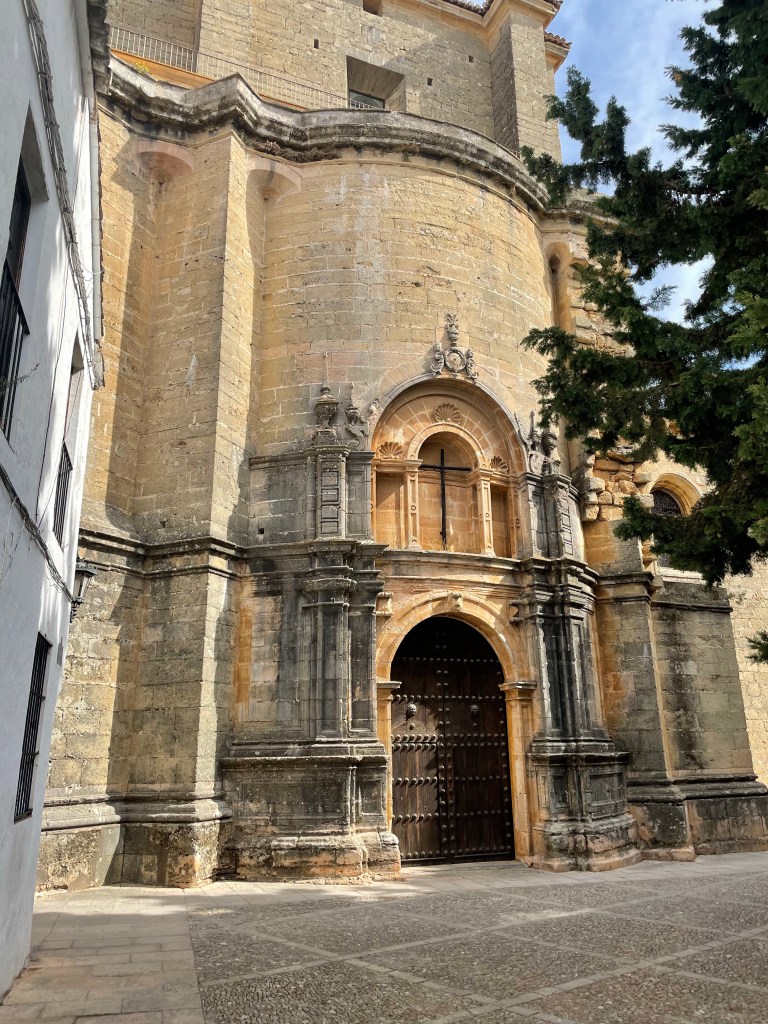
While staying with our friend Renae in Marbella, we were able to make a couple of day trips to historical cities in Andalusia. One visit was to Ronda, an ancient village located in the region noted for its many Pueblo Blanco (white house) villages. Ronda is famous for its homes straddling the 390 ft. massive El Tajo gorge, and for the Romanesque bridge that crosses the chasm.
Ronda bridge
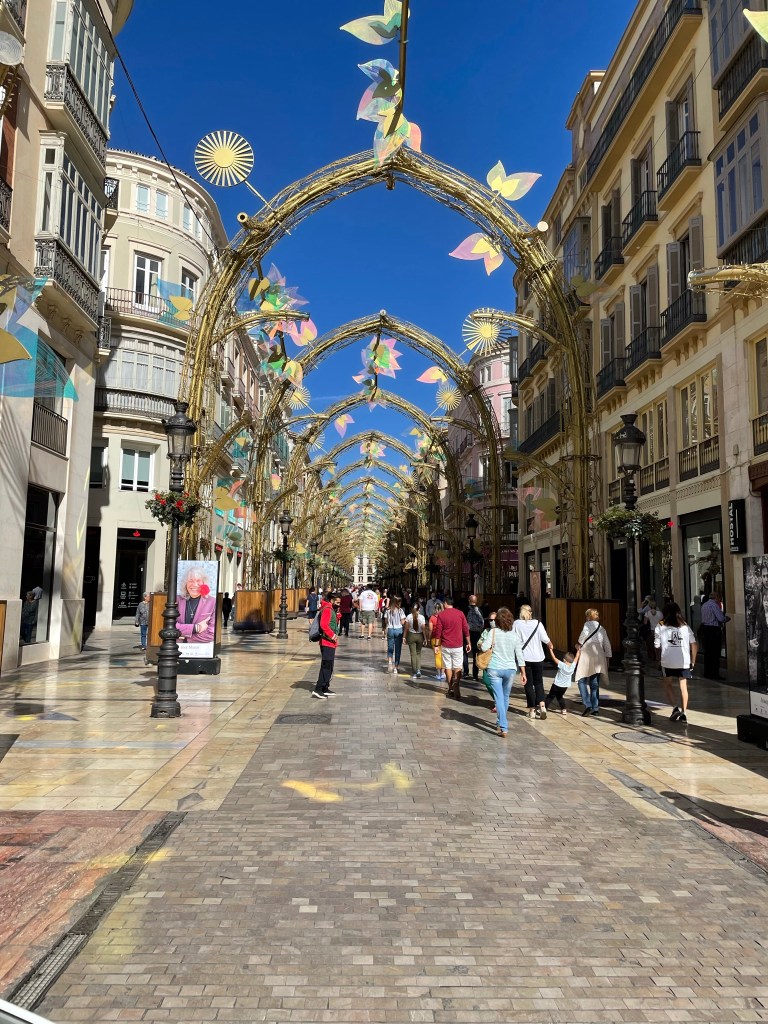
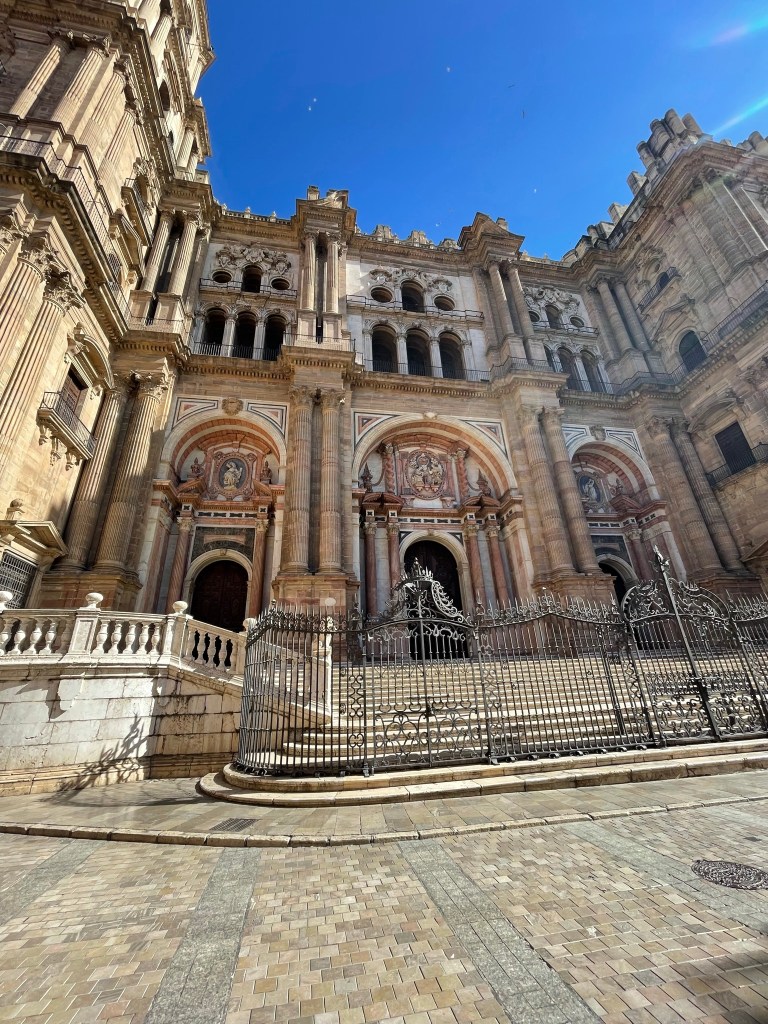
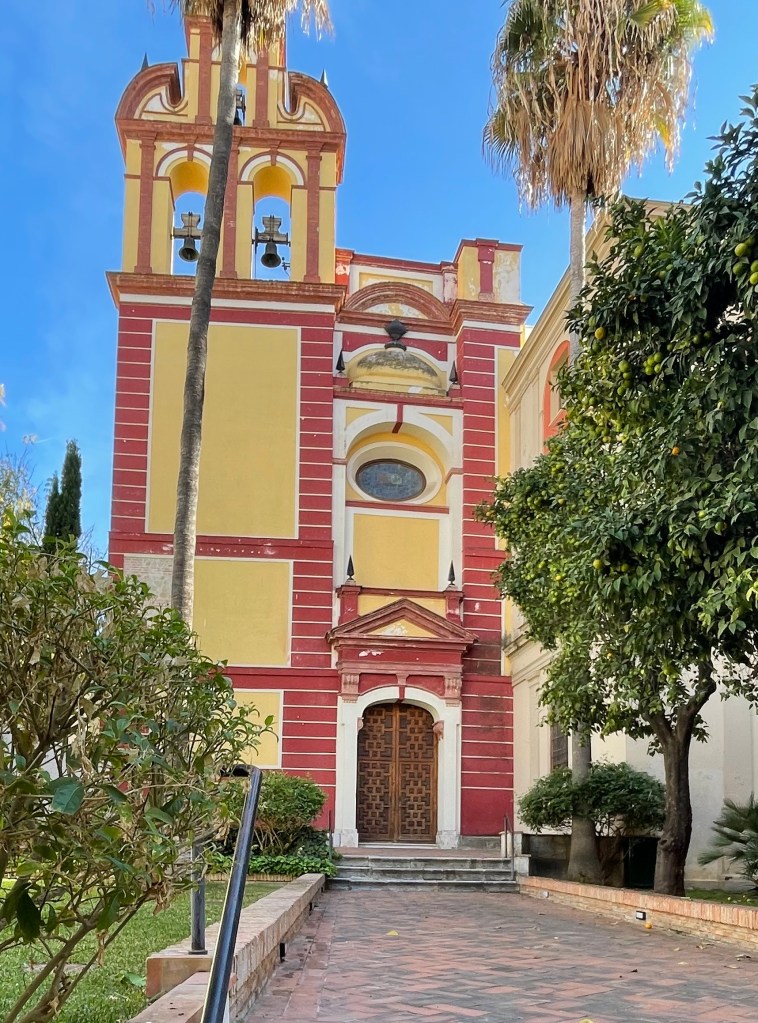
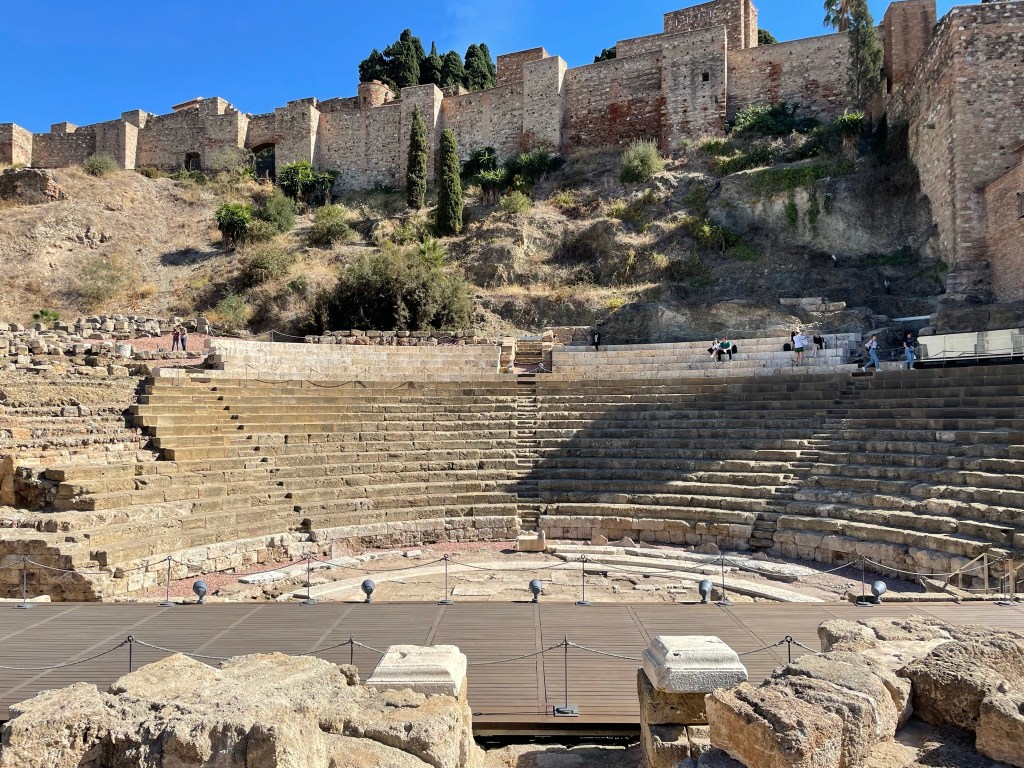
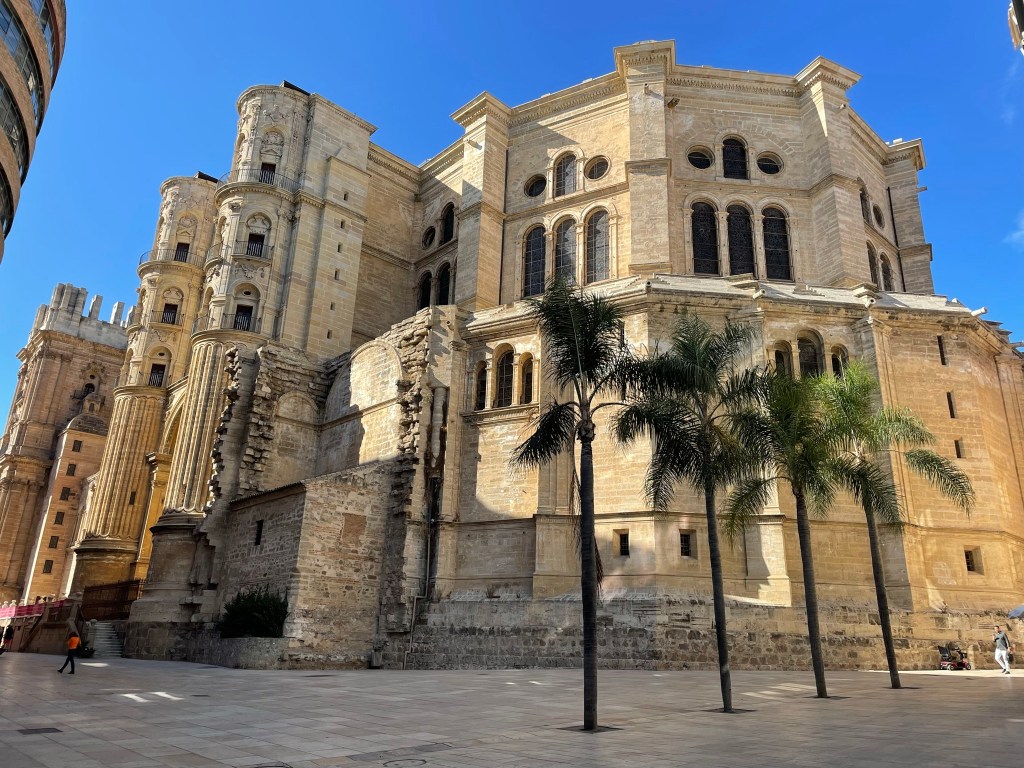
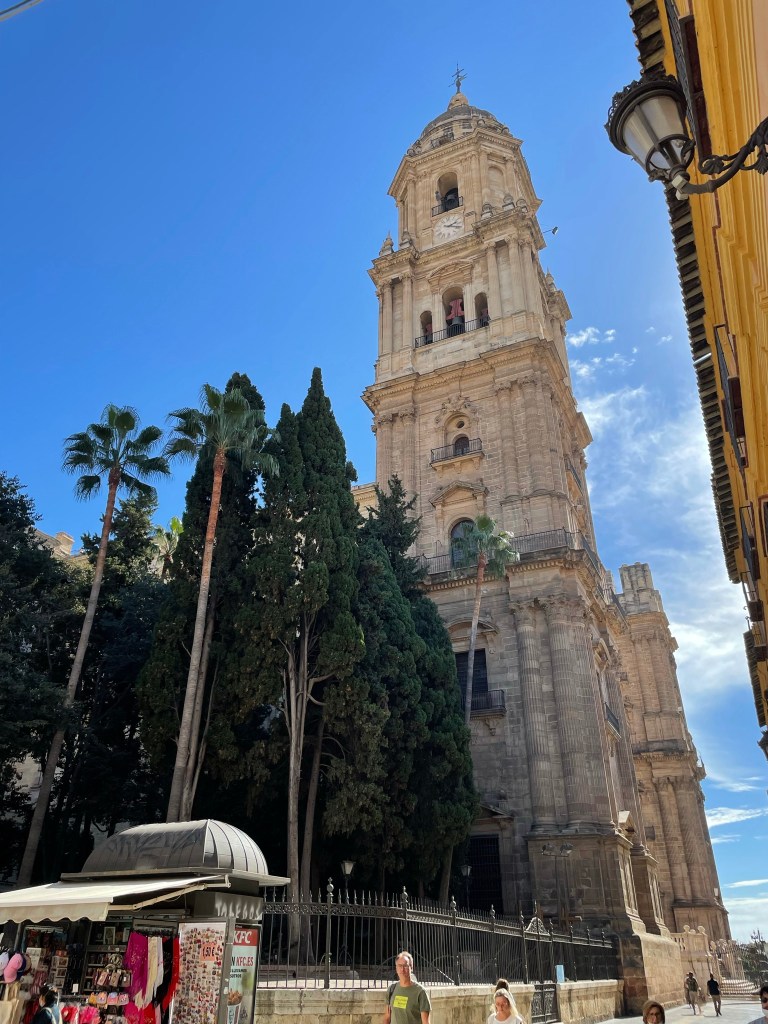
Malaga, another coastal paradise, and the capitol of Andalusia, is just east of Marbella. It boasts a large fortress high above the city, a classic Roman theatre and a grand bull fighting ring. Scholars say that Malaga is one of the oldest continuously inhabited cities in the world.
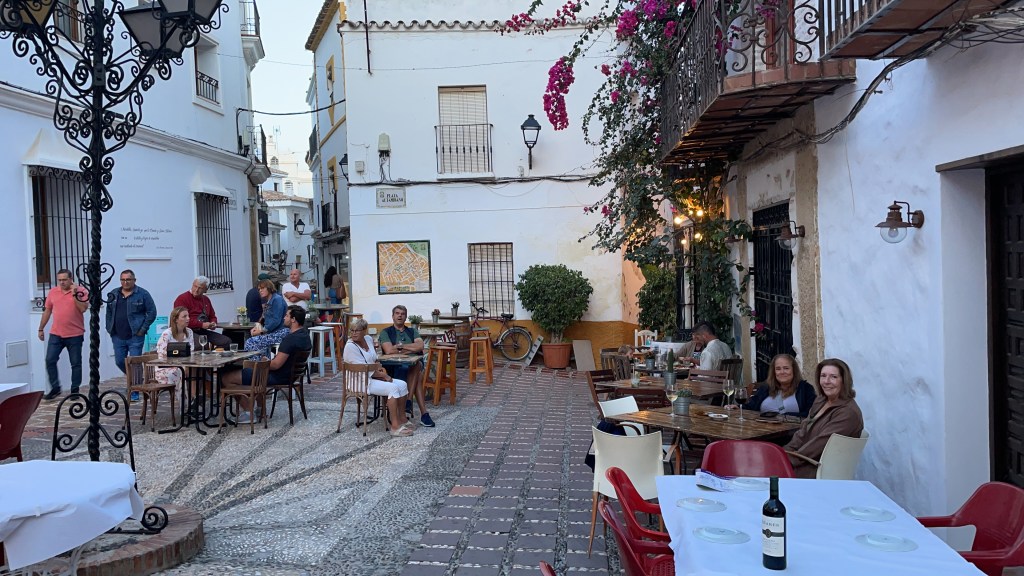
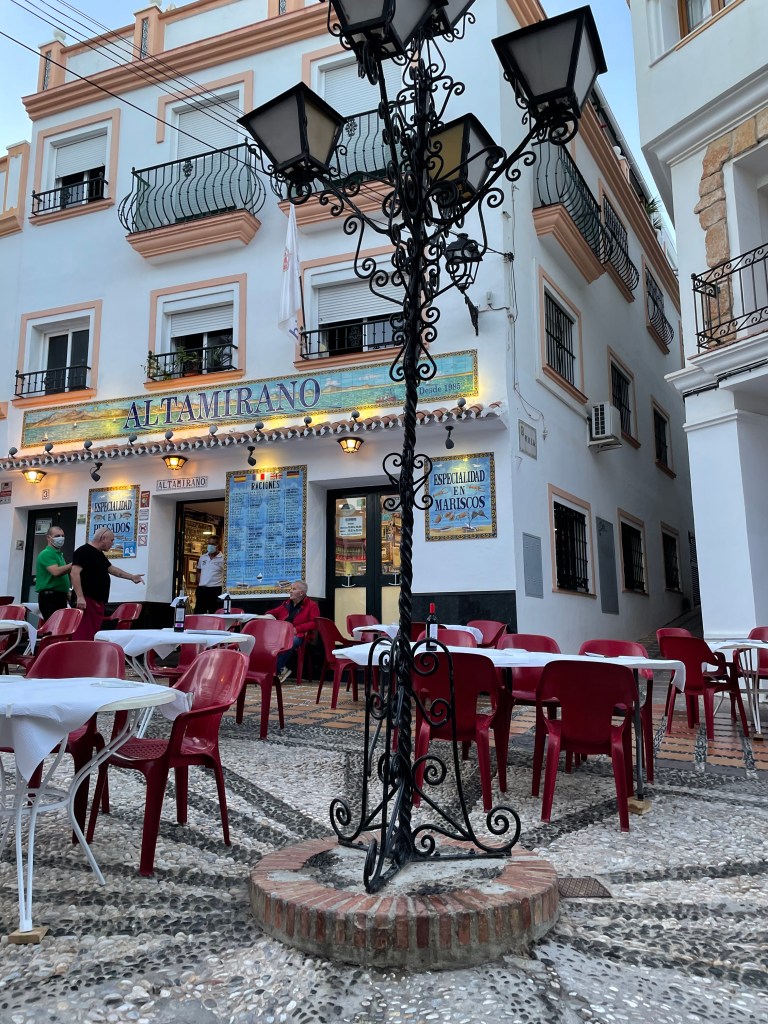
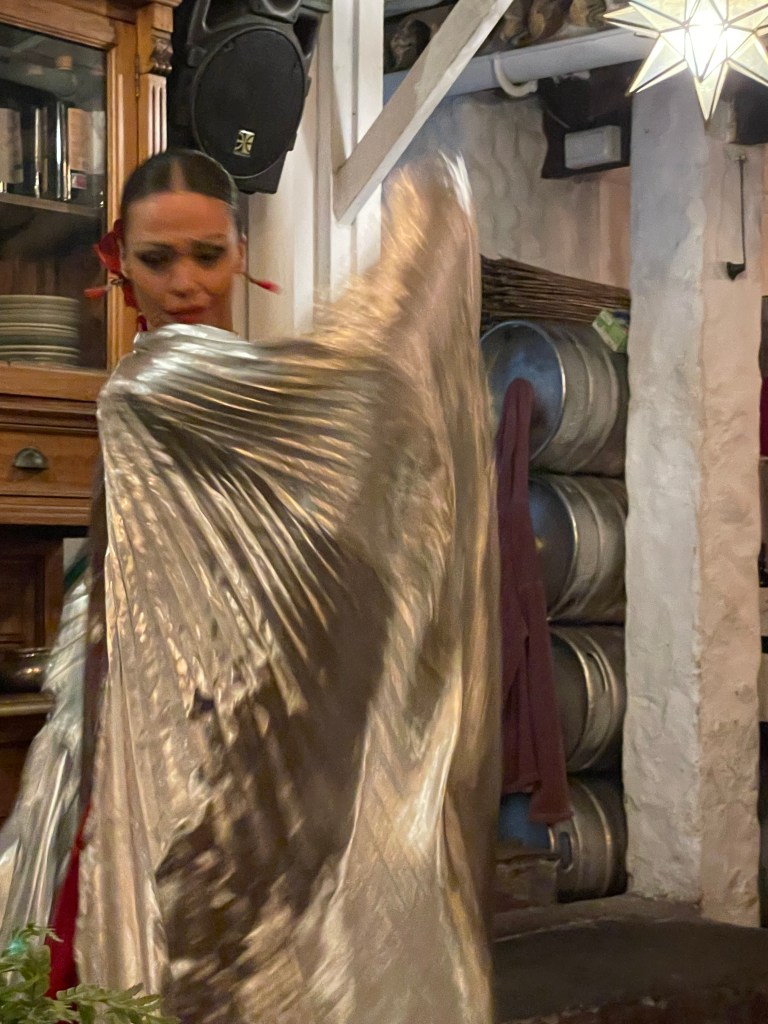
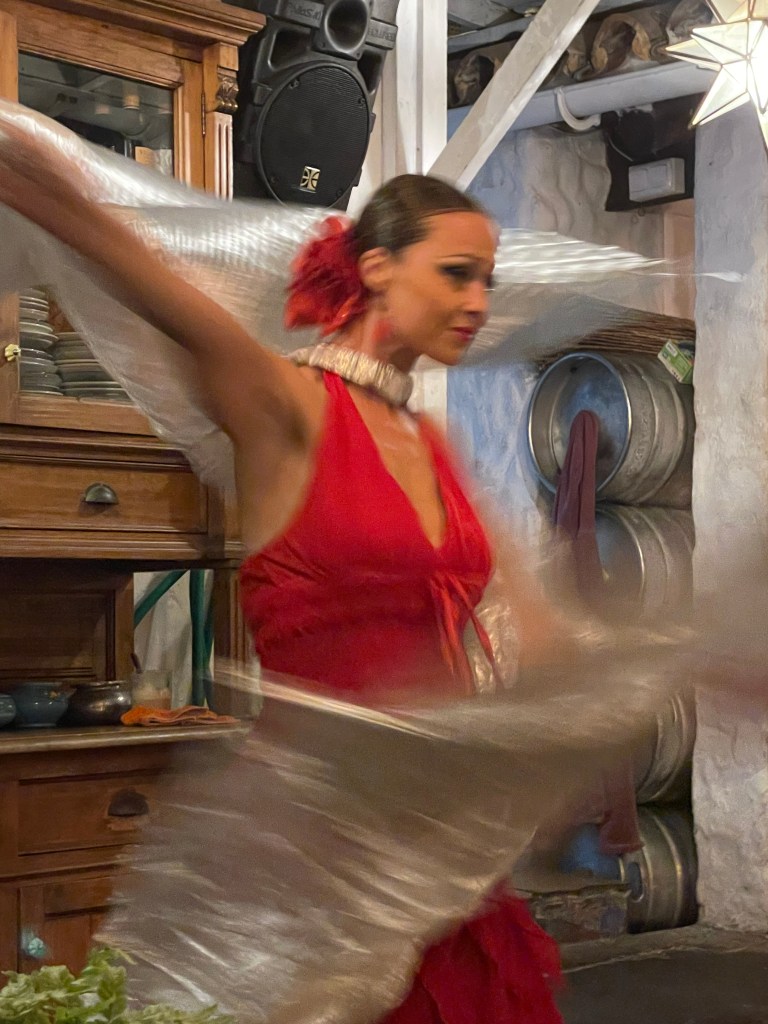
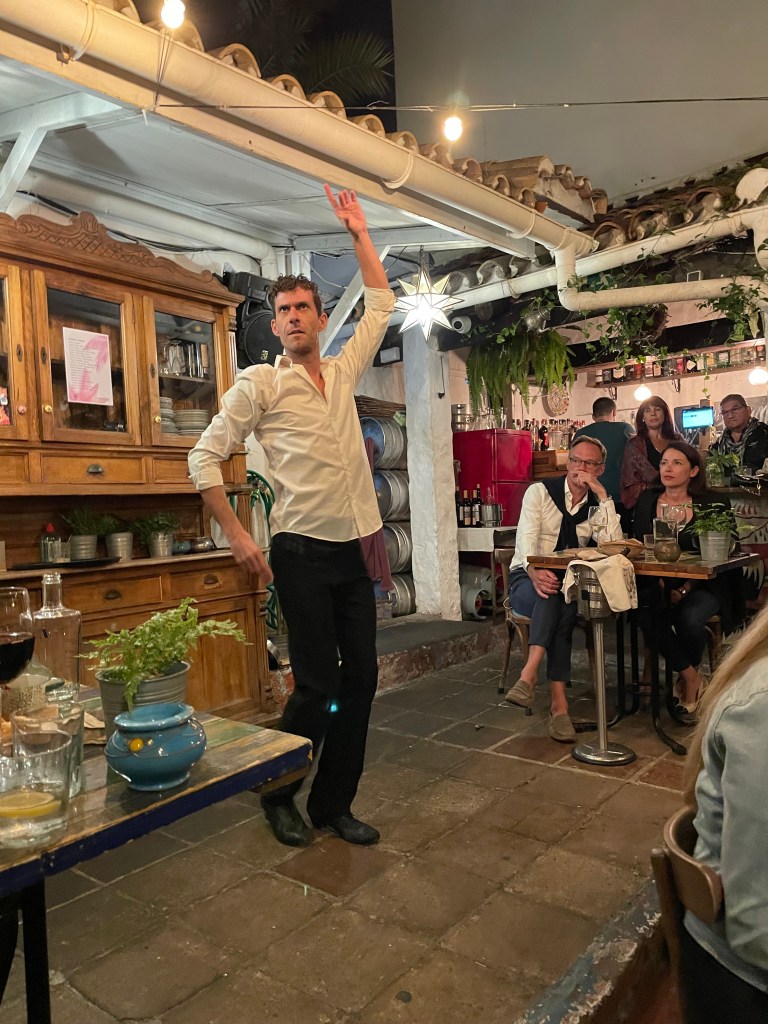
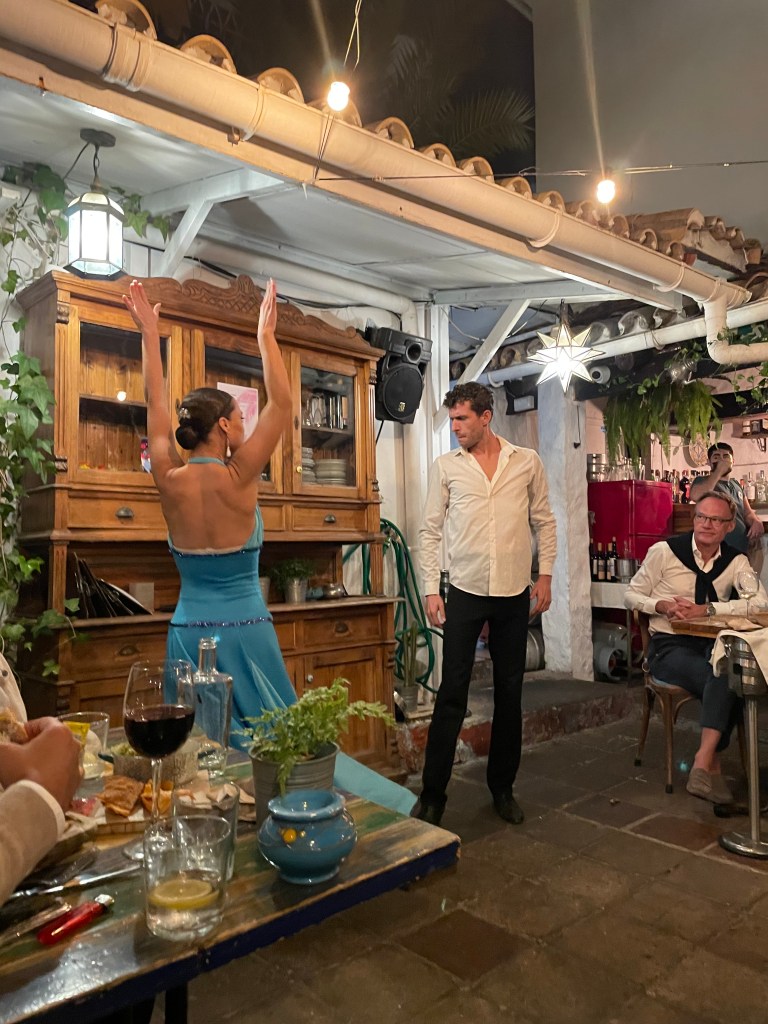
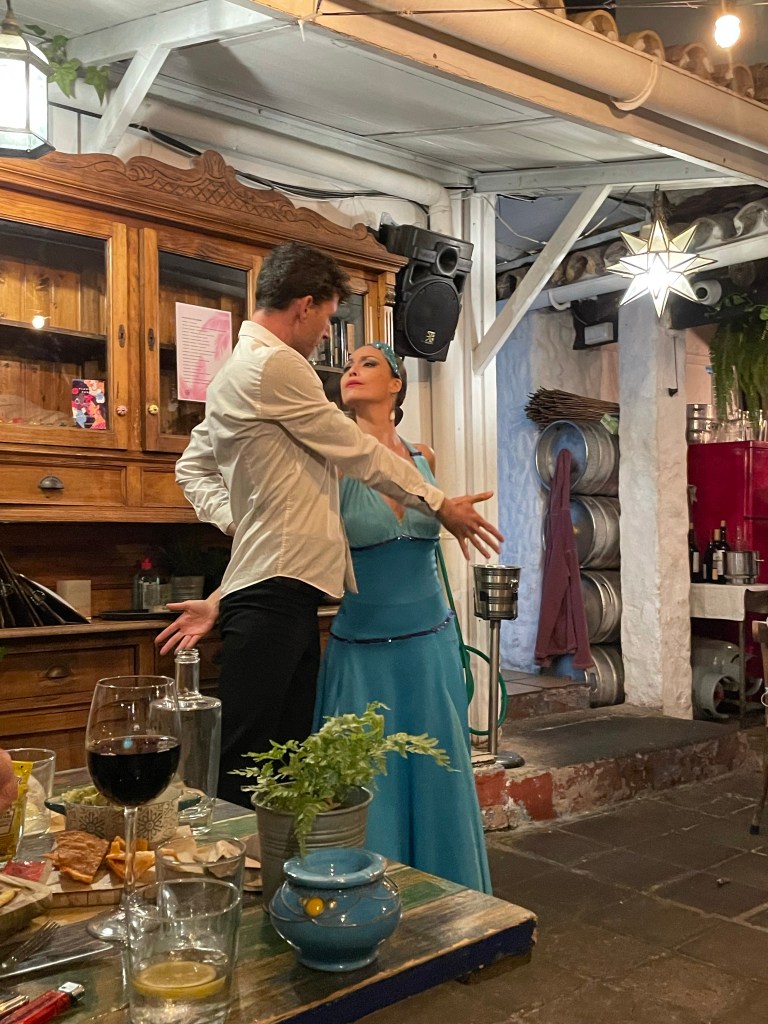
Carrie and I are always surprised when we run across something unique and culturally interesting when we travel. One evening while sitting in a Marbella plaza enjoying the cool early evening with a glass of wine we noticed a young couple dressed in Flamenco attire relaxing a few tables away. The waiter said they were performers on break from their show in the restaurant’s interior. He invited us inside to be seated in a beautiful jasmine filled garden to watch the couple’s Flamenco show while we dined. This was an unexpected treat.
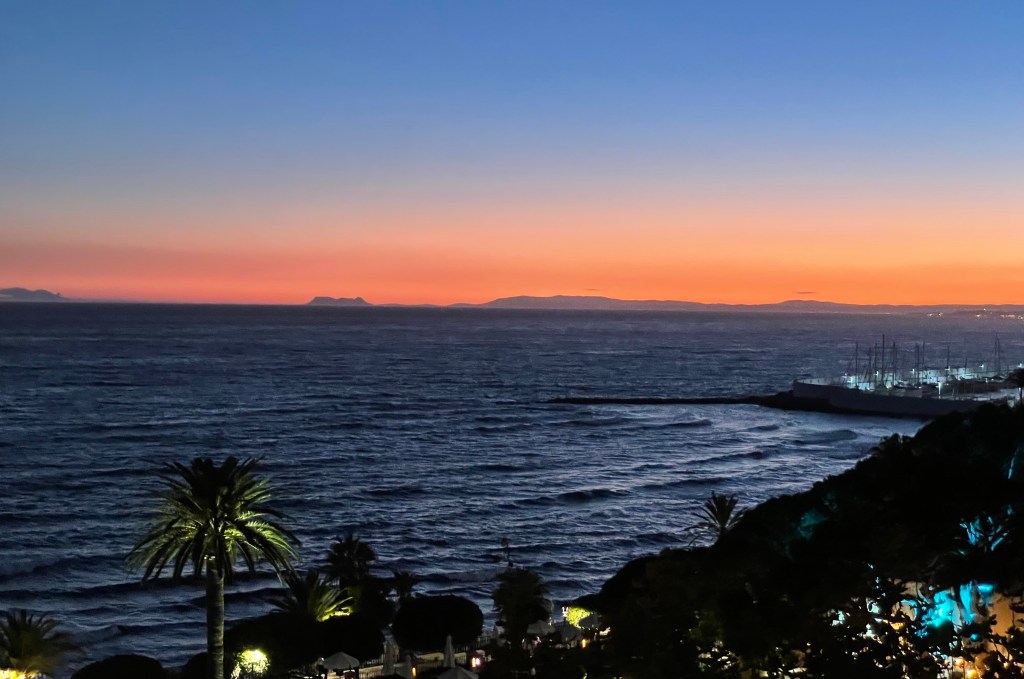
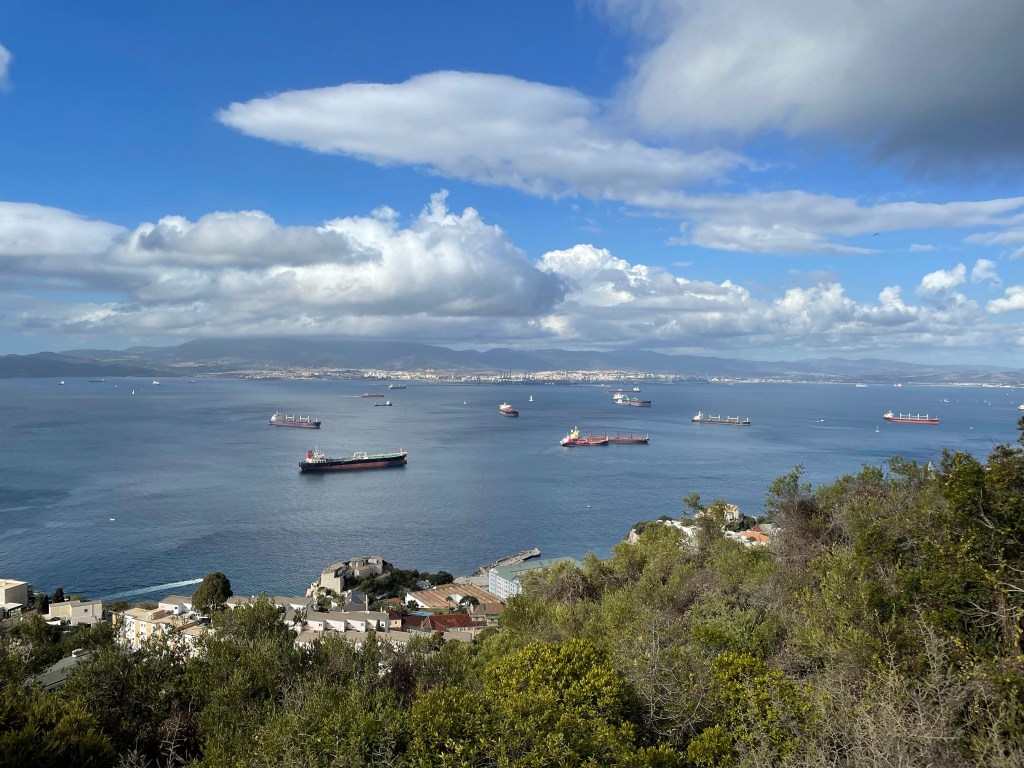
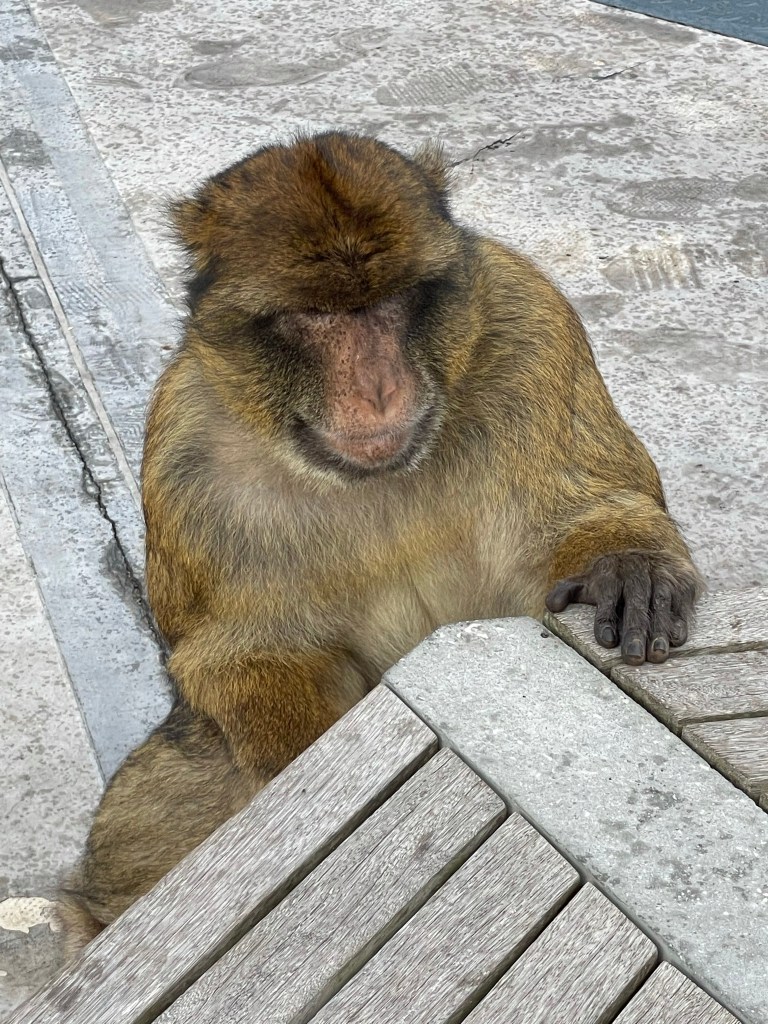
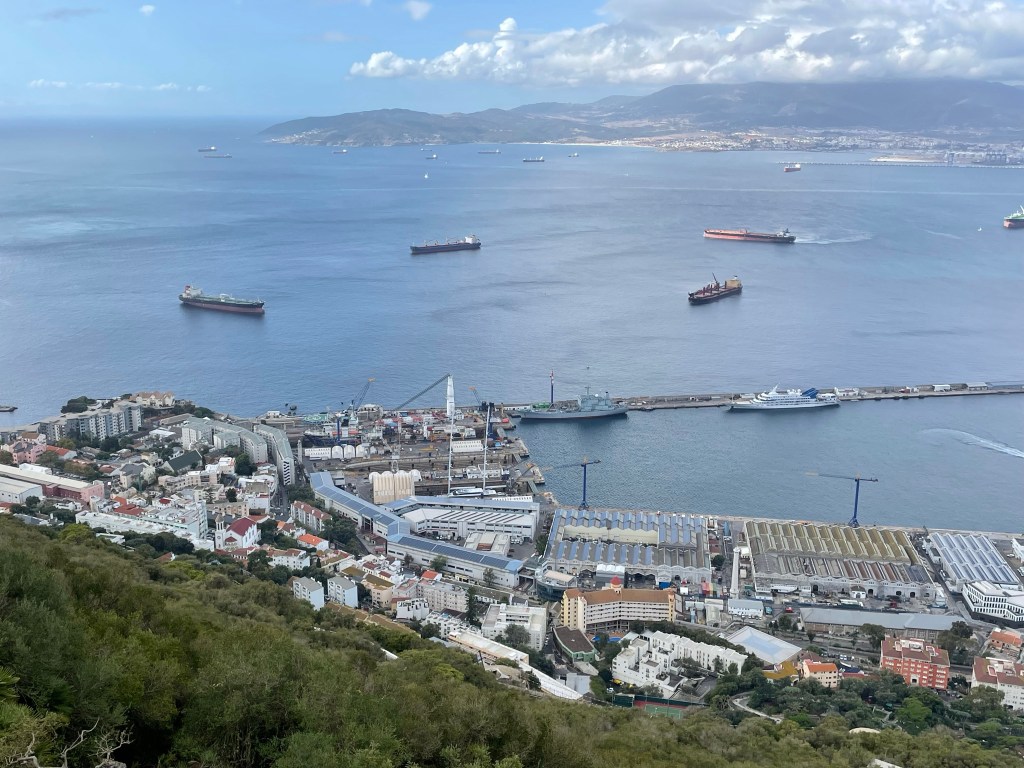
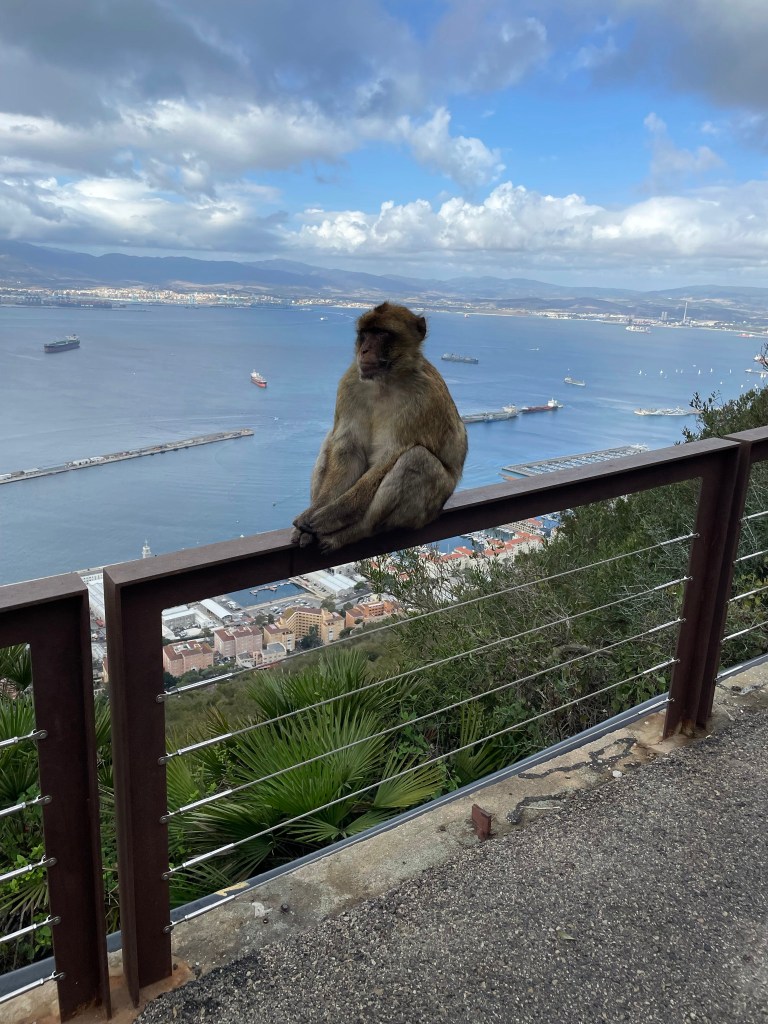
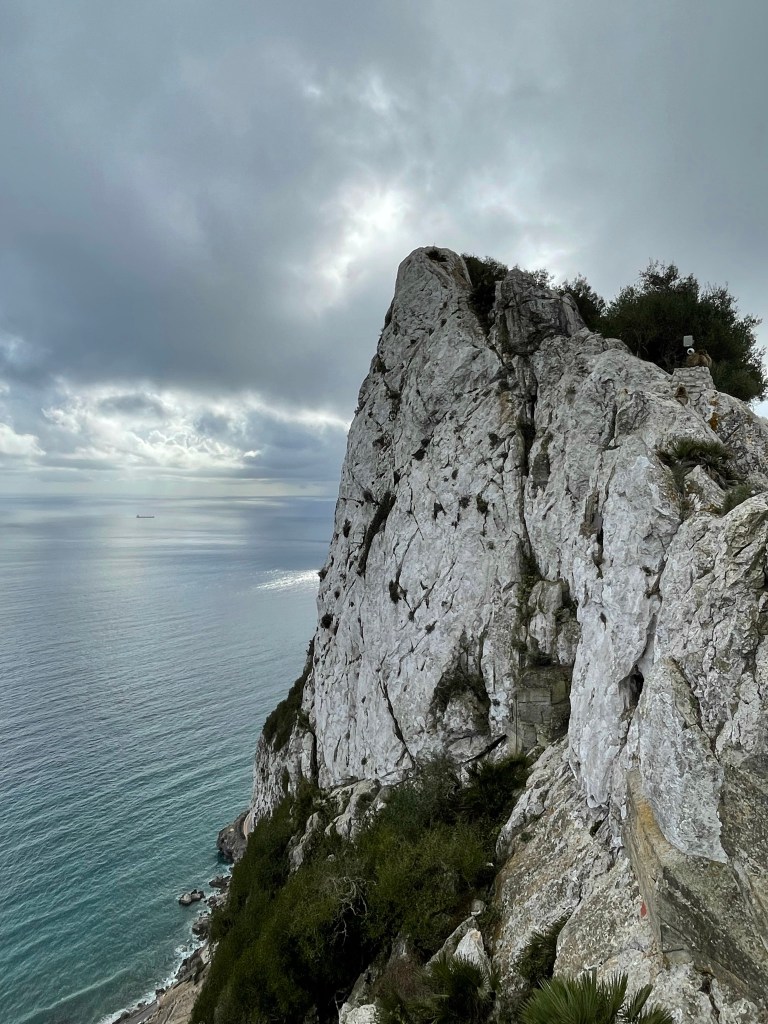
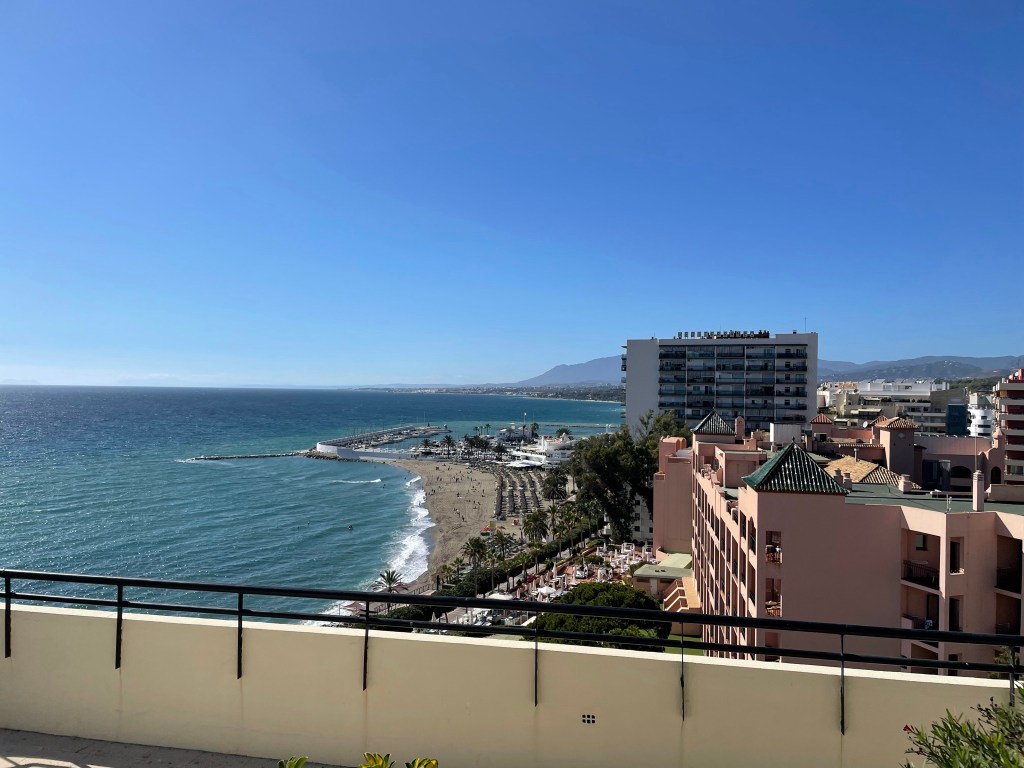
After touring the Algarve area of Portugal, Carrie and I drove east along the Costa del Sol to Marbella, Spain, a toney enclave hugging the southern shores of Spain along the Mediterranean. The views from our friend Renae’s apartment were stunning. As you can see from the photo above, not only do you get to watch the lapping azure waters below, but in the distance you see the Pillars of Hercules. From the left, in the horizon, is the mountain top of Jebel Musa in Morocco. The Rock of Gibraltar is the next promontory that you see to the right, separated by the Strait of Gibraltar. So much history has occurred in these seas and passed though that narrow strip of water where the Mediterranean Sea meets the Atlantic Ocean! We had wanted to visit Gibraltar the last time we were in Spain, but couldn’t make it work in our itinerary. We were so happy to make it here on this trip. The views from on top the Rock were amazing and it was fun to get to observe the famous Barbary macaque wild monkeys up close. Our tour guide regaled us with stories of the mischievous monkeys and warned us of one particular “cheeky monkey” who will joyfully jump into any vehicle who’s driver is careless enough to leave the door open.
View of Algeciras
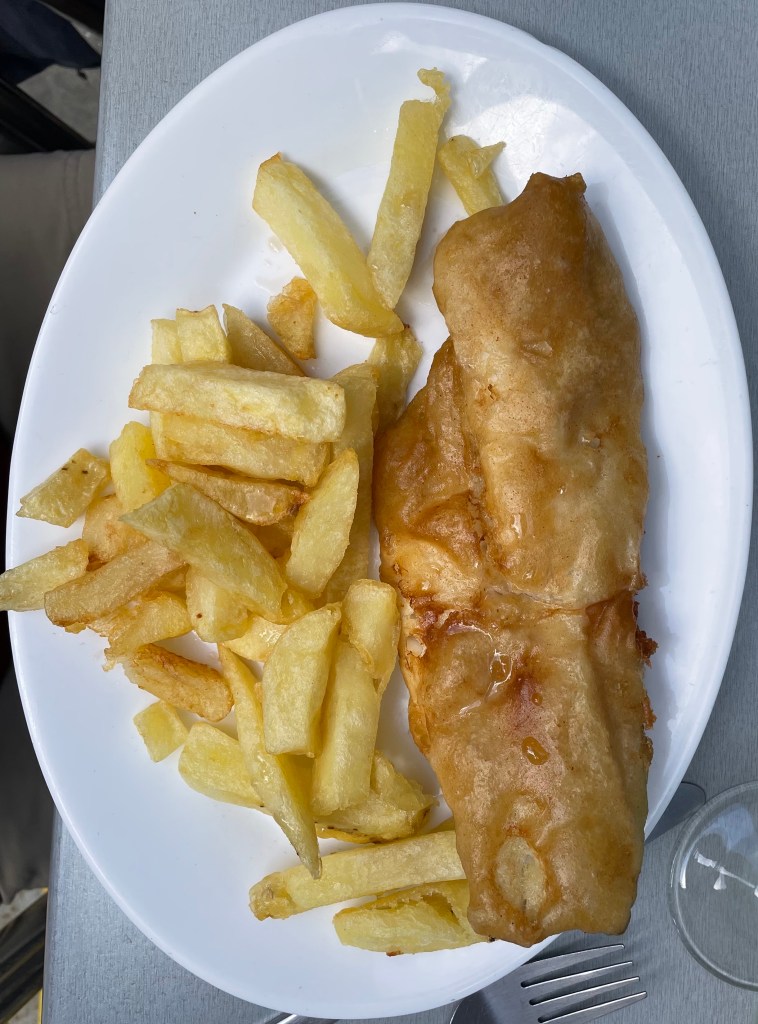
Roy’s Fish and Chips
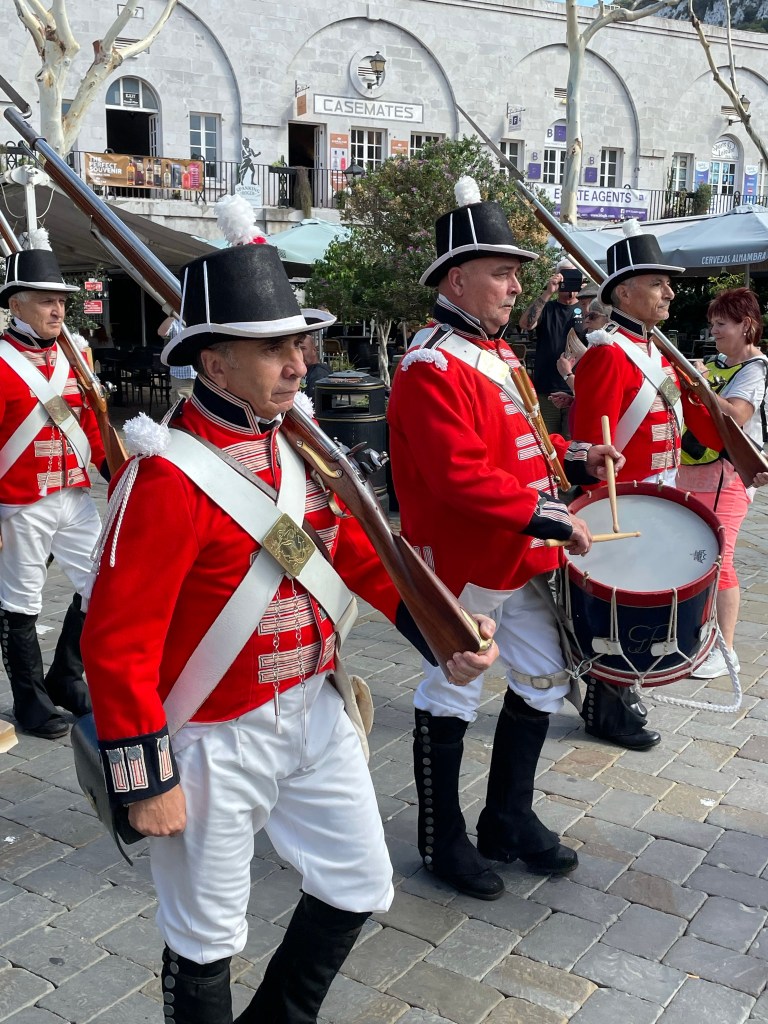
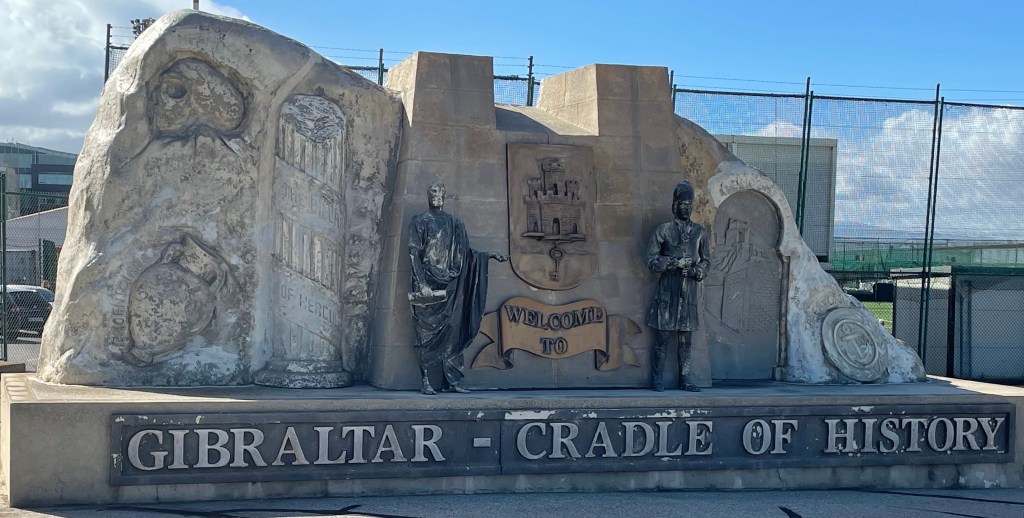
Gibraltar is an enigma. Although it is physically on a strip of land attached to Spain, the small community is actually a British Overseas Territory, which was ceded to the British in 1713. Driving into Gibraltar from La Linea de la Concepion, on the Spanish side, we passed through customs, and then crossed an active jet runway before entering British territory. We were warned to ”look right, look left and look up!”. Everything we encountered reminded us we were not in Spain any more. The restaurants charged us in Pounds Sterling, not Euros. British shops and pubs abounded and we were delighted to see fish and chips abundantly available.
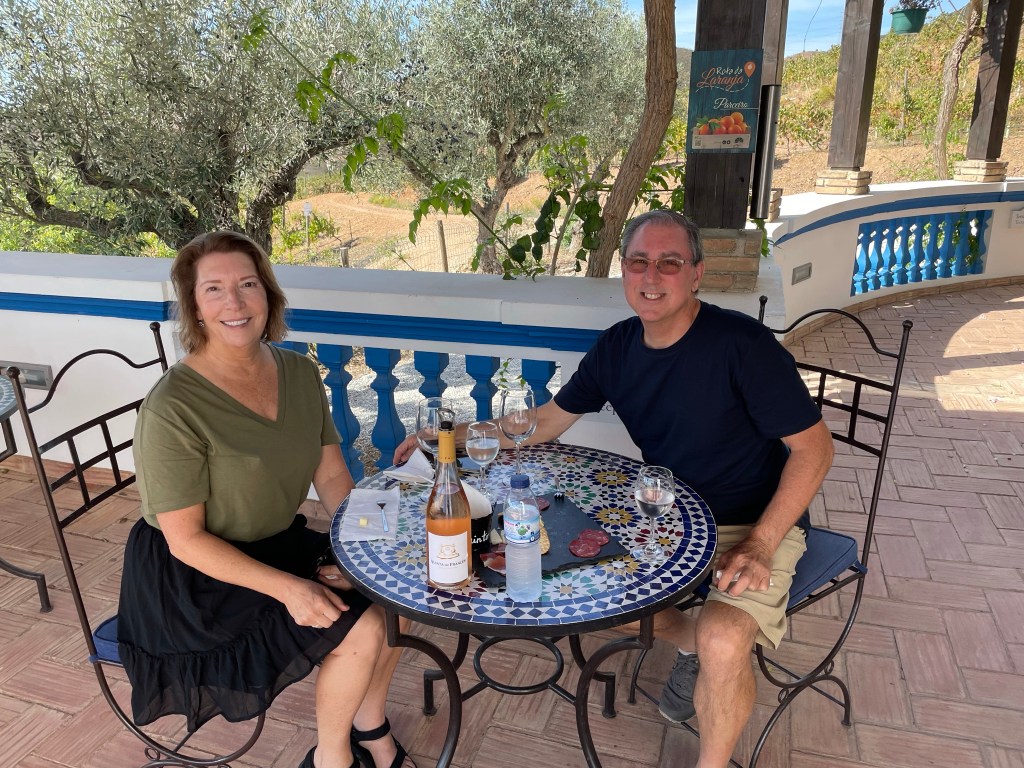
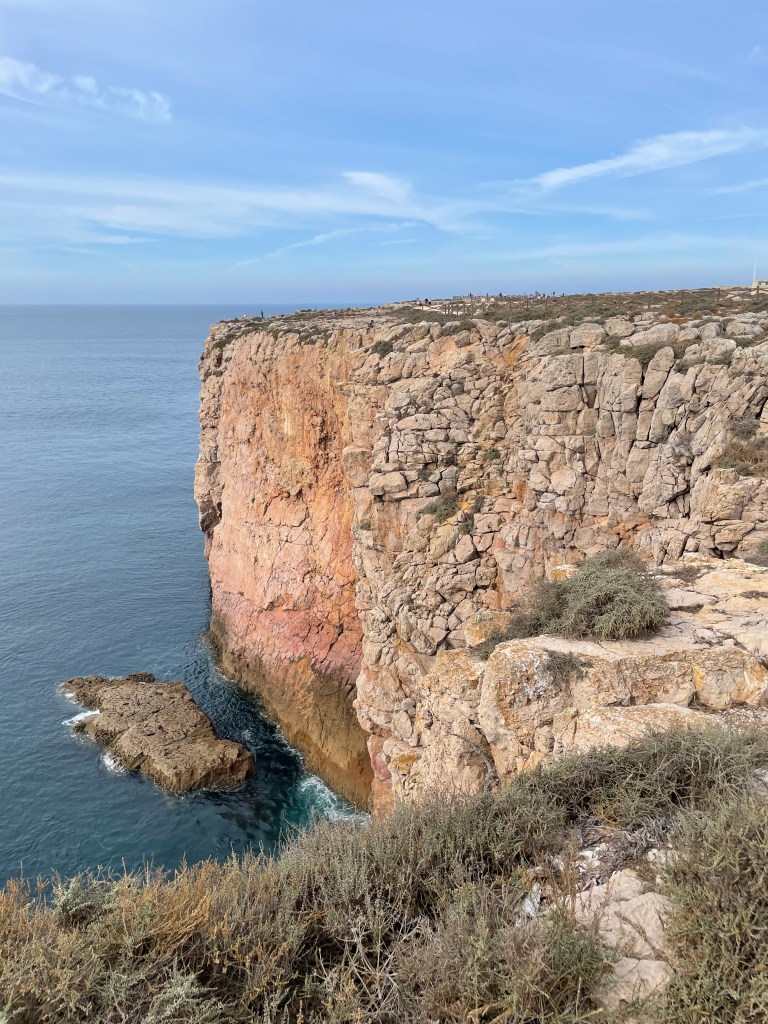
Carrie and I have been sunning and strolling on the pristine white beaches that appear everywhere along the Algarve coast. We visited the rocky point in Cape Sagres where Henry the Navigator supposedly ran a school for potential sailors in 1420, later built as an 18th century fort. We wandered just beyond here to Cape St. Vincent, the spit of rock which is the actual southwestern tip of Europe to see, you guessed it, another sunset, along with about a hundred or so other tourists eager to take in the daily color and light show. We tasted delicious Algarve wines at Quinta do Frances. Our only disappointment came today when our boat tour of the fabulous Benagil sea caves was cancelled due to rough seas.
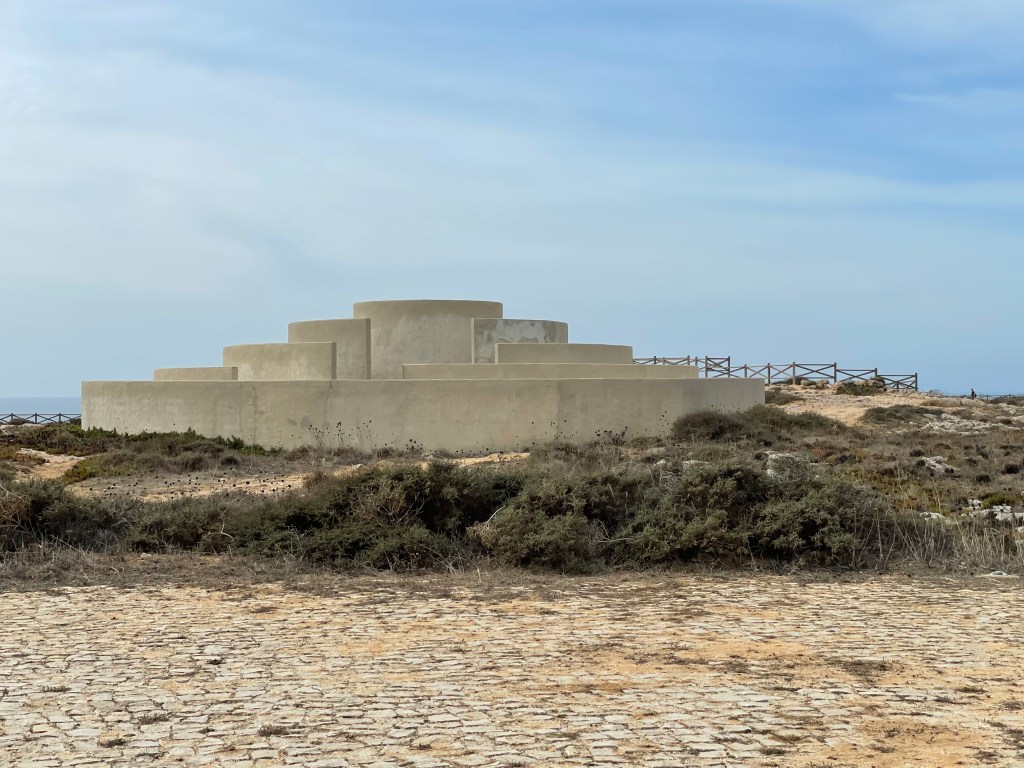
Cape Sagres Fort
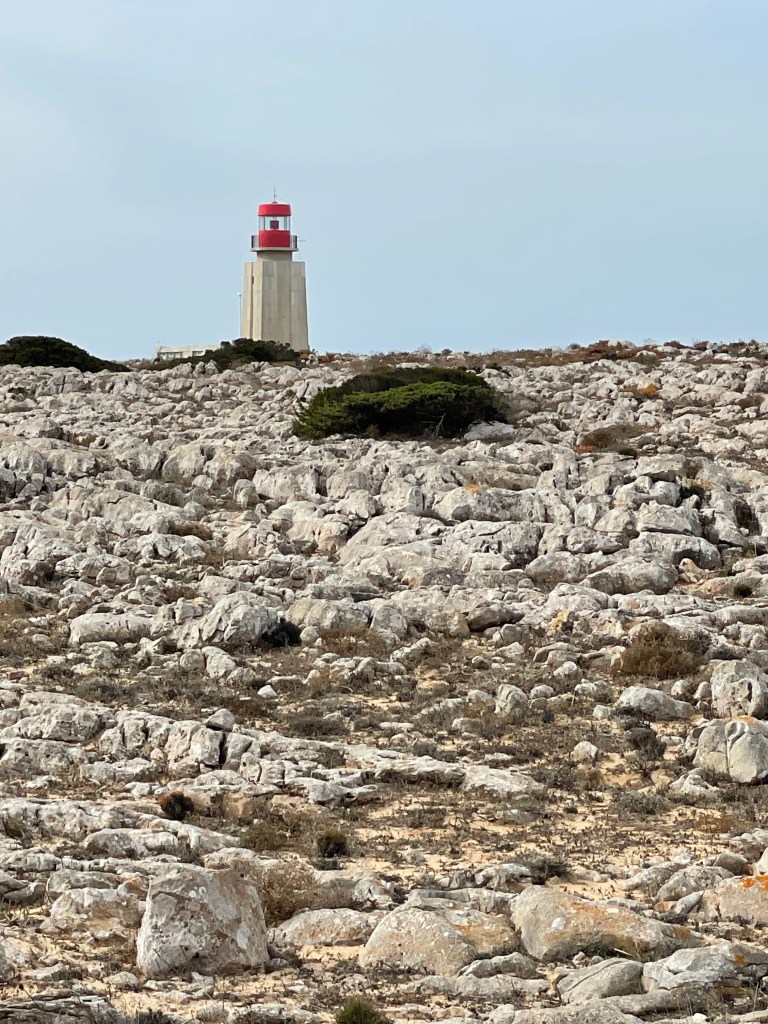
Cape Sagres Lighthouse
Cape Sagres Fort
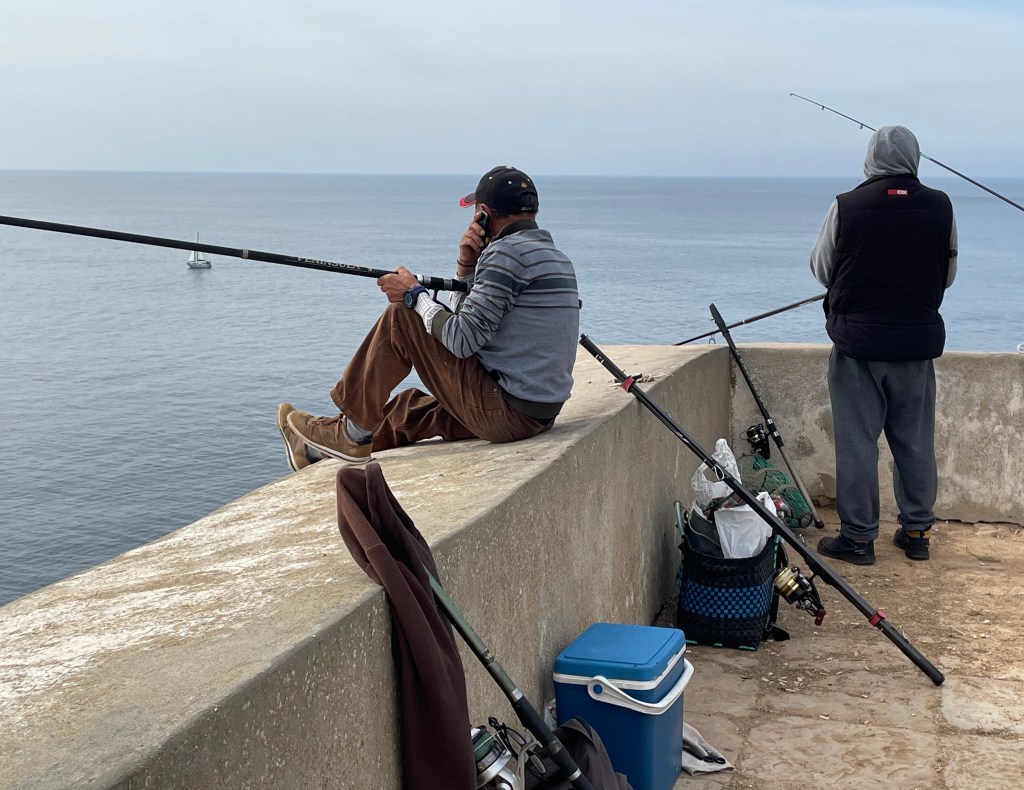
Fresh Catch of the Day
Wine Tasting
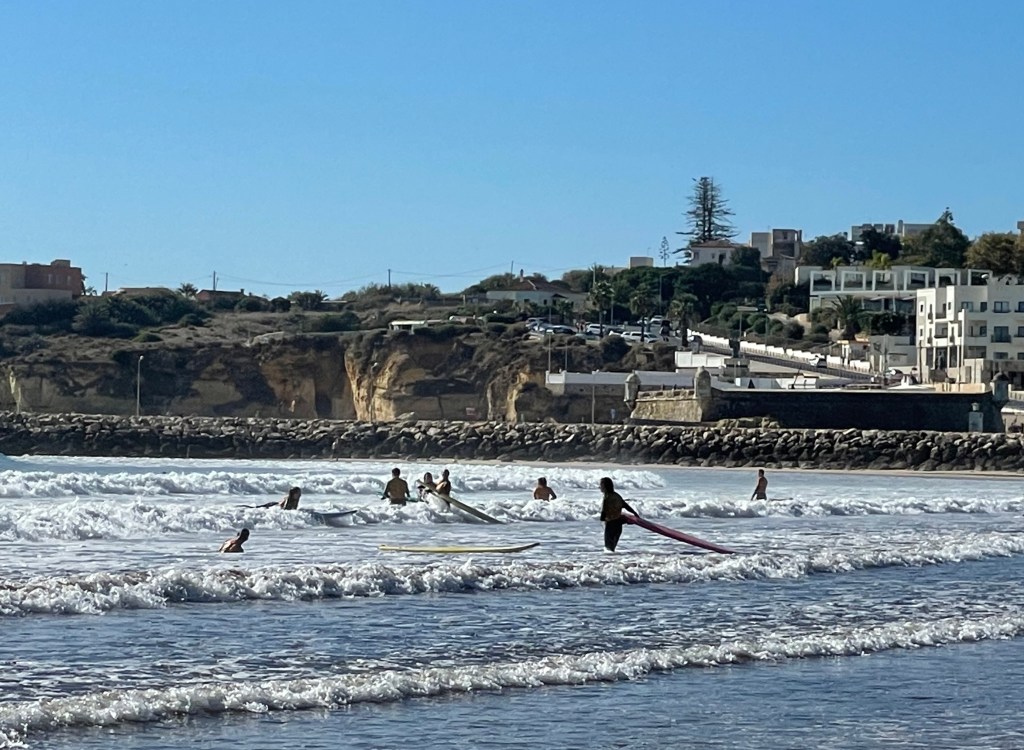
Surfing School
Surfing School Meia Beach
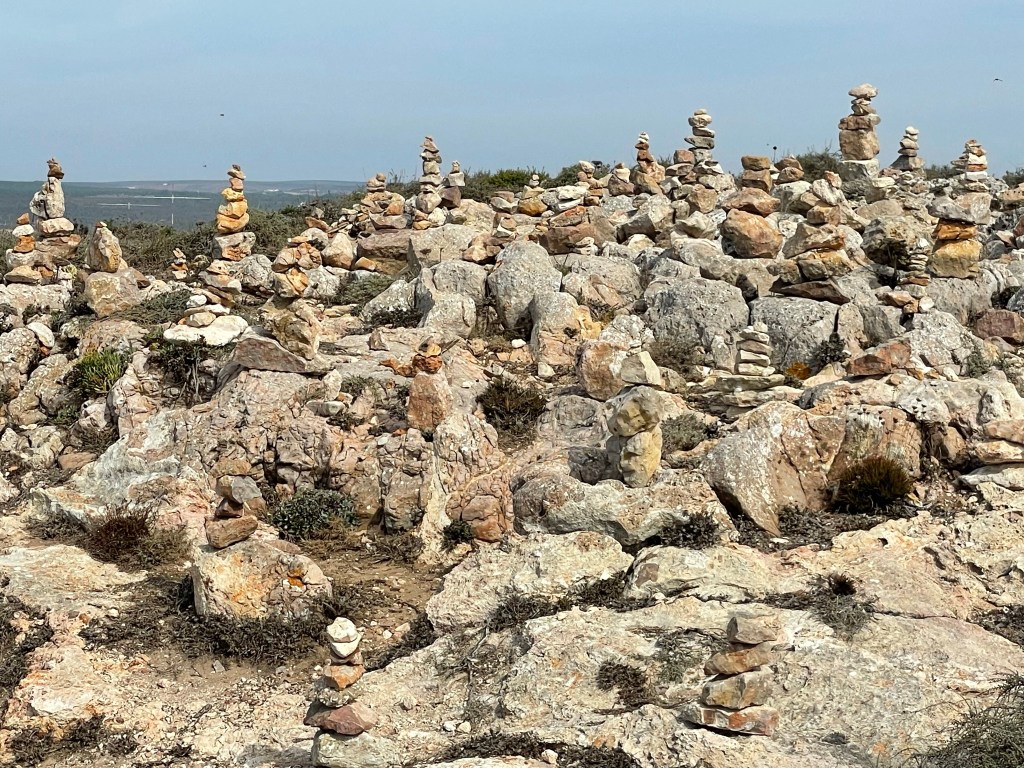
Cape Vincent
Cape Vincent Lighthouse
Cape Vincent
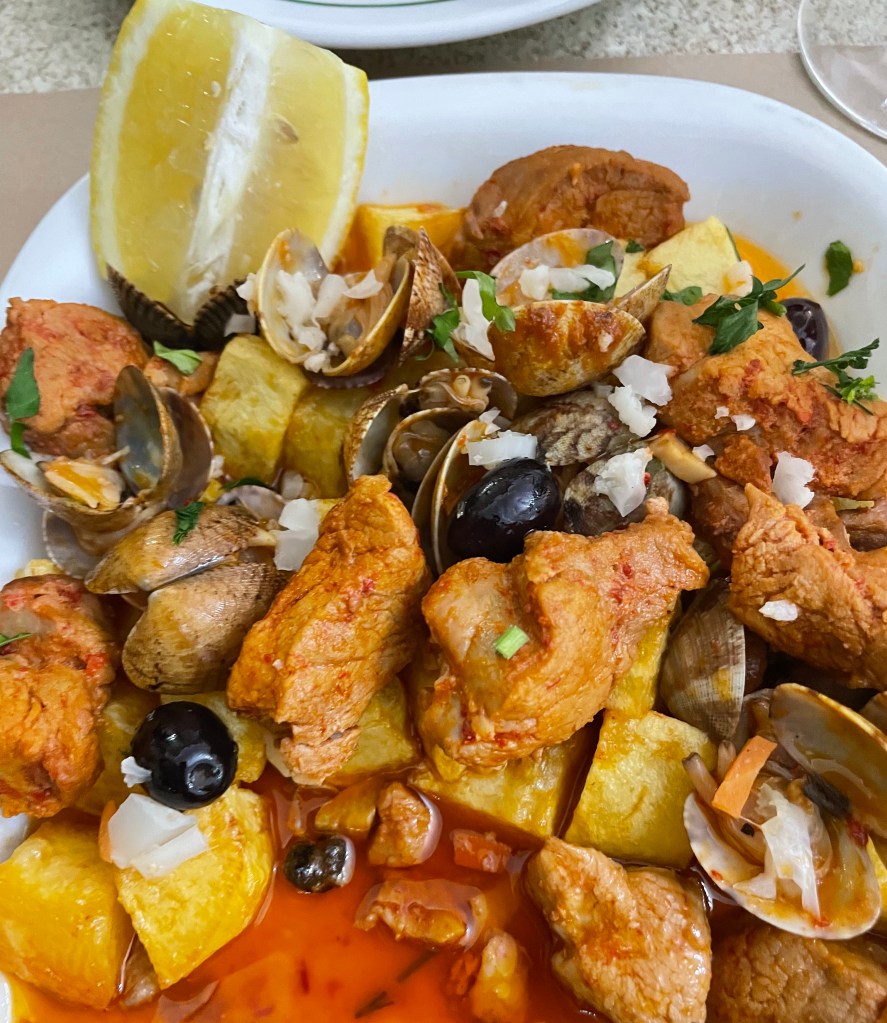
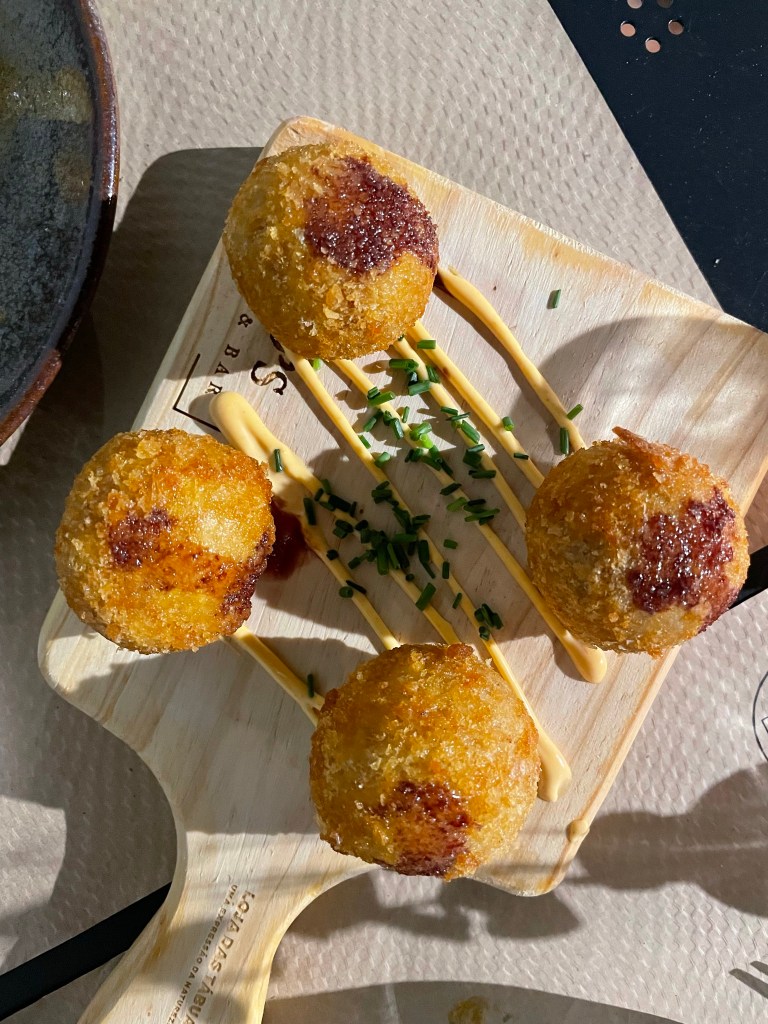
Pork and Little Neck Clams
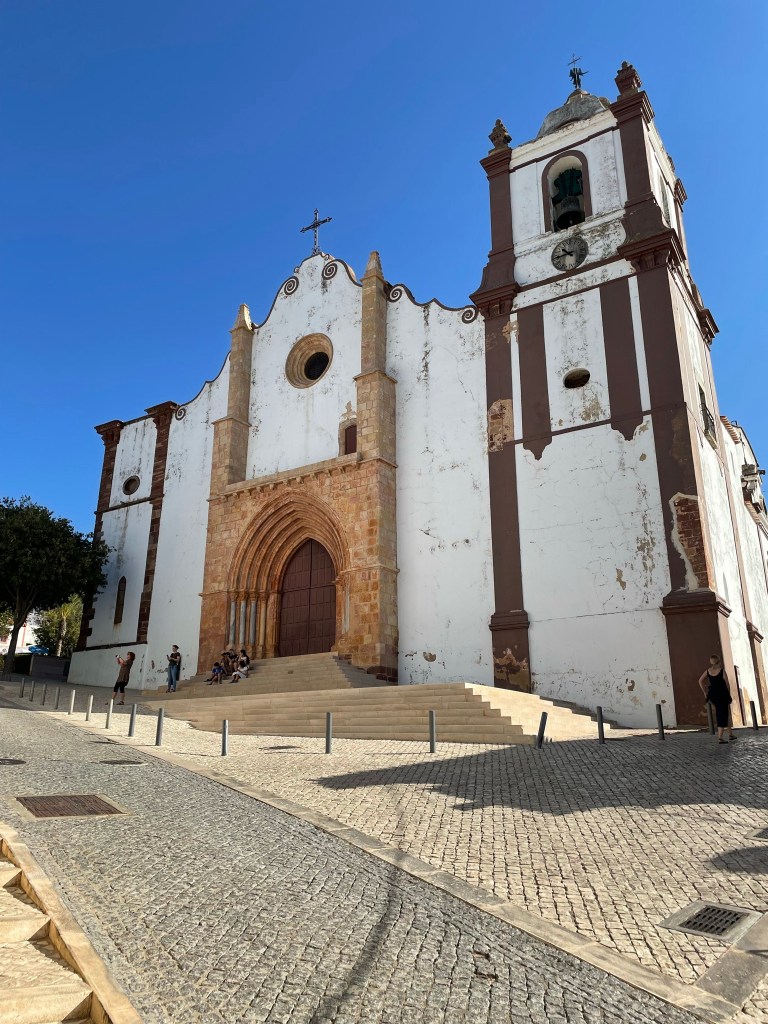
While wine tasting the other day we wandered past Silves, where there was an old fort perched high above the village. This fort and village were not in our tour guide, but after a little research we learned of its historical significance. We stopped there to take in the history and views and were glad we did. Historians say Silves was founded during the Roman expansion into the region but there is also evidence of Celtic influence. Silves became part of the Moor empire in 713 and remained so until the “reconquista” in 1189, when the castle and fortifications were built.
The Cathedral of Silves
Things That make us scratch our heads
Wash cloths: In every hotel we’ve stayed in, both in Spain and Portugal, they don’t supply wash cloths in the bathrooms. We knew this, so we brought our own along. But why?
Salad dressings: The only dressings for lettuce here are oil and vinegar. Even at the grocery stores you can’t find Ranch, Thousand Island, Blue Cheese, Russian or anything else. We’ve come to appreciate this and like the simple taste. We’ll be doing more just oil and vinegar when we get home.
Salt: They use salt differently here. On the lettuce salads, with just the oil and vinegar, they add a touch of salt. On a cooked piece of meat, chicken or fish they add a sprinkling of salt. It really adds more flavor to the meal. When we get home, instead of adding salt to a recipe as we cook it, we will be adding a touch of finishing salt. We can’t wait to try it.
Potato chips/french fries: In Spain they call french fries ”potatas fritas”. However, they call potato chips by the same name. We have asked several times but no one can tell us how to differentiate between the two. There were several instances where we just wanted a bag of salty chips to accompany a soft drink or a glass of wine and ended up with a big plate of french fries.
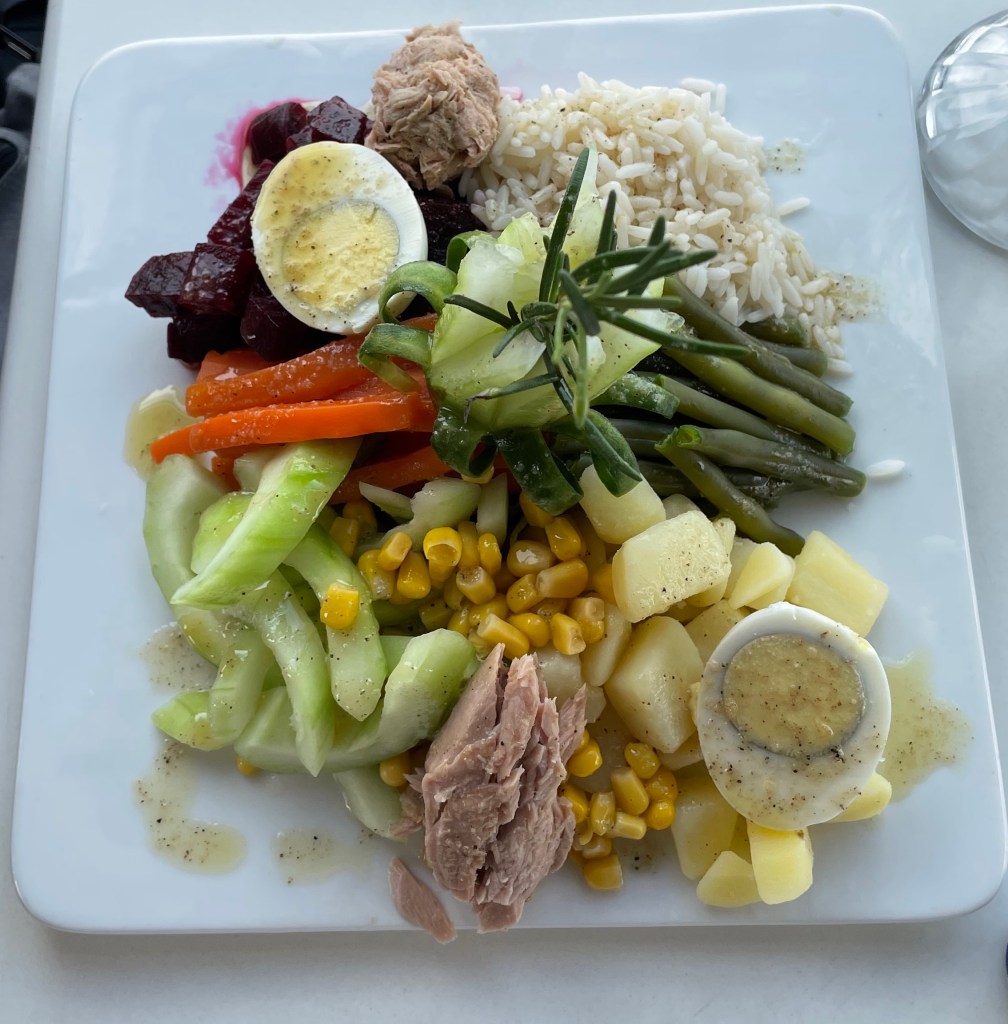
Tuna: I know both Spain and Portugal are surrounded by oceans, but it seems they put tuna on everything here. If you order a lettuce salad chances are there will be tuna on it. Tuna is a popular topping for pizza here as well, apparently. I even sampled a savory breakfast turnover that looked delicious – yep, Tuna!
In both Spain and Portugal we have noticed that much of the background music at a bar or restaurant or in a taxi is typically classic American rock and roll or other American standards. In general, most people here don’t speak much or any English, so why do they listen to music in another language? Do they understand the words or meanings of the songs?
Even though we recognize and are sometimes frustrated by these idiosyncrasies, we still love Spain and Portugal, and are so happy to be visiting here.
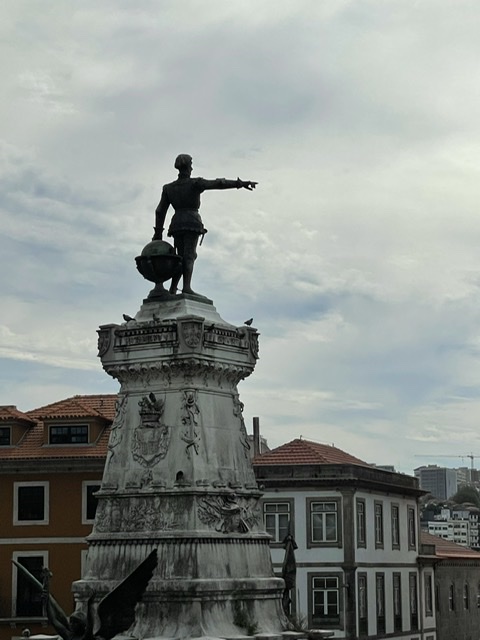
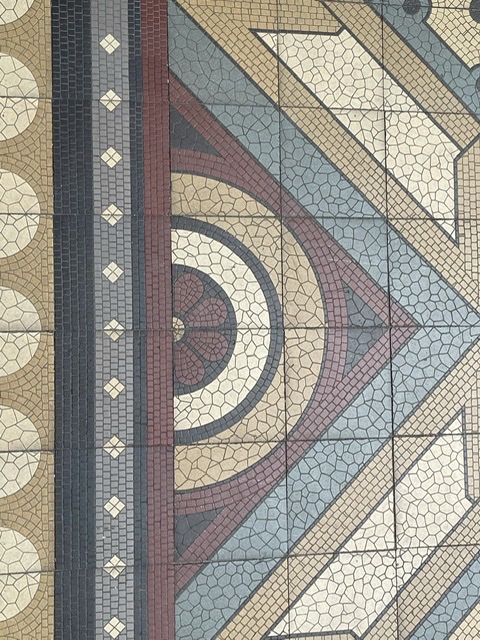
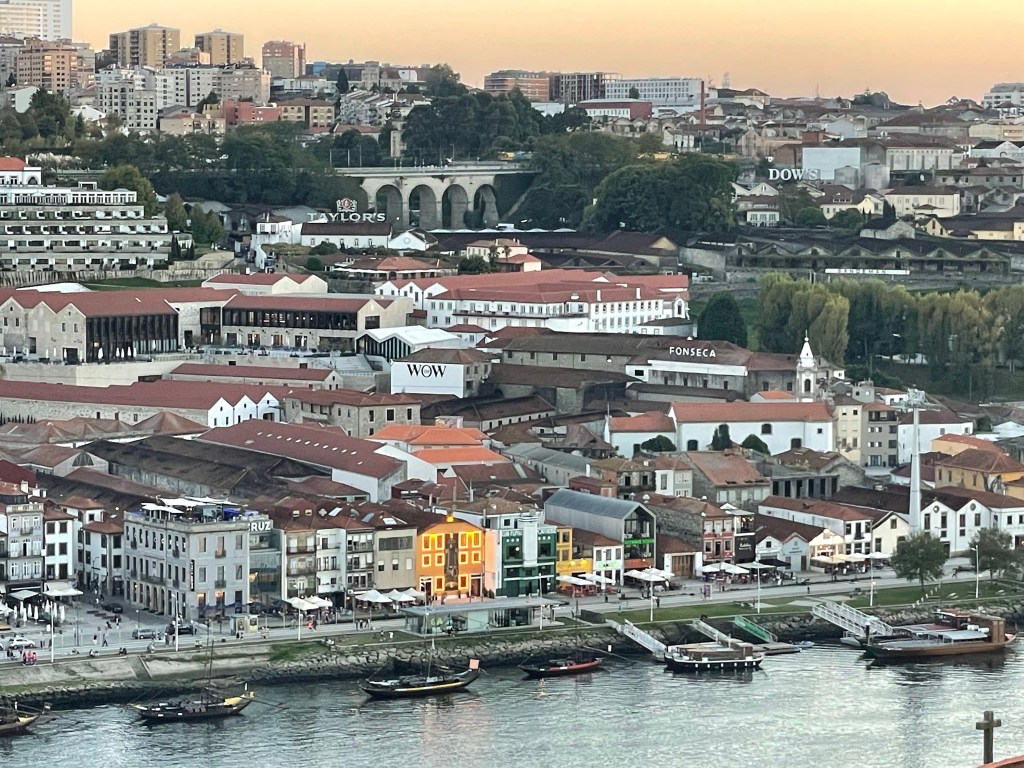
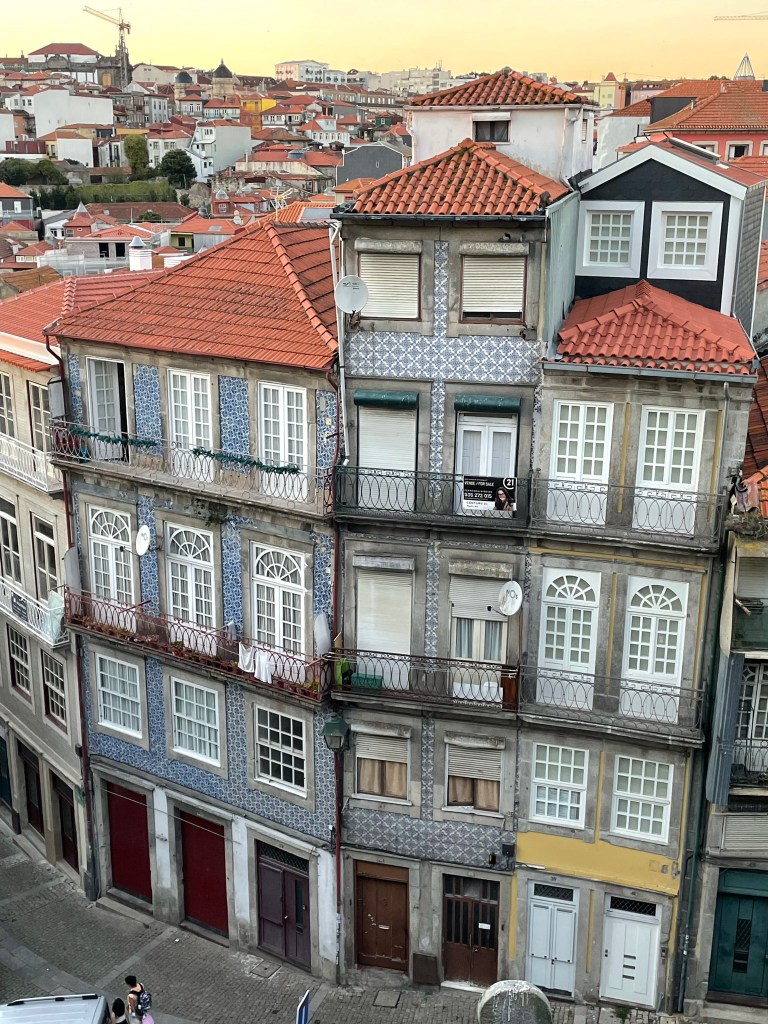
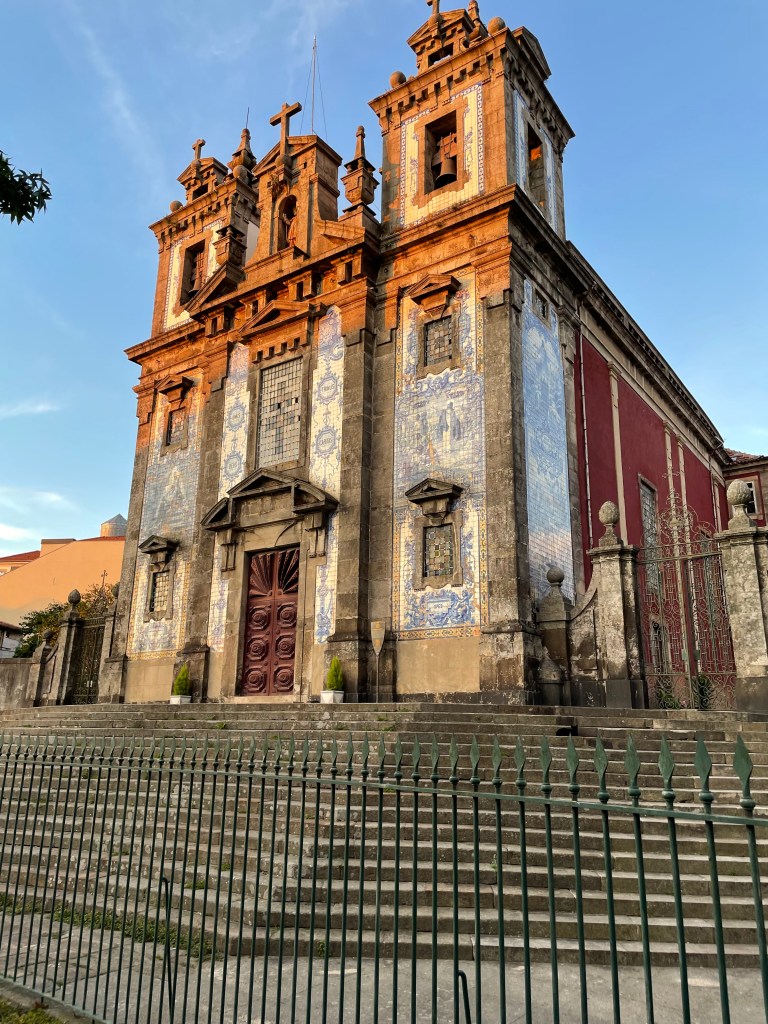
Carrie and I loved Porto. It’s a little bit gritty, with crumbling buildings, grafitti everywhere and more homeless men than we’ve seen so far on this trip. But when you look past those negative aspects you can see a great historical city where the elaborate designs of blue and white tiled walls meet the flowing black and white brick patterns on the streets and sidewalks. Along with the dilapidated buildings there are new construction projects going on throughout the city and the streets, shops and restaurants are packed with both tourists and locals. You can spot a piece of Portugal’s history every time you turn around. There is the wealth created from Portugal’s golden age of discovery evident in the magnificent Stock Exchange building. Outside of the building is a statue of Magellan, the explorer, pointing to the horizon. Across the river from here is Vila Nova de Gaia, home of the port houses where Porto received its name.
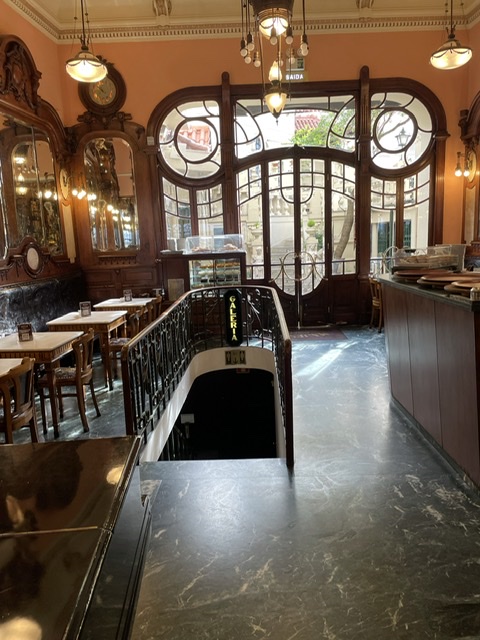
The Majestic Cafe
The Stock Exchange Building
Magellan
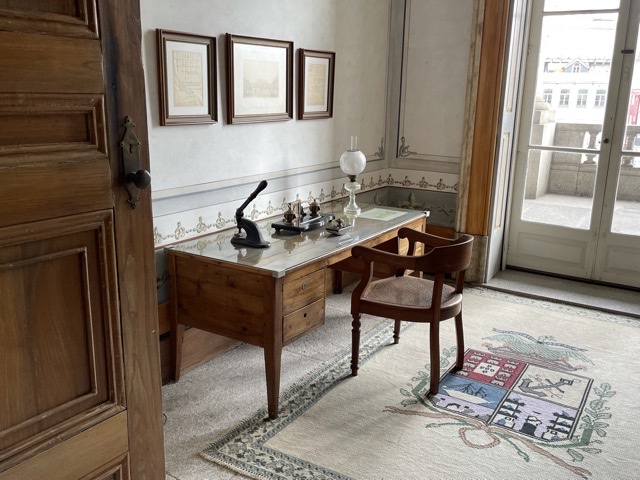
Gustave Eiffel’s Desk
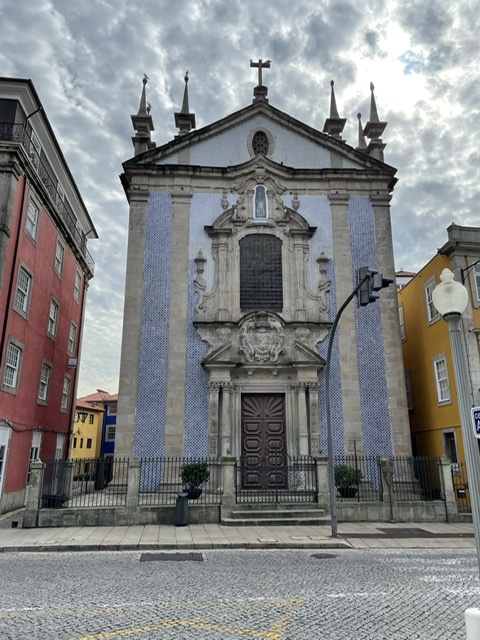
Typical Porto Building Facade
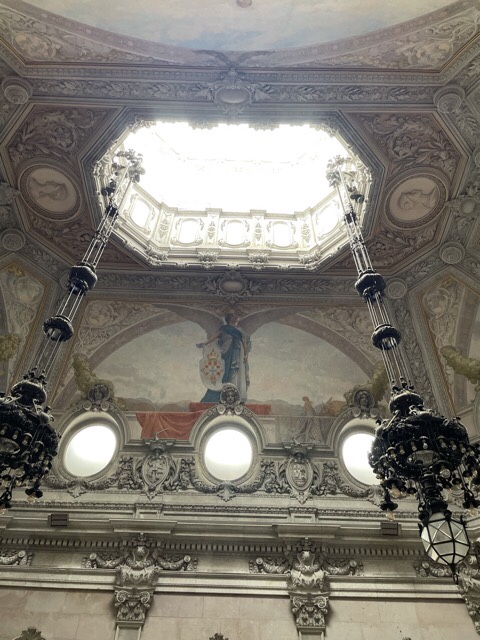
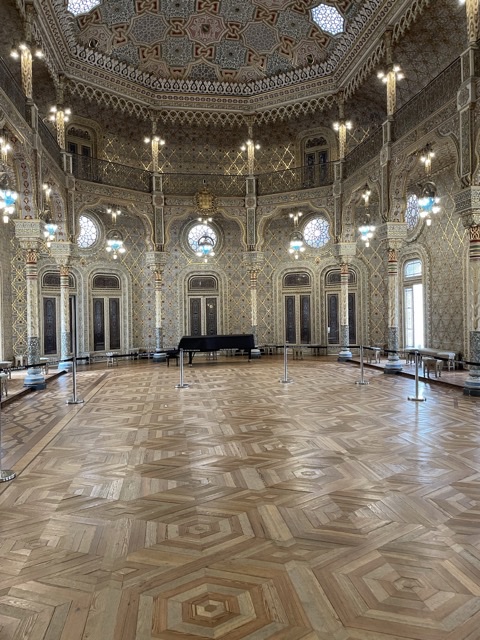
Grand Ballroom of the Stock Exchange
We took the bus from Porto to Lisbon to pick up a rental car. Much of the next two weeks will be driving around the Algarve area, seeing the cliffs and beach of the seaside villages. From the Algarve we plan on driving to Marbella, Spain to spend a few days with Renae, one of our pilgrim friends. We will explore Gibraltar together and we want to visit Tangiers, if Covid allows entry.
The Algarve
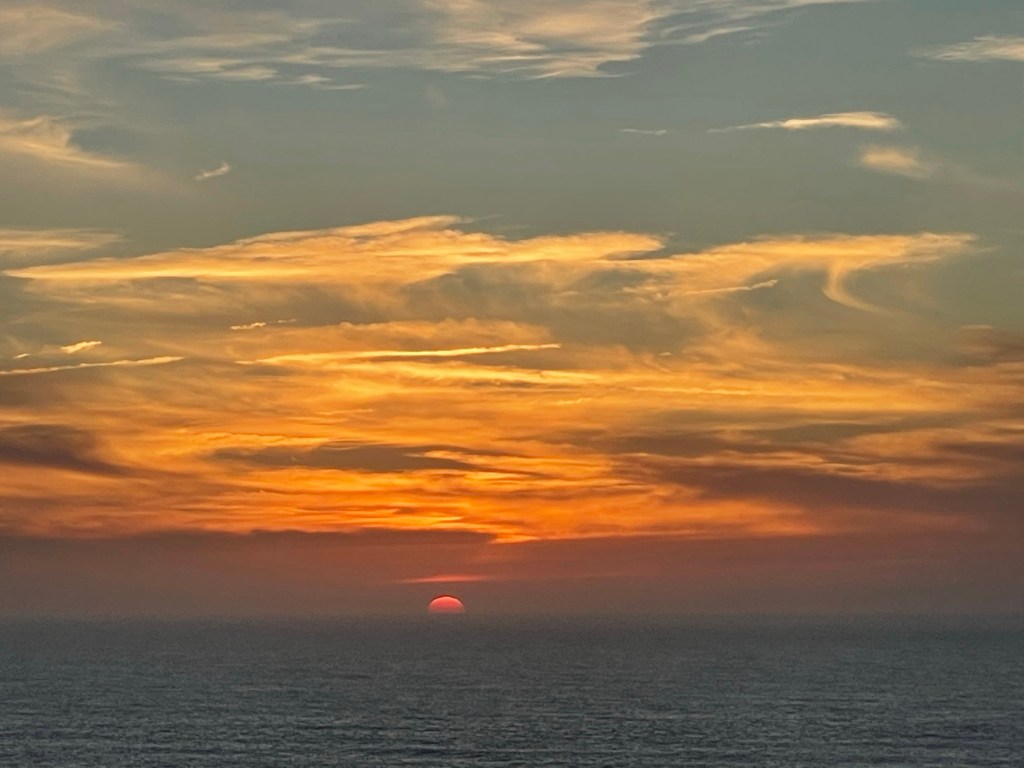
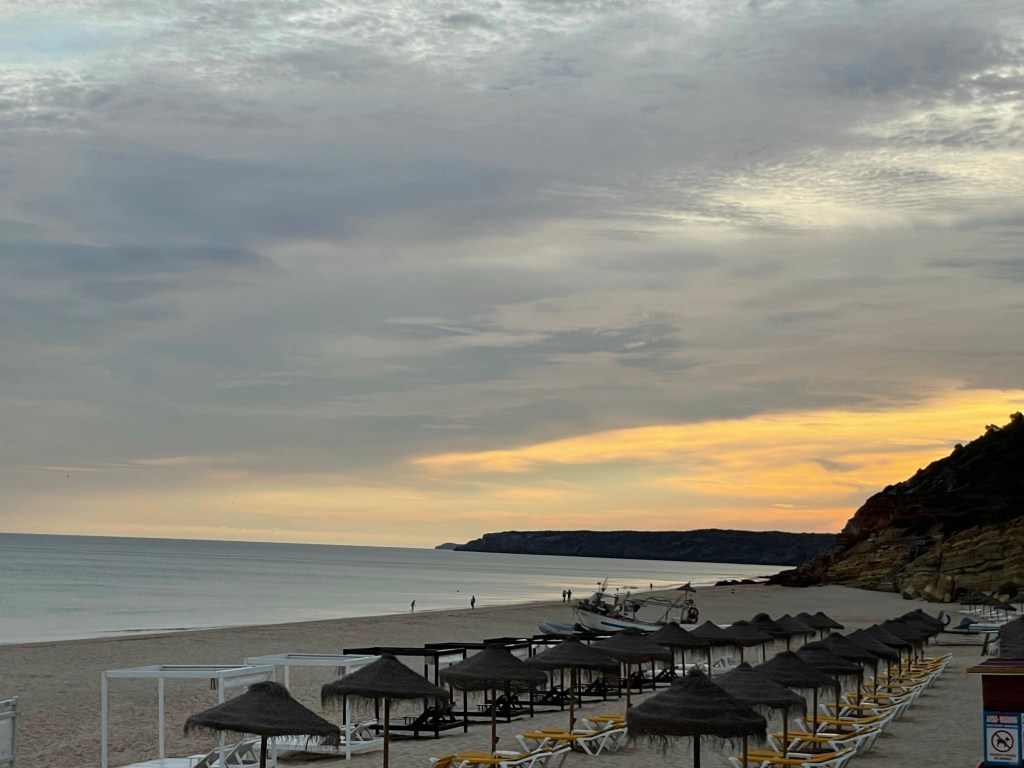
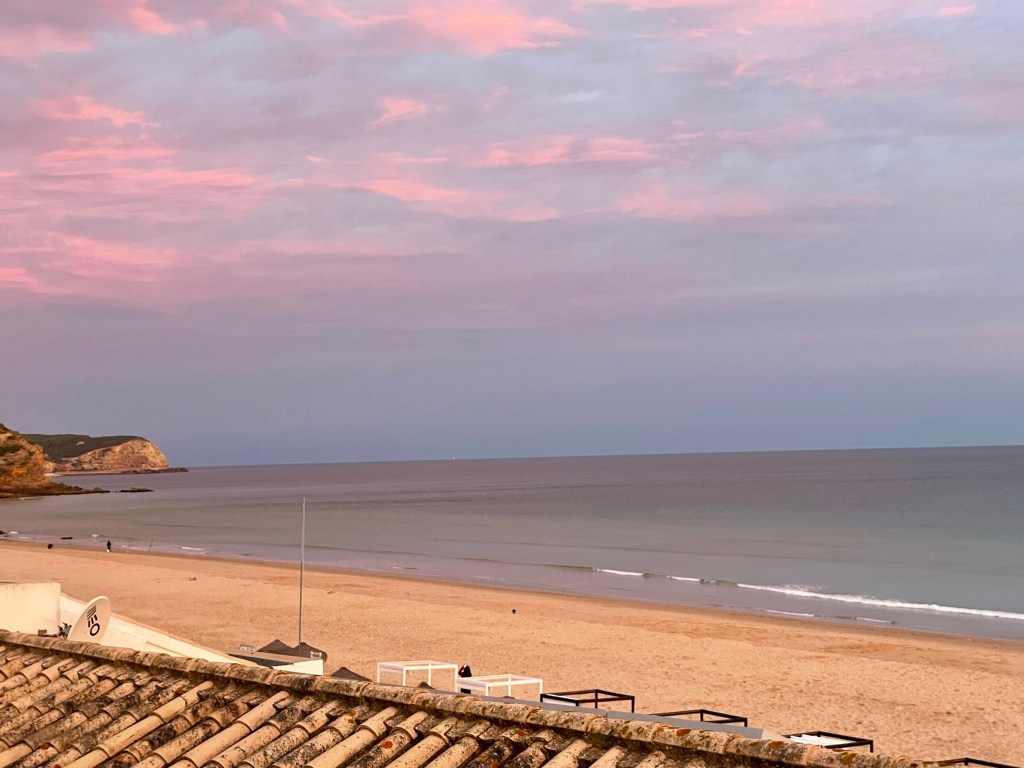
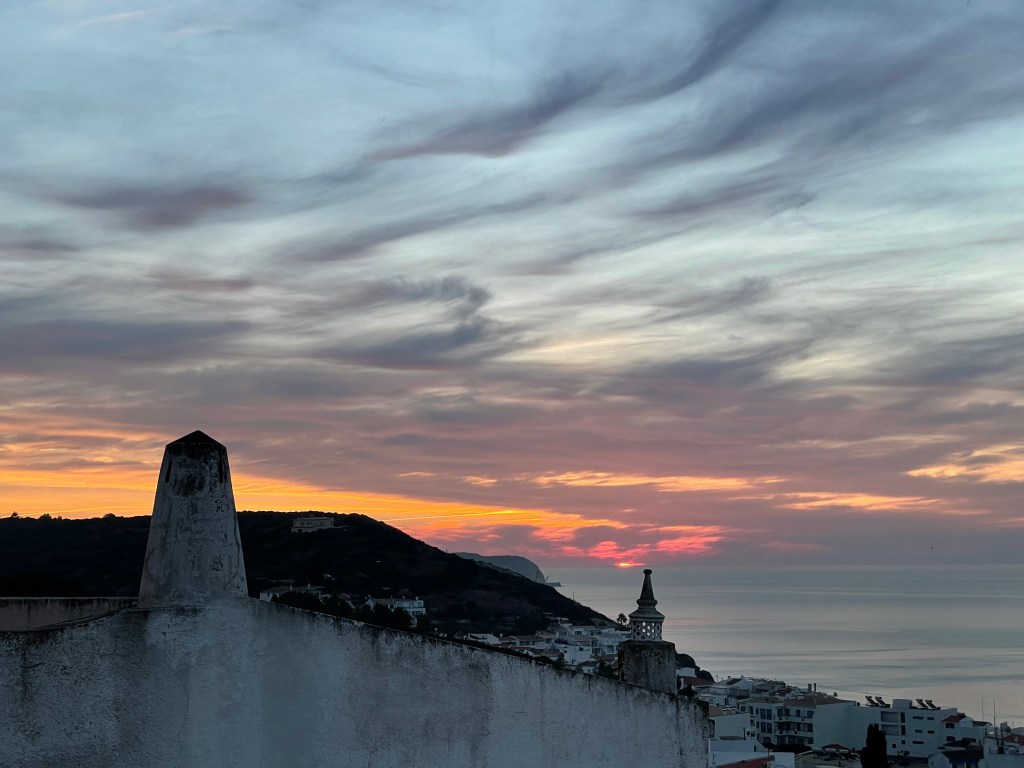
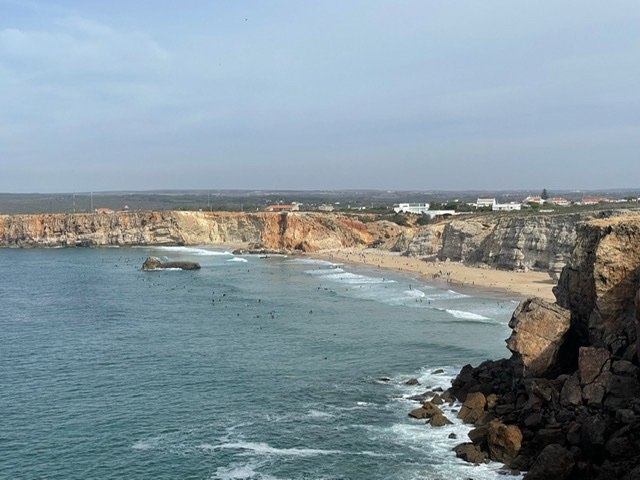
The Algarve is all about natural beauty. The breathtaking cliffs and vast beaches lead to the ever changing colors and temperament of the Atlantic Ocean. There are dozens of windswept secluded beaches to meet the needs of the sunbathers, surfers, hikers shell pickers who flock here year round. We noticed that the most prominent element of the region is the infinite number of variations in light and hue of the sunrises and sunsets. It seems we marveled at each one and photographed them constantly.
After completing our walk on the Camino, Carrie and I spent a few days in Santiago de Compostela planning the remainder of our 90 days here in Europe. We had spent months planning for the Camino, but we had not scheduled one step of the remainder of our trip, other than we have a flight home from the Lisbon, Portugal airport. We had a vague notion that we would visit some of the prominent tourist sites in Portugal but no real plan. We love this wide open itinerary! Two days before we left Santiago we booked a hotel in Porto and went to the bus station to get our tickets.
On Tuesday morning we were in our hotel in Porto working on the next leg of our trip.
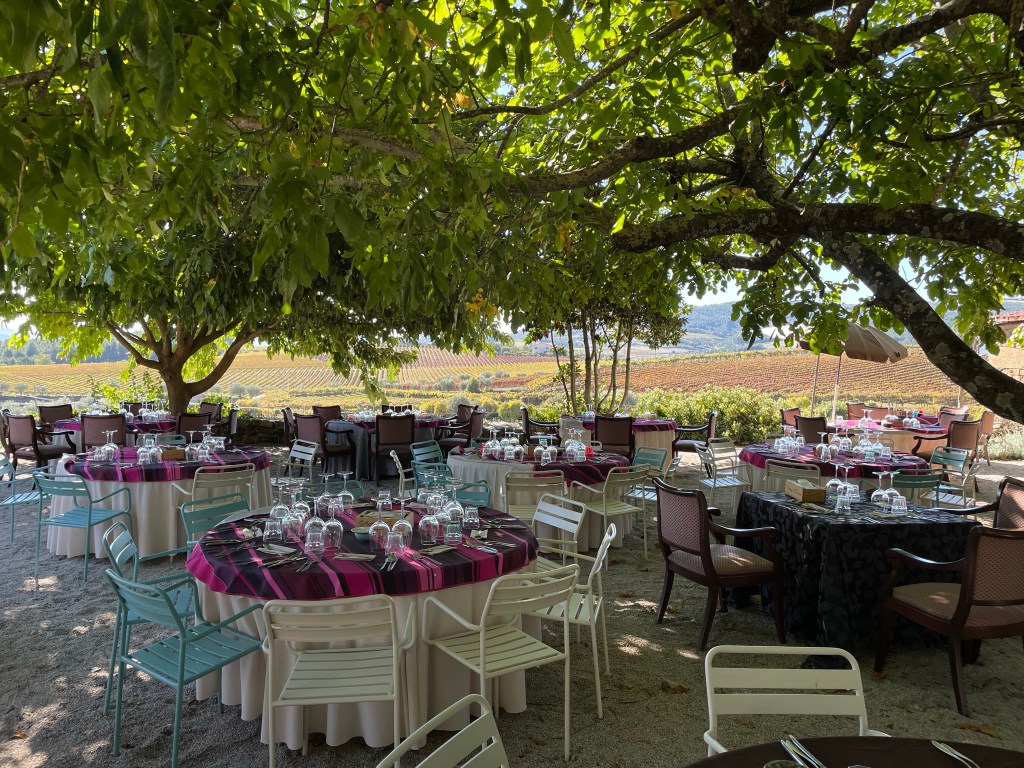
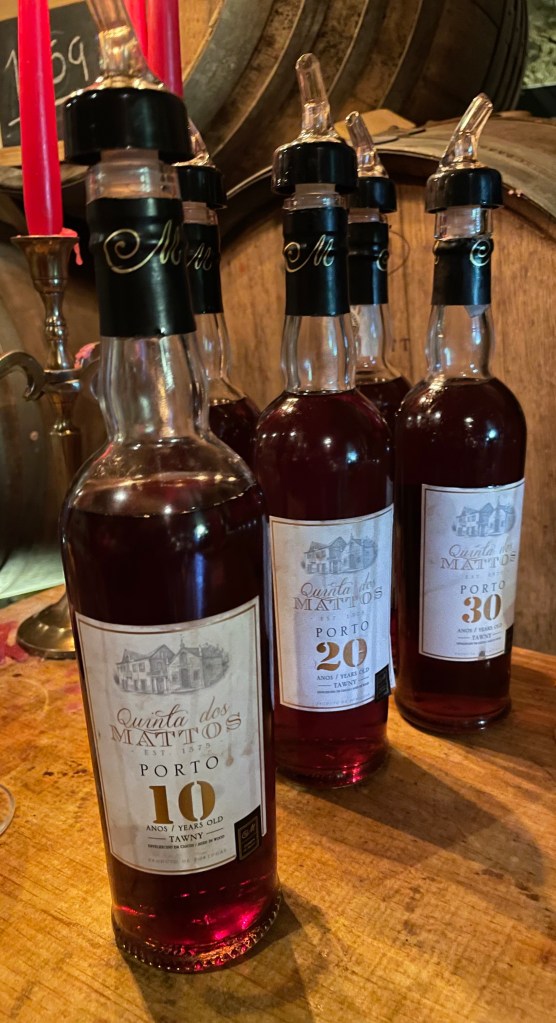
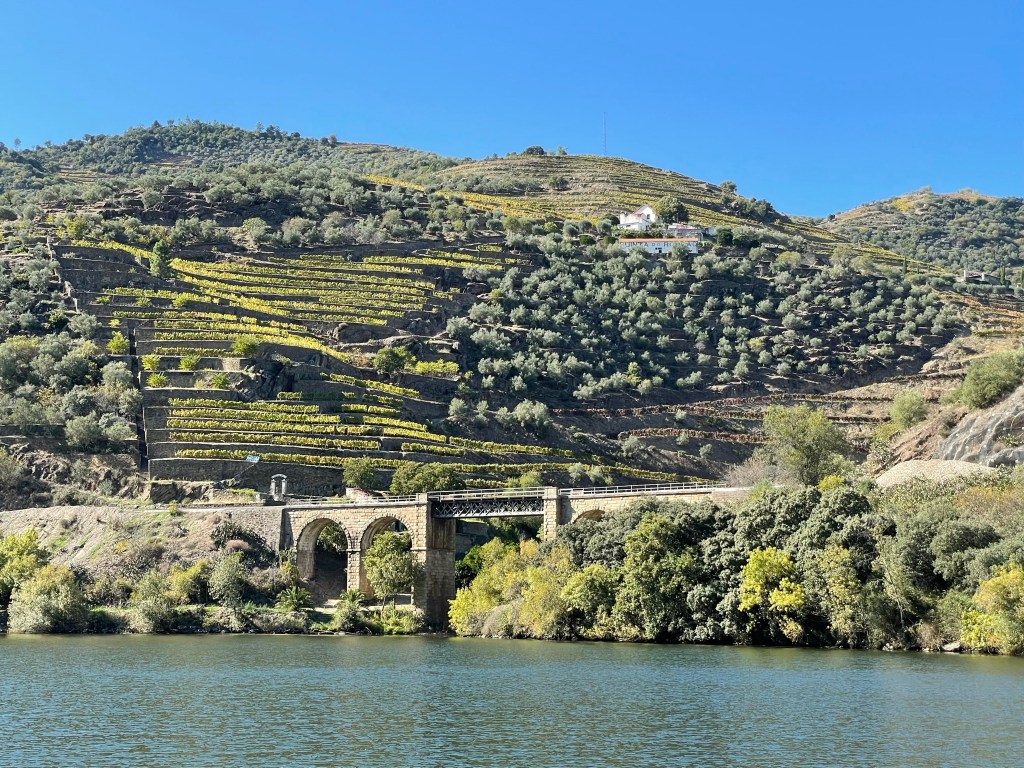
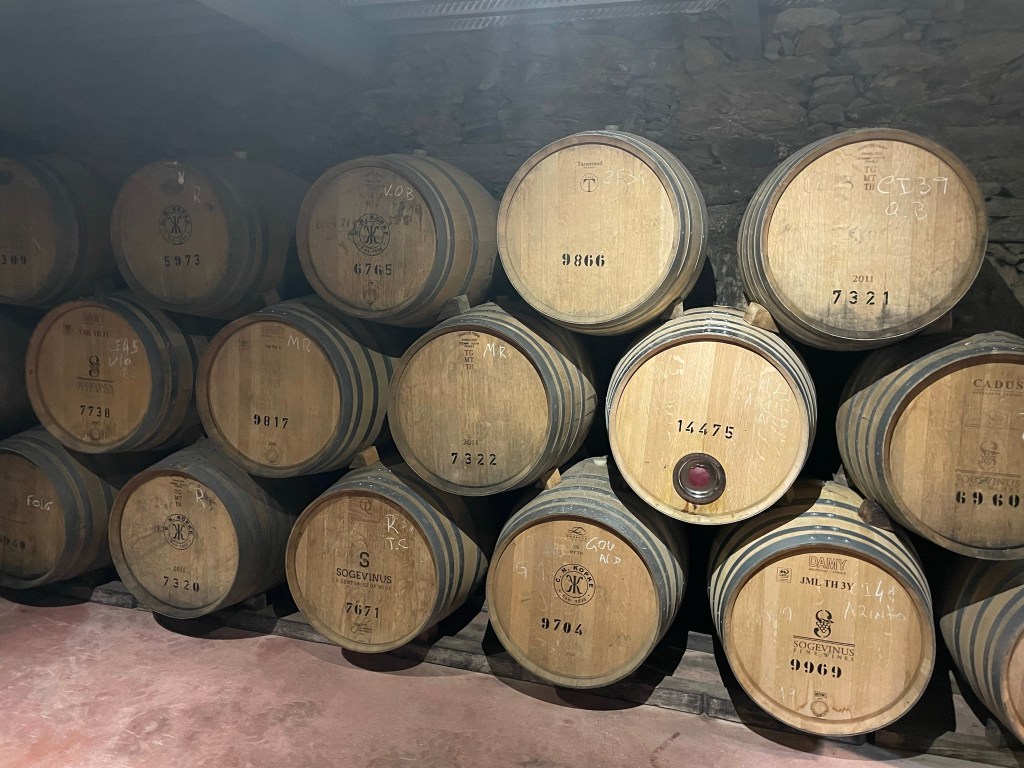
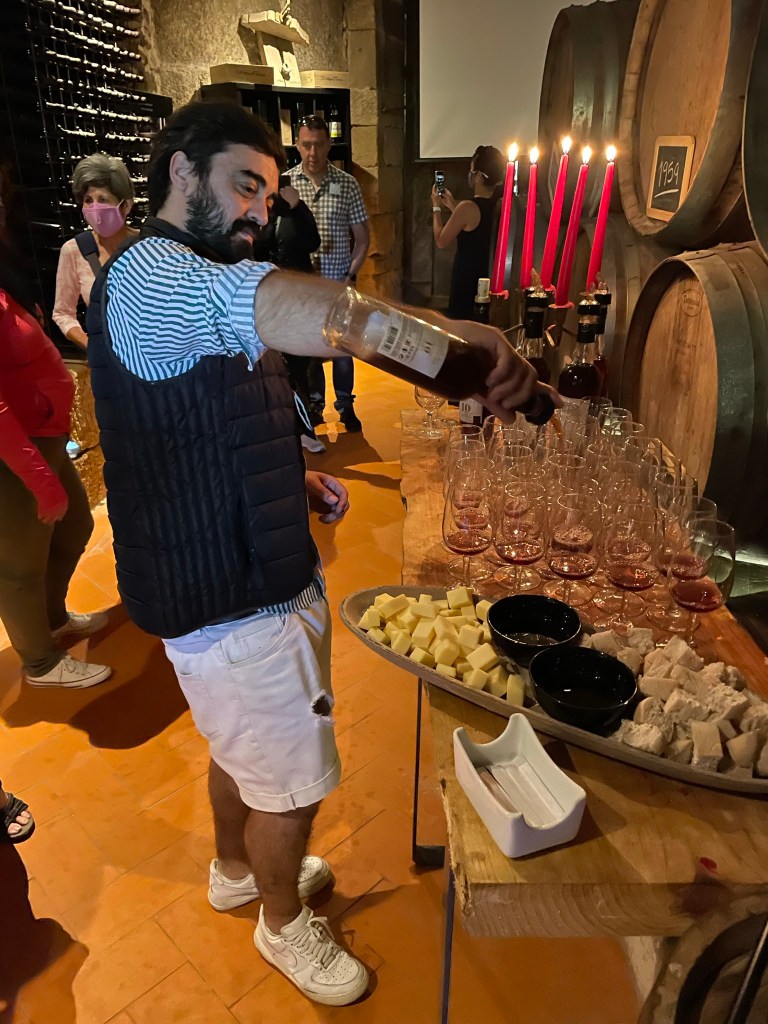
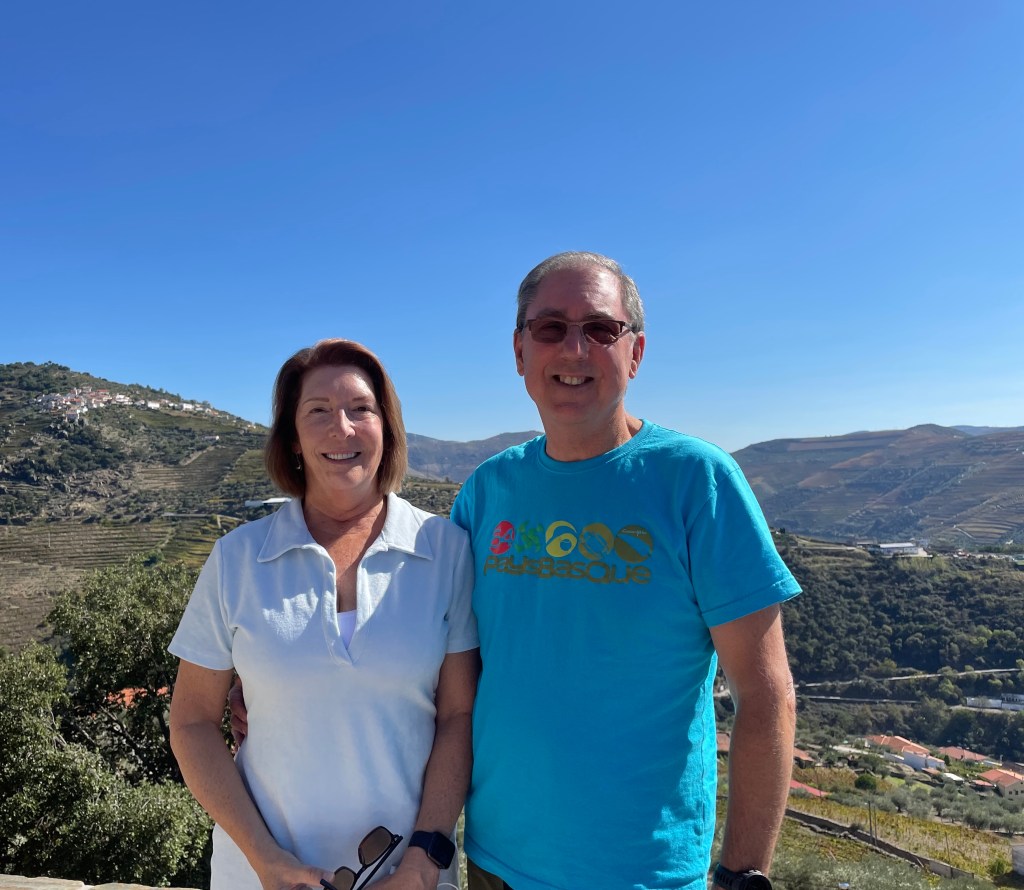
In Porto we sampled some of the delicious local Portuguese dishes, which focus on seafood and pork and wandered around the city center near our hotel. Porto is obviously renowned for its port wines and wineries along the Douro River. Carrie and I met up with some friends and took a small group bus tour along the Douro River and visited a couple of wineries sampling both their still wines and ports. We had a delicious lunch at one of the wineries overlooking rows of grape vines turning gold in the October sun.
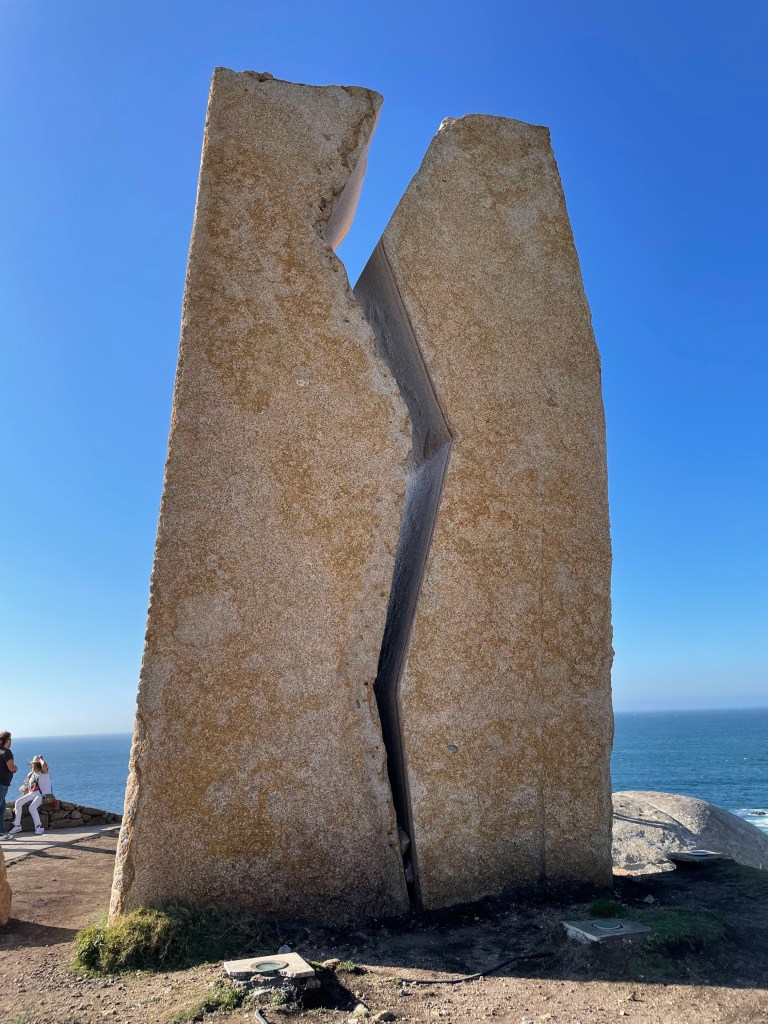
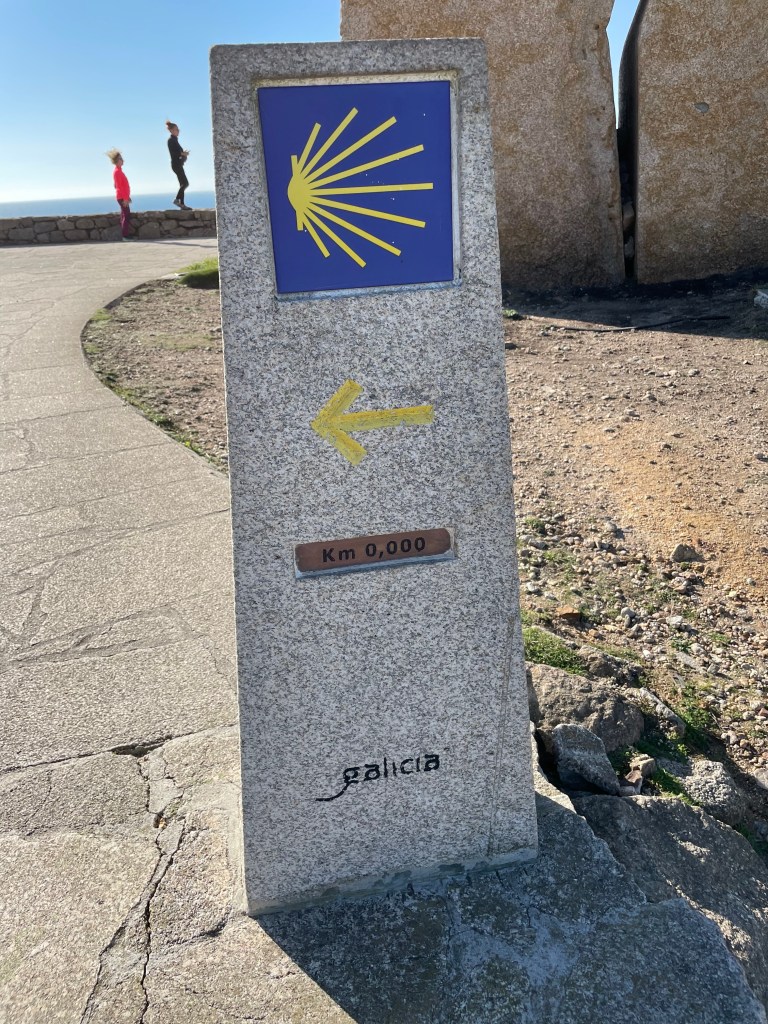
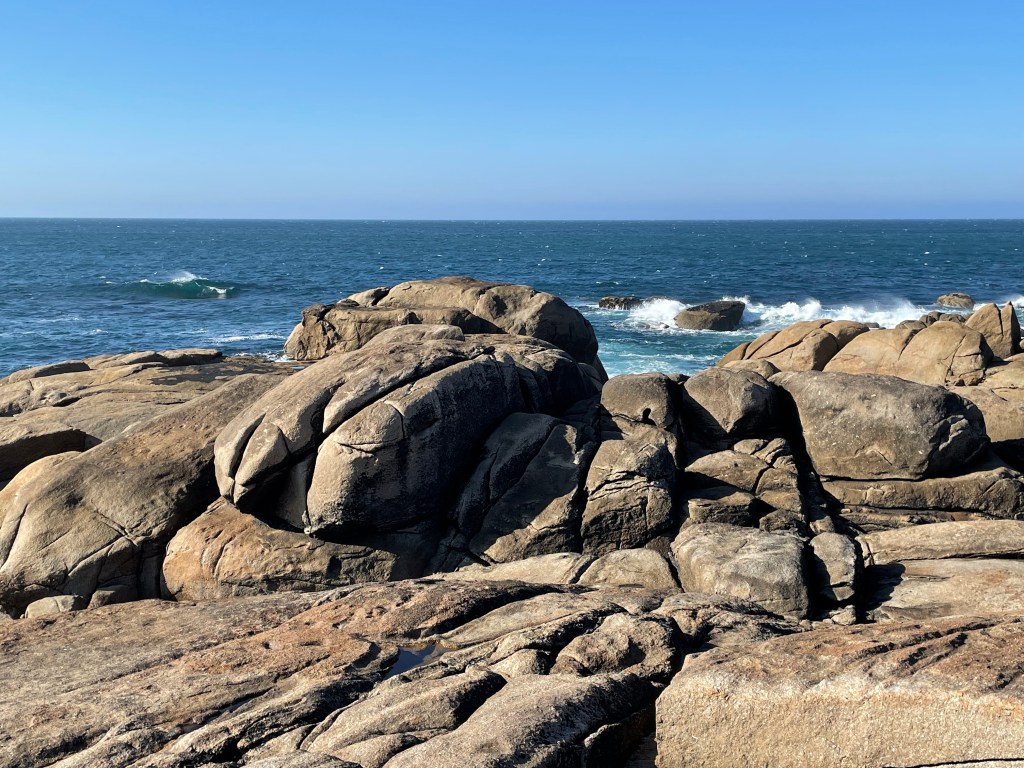
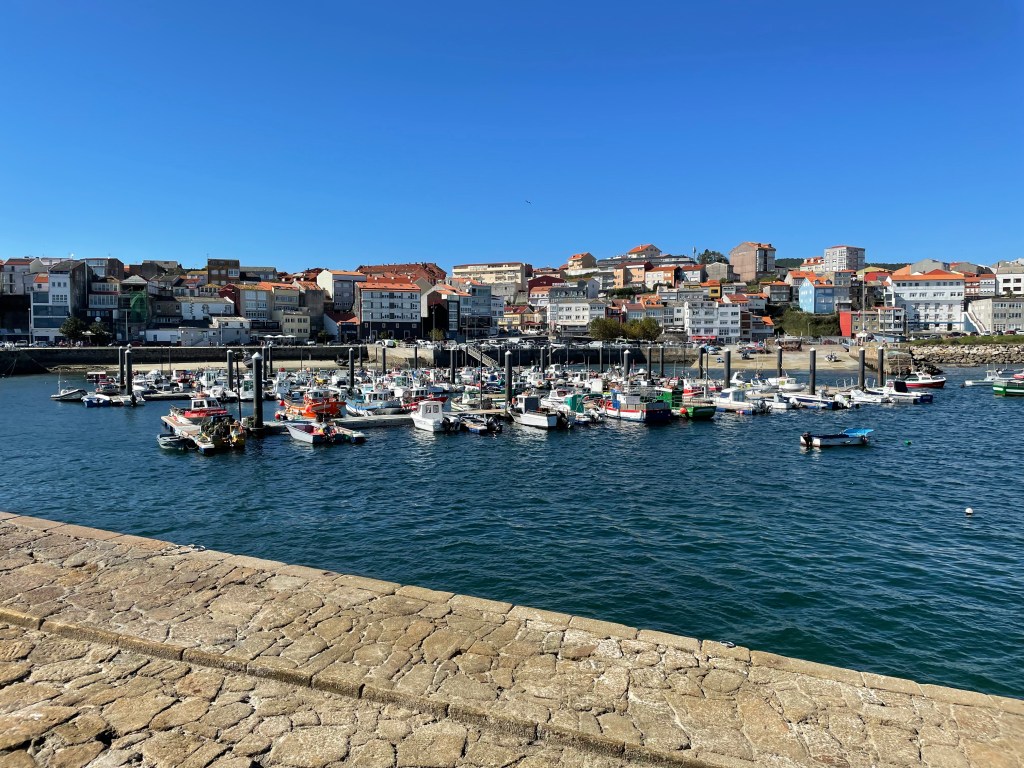
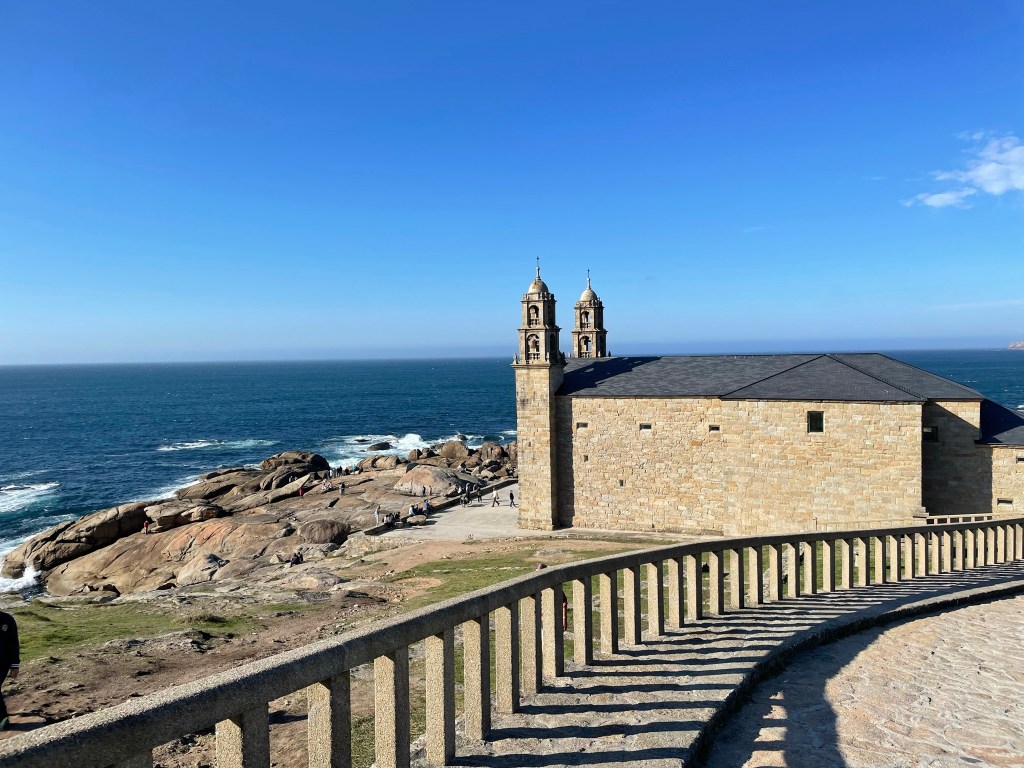
Most pilgrims end their long journey in Santiago, but a few continue on to Fisterre (end of the world), a tiny seaside village, which was in ancient times considered to be the most western point in Europe. We also traveled there, and to Muxia, but in the cushiony comfort of a tour bus. This was a fun and relaxing method of travel compared to our long days of walking.
As we were getting ready for our day trip to Fisterre, we walked out to the plaza in front of the cathedral and in the predawn light saw about eight horses and riders gathered on the square preparing for their journey. The last rider to leave the plaza, on a sleek dark horse with bright taped leggings high stepped all the way out of the plaza though the archway.
Today we take a bus down to Porto, Portugal and plan the next stage of our 90 days in Europe.
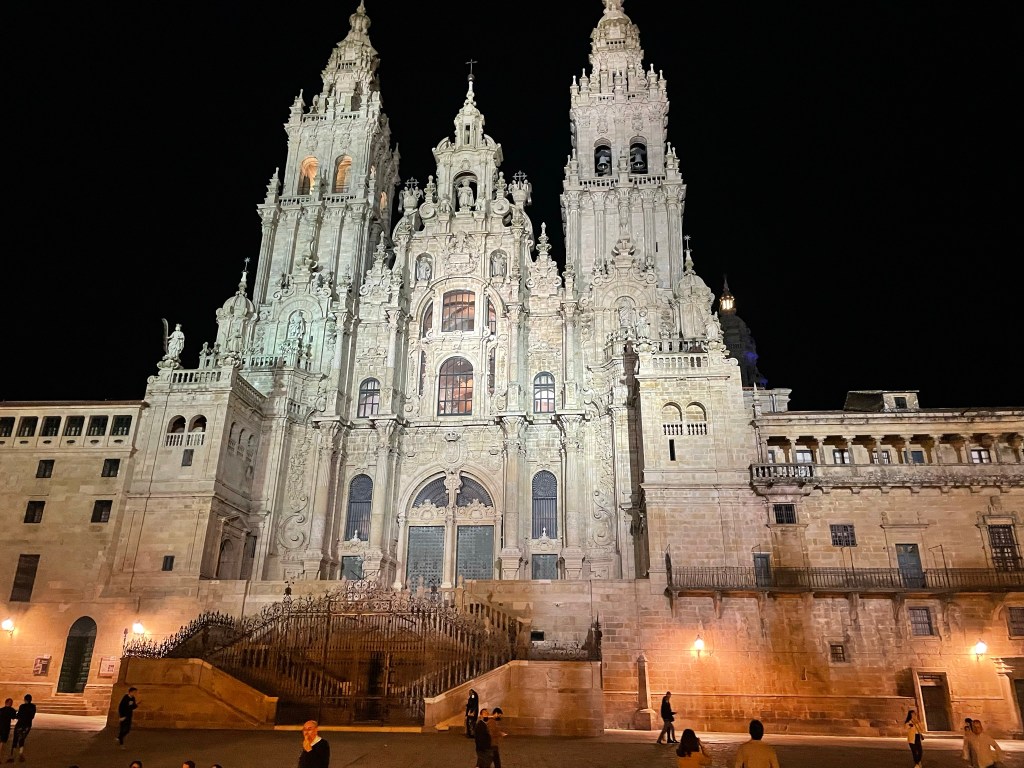
We are finally in Santiago! We arrived here on Friday, after 38 days of traveling to get here. Upon entering the plaza facing the cathedral we were met by the sounds of bagpipes from local musicians and throngs of joyous pilgrims hugging each other and posing for group photos. It was a scene of joy and chaos.
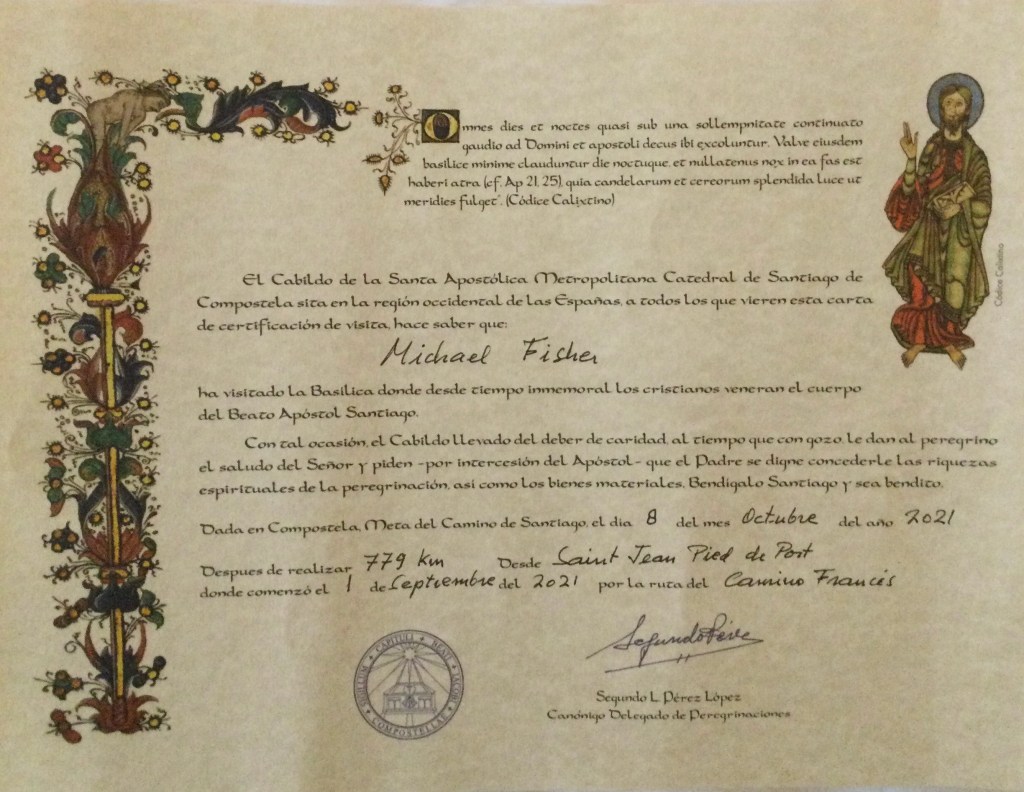
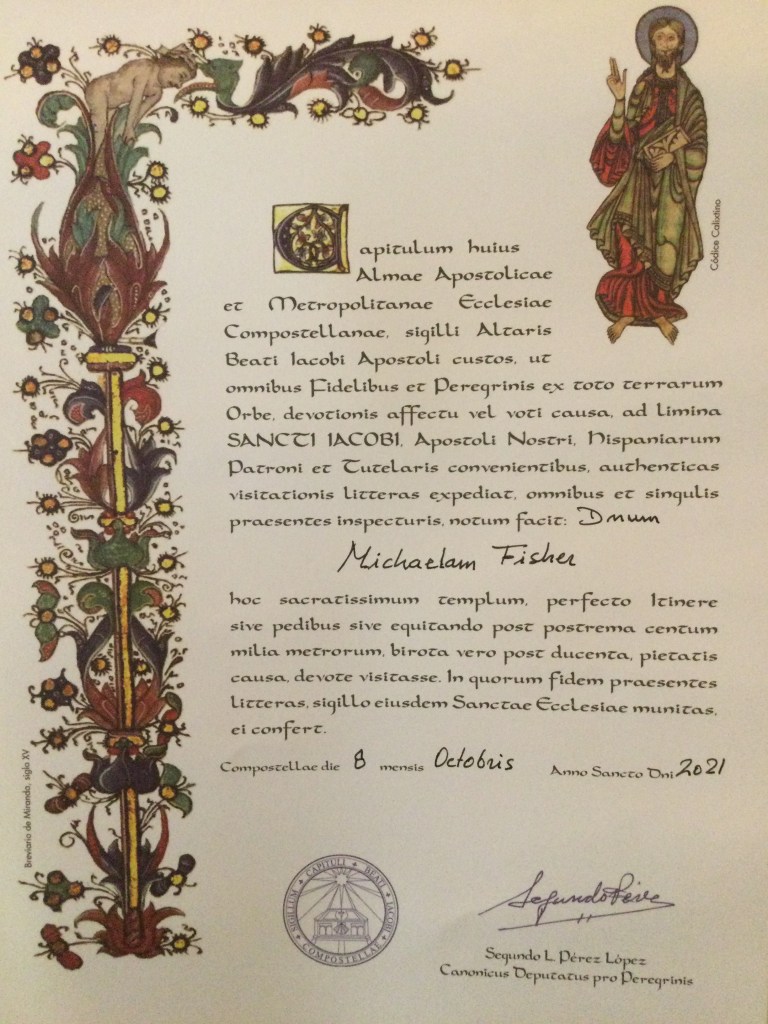
After walking around the plaza feeling a little dazed and confused, we asked and found out how to attain our certificates of compostela (see above). There is an elaborate process to go though, but once received we noted that they are all written out in Latin. It seems that my name in Latin is “Michaelam”. Who knew?! Carrie is still Carrie.
The last 10 kilometers
Horreo
The Cathedral of Santiago
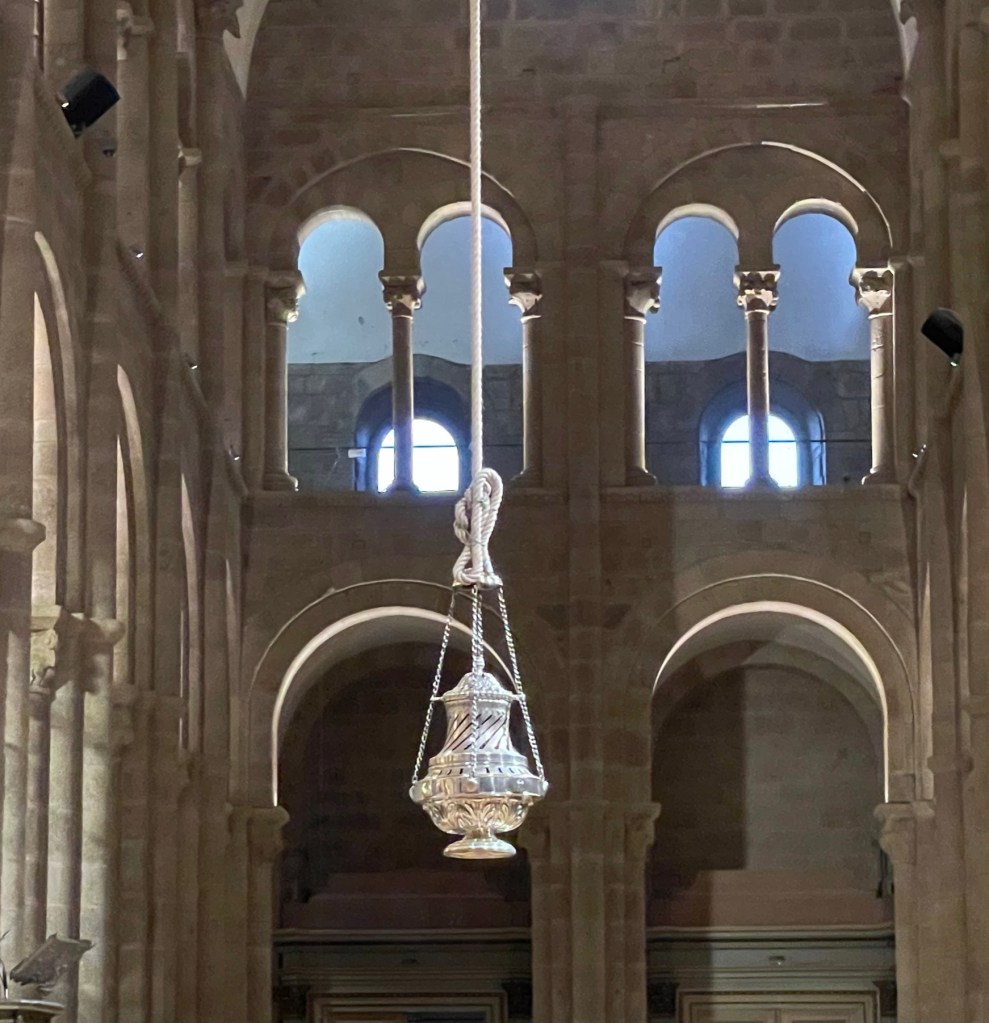
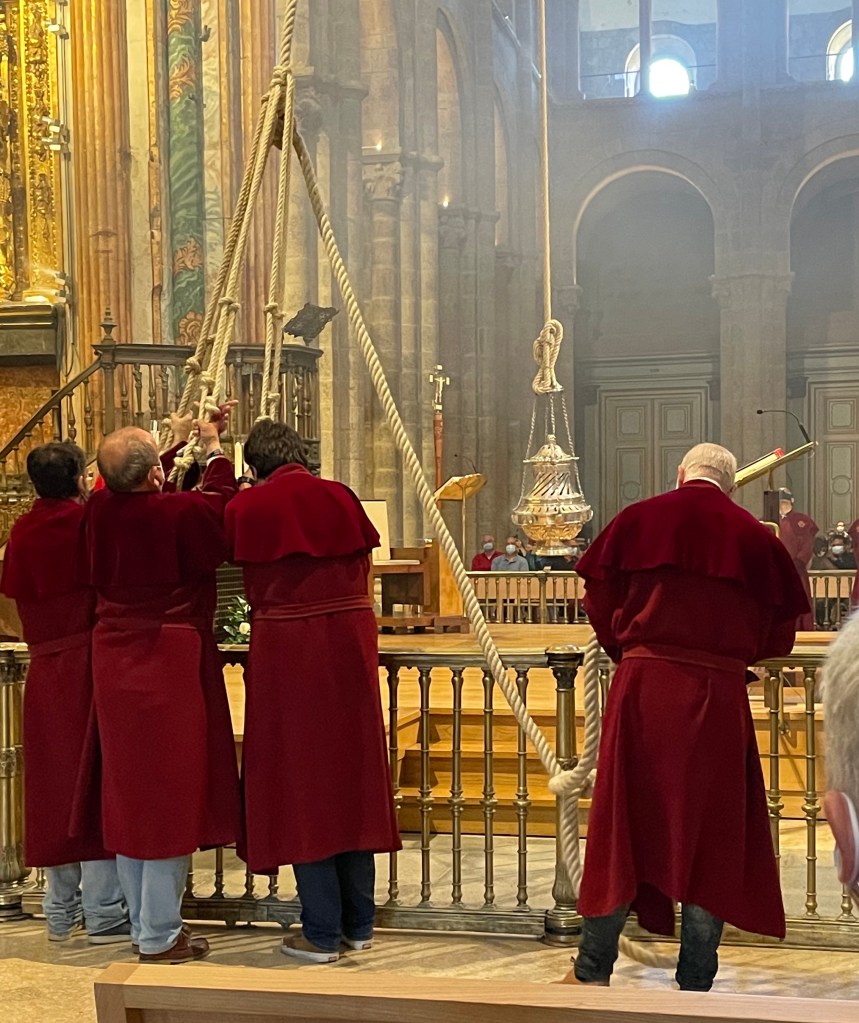
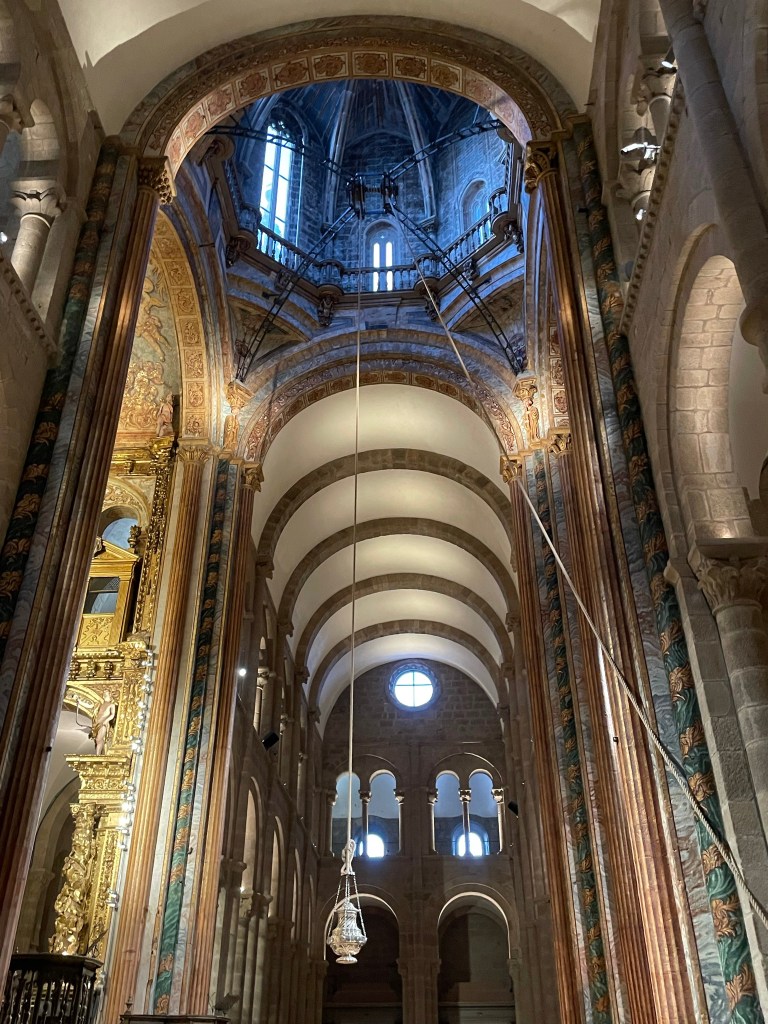
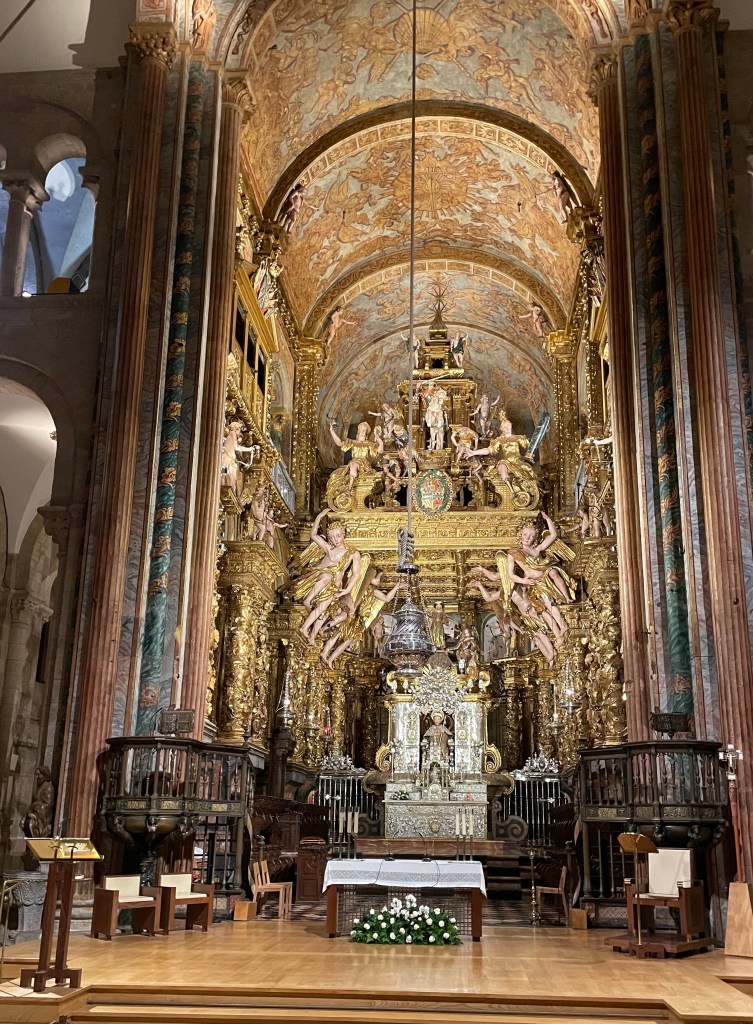
We attempted to attend the 7:30 PM mass at the Cathedral on Friday night, but weren’t able to get in because the crowds were so large, mostly because at this mass the service included the “Botafumeiro”. This is an special service where a large canister of incense is hoisted into the air by several strong men who swing the vessel back and forth above the aisles. It’s very impressive. We were lucky to see the Botafumeiro service the next morning.
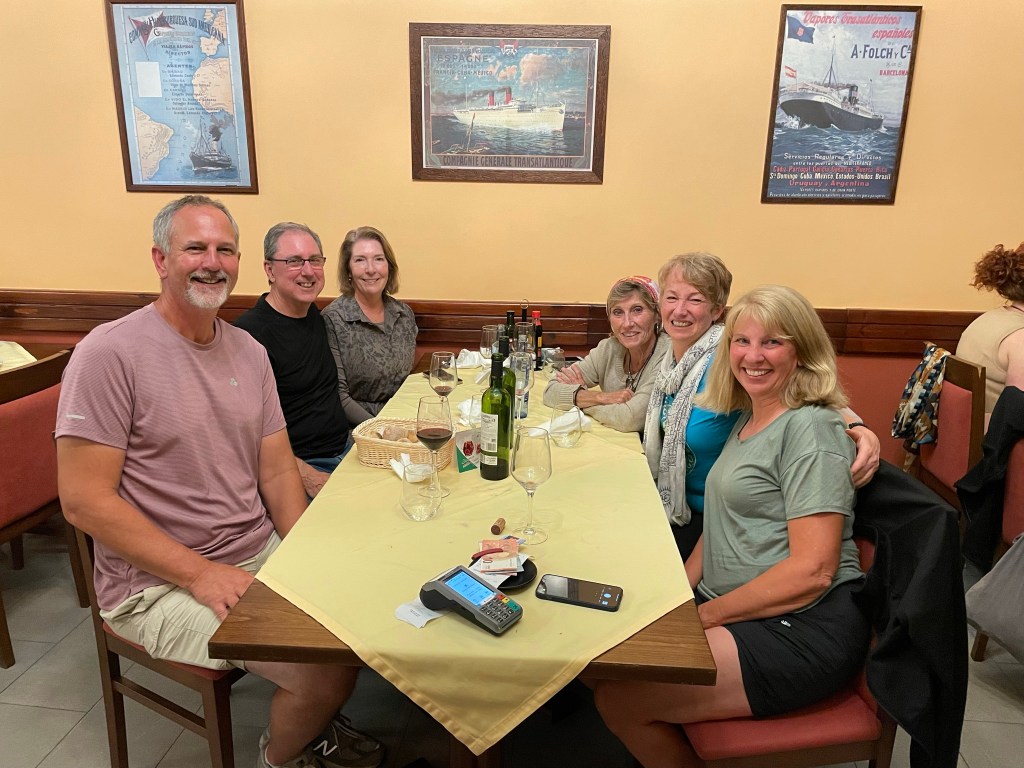
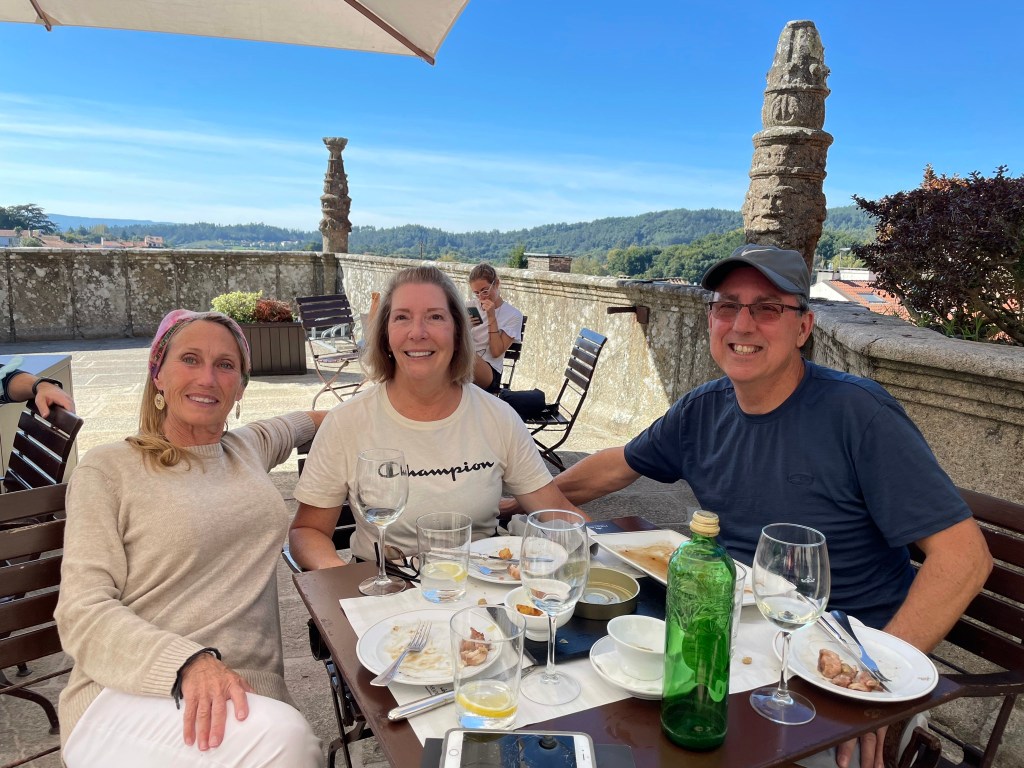
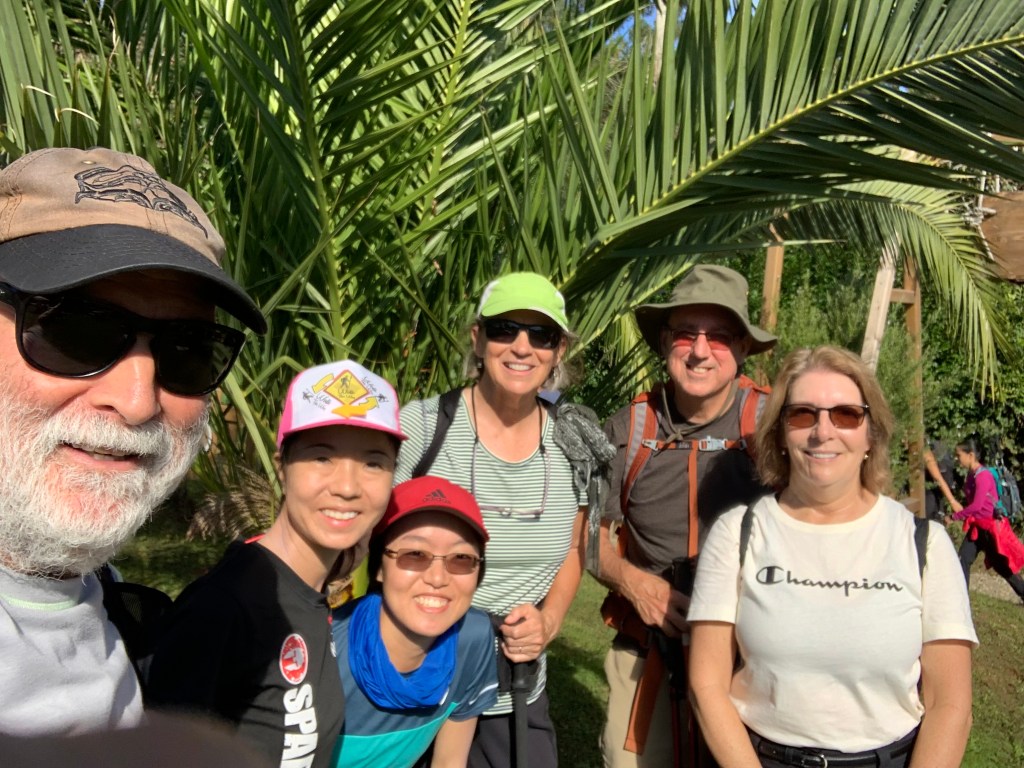
Pilgrims walk into the city every day, so there is a festive atmosphere all day and all evening . The bars and restaurants are bustling with tourists. Musicians fill the alleyways and alcoves working the crowds for money. Old friends meet again and new friendships begin as stories of our journeys are recounted until late into the night. We know that we share a common story that we’ll remember all our lives. We have all benefited from our pilgrimage in many ways, but what we’ll cherish the most are the friends we made along the way.